Blog


TL;DR:
- Decking enhances outdoor living, blending your log cabin with the garden and increasing property value.
- Material choices like treated softwood, hardwood, or composite depend on budget and maintenance preferences.
- Proper design, positioning, and planning are crucial for longevity, usability, and aesthetic harmony.
Many homeowners assume decking is a simple add-on. Pick some boards, nail them down, and you’re done. But the truth is, the decking choices you make for your garden log cabin will shape how you use it, how it looks, and how long it lasts. Get it right, and you’ve created a proper outdoor room. Get it wrong, and you’re dealing with warped boards, slippery surfaces, and a style that clashes with your cabin. This guide walks you through the main decking options, what to consider before you choose, and how to make your cabin and deck work together beautifully.
Table of Contents
- Why add decking to your garden log cabin?
- Popular decking materials for log cabins
- Design ideas: integrating decking with your log cabin
- Planning permission, installation and maintenance
- Our perspective: what most guides miss about log cabin decking
- Ready to create your ideal garden retreat?
- Frequently asked questions
Key Takeaways
| Point | Details |
|---|---|
| Decking transforms garden cabins | A well-designed deck links your log cabin to outdoor living and increases property value. |
| Material selection is crucial | Choose decking materials carefully for durability, safety, and climate fit in the UK. |
| Design and legal planning matter | The right design and awareness of UK planning rules ensure a smooth, lasting installation. |
| Ongoing care extends deck life | Regular upkeep keeps your decking safe, attractive, and long-lasting throughout the seasons. |
Why add decking to your garden log cabin?
A garden log cabin on its own is already a fantastic addition to your outdoor space. But add decking, and something clicks. The cabin stops feeling like a standalone structure and starts feeling like a destination.
Decking creates a natural transition between the inside of your cabin and the garden beyond. It gives you a defined space to sit, eat, relax, or entertain without stepping onto grass or gravel. On a warm evening, that matters more than you might think.
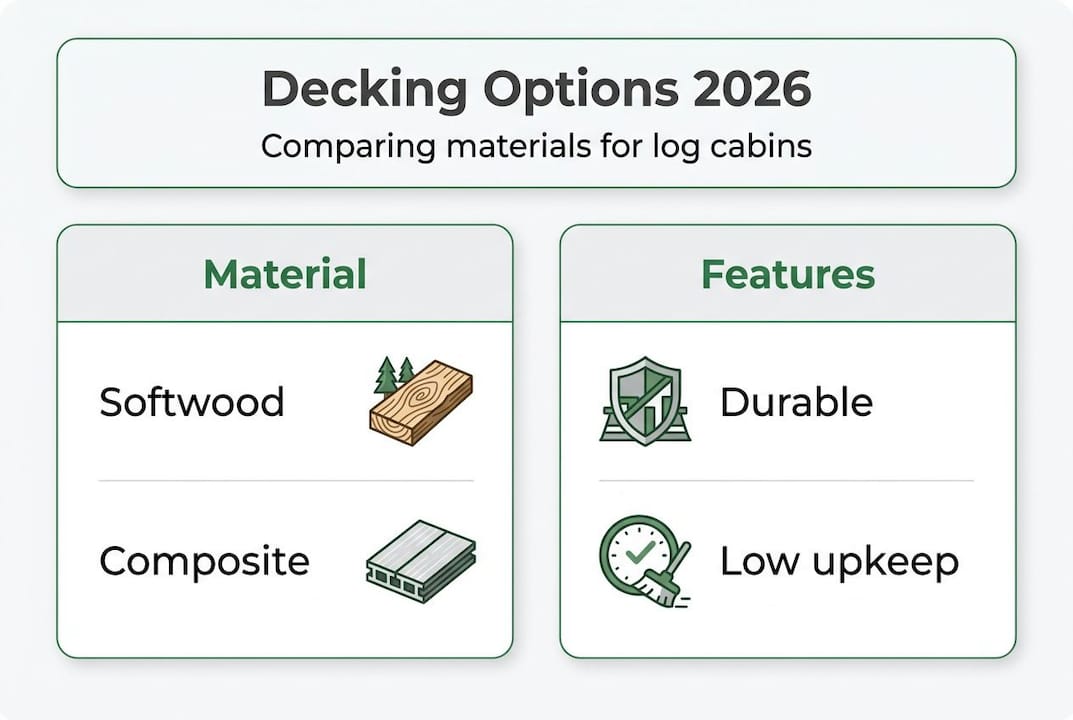
The practical benefits are real too. Decking extends living spaces and adds genuine value to your property. Outdoor living has become a priority for UK homeowners, and a well-designed deck signals that your garden has been thoughtfully planned.
Here’s what decking actually adds to your log cabin setup:
- Al fresco dining space for meals and entertaining outdoors
- A defined leisure area for seating, reading, or simply unwinding
- Better kerb appeal and improved property value
- Year-round usability when paired with shelter or a pergola
- A visual anchor that ties your cabin to the rest of the garden
Design flexibility is another big plus. Whether your cabin has a modern, rustic, or natural aesthetic, decking can be chosen to complement it. Pale composite boards suit a contemporary look. Rich hardwood feels at home beside a traditional log cabin. The options are wide.
There’s also a lifestyle angle worth considering. Incorporating biophilic design elements into your outdoor space, bringing nature closer through materials, planting, and layout, has been shown to reduce stress and improve wellbeing. Decking positioned to face a garden view or a patch of wildlife-friendly planting does exactly that.
“A deck isn’t just a floor outside your cabin. It’s the room where your outdoor life actually happens.”
Think of it this way. Your cabin is the destination. Your decking is the experience that surrounds it.
Popular decking materials for log cabins
Material choice is where most people get stuck. There’s no single right answer, but there is a right answer for you, based on your budget, how much maintenance you want to do, and how you want it to look.
The best timber for log cabin decking longevity comes down to choosing the right species and treatment for the UK’s wet, changeable climate. Here’s how the main options compare.
| Material | Durability | Maintenance | Cost | Best for |
|---|---|---|---|---|
| Treated softwood | Moderate | Annual oiling/staining | Low | Budget-conscious builds |
| Hardwood (e.g. oak) | High | Occasional oiling | Medium-high | Traditional aesthetics |
| Composite | Very high | Minimal | Medium-high | Low-maintenance gardens |
| PVC/uPVC | High | Very low | Medium | Wet or shaded areas |
Treated softwood is the most affordable option and widely available. It looks great when freshly treated, but it does need annual attention to stay in good shape. Hardwood is more durable and holds its appearance well, though it costs more upfront. Both timber options bring warmth and natural character that suits log cabins particularly well.
Composite decking is made from a mix of wood fibre and plastic. It resists moisture, won’t splinter, and holds its colour for years. According to best decking materials guidance, composite is increasingly popular for UK gardens precisely because it handles rain and shade without warping or rotting.
Key things to check when choosing any material:
- Slip resistance rating, especially important in shaded or north-facing gardens
- Warranty length and what it covers
- Environmental credentials such as FSC certification for timber
- Colour stability over time, particularly for composite boards
Pro Tip: If your deck will sit in shade for much of the day, go for a grooved composite or textured timber board. Smooth boards in damp conditions can become dangerously slippery.
Design ideas: integrating decking with your log cabin
Once you’ve settled on a material, the fun part begins. How your deck is shaped, positioned, and styled will define the whole feel of your outdoor space.
Shape and elevation are your first decisions. A simple platform deck at ground level is the most affordable and easiest to install. A raised deck suits sloped gardens and can create a lovely elevated view. A wrap-around deck adds real wow factor and gives you multiple zones for different activities.
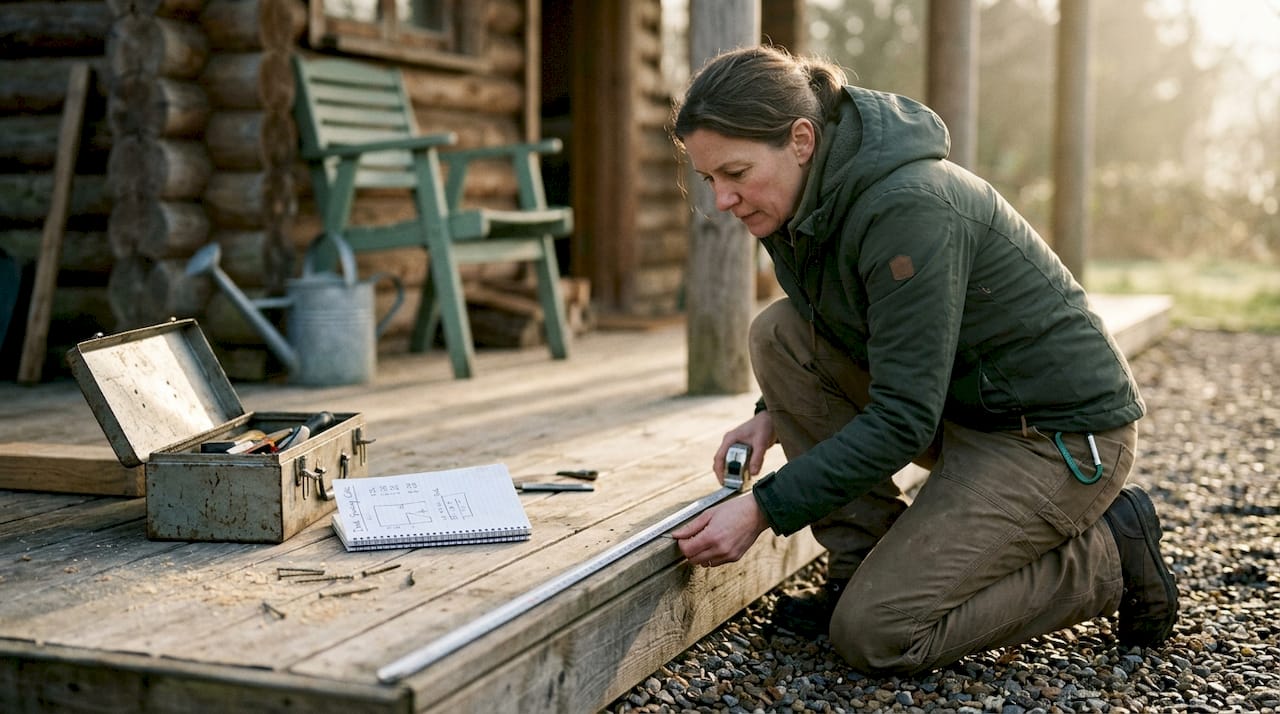
Clever design features can genuinely transform how much you enjoy your outdoor space. Here are some ideas worth considering:
| Design feature | Benefit |
|---|---|
| Built-in seating | Saves space, looks tidy, great for entertaining |
| Pergola or canopy | Extends usability in rain or strong sun |
| Raised planters | Adds greenery and natural screening |
| Deck lighting | Enables evening use and adds atmosphere |
| Privacy screens | Creates a sheltered, enclosed feel |
Matching the colour and finish of your deck to your cabin is worth taking seriously. A pale grey composite board can look stunning against a dark-stained cabin. Natural oiled hardwood complements a traditional log finish beautifully. For alpine decor ideas and styling inspiration, it’s worth looking at how Scandinavian and mountain-style cabins use decking as an extension of the interior aesthetic.
Positioning matters too. A deck facing south or south-west will catch the most sun across the day. If you’re near a garden boundary, angling the deck slightly can maximise privacy without losing light. For more ideas on creating a complete outdoor retreat inspiration, think about how the deck connects to paths, lawns, and planting.
Pro Tip: Before you finalise your deck layout, spend a day watching how sunlight moves across your garden. The best-looking deck in the wrong position can end up cold and shaded by mid-afternoon.
For a wider range of visual ideas, decking design inspiration from real UK gardens can spark ideas you might not have considered.
Planning permission, installation and maintenance
This is the section most people skip until it’s too late. Don’t do that. A little planning upfront saves a lot of headaches later.
In the UK, garden log cabin planning permission rules also apply to attached or adjacent decking. As a general rule, planning permission may not be needed if the decking is below 30cm in height and covers less than 50% of your garden. But there are exceptions, particularly for listed buildings, conservation areas, or properties where permitted development rights have been removed.
For a full breakdown of what applies to your specific situation, the UK planning permission for cabins guide is a useful starting point.
Here’s a simple checklist before you start any installation:
- Check your permitted development rights with your local planning authority
- Confirm the deck height will stay within permitted thresholds
- Assess ground conditions to choose the right foundation type
- Agree on drainage so water doesn’t pool under or around the deck
- Review building regulations if the deck is attached to the cabin structure
Professional installation is worth considering seriously. A professional installation service ensures your deck is structurally sound, correctly fixed, and built to last. DIY decking is achievable, but errors in joist spacing or fixing methods can lead to movement, squeaking, or even safety issues within a few years.
“The most expensive decking repair is the one you could have avoided with a proper installation in the first place.”
Once your deck is in, maintenance is straightforward but important. Regular maintenance extends the life of decking significantly. For timber, that means an annual clean, a check for any loose fixings, and a fresh coat of oil or stain before winter. Composite needs less attention but still benefits from a seasonal sweep and wash to prevent algae build-up.
Our perspective: what most guides miss about log cabin decking
Most articles focus on materials and planning rules. Both matter. But what we’ve seen time and again is that the homeowners who are most pleased with their decking thought about lifestyle first, not just looks or budget.
The microclimate of your specific garden has a huge influence on how much you’ll actually use your deck. A beautifully built deck in a cold, north-facing corner will sit empty most of the year. Positioning your deck to catch afternoon sun, shelter from prevailing winds, or frame a particular view changes everything.
We also think mixing materials is underrated. A composite deck surface paired with hardwood trim and built-in timber seating gives you the best of both worlds: low maintenance where it counts, and natural warmth in the details. Rigid material choices can limit your design unnecessarily.
Finally, build adaptability in from the start. A deck with solid fixing points for a future pergola, or space for raised planters, will serve you far better as your needs change. If you’re ready to think bigger, creating your outdoor retreat is about more than a single build decision. It’s a long-term investment in how you live.
Ready to create your ideal garden retreat?
If this guide has got you thinking about what your perfect log cabin and decking setup could look like, we’d love to help you bring it to life. At Log Cabin Kits, we specialise in customised log cabin designs built around your space, your style, and your budget.
Browse our garden log cabin gallery to see real examples of cabins paired with stunning decking arrangements. Every cabin we offer comes with free UK delivery, and our team is on hand to help you design something that truly fits your garden. Get in touch today and let’s talk through your ideas.
Frequently asked questions
Do I need planning permission for decking with a log cabin?
Most UK homeowners don’t need planning permission if the decking stays under 30cm high, but local rules and conservation area restrictions can change this, so it’s always worth checking with your local authority.
What is the best decking material for UK weather?
Treated softwood and composite decking are both well-suited to the UK’s wet climate, with composite requiring less ongoing maintenance and softwood offering a more natural look at a lower upfront cost.
How do I maintain my decking to last longer?
Regular cleaning and resealing each year, along with prompt repairs to any loose boards or fixings, will keep your deck safe and looking good for many years.
Can I add decking to an existing log cabin?
Yes, decking can be retrofitted to most existing cabins, provided you follow the correct foundation approach and check whether any planning considerations apply to your property.