
Garden cabin security: How to protect your investment
TL;DR:
- Many UK garden cabins are vulnerable due to their secluded and less protected locations.
- Effective security combines physical measures, environmental deterrents, and technology layers.
- Consistent habits and proper design are key to preventing theft and securing outdoor spaces.
A garden cabin feels like a safe space tucked away at the bottom of your garden. But here’s the uncomfortable truth: many UK homeowners assume their cabin is far less of a target than their main home. That assumption can be costly. Around 600,000 garden thefts occur every year in the UK, and outbuildings are often the easiest target on a property. In this guide, we’ll walk you through exactly what makes garden cabins vulnerable, what physical and environmental steps you can take, and how technology fits into a genuinely effective security plan.
Table of Contents
- Why are garden cabins vulnerable? The real risks explained
- Physical security: Foundations, materials, and key design choices
- Environmental and deterrence strategies: Making your cabin harder to access
- Technology and smart security: CCTV, alarms, and tracking
- The expert’s view: Why most cabin security advice misses the mark
- Secure your cabin: Next steps and top resources
- Frequently asked questions
Key Takeaways
| Point | Details |
|---|---|
| Understand real theft risks | Garden cabins are frequent targets, with over 600,000 thefts annually in the UK. |
| Prioritise physical security | Robust construction and professional fitting are the foundation for effective cabin security. |
| Layer defence strategies | Combine physical, environmental, and tech solutions for comprehensive protection. |
| Tech enhances, not replaces | CCTV and alarms support, but do not substitute for strong physical barriers. |
| Take practical steps today | Upgrade locks, improve visibility, and use deterrents to make your cabin less attractive to thieves. |
Why are garden cabins vulnerable? The real risks explained
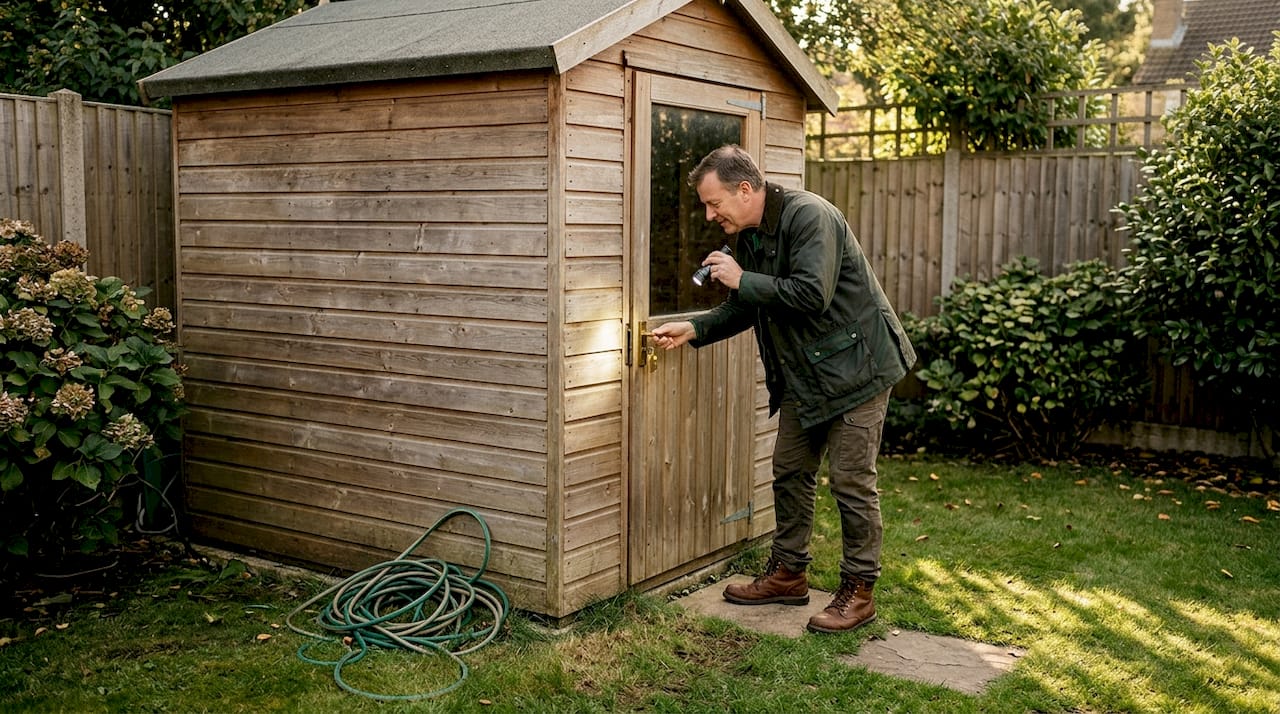
Garden cabins sit away from the main house, often screened by fencing or planting. That privacy is one of the things we love about them. Unfortunately, it’s also what makes them attractive to thieves. Out of sight often means out of mind, and that’s where problems start.
The scale of the problem is bigger than most people realise. Around 600,000 garden thefts happen annually across the UK. And yet around 5 million residents take no security measures whatsoever for their sheds or outbuildings. That’s roughly 9% of the population leaving their outdoor structures completely unprotected.
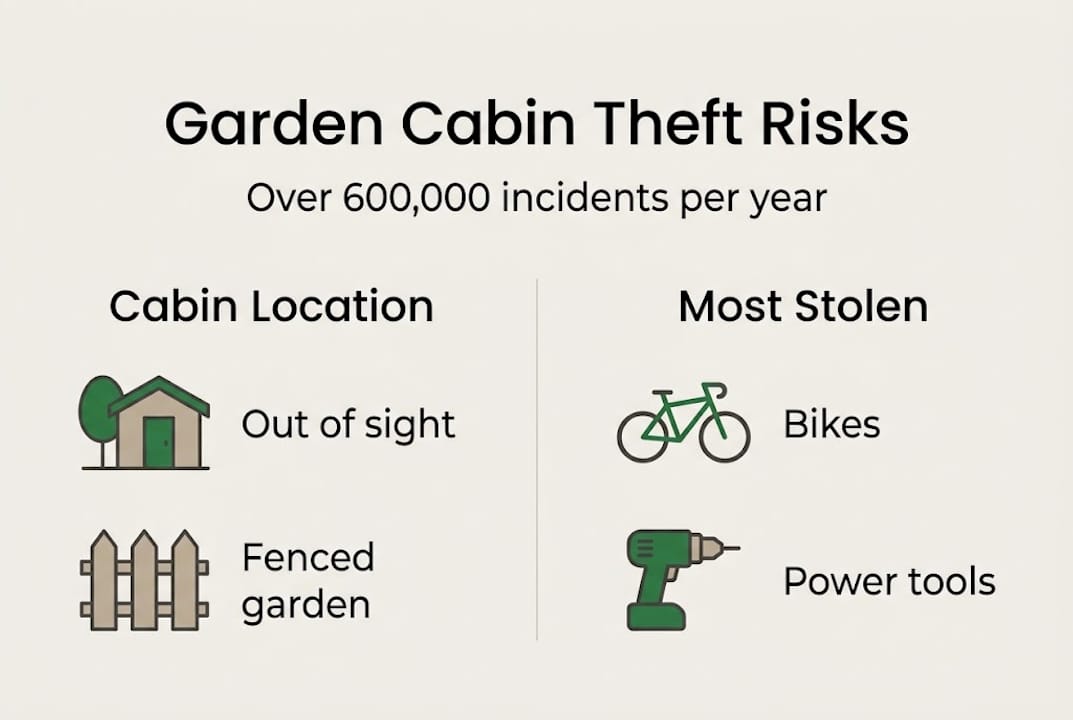
The impact is real. 29% of UK residents have already experienced a break-in to an outbuilding. That’s nearly one in three people. If you’ve never thought seriously about your cabin’s security, you’re not alone, but you are taking a risk.
So what do thieves actually go after? Here’s a breakdown of the most commonly stolen items:
| Item | Percentage of thefts |
|---|---|
| Bikes and ebikes | 24% |
| Garden tools | 20% |
| Power tools | 16% |
| Outdoor furniture | 11% |
| Sports equipment | 9% |
Data source: Aviva, 2025
The most commonly stolen items are bikes and ebikes (24%), garden tools (20%), and power tools (16%). These are high-value, easy-to-carry items that fetch good money quickly. If your cabin doubles as a workshop or storage space, you could be sitting on thousands of pounds worth of equipment.
Beyond the financial loss, there’s the stress of a break-in, the hassle of insurance claims, and the feeling that your private space has been violated. Good cabin security features aren’t just about protecting things. They’re about protecting your peace of mind.
If you’re unsure where to start, our guide to securing your garden log cabin covers the basics clearly. And for a broader overview, our garden cabin security tips article is a great companion read.
Physical security: Foundations, materials, and key design choices
Understanding the risks, the first layer of any effective garden cabin security is robust physical protection. This is where most people underinvest, and it’s the area that makes the biggest difference.
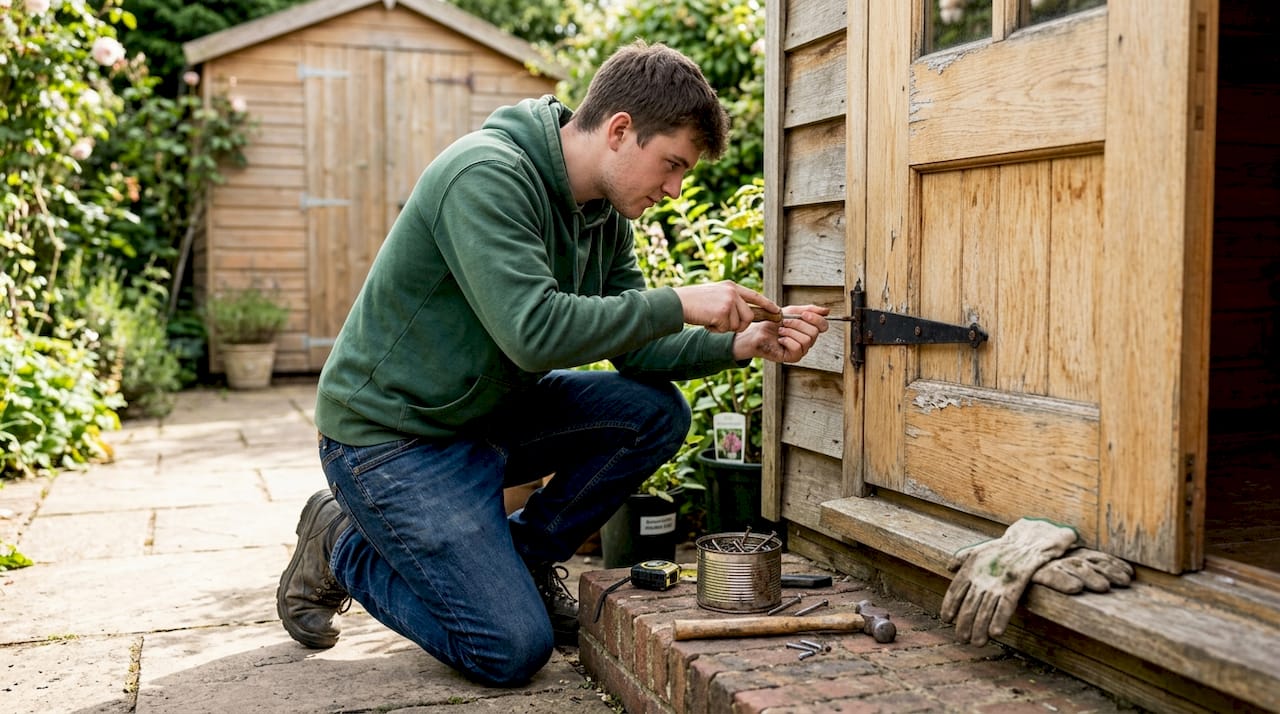
Avon and Somerset Police recommend a structured approach to physical security. According to their guidance, robust physical security starts with heavy-duty timber framing (such as 58x44mm profiles), ground anchoring with screws or bolts to prevent lifting, multi-point locking systems, reinforced door frames, security hinges, and window grilles or security film.
Here’s a quick comparison of basic versus robust cabin builds:
| Feature | Basic build | Robust build |
|---|---|---|
| Timber framing | Standard 28mm logs | Heavy-duty 58x44mm |
| Door locks | Single-point lock | Multi-point locking system |
| Hinges | Standard hinges | Security hinges (non-removable pins) |
| Windows | Single glazing | Toughened glass with security film |
| Ground fixing | None | Anchored with bolts/screws |
To make it practical, here are the key physical steps to prioritise:
- Choose heavy-duty timber from the outset. Thicker logs and stronger framing resist forced entry far better than lightweight alternatives.
- Anchor your cabin to the ground. A cabin that can be lifted or shifted is far easier to break into. Bolt it down.
- Fit a multi-point locking system on all doors. Single-point locks are easy to force.
- Upgrade your hinges. Standard hinges with exposed pins can be knocked out. Security hinges eliminate this weakness.
- Add window security. Grilles or security film make windows much harder to smash quickly.
Pro Tip: Most break-ins happen through the door or a window, but hinges are the most overlooked entry point. If a hinge pin can be removed from outside, your lock is irrelevant. Always check hinge security before anything else.
For more detail on what to look for, our guide on how to secure your log cabin is worth a read. You might also find our advice on premium grade doors and windows and door and window reinforcement useful when specifying your build.
Environmental and deterrence strategies: Making your cabin harder to access
Beyond construction details, the surroundings and environment play a crucial part in securing your garden cabin. Physical security is your foundation, but the environment around your cabin is your first line of deterrence.
Police and security experts recommend a defence in depth approach. This means layering physical security with environmental measures and technology, rather than relying on any single solution. The idea is simple: the more barriers a thief encounters, the more likely they are to move on.
Here are the most effective environmental deterrents to consider:
- Motion-activated lighting. Bright lights triggered by movement are one of the cheapest and most effective deterrents available. Thieves prefer darkness.
- Boundary fencing and gates. A locked gate adds a meaningful barrier. It doesn’t need to be impenetrable, just inconvenient enough to discourage casual opportunists.
- Thorny planting. Hedges like hawthorn or berberis along boundaries make access uncomfortable without looking like a fortress.
- Security signage. Visible signs indicating CCTV or an alarm system can put off opportunist thieves, even before they get close.
- Concealing contents. Net curtains or frosted window film mean passers-by can’t see what’s inside. If they can’t see it, they’re less likely to want it.
- Avoiding obvious sightlines. Position valuable items away from windows and doors. A bike visible from the gate is an invitation.
Pro Tip: A £15 motion-activated floodlight and a visible alarm box often outperform a £300 smart camera system in deterrence terms. Opportunist thieves make quick decisions. Make the decision easy for them by making your cabin look like hard work.
It’s also worth thinking about your cabin’s overall maintenance and safety. Our guides on keeping your log cabin safe, fire safety for garden buildings, and winterising your cabin all feed into a broader approach to protecting your investment year-round.
Technology and smart security: CCTV, alarms, and tracking
While physical and environmental strategies are the foundation, technology can further strengthen your overall security plan. But it’s important to understand what technology can and can’t do on its own.
Police guidance is clear: a multi-layered approach puts physical security first, with technology as a complement, not a replacement. A CCTV camera on a cabin with a flimsy lock is still a cabin with a flimsy lock.
That said, the right tech adds genuine value. Here’s what’s worth considering:
- CCTV cameras. Visible cameras deter opportunists and provide evidence if a theft does occur. Position them to cover entry points and make sure they’re clearly visible.
- PIR alarms (passive infrared). These detect movement and trigger a loud alarm. Even a basic standalone alarm can be enough to send a thief running.
- Smart sensors and alerts. Door and window sensors connected to your phone mean you get an instant notification if something is opened unexpectedly.
- Smart locks. These allow keyless entry with a code or app, eliminating the risk of lost or copied keys.
- GPS trackers. If you store high-value items like bikes or power tools, a hidden GPS tracker gives you a chance of recovery if they’re stolen.
Installation matters too. Cameras should be mounted high enough to avoid tampering, angled to capture faces rather than the tops of heads, and protected from the weather. Our guide on installing a CCTV system covers the practical steps in detail.
Pro Tip: Don’t let technology give you a false sense of security. A camera records a theft. A good lock prevents one. Use tech to support your physical measures, not to replace them. Our full guide on how to secure your log cabin brings all these layers together.
The expert’s view: Why most cabin security advice misses the mark
Most security guides focus on products. Buy this lock. Install that camera. It’s understandable, but it misses the bigger picture.
The truth is that security is a habit, not a purchase. You can fit the best lock on the market and still leave your cabin vulnerable if you don’t use it consistently, maintain it regularly, or think about how your cabin looks from outside your property.
The defence in depth principle that police recommend isn’t just about layering products. It’s about layering behaviours. Locking up every time. Checking hinges annually. Replacing worn fittings before they fail. Keeping valuables out of sight as a matter of routine.
We’ve seen homeowners spend hundreds on smart cameras while their door hinges have exposed pins and their window latches are original fittings from years ago. The camera looks impressive. The cabin is still easy to enter.
Our advice? Start with your cabin’s security features at the point of purchase or upgrade. Build good habits from day one. Then layer in technology as a supplement, not a solution.
Secure your cabin: Next steps and top resources
Convinced of the need for layered security? Here’s how to take action and connect with expert resources.
If you’re thinking about a new cabin, security starts at the design stage. Choosing the right materials, door specifications, and window options from the beginning is far easier than retrofitting security later.
Browse our garden log cabin gallery to see the range of builds available, or explore our custom build log cabins if you want a cabin designed around your specific security and lifestyle needs. And if you’d rather leave the build to the experts, our professional installation service ensures everything is fitted correctly from the ground up. We’re here to help you get it right.
Frequently asked questions
What is the most effective way to secure a garden cabin?
Robust physical measures such as heavy-duty timber framing, ground anchoring, and multi-point locking systems are the most effective foundation, with environmental deterrents and technology adding further layers of protection.
Do security cameras prevent garden cabin theft?
Cameras can deter opportunist thieves, but police recommend combining them with strong physical barriers, as cameras alone won’t stop a determined thief.
What items are most commonly stolen from garden cabins?
Bikes and ebikes (24%), garden tools (20%), and power tools (16%) are the most frequently targeted items in UK garden outbuilding thefts.
How common are garden cabin thefts in the UK?
There are around 600,000 garden thefts every year in the UK, and nearly 29% of residents have already experienced a break-in to an outbuilding.
Recommended
- Garden Cabin Security Tips: Protect Your Investment - Log Cabin Kits To Buy Online
- Garden Cabin Security Features: Protect Your Investment
- Securing Your Garden Log Cabin | Log Cabin Kits
- How Can I Secure My Log Cabin - Log Cabin Kits To Buy Online
- Protect your Nordic property: spring checklist after harsh winter 2026 - Guestly Homes