

Blog

TL;DR:
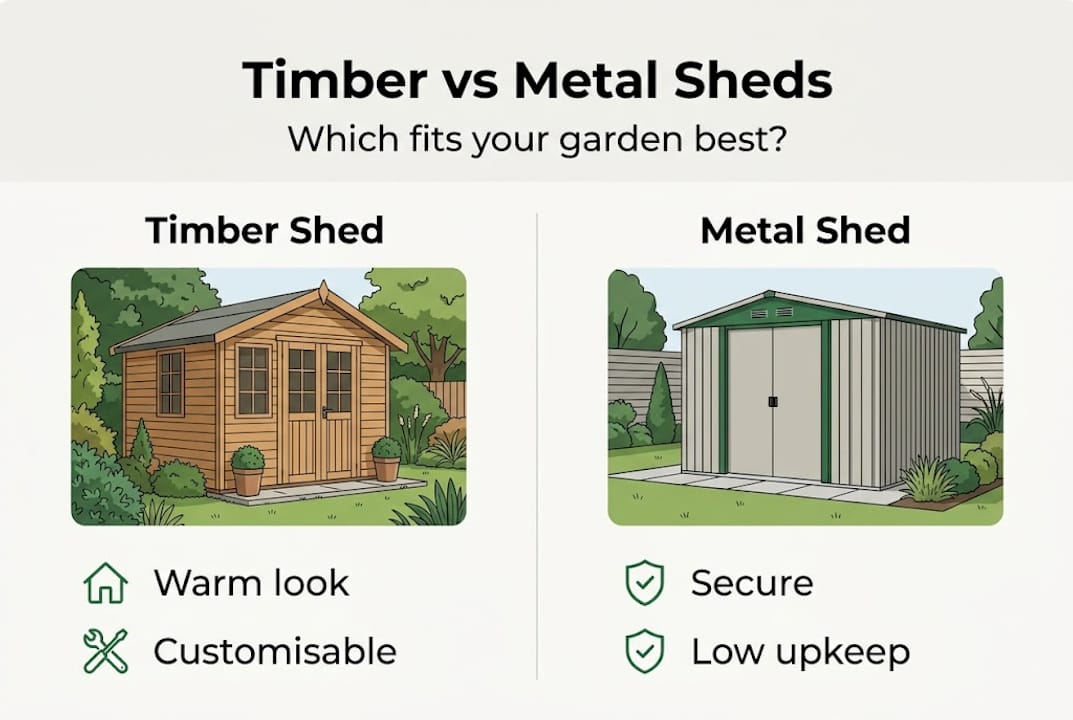
- Timber sheds offer natural aesthetics and high customizability, ideal for traditional gardens.
- Metal sheds excel in security and low maintenance, suitable for practical storage needs.
- Choose shed materials based on your garden style, intended use, and upkeep willingness.
Most people assume a shed is just a shed. Four walls, a roof, and somewhere to store the lawnmower. But when you’re actually standing in a garden centre or browsing online, the choice between timber and metal quickly feels far more complicated than that. The material you choose affects everything from how your garden looks to how well your tools stay safe. And the wrong decision can mean years of frustration. This guide walks you through the real differences between timber and metal sheds, so you can weigh up the options clearly and pick the one that genuinely suits your garden and your life.
Table of Contents
- Understanding timber and metal sheds
- Aesthetic appeal and integration in the garden
- Security, durability and maintenance needs
- Cost, installation, and long-term value
- Why the right shed material is all about your priorities
- Explore bespoke solutions for your garden
- Frequently asked questions
Key Takeaways
| Point | Details |
|---|---|
| Timber excels in customisation | Timber sheds allow for easy modifications, painting, and a natural garden look. |
| Metal prioritises security | Metal sheds offer the best protection against theft, fire, and rodents. |
| Maintenance varies | Timber needs regular treatment, while metal is lower-maintenance but can face condensation issues. |
| Consider your garden’s style | The right shed should blend with your outdoor space and support intended use, from workshops to secure storage. |
Understanding timber and metal sheds
Before you can make a confident choice, it helps to understand what each shed type is actually made of and why that matters in a typical UK garden.
A timber shed is built from natural wood, most commonly pressure-treated softwood such as pine or spruce. The construction gives it a warm, traditional appearance that most people associate with classic British gardens. Timber is also a versatile material, which is why you can explore so many different garden shed types built from wood. You can cut it, drill it, paint it, and modify it relatively easily.
A metal shed, on the other hand, uses steel or aluminium panels bolted together in a modular system. Steel sheds tend to be heavier and stronger, while aluminium is lighter and naturally rust-resistant. Both options sit at the more functional end of the spectrum, prioritising practicality over aesthetics.
Here’s a quick summary of what each brings to the table:
- Timber sheds: Natural look, easy to customise, comfortable to work in, requires regular treatment
- Metal sheds: Low maintenance, strong security, resistant to fire and rodents, can suffer from condensation
- Timber in UK weather: Needs treating against rain and damp but performs well with proper upkeep
- Metal in UK weather: Handles wet conditions well but can sweat internally during temperature changes
“Timber sheds offer superior aesthetics, blending naturally with UK gardens, and are highly customisable.”
If your goal is to blend the shed seamlessly into a cottage-style garden, timber is likely your friend. If you need robust, no-fuss storage and security is your top concern, metal deserves a serious look. And if you’re considering building a garden shed yourself, it’s worth knowing that timber is generally easier to work with for anyone without specialist tools.
Both options have genuine strengths. Neither is universally better. That’s why it’s so important to get clear on your own priorities first.
Aesthetic appeal and integration in the garden
Let’s be honest: a shed takes up a significant amount of space in your garden. How it looks matters, whether you care to admit it or not.
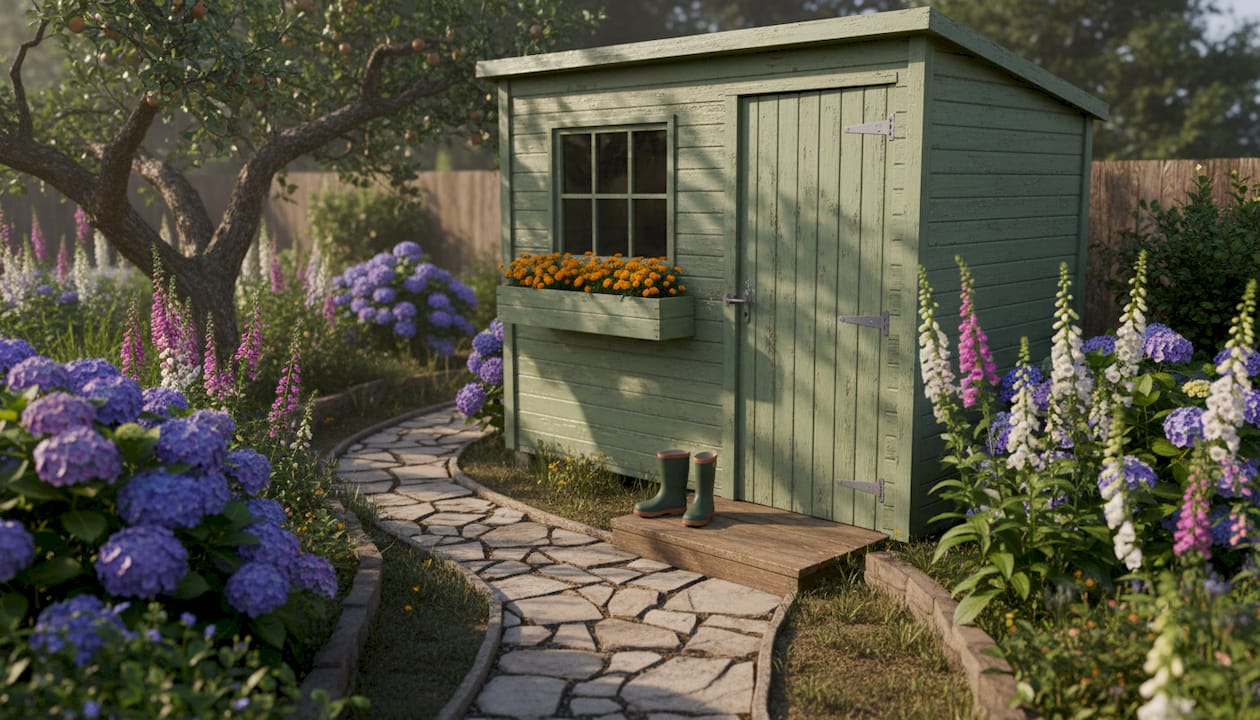
Timber sheds naturally complement most garden settings. The wood tones sit comfortably alongside planting beds, stone paths, and lawn edges. There’s a warmth to timber that no metal panel can replicate. It feels like it belongs. You can also make a shed a garden centrepiece rather than something to hide behind the rose bushes.
Metal sheds tend to have a more industrial look. They’re clean and functional, but they can feel out of place in a traditional English country garden. That said, some contemporary garden designs actually benefit from the sleek, modern lines of a metal structure.
Here’s how the two compare on key aesthetic factors:
| Feature | Timber shed | Metal shed |
|---|---|---|
| Visual warmth | High | Low |
| Colour options | Unlimited (paint any colour) | Limited (usually grey or green) |
| Window options | Easy to fit | Harder to modify |
| Shelf and rack fitting | Simple with screws | Requires special fixings |
| Personalisation potential | Very high | Low to moderate |
Customising your shed is where timber really pulls ahead. You can paint it in any colour you like, add window boxes, install shelving at any height, and even hang tools directly from the walls. It’s your space, and timber lets you shape it.
Metal sheds can be improved with internal organisers, peg boards, and specialist brackets, but the modifications feel like workarounds rather than natural extensions of the structure.
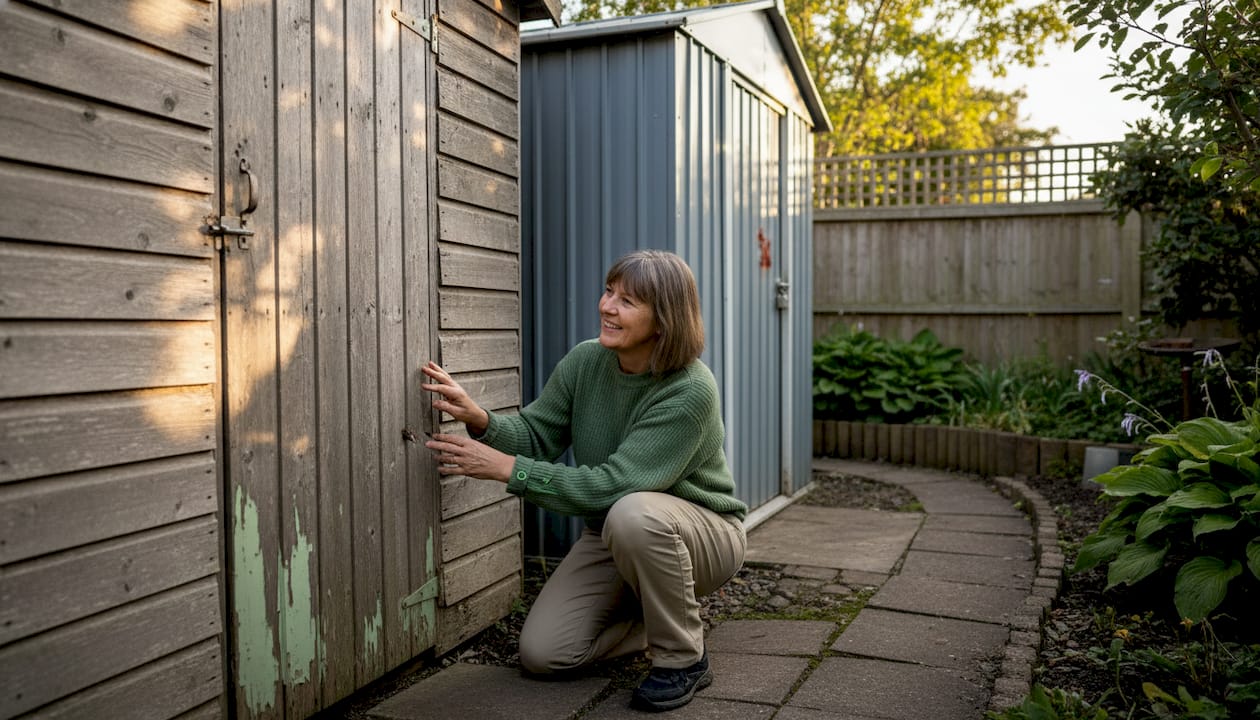
Pro Tip: If you want a timber shed to look truly polished, choose an exterior wood paint rather than a standard garden stain. The colour holds better, and it gives the shed a much crisper finish that really lifts the whole garden.
Timber sheds blend naturally with UK gardens and are highly customisable for workshops or potting sheds, which is why so many garden lovers still reach for wood first.
Security, durability and maintenance needs
This is where the practical realities hit home. Your shed needs to protect your stuff, hold up to the British weather, and not become a maintenance chore you dread every spring.
On security, metal sheds have a clear edge. Metal sheds provide excellent security against break-ins, fire resistance, and rodent-proofing, making them ideal for tools, bikes, and feed storage. Steel panels are far harder to cut through than timber planks. Many metal sheds also come with reinforced locking systems as standard.
Timber sheds can be secured effectively with the right locks and hasps, but they are inherently more vulnerable to forced entry if not properly reinforced.
Here’s how durability stacks up:
| Factor | Timber shed | Metal shed |
|---|---|---|
| Rot resistance | Moderate (needs treatment) | Excellent |
| Rust resistance | N/A | Good (aluminium) / Moderate (steel) |
| Fire resistance | Low | High |
| Wind resistance | Good if anchored | Very good |
| Rodent resistance | Low | High |
For ongoing upkeep, you’ll want to keep these steps in mind with a timber shed:
- Inspect the timber annually for signs of rot, especially at the base and around the door frame.
- Apply a wood preservative or stain every two to three years to protect against moisture.
- Check the roof felt each autumn and replace it if it’s cracking or lifting.
- Keep gutters and vents clear to prevent water pooling near the walls.
Metal sheds need far less attention. A wipe-down to remove algae and bird mess, and checking for small rust spots on steel panels, is usually enough. However, condensation is a genuine issue. When warm air meets cold metal walls, moisture forms inside the shed. This can damage tools and stored goods. Explore your custom shed options if you want to find solutions with better insulation built in.
Good ventilation and a raised timber floor inside the metal shed go a long way towards managing this.
Cost, installation, and long-term value
Budget is always part of the conversation. But cost isn’t just about the price tag on the box. It’s about what you get over five, ten, or twenty years.
Metal sheds generally cost less upfront. A basic steel shed can be assembled in a few hours with two people and standard tools. There’s no specialist knowledge needed, and the parts arrive ready to connect. Ongoing costs are minimal.
Timber sheds carry a higher initial spend, especially if you’re choosing thicker cladding or a more complex design. Installation takes longer, particularly if you’re laying a base and fitting internal shelving. However, there are solid reasons why timber suits workshop and customised use despite the maintenance commitment.
Here’s what to consider when looking at long-term value:
- Timber sheds can last 20 to 30 years with proper care. They add genuine character to a garden and can increase property appeal.
- Metal sheds typically last 10 to 20 years. Cheaper models can dent, rust at the joints, and become difficult to repair.
- Repairs: Timber is easy to patch. A rotted plank can be replaced without dismantling the whole structure. Metal panels are harder to source and replace individually.
- Resale: Timber structures tend to photograph better and hold more perceived value for prospective homebuyers.
Pro Tip: Always check the timber thickness before you buy. Sheds built with 12mm overlap boards are much thinner and less insulating than those using 19mm tongue-and-groove cladding. That extra few millimetres makes a big difference to how comfortable and durable the shed feels.
For guidance on the practicalities of getting your shed in place, the garden shed installation tips on our site walk you through it clearly, from base preparation to anchoring.
If you’re planning to use your shed as a workshop, creative space, or hobby room, the extra investment in timber is almost always worth it. If you just need somewhere secure to store garden kit and bikes, a quality metal shed will do the job without fuss.
Why the right shed material is all about your priorities
Here’s something we’ve noticed after years of helping UK homeowners find the right garden structure: most people make their shed decision based on what their neighbour has, or what’s on offer this weekend at the local DIY store. That’s not the best starting point.
The honest truth is that neither timber nor metal is the winner. They serve different needs. The mistake is treating it as a trend to follow rather than a personal decision to make.
The questions that actually matter are: Will you be spending time inside this shed, or just storing things in it? Is your garden style traditional or contemporary? How much time are you genuinely willing to put into upkeep each year? Do you have high-value items that need maximum security?
Condensation in metal sheds and ongoing timber treatment are the two most commonly overlooked realities. People don’t think about them until they’re mopping out a damp shed in February or scraping flaking paint in the spring.
We always encourage honest reflection before purchase. Read more about why custom sheds matter and how matching the right structure to your specific use makes all the difference. A shed that fits your life will serve you far better than one that simply looks good in a brochure.
Explore bespoke solutions for your garden
If you’ve reached the end of this guide and you’re still not sure whether a standard timber or metal shed quite hits the mark, that’s actually a good sign. It means you know what you want and you’re not willing to settle.
That’s exactly where we come in. At Log Cabin Kits, we specialise in bespoke cabin design and tailored garden structures built around your needs, your garden dimensions, and your style preferences. Whether you’re after a workshop, a home office, or a beautifully crafted storage space, our custom build log cabins give you a result that no off-the-shelf shed can match. Browse our gallery, or get in touch to chat through your ideas with our friendly team. We’re here to help you get it right.
Frequently asked questions
Are timber sheds harder to maintain than metal sheds?
Yes. Timber sheds require regular treatment with wood preservative every two to three years to prevent rot, whereas metal sheds need little more than an occasional clean.
Which shed type is better for workshop use?
Timber sheds are the stronger choice for workshops because they’re easy to insulate, simple to fit shelving to, and can be painted or modified freely. Timber sheds are highly customisable in ways that metal structures simply can’t match.
How secure are metal sheds compared to timber sheds?
Metal sheds offer better protection against forced entry and fire. Metal sheds provide excellent security with reinforced panels and locking systems, making them the preferred option for storing bikes, tools, and valuable equipment.
Do metal sheds suffer from condensation?
Yes, condensation is a common issue. Metal suits security-focused storage well, but managing moisture build-up through good ventilation and a raised internal floor is essential to protect anything stored inside.


