
TL;DR:
- Proper planning, permissions, and site preparation are crucial for a successful log cabin build.
- A level, sturdy foundation ensures structural integrity and long-lasting stability.
- Regular weatherproofing and maintenance significantly extend the lifespan of your log cabin. Check out our cabin maintenance tips here.
So, your flat-pack log cabin kit or summerhouse has arrived. It’s sitting in boxes on your driveway, and you’re feeling that familiar mix of excitement and mild panic. You’re not alone. Thousands of UK homeowners dream of a bespoke garden cabin but feel daunted once the reality of installation sets in. The good news? With the right preparation and a clear plan, building your log cabin is far more manageable than it looks. This guide walks you through every stage, from planning and permissions right through to final checks, so you can get from flat-pack to finished with confidence.
Table of Contents
- Pre-installation: Planning, permissions, and preparation
- Foundation and base: Getting your cabin started right
- Step-by-step assembly: Building your log cabin structure
- Weatherproofing and finishing: Protecting your investment
- Snags, troubleshooting, and first-time checks
- What most guides miss about DIY log cabin installation
- Visualise your dream cabin and get expert support
- Frequently asked questions
Key Takeaways
| Point | Details |
|---|---|
| Plan before you build | Checking permissions and preparing your site saves time and ensures compliance. |
| Strong foundation is vital | A level, well-built base stops structural issues before they start. |
| Follow assembly steps | Building in order ensures safety, durability, and a hassle-free experience. |
| Properly weatherproof | Sealing and finishing your cabin adds decades to its lifespan. |
| Check for snags | Early troubleshooting of common issues keeps your new log cabin hassle-free. |
Pre-installation: Planning, permissions, and preparation
Once you’ve decided to add a log cabin to your garden, it’s essential to start with the right groundwork. Rushing into the build without proper preparation is one of the most common mistakes homeowners make, and it can cost you time and money later.
Choosing the right spot
Think carefully about where your cabin will sit. Consider these factors before committing to a location:
- Sunlight: South or west-facing positions tend to get the best light throughout the day.
- Drainage: Avoid low-lying areas where water collects after rain.
- Accessibility: You’ll need easy access during the build, and ideally a clear route for deliveries.
- Utilities: If you want power or water inside, plan cable and pipe routes now.
- Neighbours: Think about how the cabin might affect surrounding properties and sightlines.
Also consider how you plan to use your cabin. If it’s going to double as a gardening and potting shed, proximity to your garden beds and an outdoor tap will matter.
Permissions and regulations
Planning permission is often required for log cabins in UK gardens depending on size and use. Most installations fall under permitted development rights, but that isn’t guaranteed. Check the UK outbuilding planning regulations before you do anything else.
You may also need building regulations approval if the cabin will be used as a habitable room or sleeping space. When in doubt, a quick call to your local council is always the safest route.
Worth knowing: Even if planning permission isn’t required, certain restrictions apply in Areas of Outstanding Natural Beauty and conservation zones. Always double-check your specific location.
Essential tools and materials checklist
| Item | Purpose |
|---|---|
| Spirit level | Checking base and wall alignment |
| Rubber mallet | Fitting logs without damage |
| Drill and bits | Fixing hardware and roofing |
| Tape measure | Accurate spacing and squareness checks |
| Safety gloves and goggles | Personal protection throughout |
| Timber preservative | Pre-treating logs before assembly |
Don’t forget to plan how you’ll secure your garden log cabin once it’s up. Security is often an afterthought, but thinking about it early makes fitting locks and alarms far simpler.
Foundation and base: Getting your cabin started right
With permissions granted and the site ready, it’s time to lay the foundation for your new space. This is arguably the most important step in the whole project. Get it wrong and you’ll face problems throughout the build and beyond.
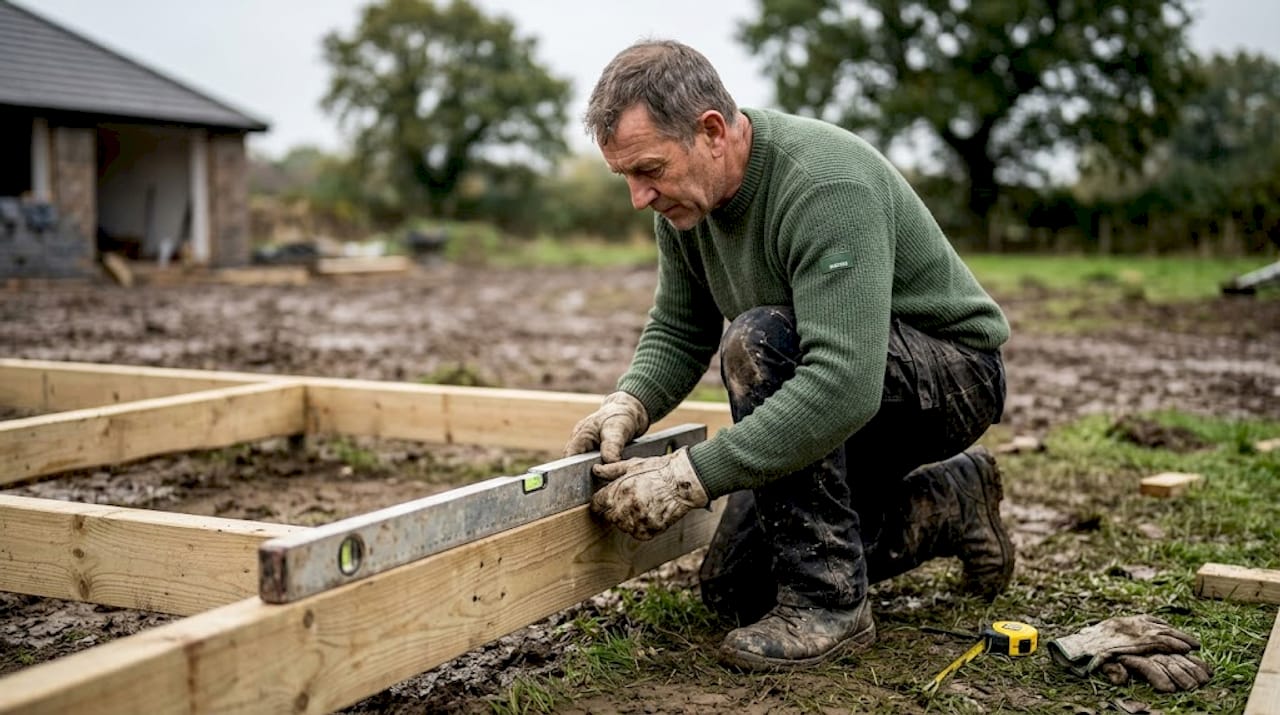
A solid, level base is crucial for structural integrity and longevity. Your cabin logs are designed to interlock precisely, and even a slight slope or unevenness can throw the whole structure out.
Comparing base options
| Base type | Pros | Cons |
|---|---|---|
| Concrete slab | Very durable, excellent load-bearing | Expensive, permanent, slow to cure |
| Paving slabs | Easier to lay, adjustable | Needs careful levelling, less rigid |
| Timber frame | Quick to install, good drainage | Needs treating, may need replacing |
For most garden log cabins, a concrete slab or treated timber frame following timber base best practices will give the best results. Chat with your supplier about which suits your ground conditions.
Laying your base: Step by step
- Clear the site. Remove all vegetation, roots, and topsoil from the area. Dig down 150mm if laying concrete.
- Level the ground. Use a long spirit level and a straight plank to check the surface is perfectly flat.
- Add a sub-base. For concrete, pour and compact a 100mm layer of hardcore (crushed stone) first.
- Pour or lay your base. For concrete, mix and pour to the required depth. For timber, lay treated joists on adjustable feet.
- Check for square. Measure diagonally from corner to corner. Both measurements should match exactly.
- Allow to cure or settle. Concrete needs at least 48 hours before you load it with cabin weight.
Pro Tip: Always check your base diagonals before building begins. If they’re equal, your corners are square. A 3mm error here can mean sticky doors and gaps in walls later.
Safety note: When handling heavy paving slabs or mixing concrete, always wear steel-capped boots and gloves. Ask a helper to assist with lifting to avoid back injuries.
Step-by-step assembly: Building your log cabin structure
With a solid base in place, you can now bring your log cabin to life, piece by piece. Good organisation at this stage makes everything easier and reduces the chance of costly mistakes.
Before you pick up a single log
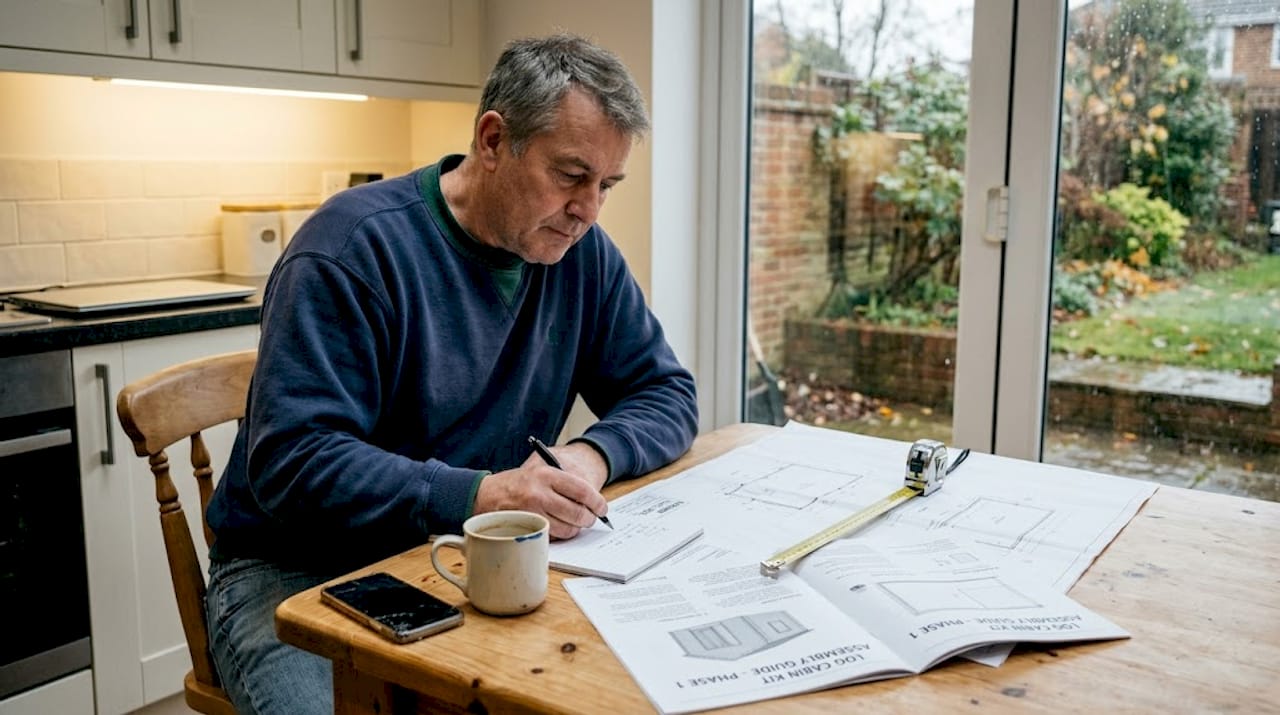
Follow manufacturer instructions exactly for safe assembly and warranty protection. Read the entire manual before starting. Lay out all logs, fixings, and components and check them against the parts list. It’s far better to discover a missing piece now than halfway through the build.
Assembling the walls: Step by step
- Position the base frame on your prepared foundation and check it’s square.
- Lay the first course of logs, interlocking the corner joints carefully. Don’t force them.
- Build up each wall course by course, alternating the direction of corner notches as the manual directs.
- Fit window and door frames as you reach the correct height. Keep checking for plumb (vertical alignment) as you go.
- Add the top wall plate once all wall logs are in place. This ties the structure together.
- Install roof trusses according to the plan. Space them evenly and secure properly.
- Lay roofing boards, then add insulation and your chosen roofing felt or shingles.
Pro Tip: Lay a tarpaulin over completed sections at the end of each day. UK weather can change quickly, and protecting fresh logs from rain stops warping before the roof goes on.
Common mistakes to avoid
- Skipping the parts check before starting
- Over-tightening fixings, which can split the timber
- Rushing corner joints and not seating logs fully
- Ignoring the comprehensive building guide included with your kit
For roof work, always follow working at height safety guidelines. Use a proper scaffold platform or tower, never just a ladder for sustained work.
Weatherproofing and finishing: Protecting your investment
After a successful assembly, protecting your hard work from the elements is vital. A beautifully built cabin that isn’t properly sealed and treated will deteriorate quickly in the UK’s changeable climate.
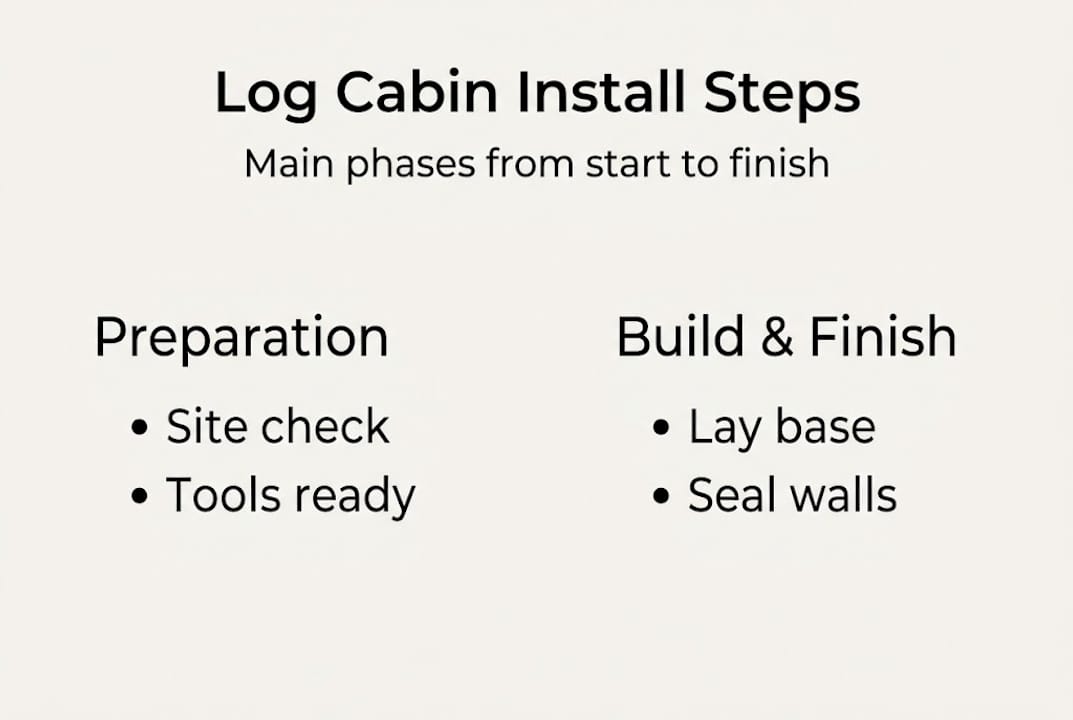
Proper weatherproofing can extend your cabin’s life by 15 years. That’s a significant return on a small investment of time and materials.
Weatherproofing essentials
- Exterior wood stain or preservative: Apply to all external surfaces, paying particular attention to end grain and joints. Use a product rated for outdoor use in damp climates.
- Log lap sealant: Seal between each log course with a flexible, waterproof sealant. This stops draughts and water ingress.
- Roof treatment: Check log cabin roof maintenance guidance to ensure your felt or shingles are properly overlapped and fixed.
- Floor protection: Treat internal floor boards with a suitable oil or varnish to guard against moisture rising from below.
- Door and window seals: Fit draught excluders and check the rubber seals around all openings.
The Royal Horticultural Society also offers advice on protecting garden buildings from seasonal weather, which is well worth a read.
Pro Tip: Apply your first coat of stain or preservative before assembly if possible, especially to areas that will be hidden once the cabin is built. It’s almost impossible to get a brush into internal log joints after the fact.
Ongoing maintenance
Weatherproofing isn’t a one-time job. Set a reminder to inspect and re-treat your cabin every one to two years. Before winter arrives, follow the steps to winterise your cabin to prevent frost damage and damp from taking hold.
15-year difference: Regular treatment and inspection is the single biggest factor in how long your cabin lasts. Neglected cabins can deteriorate in under a decade. Well-maintained ones can look great for 30 years or more.
Snags, troubleshooting, and first-time checks
Even the best builds can hit a snag or two. What should you double-check before declaring your log cabin finished?
First-time cabin owners often overlook simple checks that prevent problems down the line. A short inspection now saves a long headache later.
Common snags and how to fix them
| Problem | Likely cause | Quick fix |
|---|---|---|
| Warping logs | Wet timber or uneven drying | Clamp and allow to dry slowly, re-seat the log |
| Leaking roof | Poorly overlapped felt or loose fixings | Re-fix felt, add extra overlap, re-nail |
| Sticky doors or windows | Cabin settling or out-of-square frame | Plane the edge lightly, re-check squareness |
| Draughts at log joints | Missed or dried-out sealant | Re-apply flexible log sealant |
| Loose hardware | Screws not fully torqued at assembly | Re-tighten all hinges, bolts, and brackets |
For any concerns about the roof specifically, refer to our roof maintenance advice for a step-by-step check.
Your post-build checklist
- Check all four corners for plumb and alignment
- Test every door and window opens and closes smoothly
- Inspect all roof edges and joints for gaps
- Tighten any loose fixings throughout
- Check the weather seal on all external surfaces
- Test any electrical or plumbing installations by a qualified tradesperson
Pro Tip: Do your final check after the first significant rainfall. Water has a way of finding any gap you missed. Walk around the outside and inside looking for damp patches or drips.
For structural concerns or anything that looks more serious, don’t hesitate to contact your supplier or a local tradesperson. Professional support is available at any stage. You can also find practical guidance on common cabin installation issues from specialist sources.
What most guides miss about DIY log cabin installation
With everything covered from planning to final checks, it’s worth reflecting on what truly separates an average DIY installation from an outstanding one. We’ve seen hundreds of builds, and the pattern is clear.
Most DIYers underestimate how much of the work happens before a single log is lifted. The homeowners who enjoy the smoothest builds are the ones who spent the most time on site assessment, permissions, and base preparation. The ones who rush those early stages are the ones calling us weeks later with warping walls and leaking roofs.
Patience is genuinely your most valuable tool. Rushing a stage to save an afternoon can cost you days of remedial work. The builds we’re proudest of, the ones featured in our UK log cabin build experience articles, all share one thing: the owners checked every stage twice and asked for help when they weren’t sure. There’s no prize for guessing and getting it wrong. Ask questions early, follow the manual, and enjoy the process. Your future self will thank you.
Visualise your dream cabin and get expert support
If you’re ready to take your vision from idea to garden centrepiece, here’s how to get tailored help and inspiration.
Browsing ideas is a great place to start. Our cabin installation inspiration gallery shows real builds from UK homeowners just like you, giving you a real feel for what’s possible in different garden sizes and styles. When you’re ready to plan your own, explore our range of bespoke log cabins designed and built to your exact requirements. Our team is on hand to talk you through every stage, from initial bespoke cabin design right through to delivery and installation support. You don’t have to figure it out alone.
Frequently asked questions
Do I need planning permission for a log cabin in my UK garden?
In many cases, planning permission is not required if your cabin meets certain height and use guidelines, but always consult your local authority. Most cabins under 2.5m in height do not require planning permission, though conservation areas and listed buildings are exceptions.
How long does it take to install a log cabin?
DIY installation typically takes 2 to 5 days for most flat-pack garden log cabins, though this depends on the size, weather conditions, and your level of experience.
What’s the best base for a garden log cabin?
Concrete slabs or properly treated timber frames are the most reliable options. Concrete or timber bases offer the stability and longevity your cabin needs for a long-lasting installation.
How do I make my log cabin last longer in the UK climate?
Regular treatment with weatherproof stains and annual checks of your roof and floor seals make the biggest difference. Weatherproofing extends cabin lifespan by up to 15 years when applied correctly and maintained consistently.
Who can help if I get stuck building my log cabin?
Your supplier should be your first port of call, as most offer telephone or on-site support. Professional support is available to guide you at any stage of the build, so never struggle on alone.