
Every British homeowner dreams of a garden retreat, but planning your ideal log cabin comes with strict rules that can catch you out. Whether you want flexibility for a home office or extra space for guests, permitted development rights may allow you to build without lengthy planning consent, provided your design meets crucial size, height, and placement limits. This guide helps you understand the rules, offering clarity so you can create your perfect space without risking costly mistakes.
Table of Contents
- Log Cabin Planning Rules: The Essentials
- Permitted Development Versus Planning Consent
- What Is Permitted Development?
- When You Need Planning Consent
- The Cost and Time Factor
- Checking Your Eligibility
- Key Size, Height, and Placement Limits
- Height Restrictions
- Garden Coverage
- Placement Rules
- Checking Your Specific Plot
- When You Need Full Permission or Building Control
- When Full Planning Permission Is Required
- Understanding Building Regulations
- The Combined Application Route
- Conservation Areas and Listed Properties
- Residential Use Changes Everything
- Common Compliance Mistakes and How to Avoid Them
- Miscalculating Garden Coverage
- Underestimating Height
- Ignoring Boundary Proximity
- Not Checking Conservation Area Status
- Failing to Confirm Intended Use
- Starting Construction Without Confirmation
Key Takeaways
| Point | Details |
|---|---|
| Permitted Development Rights | Many log cabins qualify for permitted development, allowing for construction without formal permission if size, height, and placement meet specific criteria. |
| Height and Coverage Limits | Cabins cannot exceed set height limits (4 metres for gable roofs, 3 metres for others) and must not occupy more than 50% of the garden area. |
| Formal Permission Requirements | Cabins in conservation areas or exceeding permitted development limits require formal planning consent, which can take 8 to 13 weeks. |
| Importance of Local Authority Confirmation | Always check with your local planning department before purchasing materials to ensure your cabin meets regulations and avoid costly mistakes. |
Log Cabin Planning Rules: The Essentials
Planning permission for your garden log cabin depends on several key factors. Whether your cabin qualifies for permitted development or needs formal approval hinges on size, location, and design.
The good news? Many custom log cabins fall within permitted development rights, meaning you can build without formal permission. But certain conditions must be met to qualify.
Size and Coverage Rules
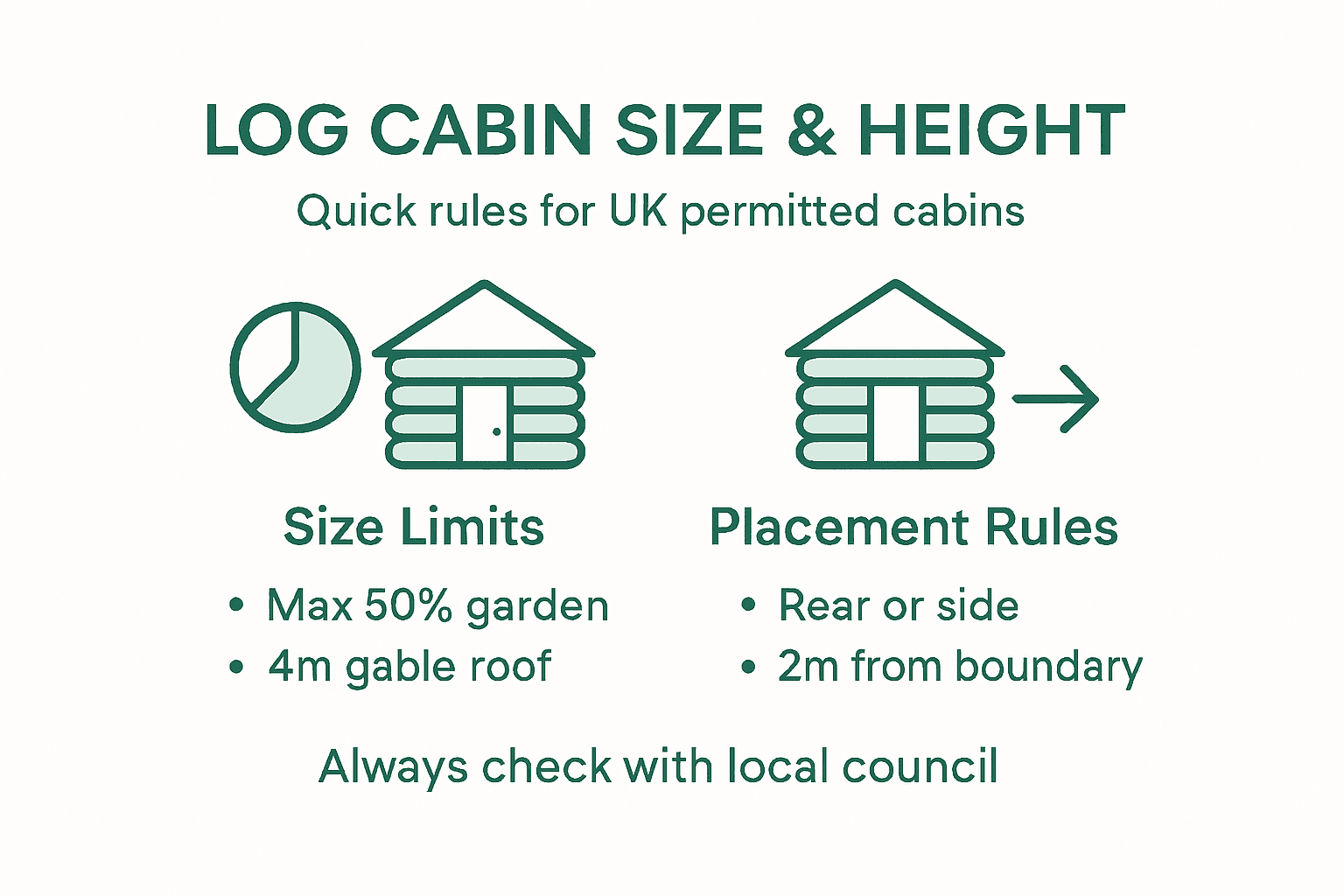
Your cabin cannot cover more than 50% of your garden area. This rule prevents developments that would overwhelm residential plots and maintains garden amenity for neighbours.
Height restrictions are strict. A cabin with a gable roof cannot exceed 4 metres, whilst other roof types must stay below 3 metres. Single-storey designs are required.
Location Matters
Placement is critical. Your cabin must not sit in front of the main building’s facade. Front placement typically requires formal planning permission regardless of size.
Back gardens and side placements work best for permitted development. Consider sightlines from neighbouring properties and the street.
Key restrictions to remember:
- Cannot exceed 4m height (gable roof) or 3m (other roofs)
- Must be single-storey only
- Cannot occupy more than 50% of garden space
- Must not be positioned forward of the main house
- Should not block neighbouring access or views significantly
When You Need Formal Permission
Some situations require you to apply through your local planning authority. This includes cabins in conservation areas, listed building grounds, or sites with specific restrictions.
If your cabin exceeds the size or height limits, or you want a design that doesn’t fit permitted development rules, formal permission becomes necessary. Bespoke designs sometimes fall into this category.
Planning permission timelines typically run 8 to 13 weeks, so factor this into your project schedule if formal approval is needed.
Your local authority can confirm whether your specific design and location qualifies for permitted development. It’s worth checking before ordering materials.
Pro tip: Contact your local planning department with your cabin dimensions and garden layout photos before committing to a purchase—this takes 10 minutes and prevents costly delays later.
Permitted Development Versus Planning Consent
Understanding the difference between these two routes is crucial for your project timeline and budget. Permitted development allows you to build without formal approval, whilst planning consent requires an application to your local authority.
Most homeowners prefer permitted development because it’s faster and cheaper. However, not every cabin qualifies, so knowing which route applies to yours is essential.
Here’s how planning permission routes for log cabins compare:
| Criteria | Permitted Development | Planning Consent |
|---|---|---|
| Application Required | No | Yes, formal process |
| Typical Timescale | Immediate build | 8–13 weeks approval |
| Cost to Homeowner | Only cabin cost | £200–£500 in fees |
| Common Triggers | Standard size, location rules | Exceeds size or restricted land |
| Authority Involvement | Only if unclear | Local council review |
| Best For | Quick, low-cost additions | Large, bespoke, or complex projects |
What Is Permitted Development?
Permitted development rights let you install a log cabin without submitting planning applications, provided specific rules are met. Think of it as building within established guidelines that your local authority has already approved.
Your cabin must meet strict criteria on size, placement, and use. Log cabins used as garden outbuildings typically qualify if they stay within limits.
Key advantages of permitted development:
- No planning application fees
- No 8 to 13 week waiting period
- Straightforward process
- Build once conditions are confirmed
When You Need Planning Consent
Certain situations demand formal planning consent. Your cabin cannot rely on permitted development if it’s intended as a residential dwelling, used commercially, or exceeds size restrictions.
Location matters enormously. Cabins on agricultural land, in conservation areas, or near listed buildings require planning consent regardless of size.
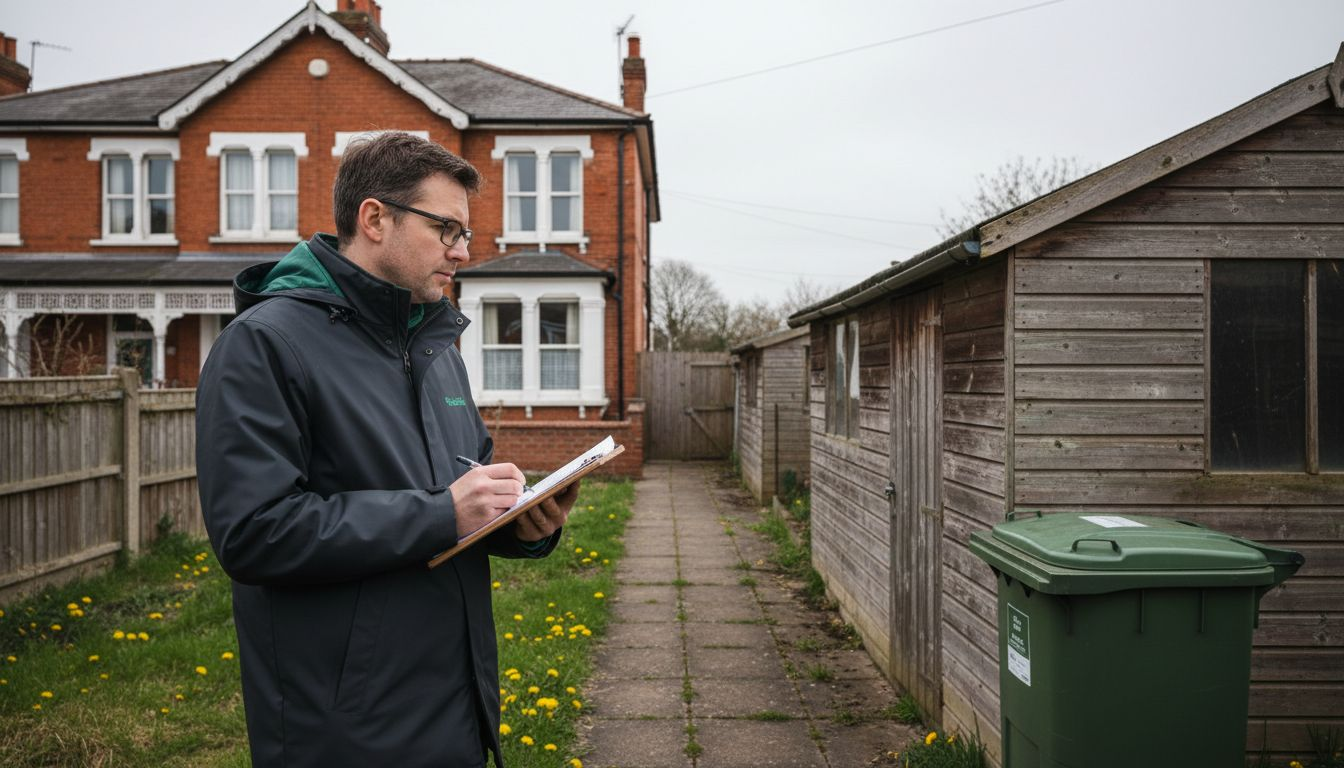
You’ll also need consent if your design doesn’t fit permitted development rules. Bespoke custom cabins with unusual dimensions sometimes fall into this category.
Scenarios requiring planning consent:
- Cabin used as a separate residence
- Commercial use (holiday rental, office space)
- Located in designated protected areas
- Exceeds height or coverage limits
- Positioned in front of the main house facade
- On non-eligible land types
The Cost and Time Factor
Permitted development costs nothing beyond your cabin purchase. Planning consent requires application fees ranging from £200 to £500+ depending on your local authority.
Time is another consideration. Permitted development starts immediately. Planning consent applications typically take 8 to 13 weeks for a decision.
Planning consent timescales can stretch longer if the authority requests additional information, so budget extra time if you go this route.
Checking Your Eligibility
Contact your local planning department before committing to purchase. They’ll confirm whether your specific location and cabin design qualifies for permitted development.
Bring your cabin dimensions, intended use, garden layout, and location details. This five-minute conversation prevents expensive mistakes later.
Pro tip: Get your eligibility confirmed in writing from your local authority before ordering—this protects you if circumstances change and proves you did your due diligence.
Key Size, Height, and Placement Limits
These measurements are non-negotiable for permitted development. Get them wrong, and you’ll need planning consent instead. Your cabin must satisfy all four rules simultaneously to qualify.
Think of these limits as a checklist. Even one violation pushes you into formal planning territory.
Height Restrictions
Height is measured from ground level to the highest point of your cabin. The rules depend on your roof style.
Single-storey cabins with a dual-pitched roof cannot exceed 4 metres in height. Other roof types must stay below 3 metres.
Boundary proximity changes everything. If your cabin sits within 2 metres of a garden boundary, the height limit drops to 2.5 metres regardless of roof type.
Height limits at a glance:
Use this table to check permitted development height at a glance:
| Distance from Boundary | Roof Type | Max Height Allowed |
|---|---|---|
| Over 2 metres | Dual-pitched/gable | 4 metres |
| Over 2 metres | Flat/other style | 3 metres |
| Within 2 metres | Any roof type | 2.5 metres |
| Any distance | Second floor included | Not permitted |
- Dual-pitched roof, over 2m from boundary: 4m maximum
- Other roof types, over 2m from boundary: 3m maximum
- Any roof type, within 2m of boundary: 2.5m maximum
- Single-storey only (no second floors)
Garden Coverage
Your cabin cannot occupy more than 50% of your total garden area. This rule prevents the structure from dominating residential plots.
Measure your entire garden space, including areas under trees or near fences. Calculate what 50% represents. Your cabin footprint must fit comfortably within that limit.
A typical 4m x 5m cabin takes 20 square metres. On a 100 square metre garden, this uses 20%—well within limits. On a 30 square metre space, it exceeds the threshold.
Placement Rules
Position matters more than you might think. Your cabin must sit to the rear or side of your property, never in front of the main building facing the road.
Front placement automatically triggers the need for planning consent. This protects the street appearance and neighbourhood character.
Consider sight lines from neighbouring properties too. Avoid blocking windows or creating a wall-like effect from adjacent gardens.
Placement checklist:
- Not positioned in front of the main house facade
- Situated towards the rear or side of the property
- Not blocking neighbouring property access
- Away from utility lines and drainage areas
Measure twice, confirm measurements with your local authority, then order—mistakes here cost time and money.
Checking Your Specific Plot
Every garden is unique. Sloping land, narrow plots, and proximity to boundaries create different constraints for each property.
Sketch your garden to scale with boundaries marked. Note where sunlight falls and where neighbours’ windows face your space. Identify the best location before purchasing.
Pro tip: Get a surveyor to confirm your cabin dimensions against your property boundaries—a £150 investment prevents £5,000+ in problems if measurements are disputed later.
When You Need Full Permission or Building Control
Sometimes your cabin requires more than permitted development approval. Understanding when full planning permission or building regulations approval kicks in saves time and prevents costly mistakes.
Two separate processes exist: planning permission and building regulations. You might need one, both, or neither depending on your situation.
When Full Planning Permission Is Required
Planning permission becomes mandatory when your cabin exceeds permitted development limits or sits on restricted land. Size breaches are the most common trigger.
If your cabin requires formal planning permission, expect an 8 to 13 week decision period. Costs range from £200 to £500+ depending on your local authority.
Scenarios triggering full permission:
- Cabin exceeds 4m height or 3m (non-gable roof)
- Uses more than 50% of garden area
- Positioned in front of the main house
- Located in conservation areas or near listed buildings
- Intended as a residential dwelling
- Used for commercial purposes
- On agricultural or non-eligible land
Understanding Building Regulations
Building regulations differ from planning permission. They govern structural safety, insulation, drainage, and electrical standards—not whether you’re allowed to build.
Most garden log cabins fall below the 30 cubic metre threshold, exempting them from building regulations. However, residential uses or commercial applications trigger compliance requirements.
Your cabin needs building regulations approval if it:
- Functions as a dwelling or holiday let
- Exceeds 30 cubic metres in volume
- Has residential-grade utilities or sanitation
- Contains a kitchen or bathroom
- Serves commercial purposes
The Combined Application Route
When both planning and building regulations apply, you can submit applications simultaneously. Some authorities allow combined submissions, speeding up the process.
Discuss this with your local building control office. They’ll advise whether simultaneous applications work for your project, potentially compressing timescales from 16 weeks to 13 weeks.
Conservation Areas and Listed Properties
Properties in conservation areas face stricter rules. Even small cabins sometimes require planning consent in these locations. Listed building grounds have similar restrictions.
Contact your local authority early if your property falls into these categories. What qualifies elsewhere might not qualify at your address.
Planning permission for conservation areas can take 12 to 16 weeks—factor this into your timeline if your property sits in a protected zone.
Residential Use Changes Everything
If you intend the cabin as a separate residence—even occasional use—full permission becomes essential. Planning authorities treat residential cabins differently from garden structures.
This includes holiday lettings, granny flats, or permanent guest accommodation. The moment overnight stay capability exists, residential rules apply.
Pro tip: Before submitting any application, ask your local authority whether your specific use qualifies for permitted development or triggers full permission—a quick phone call clarifies everything and prevents rejected applications.
Common Compliance Mistakes and How to Avoid Them
Most issues arise from skipping basic checks before purchase. A few minutes of planning prevents months of complications later. Understanding the pitfalls keeps your project on track.
We’ve seen homeowners make the same errors repeatedly. Learning from these mistakes saves you stress and money.
Miscalculating Garden Coverage
People often overestimate how much garden space they have available. They measure carelessly or forget to include existing structures in their calculations.
Your 50% limit includes everything—existing pathways, patios, water features, and planted areas. A small miscalculation pushes you over the threshold and triggers planning consent requirements.
Measurement mistakes to avoid:
- Forgetting to include paved areas in garden coverage
- Not accounting for future landscaping or extensions
- Measuring only the visible flat space
- Excluding existing sheds or structures
- Rounding down garden dimensions
Underestimating Height
Cabins look smaller on paper than in reality. Owners frequently misjudge whether their design stays within height limits.
Measure from ground level to the absolute highest point, including roof ridging and any decorative elements. Sloping gardens create confusion—measure from the lowest ground point.
A cabin that seems acceptably tall in your mind might breach the 4-metre limit when properly measured. This single mistake requires formal planning permission.
Ignoring Boundary Proximity
Placing your cabin within 2 metres of a boundary triggers stricter height rules. Many owners don’t realise this proximity restriction exists until it’s too late.
Check where your property boundaries actually sit before choosing your cabin location. Survey documents or land registry maps confirm exact boundaries.
Boundary mistakes lead to:
- Height restrictions you didn’t anticipate
- Neighbour disputes over placement
- Requirement for formal permissions
- Costly relocations mid-build
Not Checking Conservation Area Status
Conservation areas impose stricter rules that many homeowners don’t know exist. You might assume your cabin qualifies for permitted development when it doesn’t.
Your local authority website lists conservation area properties. Check yours before proceeding. If you’re uncertain, phone and ask—it takes two minutes and clarifies everything.
Failing to Confirm Intended Use
Using your cabin for anything beyond a garden structure triggers different rules. Holiday lettings, granny flats, or office spaces require planning permission.
Be honest about your intentions when discussing with planning authorities. Misrepresenting use causes applications to be rejected or, worse, enforcement action taken against completed structures.
One phone call to your local planning department catches 95% of compliance issues before they become problems.
Starting Construction Without Confirmation
Ordering and building before checking with authorities is the most expensive mistake. Once work begins, reversing course costs thousands.
Wait for written confirmation from your local authority that your cabin qualifies for permitted development. This takes weeks, not months, and protects your entire investment.
Pro tip: Create a simple checklist: measurements confirmed, boundaries marked, use purpose clarified, local authority confirmation received—tick all four before ordering materials.
Simplify Your Log Cabin Project with Expert Support
Navigating the complex planning rules for log cabins in the UK can feel overwhelming especially with strict limits on size, height, placement, and permitted development rights. Whether you are aiming to stay within the 50% garden coverage rule or you need to consider boundary proximities and conservation area restrictions, the risk of costly delays and rejected applications is real. Avoid the stress of planning permission uncertainties and make your dream garden cabin a reality with bespoke solutions tailored to meet all UK regulations.
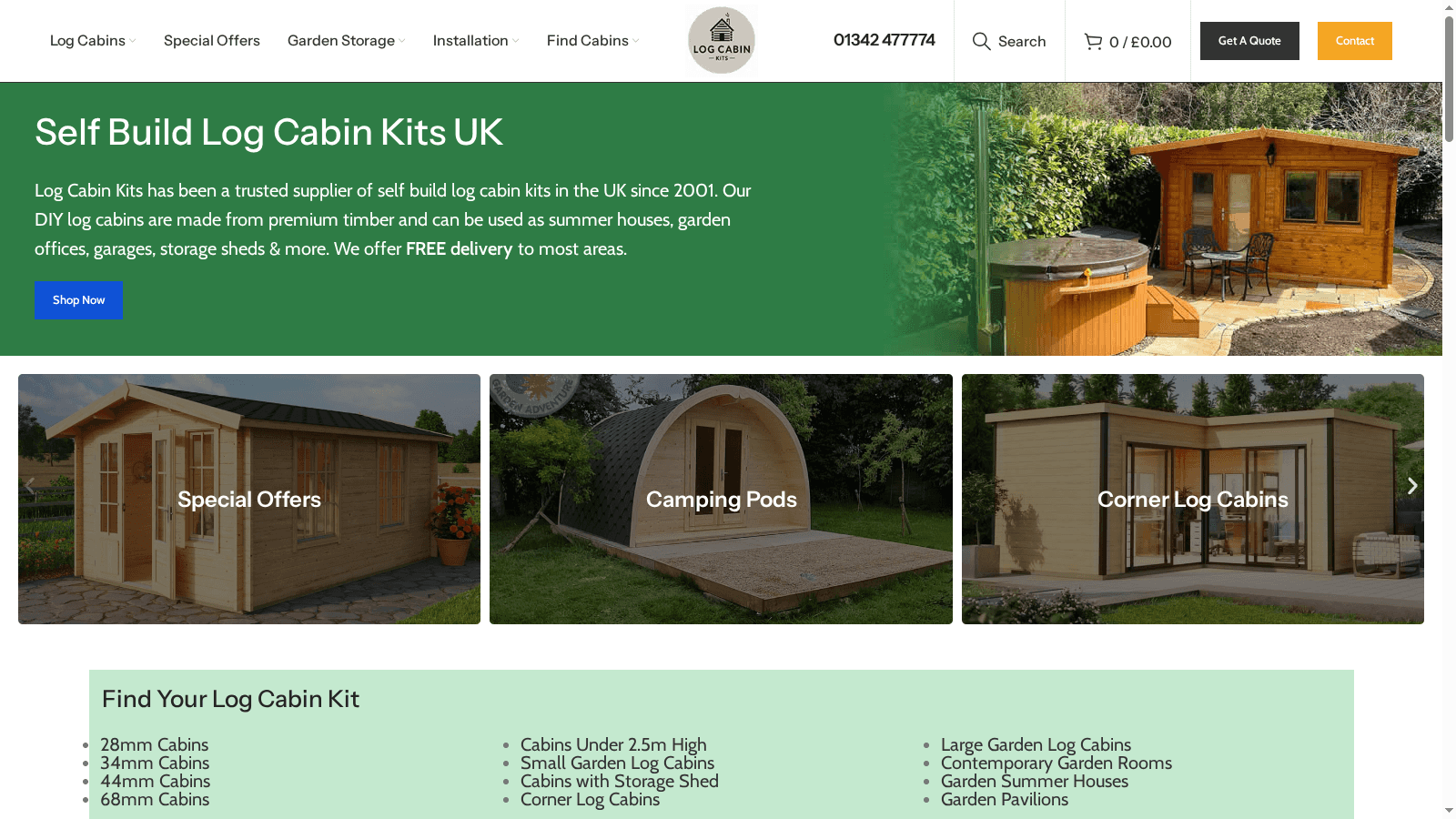
Discover how our custom log cabins are designed to comply with essential planning requirements while providing the exact style and dimensions you want. Visit Log Cabin Kits to explore our range and benefit from expert guidance. Act now and secure a cabin that fits your garden perfectly and respects local development rules. Start your seamless build journey today by checking out our bespoke log cabin options and confirm your planning viability early to avoid surprises.
Frequently Asked Questions
What are the size restrictions for a log cabin to qualify for permitted development?
Your log cabin must not occupy more than 50% of your garden area. Additionally, a gable roof cabin cannot exceed 4 metres in height, while other roof types must remain under 3 metres. If your cabin is within 2 metres of a boundary, the height limit drops to 2.5 metres.
When is formal planning permission required for a log cabin?
Formal planning permission is needed if your cabin exceeds the height or coverage limits, is intended for residential or commercial use, or is located in conservation areas or near listed buildings. Additionally, if your cabin is positioned in front of the main house, this also triggers the need for planning consent.
What is the difference between permitted development and planning permission?
Permitted development allows you to build your cabin without formal approval, provided you meet specific criteria. In contrast, planning permission requires you to submit an application to your local authority, which generally takes 8 to 13 weeks for a decision.
What should I do before purchasing a log cabin?
Before making a purchase, contact your local planning department with your cabin dimensions, intended use, and garden layout. Confirm whether your specific design qualifies for permitted development to avoid costly delays or issues later.
Recommended
- Planning Permission For Log Cabins – What UK Homeowners Must Know
- Do I Need Planning Permission For My Log Cabin - Log Cabin Kits To Buy Online
- Construct Bespoke Log Cabin: Step-by-Step Guide For UK Homes
- Master The Garden Log Cabin Planning Process UK
- Custom Cottage Design Workflow: A Step-by-Step Guide