
Proper insulation can slash heat loss by up to 60% in UK garden cabins, transforming them from seasonal shelters into comfortable year-round retreats. Yet many cabin owners struggle with soaring heating bills and damp conditions because their structures lack adequate thermal protection. This guide reveals how strategic insulation choices, moisture management, and maintenance practices deliver lasting comfort, energy savings, and structural durability for your bespoke timber cabin.
Table of Contents
- Understanding Garden Cabin Insulation In The UK Context
- How Insulation Works To Improve Comfort And Energy Savings
- Choosing The Right Insulation Materials For Garden Cabins
- Moisture Control And Condensation Prevention In Timber Garden Cabins
- Seasonal Preparation And Maintenance To Protect Insulation Performance
- Practical Benefits And Energy Savings From Proper Insulation
- Explore Bespoke Garden Cabins With Expert Insulation Options
- Frequently Asked Questions
Key takeaways
| Point | Details |
|---|---|
| Heat loss reduction | Effective insulation reduces heat loss by up to 60%, dramatically improving comfort and slashing energy bills. |
| Moisture management | Vapour barriers and proper sealing prevent condensation and timber rot in damp UK conditions. |
| Material selection | Choose insulation based on thermal performance, moisture resistance, cost, and ease of installation for timber structures. |
| Installation quality | Correct installation techniques including airtightness measures ensure maximum insulation effectiveness. |
| Seasonal upkeep | Regular inspections and maintenance preserve insulation performance and extend cabin lifespan. |
Understanding garden cabin insulation in the UK context
The UK’s cold, damp winters create unique challenges for garden cabin owners. Timber structures naturally conduct heat through their walls, floors, and roofs, whilst gaps between planks allow warm air to escape and cold draughts to enter. Without proper insulation, your cabin becomes uncomfortable and expensive to heat from October through March.
Moisture poses an even greater threat than cold. The UK climate combines low temperatures with high humidity, creating perfect conditions for condensation to form on cold interior surfaces. This moisture seeps into timber, causing rot, mould growth, and structural damage that can render your cabin unusable within a few years.
Effective insulation addresses both thermal and moisture challenges simultaneously. Here’s why garden cabins struggle year-round in UK conditions:
- Timber’s natural porosity allows moisture penetration without proper barriers
- Temperature differentials between warm interiors and cold exteriors create condensation
- Gaps in construction allow air infiltration and heat escape
- Uninsulated floors conduct heat directly into cold ground
- Roof surfaces lose significant heat through radiation and conduction
Proper insulation transforms these vulnerabilities into strengths. By creating thermal barriers and controlling moisture movement, you enable comfortable year-round use whilst protecting your investment from weather-related damage.
How insulation works to improve comfort and energy savings
Insulation fights heat loss through three physical mechanisms. Conduction occurs when heat travels through solid materials like timber walls. Convection happens when warm air circulates and escapes through gaps. Radiation allows heat energy to transfer through space to colder surfaces. Quality insulation materials tackle all three processes simultaneously.
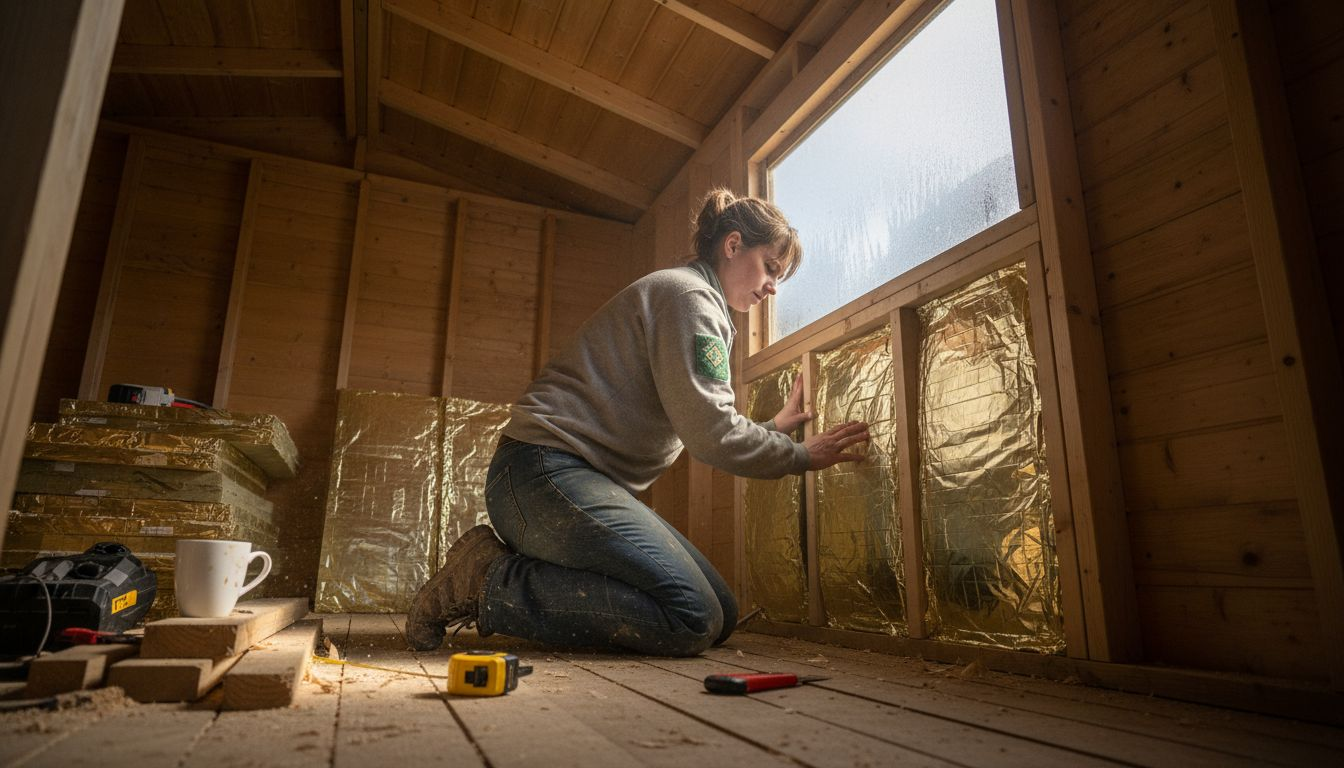
Thermal bridging creates weak points where heat escapes rapidly. These bridges form wherever continuous solid materials span from warm interiors to cold exteriors, such as wall studs, floor joists, or roof rafters. Timber conducts heat 10 times faster than insulation materials, so unbroken thermal bridges can negate 30% of your insulation’s effectiveness.
Air leaks compound the problem dramatically. Even tiny gaps around windows, doors, or wall joints allow warm air to pour out whilst cold air rushes in. This convective heat loss accounts for up to 40% of total heat escape in poorly sealed cabins.
Properly installed insulation cuts heating bills by 60% through comprehensive thermal protection:
- Wall insulation blocks conductive heat transfer through timber
- Floor insulation prevents ground-based heat loss
- Roof insulation stops rising warm air from escaping
- Air sealing eliminates convective losses
- Vapour barriers control moisture whilst maintaining thermal integrity
Maintaining airtightness enhances every other insulation benefit. Seal all penetrations where pipes, wires, or vents pass through walls. Use expanding foam for irregular gaps and specialist tape for membrane joints. Pay special attention to corners and junctions where different building elements meet.
Pro Tip: Test your cabin’s airtightness by closing all windows and doors, then lighting a candle near potential leak points. Flickering flames reveal air movement that needs sealing.
Energy savings depend on comprehensive coverage. Insulating walls alone delivers only partial benefits if heat escapes through floors and roofs. Target all six surfaces of your cabin for maximum efficiency and comfort. Consider complementary heating options for garden cabins that work synergistically with insulation to optimise energy use.
Choosing the right insulation materials for garden cabins
Selecting appropriate insulation requires balancing thermal performance, moisture handling, cost, and installation complexity. Each material offers distinct advantages for timber garden cabins in UK conditions.
| Material | Thermal Resistance (R-value per 100mm) | Moisture Performance | Cost Level | Best Application |
|---|---|---|---|---|
| PIR boards | 4.5-5.0 | Excellent with vapour barrier | Medium-High | Floors, roofs, walls requiring rigid support |
| Rockwool | 2.8-3.3 | Good natural resistance | Medium | Wall cavities, between timber studs |
| Fibreglass | 2.5-3.0 | Poor unless fully sealed | Low | Budget projects with perfect moisture control |
| Sheep’s wool | 2.3-2.8 | Excellent natural regulation | High | Sustainable builds, breathable systems |
| Multifoil | 3.0-4.0 (with air gaps) | Good with proper installation | Medium | Thin profile applications, DIY projects |
PIR boards deliver exceptional thermal performance in compact thickness. These rigid foam panels provide structural support whilst insulating, making them ideal for floors and roof decks. Their closed-cell structure resists moisture penetration naturally, though vapour barriers remain essential on the warm side to prevent condensation within wall cavities.
Rockwool combines mineral fibres into batts that fit snugly between timber studs. Its natural stone composition resists moisture better than organic materials, and it won’t slump or degrade over time. The material’s fire resistance adds safety benefits for heated cabins.
Fibreglass costs least but demands meticulous moisture protection. Any water contact reduces its insulating ability permanently. Only use fibreglass where you can guarantee perfect vapour barrier installation and zero leak risk.
Sheep’s wool offers natural breathability that helps regulate humidity whilst insulating. This sustainable material absorbs up to 30% of its weight in moisture without losing thermal performance, then releases it when conditions dry. Higher upfront costs are offset by longevity and environmental benefits.
Multifoil insulation reflects radiant heat, keeping cabins warm in winter and cool in summer through thin, lightweight layers. Installation requires precise 25mm air gaps on both sides to achieve stated performance. DIY enthusiasts appreciate the simple installation, though professional fitting ensures optimal results.
Pro Tip: Combine materials strategically. Use rigid PIR boards under floors for compression resistance, Rockwool in walls for thermal mass, and multifoil in roofs where space is limited.
Floor insulation deserves special attention. Insulating suspended timber floors saves up to £111 annually in residential settings, with similar benefits for garden cabins. Cold floors create discomfort even when walls and ceilings are warm, so prioritise comprehensive floor treatment.
Explore detailed guidance on garden cabin insulation materials in the UK and specific techniques for garden log cabin roof insulation to refine your material choices.
Moisture control and condensation prevention in timber garden cabins
Moisture threatens timber cabins through multiple pathways. External rain and ground moisture attempt to penetrate from outside. Internal activities like breathing, cooking, or showering generate humidity that seeks to escape through walls. When warm, moisture-laden interior air contacts cold surfaces or passes through insulation to cold exterior layers, condensation forms within the wall cavity.
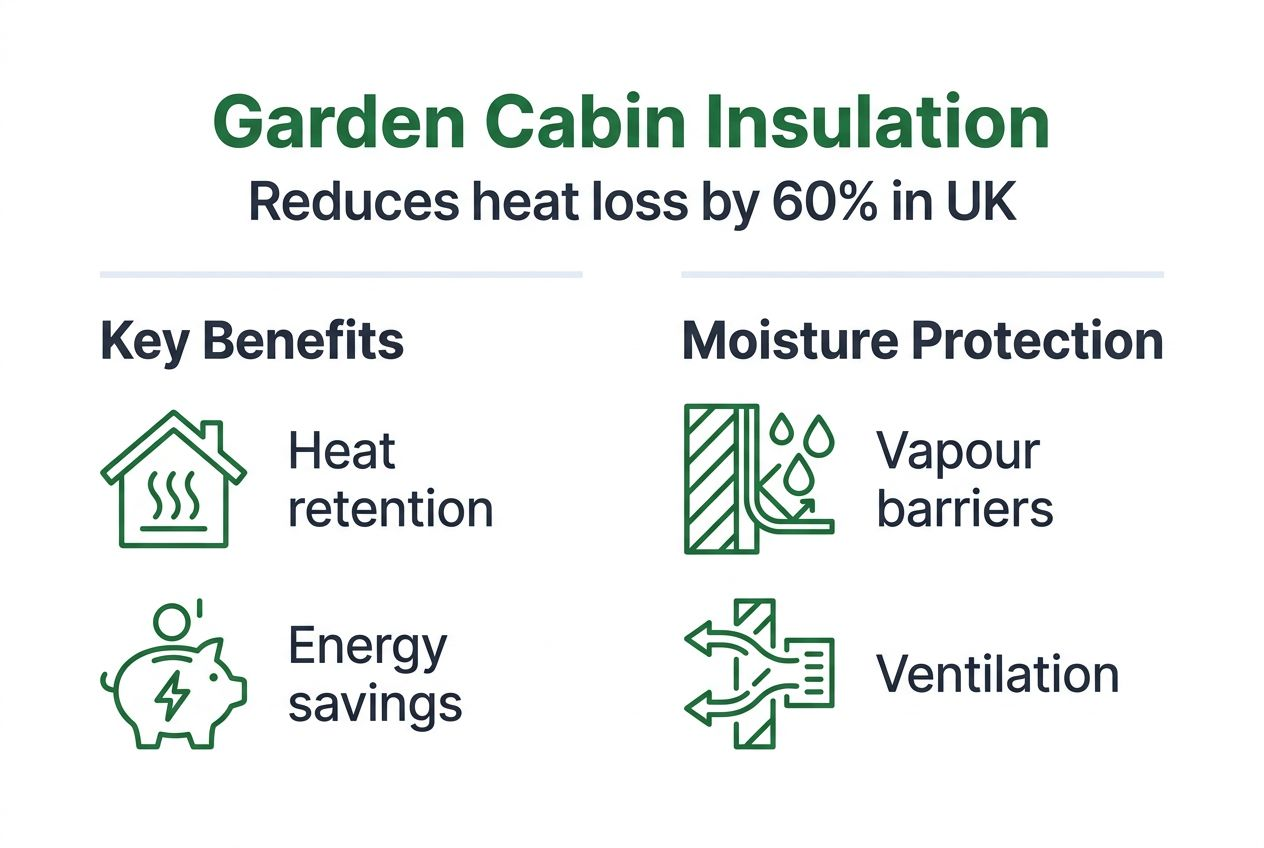
Uncontrolled moisture creates cascading problems. Timber swells, warps, and eventually rots when repeatedly wetted. Mould colonies establish themselves within days of sustained dampness, releasing spores that compromise air quality. Insulation materials lose effectiveness when saturated, negating your thermal investment.
Moisture control in timber frame insulation requires systematic barriers and sealing to prevent rot and ensure airtightness, meeting UK Part L Building Regulations that mandate moisture and thermal control in all habitable structures.
Vapour barriers form your primary defence. These impermeable membranes install on the warm side of insulation, blocking moisture-laden air from reaching cold surfaces where condensation would occur. Polythene sheeting of at least 500 gauge provides adequate protection when properly sealed at all joints and penetrations.
Breathable membranes serve different functions on the cold side. These materials allow any moisture that does penetrate to escape outward whilst blocking rain and wind from entering. This two-layer strategy creates a moisture management system rather than relying on a single barrier.
Critical installation practices include:
- Overlap vapour barrier sheets by at least 150mm and seal with specialist tape
- Seal around all window and door frames with flexible sealant
- Use grommets and tape where services penetrate membranes
- Ensure continuous barrier coverage with no gaps or tears
- Install insulation tightly against barriers to eliminate air gaps
Pro Tip: Work methodically from bottom to top when installing vapour barriers. This natural overlap pattern sheds any condensation that forms back down and out, mimicking roof tile principles.
Ventilation complements moisture barriers by removing humidity before it becomes problematic. Trickle vents in windows or dedicated air bricks allow controlled air exchange without creating draughts. Mechanical extract fans help in cabins used for activities generating steam or high humidity.
Proper sequencing matters enormously. Install insulation, then the vapour barrier, then internal cladding in that order. Never trap moisture-generating materials like plasterboard between insulation and barriers. Review garden log cabin roof insulation guidance for specific membrane layering requirements in roof assemblies where moisture risks peak.
Seasonal preparation and maintenance to protect insulation performance
Regular maintenance preserves insulation effectiveness and prevents minor issues from becoming expensive repairs. Seasonal inspection routines catch problems early whilst they remain simple to fix.
Prepare for winter with these essential steps:
- Inspect all vapour barriers for tears or separation at seams
- Check window and door seals for gaps allowing air infiltration
- Clear roof gutters and drains to prevent water backing up into walls
- Verify that ventilation paths remain unblocked for moisture escape
- Test heating systems and repair any malfunctions before cold arrives
- Seal any new gaps or cracks that appeared during summer expansion
Summer preparation focuses on different concerns. Heat and humidity create risks when trapped by insulation designed to retain warmth. Ensure adequate ventilation prevents overheating whilst checking for moisture accumulation from spring condensation.
Post-season inspections reveal damage that occurred during extreme weather:
- Spring inspection after winter checks for moisture damage from condensation or leaks
- Autumn inspection after summer identifies UV damage to external membranes or expanded gaps from heat
- Look for signs of pest intrusion that could compromise insulation
- Check for any settlement or movement in insulation materials
- Verify that all seals and barriers remain intact and effective
Pro Tip: Keep a simple log of inspection dates and findings. Patterns emerge over time that help you anticipate maintenance needs and budget accordingly.
Address minor repairs immediately. A small tear in a vapour barrier takes five minutes to tape but left unattended allows moisture infiltration that causes hundreds of pounds in timber damage. Gaps smaller than your fingertip still allow significant air leakage, so seal everything you find.
Maintain cleanliness around insulation areas. Leaves, debris, or stored items against walls can trap moisture and create pest habitats. Keep a 300mm clear zone around your cabin’s perimeter for drainage and inspection access.
Refer to comprehensive insulating your garden log cabin guidance for detailed maintenance schedules and techniques tailored to timber construction specifics.
Practical benefits and energy savings from proper insulation
Investing in quality insulation delivers measurable returns through reduced operating costs and enhanced functionality. The financial case extends beyond simple energy savings to encompass maintenance avoidance and increased usability.
Heating cost reductions provide the most visible benefit. A properly insulated cabin uses 60% less energy for heating compared to an uninsulated structure, translating to substantial savings over UK winters. A cabin requiring £500 annually for heating drops to £200 with comprehensive insulation, recovering installation costs within three to five years.
Moisture damage prevention protects your capital investment. Timber rot repairs cost thousands of pounds and may require replacing entire wall sections or structural members. Preventing moisture ingress through proper insulation and barriers eliminates these catastrophic expenses whilst preserving your cabin’s market value.
Year-round usability transforms your cabin from a seasonal amenity into a functional space throughout all twelve months. Home offices, guest accommodations, hobby workshops, or fitness studios all require stable temperatures and dry conditions. Proper insulation enables these uses by maintaining comfort regardless of external weather.
Complementary heating options for garden cabins become more efficient and affordable when combined with quality insulation. A well-insulated space requires smaller, less expensive heating systems that cost less to operate.
Additional benefits include:
- Sound dampening reduces noise transmission for private workspace or entertainment areas
- Temperature stability protects stored items from condensation or freeze damage
- Increased structural lifespan through moisture control and reduced thermal stress
- Enhanced property value if the cabin contributes to home valuations
- Comfort improvements beyond mere temperature, including draft elimination and humidity control
“Effective insulation addresses three critical needs simultaneously: energy efficiency, structural preservation, and occupant comfort. UK garden cabins specifically benefit because our climate’s combination of cold and damp magnifies all three challenges.”
The investment scales to your budget and needs. Basic insulation for a small cabin costs £500 to £1,000 in materials for a competent DIY installer. Professional installation of premium materials in larger cabins ranges from £2,000 to £5,000. Either approach delivers returns through decades of reduced costs and enhanced usability that far exceed initial outlays.
Explore bespoke garden cabins with expert insulation options
Your journey towards a comfortable, energy-efficient garden cabin begins with the right structure and professional installation. Log Cabin Kits specialises in custom build log cabins tailored to your specific insulation requirements and UK climate demands.

Our professional installation services ensure proper insulation techniques, vapour barrier placement, and moisture management from the foundation up. Expert installers understand the critical details that make the difference between adequate and exceptional thermal performance.
Browse our garden log cabin gallery to discover design possibilities and see completed projects showcasing various insulation approaches. Whether you envision a compact studio or spacious retreat, proper insulation transforms your cabin into a year-round haven that protects your investment whilst delivering lasting comfort and savings.
Frequently asked questions
What is the best insulation material for UK garden cabins?
PIR boards and Rockwool provide excellent thermal resistance and moisture control suited to UK conditions. PIR offers superior performance in compact thickness, whilst Rockwool’s breathability and fire resistance make it ideal for wall cavities. Natural sheep’s wool insulation delivers sustainability and moisture regulation but costs more upfront. Your choice depends on budget, installation method, and specific cabin requirements.
How does insulation prevent moisture damage in timber cabins?
Vapour barriers installed on the warm side of insulation block moisture-laden air from reaching cold surfaces where condensation forms. Breathable membranes on the cold side allow any trapped moisture to escape outward whilst preventing rain penetration. Proper sealing of gaps and controlled ventilation maintain timber integrity by keeping wood dry and preventing mould growth. This layered approach manages moisture movement rather than simply blocking it.
Can proper insulation really reduce my garden cabin heating bills?
Yes, effective insulation cuts heating costs by up to 60% by minimising heat loss through walls, floors, and roofs. This reduction translates to substantial savings during cold UK winters when heating demand peaks. A cabin costing £500 annually to heat drops to £200 with comprehensive insulation, recovering installation costs within a few years whilst improving comfort significantly.
What maintenance is required to keep insulation effective in garden cabins?
Seasonal inspections before winter and after summer detect gaps, moisture ingress, or damage requiring attention. Check vapour barriers for tears, verify window and door seals remain intact, and clear drainage paths to prevent water accumulation. Prompt repairs of minor issues prevent major damage and preserve insulation performance over decades. Simple vigilance protects your investment far more cost-effectively than major remedial work.