Blog


Think log cabins are just for warm summers? Think again. Modern insulated cabins deliver cosy comfort all year long, even in the coldest UK winters. Proper insulation can reduce heat loss by up to 60%, making year-round use practical. With the right approach, your bespoke garden cabin transforms from a seasonal retreat into a permanent haven that saves money and stays warm through Britain’s harshest weather.
Table of Contents
- Introduction To Log Cabin Insulation In The UK
- Why Insulate Your Cabin? Energy Efficiency And Cost Savings
- Choosing And Installing Insulation: Materials And Methods
- Moisture Control And Condensation Prevention
- Common Installation Mistakes And How To Avoid Them
- Explore Bespoke Log Cabins With Expert Insulation Solutions
- Frequently Asked Questions
Key Takeaways
| Point | Details |
|---|---|
| Dramatic heat loss reduction | Effective insulation cuts heat loss by up to 60%, slashing heating bills. |
| Material selection matters | Rockwool, PIR boards, fibreglass, and sheep’s wool each offer distinct thermal performance and cost profiles. |
| Sealing and moisture control | Gaps and condensation undermine insulation, so proper sealing and vapour barriers are essential. |
| Installation sequence is critical | Following the correct order maximises energy savings and prevents thermal leaks. |
| UK regulations ensure durability | Compliance with building standards protects your investment and guarantees safety. |
Introduction to Log Cabin Insulation in the UK
Britain’s climate presents unique challenges for garden log cabins. Cold, damp winters threaten both comfort and structural integrity. Natural wood offers some insulation but cannot solely protect against the UK’s unpredictable and damp climate, leaving gaps that haemorrhage precious heat.
Without dedicated thermal protection, your cabin remains a seasonal luxury rather than a year-round asset. Moisture infiltration damages timber, encourages mould growth, and compromises indoor air quality. An effective insulation strategy tackles all these problems simultaneously.
Here’s why log cabin insulation in the UK demands special attention:
- Britain’s winters combine low temperatures with persistent dampness, stressing uninsulated structures.
- Timber walls provide basic resistance but allow significant thermal bridging through joints and gaps.
- Year-round usability requires a comprehensive thermal envelope that keeps warmth inside.
- Moisture control prevents rot, mould, and structural deterioration over time.
- Proper insulation transforms seasonal sheds into comfortable living or working spaces.
The UK’s variable weather patterns mean your cabin faces temperature swings, rain, and humidity throughout the year. Wood expands and contracts with these changes, creating gaps that undermine thermal performance. This natural movement, combined with Britain’s damp air, makes insulation not just beneficial but essential. You need a system that adapts to timber’s behaviour while maintaining a consistent barrier against the elements.
UK-specific cabin insulation benefits extend beyond comfort. They include structural protection, improved property value, and reduced environmental impact through lower energy consumption. The investment pays dividends in heating savings, extended cabin lifespan, and enhanced usability across all seasons.
Why Insulate Your Cabin? Energy Efficiency and Cost Savings
Heat escapes through every uninsulated surface in your cabin. Walls, roof, and floor all contribute to energy waste that inflates your bills. Without proper thermal protection, you’re essentially heating the outdoors while your cabin struggles to maintain comfortable temperatures.
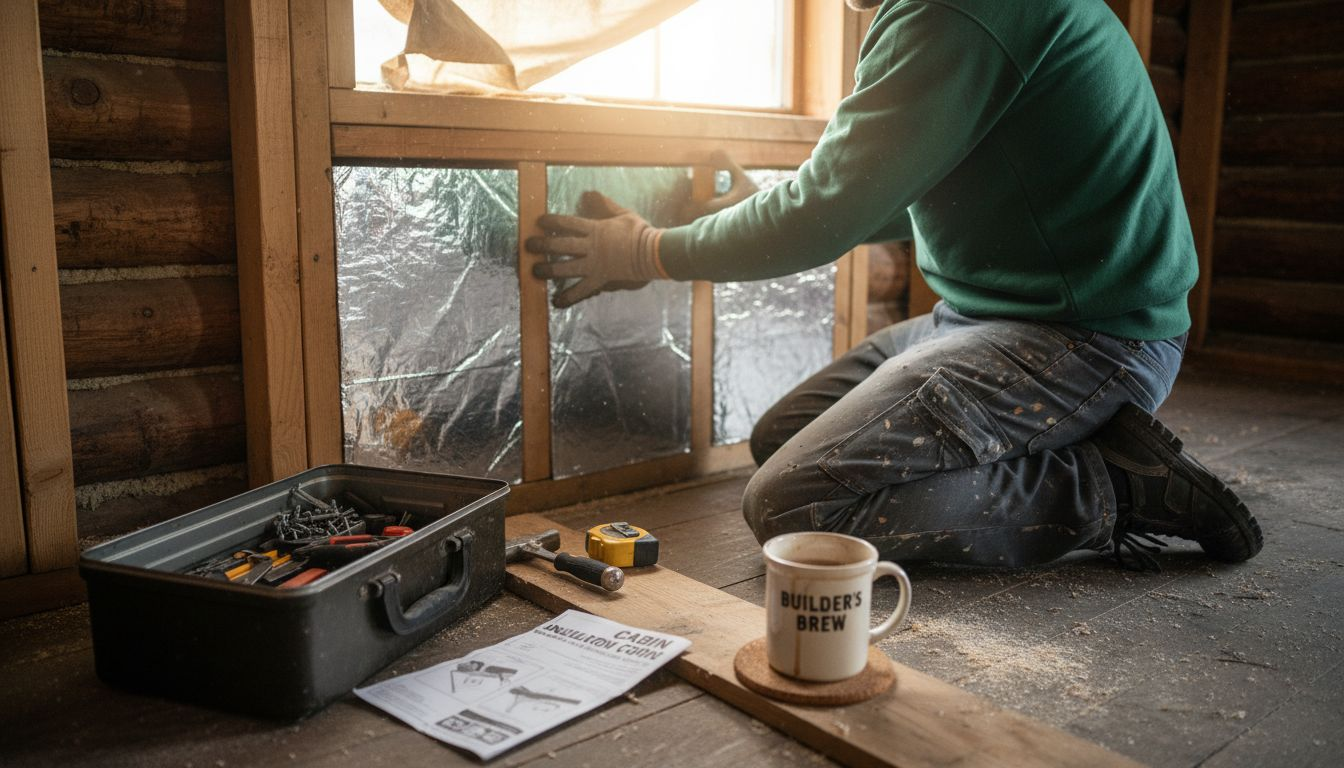
Effective insulation can reduce heating demand between 40 and 60%, leading to significant energy and cost savings. This translates directly to lower monthly heating expenses and faster return on your insulation investment. Over a typical winter, these savings accumulate into hundreds of pounds that stay in your pocket.
Consider the financial impact:
- Uninsulated cabins lose heat rapidly, requiring constant heating to maintain comfort.
- A well-insulated structure retains warmth for hours after heating stops.
- Reduced heating cycles mean lower energy bills and less wear on heating equipment.
- The initial insulation cost typically pays for itself within three to five years through reduced bills.
- Long-term savings continue for decades with minimal maintenance.
Statistic spotlight: A typical 4m x 4m garden cabin in the UK spends approximately £800 annually on heating when uninsulated. With proper insulation reducing demand by 50%, you save £400 every year. Over ten years, that’s £4,000 in your pocket, far exceeding the initial insulation investment of £1,200 to £2,000.
Energy efficiency improvements also enhance comfort beyond just warmth. Your cabin maintains stable temperatures, reducing cold spots and drafts. This consistency makes the space more usable for work, hobbies, or relaxation throughout the year. You’re not just saving money; you’re creating a genuinely pleasant environment.
Pairing insulation with energy-efficient heating options multiplies these benefits. Modern heat pumps, infrared panels, or wood burners work far more effectively in an insulated space, requiring less power to maintain comfort. The synergy between proper insulation and efficient heating creates optimal conditions for both your wallet and the planet.
Insulation costs and benefits vary by material choice and cabin size, but the fundamental economics remain compelling. Every pound invested in quality insulation returns multiple times over through reduced heating costs, improved property value, and enhanced usability.
Choosing and Installing Insulation: Materials and Methods
Selecting the right insulation material determines both performance and budget. Each option brings distinct advantages for UK garden cabins. Rockwool, PIR boards, fibreglass, and sheep’s wool are common materials, each with distinct thermal performance, cost, and moisture resistance.
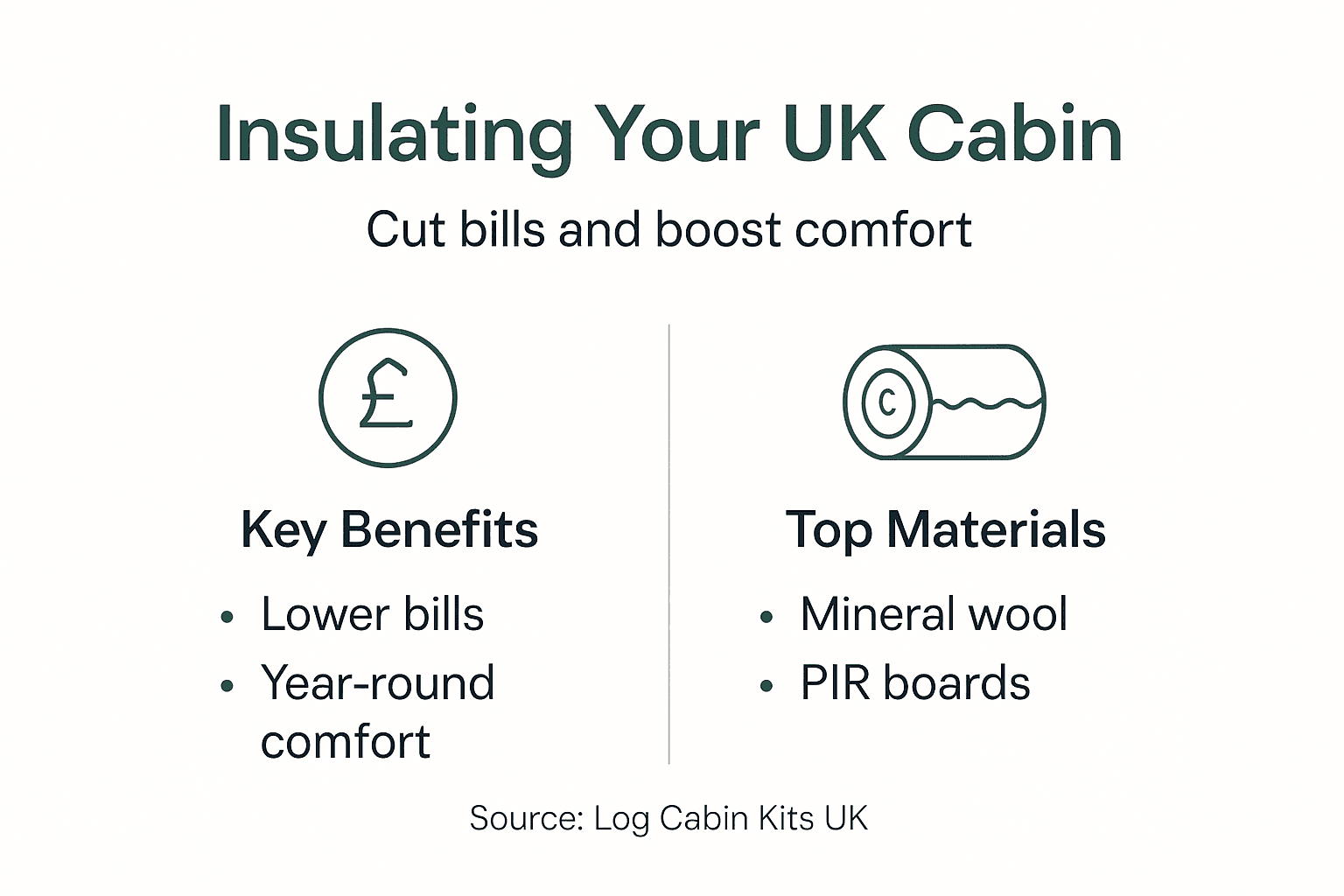
Here’s how the main options compare:
| Material | Thermal Conductivity | Moisture Resistance | Cost per m² | Ease of Installation |
|---|---|---|---|---|
| Rockwool | 0.035 W/mK | Excellent | £15-£25 | Moderate |
| PIR Boards | 0.022 W/mK | Very Good | £25-£40 | Easy |
| Fibreglass | 0.040 W/mK | Fair | £10-£18 | Easy |
| Sheep’s Wool | 0.038 W/mK | Good | £20-£30 | Moderate |
Thermal conductivity measures how well a material resists heat flow. Lower numbers mean better insulation performance. PIR boards deliver the best thermal protection per centimetre of thickness, making them ideal where space is limited. Rockwool excels in moisture resistance and fire safety, crucial for UK conditions.
Follow this installation sequence for optimal results:
- Seal all gaps around windows, doors, and joints with expanding foam or caulk.
- Install roof insulation first, as most heat escapes upward through the ceiling.
- Apply wall insulation between timber studs, ensuring full contact with no air pockets.
- Add floor insulation from below if possible, or between floor joists from above.
- Install vapour barriers on the warm side of insulation to prevent condensation.
- Finish with interior cladding that seals the system and provides a clean appearance.
Proper sealing eliminates thermal bridges where heat sneaks past insulation. Pay special attention to corners, junctions between walls and roof, and penetrations for pipes or wires. These small gaps cause disproportionate heat loss if left unsealed.
Pro tip: If you’re new to insulation work, PIR boards offer the easiest installation with excellent performance. They cut cleanly, fit snugly between studs, and require minimal protective equipment. For experienced DIYers prioritising moisture resistance, Rockwool provides superior long-term durability in damp British conditions, though it requires more careful handling.
Your insulation installation guide should account for timber settlement. Log cabins naturally compress slightly as wood seasons and settles. Leave small expansion gaps at the top of walls that compress without creating insulation voids. This flexibility prevents future problems as your cabin matures.
Material thickness matters as much as type. Aim for at least 100mm in walls and 150mm in the roof for effective thermal protection in the UK climate. Skimping on thickness to save money defeats the purpose, leaving you with mediocre performance that barely justifies the installation effort.
Moisture Control and Condensation Prevention
Insulation without moisture management creates more problems than it solves. Warm, moist air inside your cabin meets cold surfaces and condenses, leading to damp timber, mould growth, and structural decay. The UK’s humid climate makes this challenge particularly acute.
Use of vapour barriers and proper sealing prevents damp penetration and condensation build-up that cause mould and rot. These thin plastic or foil membranes sit on the warm side of your insulation, stopping moisture before it reaches cold surfaces where it would condense.
Condensation forms when warm indoor air contacts cold exterior walls or roof. The temperature drop forces moisture out of the air, depositing it as liquid water. In an insulated cabin, this happens within the wall cavity if vapour isn’t controlled. The trapped moisture saturates insulation, reducing its effectiveness and rotting timber.
Common scenarios you’ll avoid with proper moisture control:
- Black mould appearing on interior walls and ceilings.
- Musty odours indicating hidden dampness within wall cavities.
- Timber rot weakening structural integrity over time.
- Insulation compression and degradation from moisture saturation.
- Paint peeling and wallpaper lifting as surfaces stay damp.
Ventilation works alongside barriers to complete your moisture strategy. Small vents in the roof allow humid air to escape rather than condensing inside. A simple ridge vent or soffit vents maintain airflow without creating drafts. This passive system requires no energy but continuously removes moisture from your cabin.
Pro tip: Check your cabin every few months for condensation signs, especially during winter when the temperature difference between inside and outside is greatest. Run your hand along walls near corners and windows. If you feel dampness, increase ventilation or check for vapour barrier gaps. Early detection prevents expensive repairs later.
Moisture control in garden log cabins requires balancing insulation, barriers, and ventilation. Too much sealing without ventilation traps moisture. Too much ventilation without sealing wastes heat. The sweet spot keeps your cabin dry and warm simultaneously.
Regular maintenance preserves moisture control effectiveness. Inspect vapour barriers annually for tears or gaps. Check that vents remain clear of debris. Ensure door and window seals stay intact. These simple tasks protect your insulation investment and keep your cabin healthy for decades.
Common Installation Mistakes and How to Avoid Them
Even experienced DIYers make insulation errors that undermine performance. Learning from others’ mistakes saves you time, money, and frustration. Gaps around windows and doors and improper sealing are the most common causes of thermal leaks.
Neglecting gap sealing defeats half your insulation effort. Air flowing through unsealed cracks carries heat away faster than conduction through walls. A 5mm gap around a window frame can lose as much heat as an entire uninsulated wall section. Expanding foam, weatherstripping, and caulk are cheap insurance against this waste.
Timber settlement creates insulation problems if not anticipated. Your cabin compresses by several centimetres over its first year as wood seasons and settles. Insulation installed tightly from floor to ceiling gets compressed or torn as the structure moves. Build flexibility into your system with expansion gaps and compression-friendly materials.
Wrong installation sequence causes inefficiency and rework:
- Installing walls before sealing gaps leaves thermal bridges you can’t access later.
- Applying vapour barriers before insulation traps them against cold surfaces where they’re useless.
- Finishing interiors before checking for condensation means tearing everything out to fix moisture problems.
- Skipping roof insulation while focusing on walls ignores the path where most heat escapes.
Regular maintenance sustains insulation integrity long after installation. Timber movement, weather exposure, and normal wear create small gaps that grow over time. Annual inspections catch these issues before they become expensive problems.
Essential steps for reliable insulation:
- Seal every gap before installing insulation materials.
- Follow the correct installation order: seal, roof, walls, floor, barriers, finish.
- Allow for timber settlement with expansion gaps at wall tops.
- Install vapour barriers on the warm side of insulation.
- Ensure continuous coverage with no compressed or missing sections.
- Check annually for damage and repair promptly.
Proper log cabin insulation methods account for timber’s unique behaviour. Unlike brick or concrete buildings that remain static, wood cabins breathe and move. Your insulation system must accommodate this character while maintaining thermal protection. When in doubt, consult professionals who understand log cabin construction. Their expertise prevents costly mistakes that plague DIY projects.
Explore Bespoke Log Cabins with Expert Insulation Solutions
Ready to build your dream garden cabin with proper insulation from the start? Bespoke cabin design and supply services ensure your structure meets your exact needs while incorporating energy-efficient thermal protection.

Log Cabin Kits specialises in custom builds designed for the UK climate. Every cabin arrives ready for insulation installation with properly spaced studs, quality timber, and expert guidance. Whether you’re planning a garden office, hobby space, or guest accommodation, starting with a well-designed structure makes insulation straightforward and effective. Our step-by-step guide to construct your bespoke log cabin walks you through the entire process, from foundation to finishing touches. Combined with our detailed advice on how to insulate your garden log cabin, you’ll have all the knowledge needed to create a warm, efficient space you’ll use year-round.
Frequently Asked Questions
How does insulation affect cabin usability in different seasons?
Proper insulation keeps cabins cool in summer by blocking heat gain and warm in winter by preventing heat loss. This thermal stability extends usable seasons from a few summer months to comfortable year-round occupation. Without insulation, summer heat makes cabins unbearably hot while winter cold renders them unusable.
Is insulating a garden log cabin cost effective for DIY installation?
Yes, DIY insulation typically costs £1,200 to £2,000 for materials in a standard garden cabin, with savings of £300 to £500 annually on heating. The investment pays back within three to five years, after which you enjoy pure savings. Materials like PIR boards and fibreglass are straightforward for competent DIYers to install following proper methods.
Do insulated garden log cabins require UK building regulation approval?
Most garden cabins under 15 square metres without sleeping accommodation don’t require planning permission or building regulations approval. However, if you’re installing electrical heating or plumbing, or if the cabin exceeds size limits, you’ll need to comply with relevant regulations. Check with your local authority before starting work to avoid complications.
What maintenance keeps cabin insulation effective long term?
Inspect annually for moisture signs, gaps, or damage, especially after severe weather. Check vapour barriers for tears, ensure vents remain clear, and seal any new gaps around windows or doors. Address timber settlement by adjusting insulation in compressed areas. These simple checks take an hour annually but prevent expensive repairs and maintain energy savings.
What signs indicate my cabin needs better insulation?
Cold spots on interior walls, condensation on windows, high heating bills despite constant use, and difficulty maintaining comfortable temperatures all signal inadequate insulation. Ice forming on roof edges in winter shows heat escaping upward. Mould or musty odours indicate moisture problems from missing or ineffective vapour barriers. Any of these symptoms warrant an insulation upgrade.