
British homeowners know how unpredictable the weather can be, and keeping your bespoke garden cabin comfortable all year takes more than luck. Effective insulation materials are the foundation for reducing heat loss, dampness, and draughts while maintaining a consistent indoor climate. This guide helps you discover which insulation materials deliver the best balance of thermal efficiency, moisture resistance, and sustainability for your cabin, so you can enjoy reliable comfort and lower energy bills no matter the season.
Table of Contents
- Defining Garden Cabin Insulation Materials
- Comparing Popular Insulation Material Types
- Thermal Performance And Environmental Impact
- Installation Methods For Bespoke Cabins
- Costs, Common Pitfalls, And Alternatives
Key Takeaways
| Point | Details |
|---|---|
| Importance of Insulation | Insulation materials are essential for maintaining comfort and energy efficiency in garden cabins throughout the year. |
| Material Selection | Choose insulation based on thermal resistance, moisture handling, and the specific area being insulated for optimal performance. |
| Installation Considerations | Accurate measurement and sealing are crucial during installation to maximise insulation effectiveness and prevent heat loss. |
| Cost Awareness | Understand both material and labour costs, as poor installation can lead to increased expenses over time, outweighing initial savings. |
Defining Garden Cabin Insulation Materials
Insulation materials are the key to transforming your bespoke garden cabin from a seasonal retreat into a year-round comfort zone. Think of them as a thermal barrier that traps heat inside during winter and reflects it away during summer.
At their core, insulation materials work by slowing heat transfer through your cabin’s walls, roof, and floor. They do this by creating air pockets or using dense fibres that interrupt the movement of warm and cold air. The better the insulation, the less your heating and cooling systems need to work.
Your garden cabin insulation serves several purposes:
- Maintains consistent interior temperatures regardless of outdoor weather
- Reduces energy bills by minimising heat loss and gain
- Improves comfort by eliminating cold spots and drafts
- Enhances sound dampening for a quieter retreat space
- Adds structural support to cabin walls and roofs
- Extends the usable season of your cabin throughout the year
Different materials perform these tasks in different ways. Some are naturally derived, whilst others are manufactured synthetically. Each has distinct advantages depending on your cabin’s design, climate zone, and budget.
The right insulation material depends on where you’re installing it—your roof, walls, and floor all have different requirements and performance needs.
When choosing insulation for your garden cabin’s specific areas, you’ll want to consider thermal resistance, moisture resistance, and installation ease. Bespoke garden cabins often benefit from tailored insulation solutions that match the cabin’s unique dimensions and design features.
The thickness and type of insulation you select will determine how effectively your cabin maintains comfort levels. Thicker insulation generally performs better, but space constraints in smaller cabins sometimes require creative solutions that balance performance with practicality.
Understanding these fundamentals helps you make informed decisions when customising your cabin build. You’ll know exactly why certain materials are recommended for specific areas and how they contribute to your overall comfort and energy efficiency goals.
Pro tip: Ask your cabin supplier about materials suited to UK climate conditions—damp resistance is crucial in British weather, so prioritise materials that handle moisture without losing their insulating properties.
Comparing Popular Insulation Material Types
Not all insulation materials perform equally in UK garden cabins. Your choice depends on climate, budget, and where you’re installing the insulation. Let’s compare the most popular options available for bespoke cabin builds.
Fibreglass remains one of the most common choices for cabin insulation. It comes in batts, rolls, or loose-fill form and offers decent thermal performance at a reasonable cost. The main drawback is moisture sensitivity—it can lose effectiveness when damp, which matters in British weather.
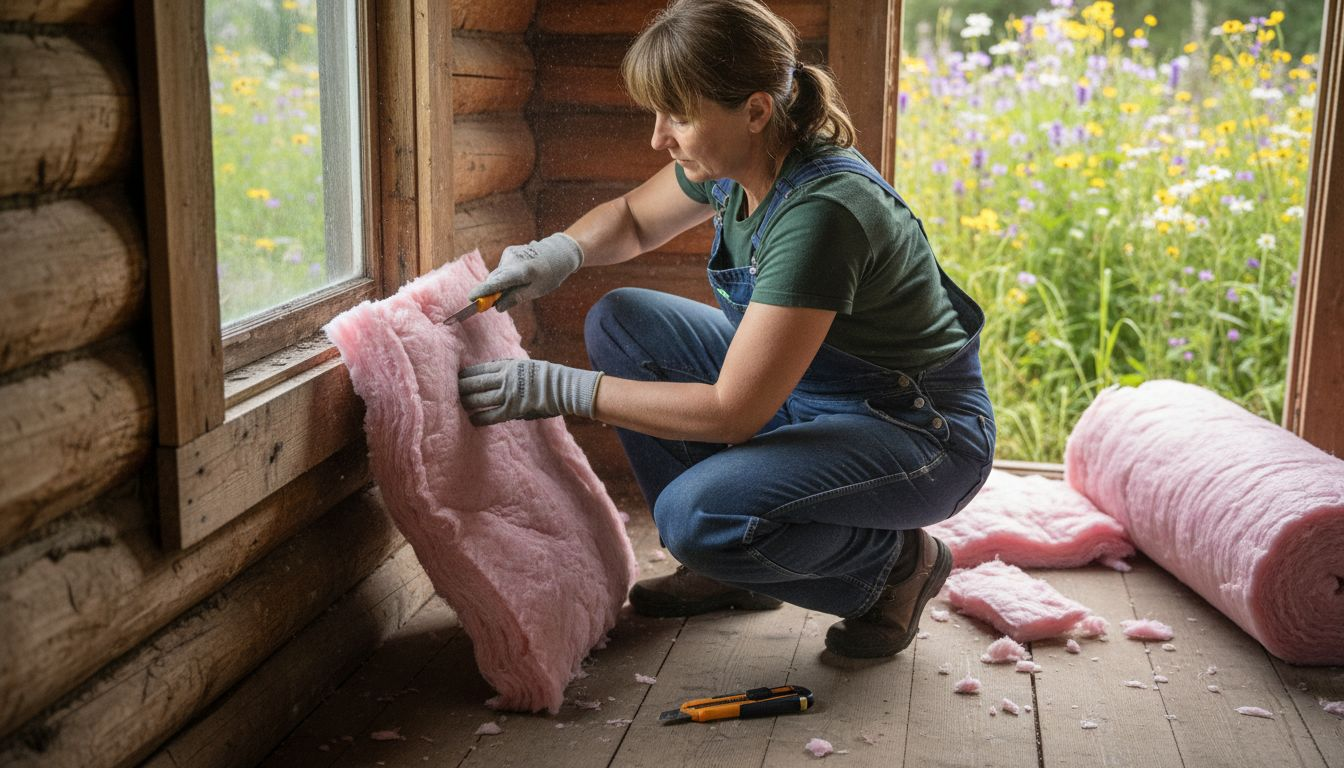
Mineral wool (rock wool and slag wool) performs better in humid conditions than fibreglass. It’s naturally fire-resistant and provides good acoustic dampening alongside thermal insulation. Installation requires proper safety equipment, as the fibres can irritate skin during application.
Cellulose is made from recycled paper and appeals to environmentally conscious homeowners. It’s treated to resist fire and pests, and it settles into gaps more effectively than batts. However, it requires professional installation equipment and can absorb moisture if not properly managed.
Rigid foam boards (polystyrene and polyurethane) deliver high thermal resistance in thinner packages. This makes them ideal for compact cabins where space is limited. They’re moisture-resistant but come with higher costs compared to traditional batts.
Compare key features of each material:
- Fibreglass: affordable, easy installation, moisture-sensitive
- Mineral wool: moisture-resistant, fire-rated, heavier than fibreglass
- Cellulose: eco-friendly, excellent gap-filling, needs professional installation
- Rigid foam: highest performance per inch, premium pricing, space-efficient
When evaluating options, consider sustainable insulation choices that balance performance with environmental impact. Your UK climate demands materials that won’t degrade when exposed to damp conditions throughout the year.
The best insulation material for your cabin isn’t necessarily the most expensive—it’s the one that handles British moisture whilst meeting your thermal performance targets.
Thickness matters as much as material type. A thinner premium material sometimes outperforms a thicker budget option. Work with your cabin supplier to calculate the right thickness for your specific location and intended use.
Installation difficulty varies between materials. Batts are straightforward for DIY work, whilst loose-fill and spray foam require specialist equipment. Factor installation costs alongside material costs when comparing options.
Pro tip: Request samples or specifications for materials suited to UK climate zones—specifically ask about moisture vapour transmission rates, as this determines how well materials handle British dampness without losing insulating properties.
To clarify material selection for your UK garden cabin, here’s how popular insulation types stack up regarding thermal efficiency, moisture handling, and sustainability:
| Material Type | Thermal Efficiency per Inch | Moisture Handling | Sustainability |
|---|---|---|---|
| Fibreglass | Moderate performance | Loses effectiveness when damp | Low recycled content |
| Mineral Wool | High performance | Maintains insulation when humid | Often made from waste |
| Cellulose | Good performance | Requires careful moisture control | Made from recycled paper |
| Rigid Foam Board | Excellent performance | Moisture-resistant, space-saving | Varies; some recyclable |
| PIR Board | Superior in thin layers | Excellent moisture resistance | Moderate eco ratings |
Thermal Performance And Environmental Impact
Choosing the right insulation material affects both your energy bills and your environmental footprint. A well-insulated cabin creates a regulated thermal envelope that keeps heat in during winter and out during summer, dramatically reducing energy consumption.
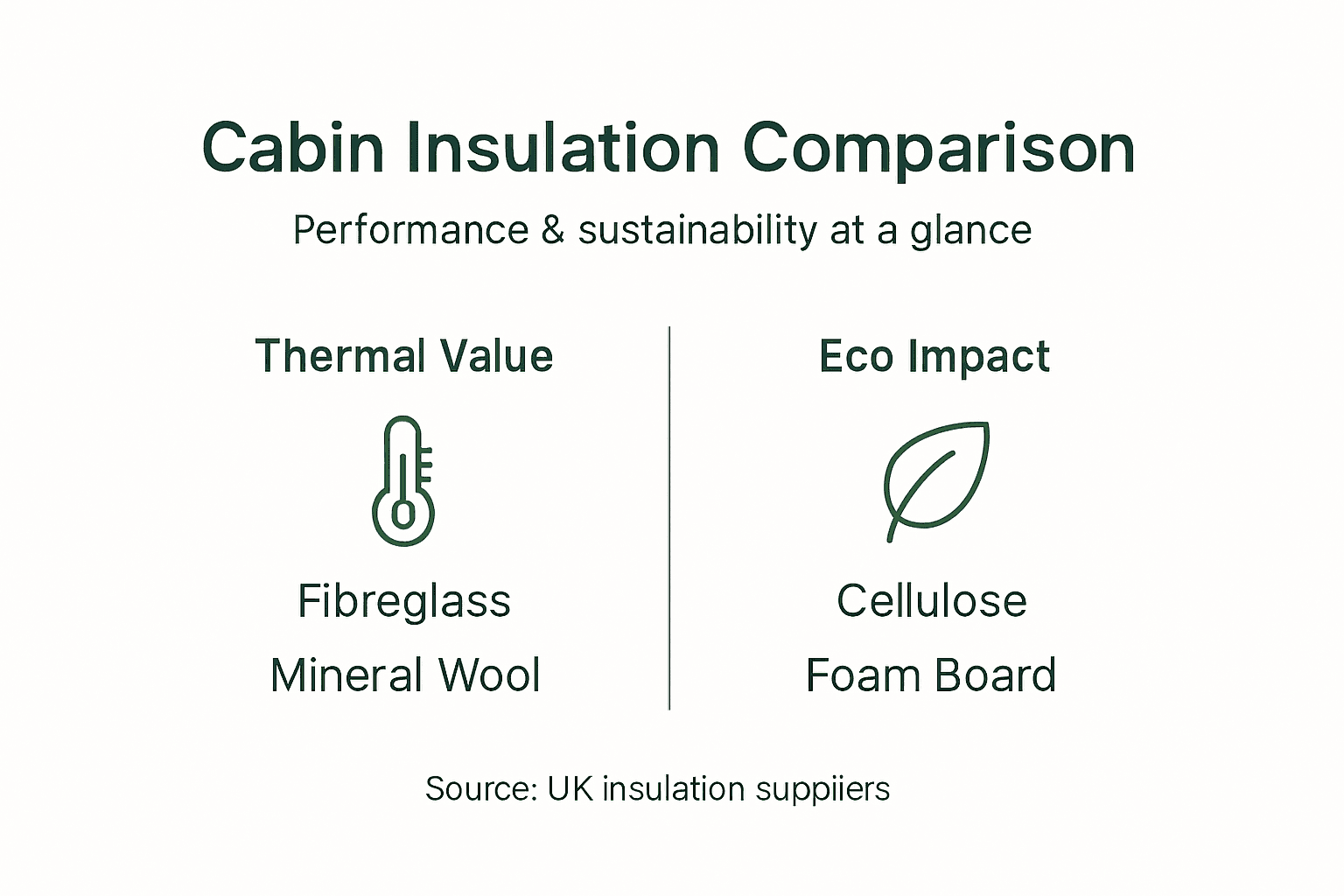
When you insulate your bespoke garden cabin properly, you’re making two investments simultaneously. The first is immediate comfort—no more cold corners or draughty spots. The second is long-term savings through lower heating costs and a smaller carbon footprint throughout the cabin’s lifespan.
Thermal performance depends on the material’s R-value, which measures resistance to heat flow. Higher R-values mean better insulation. However, thicker isn’t always better—some materials like PIR boards deliver excellent performance in thinner layers, saving space in compact cabin designs.
Environmental impact extends beyond just energy savings. The manufacturing process matters too. Sustainable options like sheep wool and recycled foam insulation reduce embodied carbon whilst maintaining strong thermal performance.
Consider these environmental factors when selecting materials:
- Manufacturing impact: how much energy went into producing the material
- Recyclability: whether it can be reused or recycled at end of life
- Lifespan: longer-lasting materials reduce replacement waste
- Health: whether it contains harmful chemicals or off-gases
- Local sourcing: reduced transport emissions if sourced nearby
Proper insulation also prevents moisture problems that damage cabin structures over time. When you reduce dampness through effective insulation, you’re extending your cabin’s lifespan and avoiding costly repairs down the line. This longevity multiplies the environmental benefit of your initial investment.
Better insulation reduces both your heating bills and environmental impact—they work together, not against each other.
The relationship between thermal efficiency and environmental responsibility is straightforward. When heating energy consumption drops, your carbon footprint shrinks proportionally. A cabin that stays warm naturally requires less fuel or electricity to maintain comfort throughout the year.
Combining high-performance materials with proper installation practices maximises these benefits. Work with your cabin supplier to balance thermal performance against environmental considerations that matter to you.
Pro tip: Ask your cabin supplier for life-cycle assessment data on materials—this shows the total environmental impact from manufacturing through disposal, helping you make genuinely sustainable choices rather than relying on marketing claims.
Installation Methods For Bespoke Cabins
Instalation of insulation in your bespoke garden cabin requires careful planning and precise execution. The process varies depending on your cabin’s design, log construction, and which areas you’re insulating first.
The foundation of any insulation job is sealing gaps between logs. Over time, logs settle and gaps appear, allowing cold air to penetrate. Using chinking or caulking creates an airtight barrier that stops draughts before they start.
Walls and ceilings need insulation fitted between timber framing once gaps are sealed. You can install insulation boards or batts depending on your material choice and available space. Accurate measurement prevents waste and ensures complete coverage without compression, which reduces effectiveness.
Key installation steps include:
- Measure wall cavities and log gaps carefully
- Seal gaps using appropriate chinking or caulking material
- Fit insulation boards or batts firmly into wall spaces
- Install vapour barriers to control moisture movement
- Add internal cladding for finishing and protection
- Insulate floor areas with rigid boards and ventilation space
- Complete roof insulation with proper ventilation underneath
Moisture control is critical in UK cabins. A vapour barrier prevents damp moving through insulation, which would destroy its thermal performance. Install barriers on the warm side of insulation during winter months.
Floors and roofs demand special attention. Floor insulation requires rigid insulation boards installed beneath with space underneath for air circulation. Roof insulation needs ventilation pathways to prevent condensation buildup in the attic space.
Accurate measurement and proper sealing are the two factors that separate effective insulation from disappointing results.
Internal cladding finished the job and protects insulation from damage. It creates a neat interior appearance whilst concealing installation beneath. Cladding also provides a thermal mass that stabilises temperature swings.
Bespoke cabins benefit from customised insulation approaches that match their unique dimensions. Work with your cabin supplier during the design phase to plan insulation placement that complements your cabin’s layout and intended use.
Pro tip: Install insulation before adding internal finishes and furniture—it’s far easier to fit insulation into empty cavities than working around existing structures, and you’ll achieve better coverage and performance.
Considering installation, here is a summary of insulation methods for bespoke cabins and their impact on performance and durability:
| Installation Method | Main Benefit | Typical Challenge |
|---|---|---|
| Batts in Walls & Roof | Easy DIY, fast coverage | Risk of compression, gaps |
| Boards on Floor/Roof | Space-efficient, precise fit | Requires accurate measurements |
| Spray Foam | Perfect gap filling, high efficiency | Needs specialist equipment |
| SIP Panels | Consistent factory quality | Higher initial cost |
| Mixed Material Approach | Balances cost and performance | Coordination of different types |
Costs, Common Pitfalls, And Alternatives
Insulation costs for your bespoke garden cabin depend on material type, cabin size, and labour expenses. Budget ranges vary significantly, so understanding the breakdown helps you make informed decisions without overspending.
Material costs form the foundation of your budget. Fibreglass batts cost less upfront than rigid foam boards or mineral wool. However, cheaper materials sometimes require thicker installation, which can offset initial savings through increased labour and space requirements.
Labour costs often exceed material expenses, especially for professional installation. DIY work reduces labour costs but risks poor installation quality. Gaps, compression, and uneven coverage reduce thermal performance, costing you money through higher heating bills for years to come.
Common installation pitfalls waste money and compromise comfort:
- Neglecting vapour control layers: moisture penetrates insulation, destroying effectiveness
- Uneven insulation thickness: cold spots develop where coverage is thin
- Insufficient sealing: draughts bypass insulation entirely
- Compression during installation: crushed insulation loses 20-30% of its performance
- Missing air gaps: proper ventilation prevents condensation and rot
When comparing insulation installation costs, factor in both materials and labour carefully. Professional installation ensures long-term savings through better thermal efficiency and durability.
The cheapest insulation option today often becomes expensive when poor installation requires repairs and replacement within a decade.
Structural Insulated Panels (SIPs) offer an alternative approach. These factory-built panels combine insulation with structural framing, speeding up installation significantly. SIPs cost more initially but reduce labour time and guarantee consistent quality control during manufacturing.
Other alternatives include spray foam insulation, which fills irregular cavities perfectly but requires specialised equipment and trained installers. Aerogel insulation delivers superior performance in minimal thickness but carries premium pricing.
Cost comparison considerations:
- Total installed cost, not just material price
- Expected lifespan of the material
- Thermal performance rating and your climate
- Maintenance requirements over time
- Warranty coverage from suppliers
Bespoke cabins sometimes benefit from mixed-material approaches. Combining budget-friendly batts in walls with premium rigid boards in roofs balances cost and performance effectively.
Pro tip: Get quotes from multiple installers and request itemised breakdowns—you’ll spot where costs differ most and identify whether you’re paying for quality installation or just material markup.
Enhance Your Garden Cabin Comfort with Expert Insulation Solutions
Choosing the right garden cabin insulation materials is crucial to tackle challenges like dampness, draughts, and high energy bills highlighted in the article. Achieving year-round comfort in your bespoke garden cabin depends on proper thermal barriers, moisture control, and expert installation. Whether you are considering fibreglass for affordability or rigid foam boards for space-saving efficiency, making informed choices impacts both your cabin’s comfort and longevity.
Discover how our custom log cabins at Log Cabin Kits are designed with insulation performance tailored to the unique UK climate needs. We offer bespoke options that prioritise moisture resistance and thermal efficiency to reduce heating costs and prevent common pitfalls like cold spots or condensation buildup. Benefit from expert guidance ensuring your cabin is sealed and insulated correctly from the ground up.

Ready to transform your outdoor space into a warm retreat that lasts all year? Explore our range of bespoke garden cabins, engineered for optimal insulation and comfort. Visit Log Cabin Kits today and take the first step towards a beautifully insulated cabin that meets your needs and budget.
Frequently Asked Questions
What are the benefits of insulating a garden cabin?
Insulating a garden cabin helps maintain consistent interior temperatures, reduces energy bills, improves comfort by eliminating drafts, enhances sound dampening, adds structural support, and extends the usable season of the cabin.
What types of insulation materials are commonly used for garden cabins?
Common insulation materials include fibreglass, mineral wool, cellulose, and rigid foam boards. Each material has unique characteristics that affect thermal performance, moisture handling, and installation ease.
How do I choose the right insulation for my garden cabin?
When selecting insulation, consider factors such as thermal resistance, moisture resistance, installation ease, and the specific area (walls, roof, or floor) being insulated. It’s also wise to consider the local climate conditions.
What installation methods are effective for insulating a garden cabin?
Effective installation methods include sealing gaps between logs, fitting batts or boards into wall and ceiling cavities, installing vapour barriers to control moisture, and ensuring accurate measurements to prevent gaps or compression. Proper installation is crucial for optimal thermal performance.