
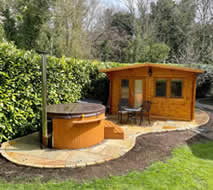
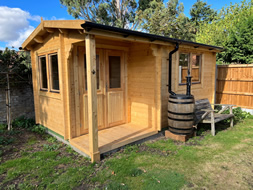
Bespoke log cabins offer charm and versatility, but without quality insulation, they can quickly turn chilly and costly during the British winter. For homeowners determined to create energy-efficient, comfortable retreats, managing moisture and sealing gaps is just as vital as choosing the right insulation material. From fibreglass to mineral wool and PIR boards, understanding the strengths and installation challenges of each option helps you avoid common UK pitfalls and maximise your cabin’s performance year-round.
Table of Contents
- Role Of Insulation In Log Cabins Explained
- Insulation Types For British Log Cabins
- How Insulation Affects Comfort And Costs
- Uk Requirements And Insulation Standards
- Installation Challenges And Common Mistakes
Key Takeaways
| Point | Details |
|---|---|
| Importance of Insulation | Proper insulation is essential for maintaining comfort, reducing energy costs, and preventing heat loss in log cabins year-round. |
| Material Choices | Selecting the right insulation material depends on specific areas and their performance; Fibreglass is economical, while PIR boards offer superior efficiency. |
| Installation Strategy | Focusing on a systematic approach to insulation, starting with the roof, helps maximise energy efficiency and mitigate cold draughts. |
| Regulatory Compliance | Understanding UK Building Regulations is crucial for insulation standards, particularly for cabins designated as habitable spaces. |
Role of Insulation in Log Cabins Explained
Insulation in your log cabin does far more than keep you warm during winter. It’s the invisible barrier between comfort and discomfort, between reasonable energy bills and shocking utility costs. Think of it as the cabin’s defence system, working constantly to regulate internal temperature, reduce heat loss, and maintain consistent conditions year-round. Without proper insulation, even the finest bespoke log cabin design loses its appeal when you’re shivering through autumn or sweating through summer.
Your log cabin’s insulation serves three fundamental purposes. First, it slows heat transfer, meaning less warmth escapes through walls, roof, and floor during cold months. Second, it stabilises indoor temperatures, preventing dramatic fluctuations that make spaces uncomfortable and force your heating system to work overtime. Third, it reduces energy consumption, directly lowering your heating and cooling costs. This last point matters significantly in the UK, where winter heating demands are substantial and energy prices continue to rise. A well-insulated cabin can reduce heating needs by 40-60%, translating to genuine savings across the heating season.
The specific benefits for your bespoke log cabin depend on where insulation is installed. Insulating the walls, roof, and floor each addresses different heat loss pathways. Walls typically account for 25-30% of heat loss, roofs for 35-40%, and floors for 15-20%, though these percentages shift based on your cabin’s design and construction. This is why a comprehensive insulation strategy targeting all three areas delivers the best results. UK homeowners often discover that insulating one area without the others creates weak points that compromise overall efficiency.
Beyond temperature control, proper insulation improves acoustic comfort and moisture management. Insulation absorbs sound, creating a quieter interior space that feels more private and peaceful. It also helps regulate humidity by reducing condensation and maintaining stable moisture levels, protecting your log cabin’s structural integrity over time. For UK climates with significant rainfall and temperature swings, this moisture management becomes particularly important for long-term durability.
Pro tip: When planning insulation upgrades for your bespoke cabin, prioritise the roof first, then walls, then floor, since roof heat loss is typically your biggest efficiency challenge.
Insulation Types for British Log Cabins
Choosing the right insulation material for your bespoke log cabin depends on your priorities, budget, and the specific areas you’re insulating. Each material performs differently, and what works brilliantly for your roof might not be ideal for your walls or floor. Understanding your options helps you make decisions that balance cost, performance, and long-term durability in the UK climate.
The most common insulation materials available today each bring distinct advantages and trade-offs. Fibreglass remains the budget-friendly option and works well for DIY installations if you’re confident with the process, though it offers moderate insulation value. Mineral wool (often called Rockwool) excels at both fire resistance and soundproofing, making it particularly valuable if your cabin adjoins neighbours or you’re concerned about acoustic comfort. PIR boards (polyisocyanurate) deliver exceptional insulation performance in thin profiles, ideal when space is limited, though they cost more upfront. Spray foam seals gaps and cracks effectively but requires professional installation, adding labour costs. For those seeking sustainable insulation choices, natural wool and cellulose options provide eco-friendly alternatives with excellent environmental credentials and comparable performance to synthetic materials.
Here’s a summary comparing common insulation materials for British log cabins:
| Insulation Material | Thermal Performance | Acoustic Dampening | Sustainability |
|---|---|---|---|
| Fibreglass | Moderate | Basic | Low |
| Mineral Wool | High | Excellent | Moderate |
| PIR Boards | Very High | Limited | Low |
| Spray Foam | High | Good | Low |
| Natural Wool | Good | Good | Very High |
| Cellulose | Good | Good | Very High |
How you install insulation varies by location within your cabin. Wall insulation can be applied externally using breathable facades that allow moisture to escape, or internally using timber battens with mineral wool or foam boards between them. External installation protects the log structure better but requires careful detailing around windows and doors. Roof insulation typically uses PIR boards or mineral wool placed between beams, as this area experiences the greatest heat loss and demands robust protection. Floor insulation requires waterproof membranes and boards to guard against moisture rising from damp ground and cold air penetration from below. The critical element across all installation methods is maintaining proper ventilation and moisture control. Without adequate air circulation, moisture accumulates within insulation, reducing its effectiveness and risking mould growth that damages both the material and your cabin’s timber frame.
For UK homeowners, the climate demands year-round consideration. Winters bring sustained cold requiring materials that resist heat loss effectively, whilst damp conditions demand moisture management that many insulation types struggle with. Materials like mineral wool and breathable foam handle seasonal moisture fluctuations better than traditional rigid boards. Bespoke cabin installations also allow you to combine materials strategically, using spray foam to seal gaps and penetrations, then layering mineral wool or PIR boards for main insulation coverage. This hybrid approach often delivers superior results compared to relying on a single material type across your entire cabin.
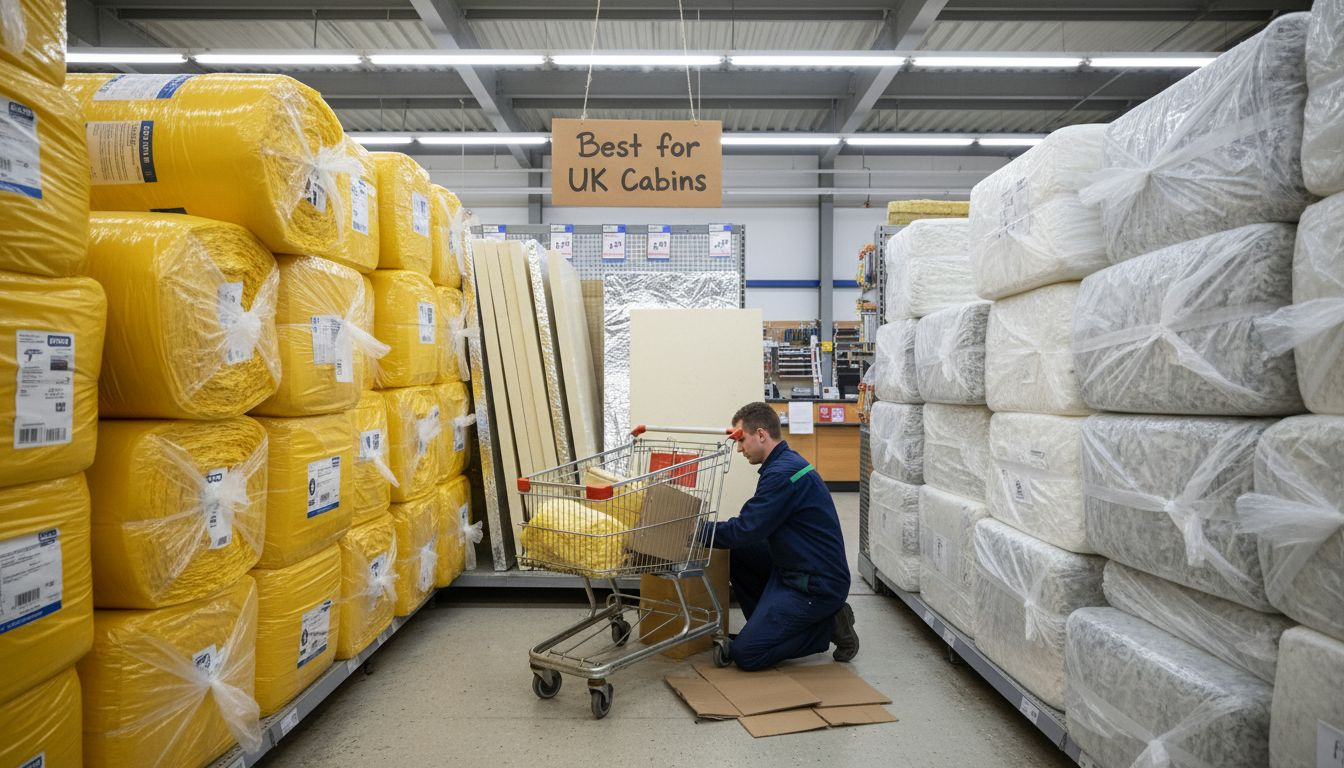
Pro tip: Select PIR boards for your roof and walls if budget allows, as their superior performance in thin profiles maximises usable interior space whilst providing UK-grade thermal protection.
How Insulation Affects Comfort and Costs
Insulation transforms how your bespoke log cabin feels and what it costs to maintain. The relationship between insulation quality and your lived experience is direct and immediate. Poor insulation means cold spots near exterior walls, temperature swings between rooms, and the constant hum of your heating system working overtime. Good insulation delivers consistent warmth, stable indoor conditions, and a cabin that feels genuinely comfortable to occupy throughout the year.
Comfort improvements from proper insulation extend beyond simple temperature regulation. When insulation prevents heat loss effectively, you eliminate cold draughts and chilly corners that force you to wear layers indoors or cluster near heat sources. Thermal stability means your cabin maintains steady temperatures rather than fluctuating wildly between day and night, which reduces physical stress on your body and improves sleep quality. Properly insulated log cabins also enhance acoustic comfort by absorbing sound, making interior spaces quieter and more peaceful. This matters particularly if your cabin adjoins neighbouring properties or sits near woodland where wind and wildlife create constant background noise. Many UK homeowners overlook this benefit until they experience how much quieter a well-insulated cabin feels compared to one with minimal protection.
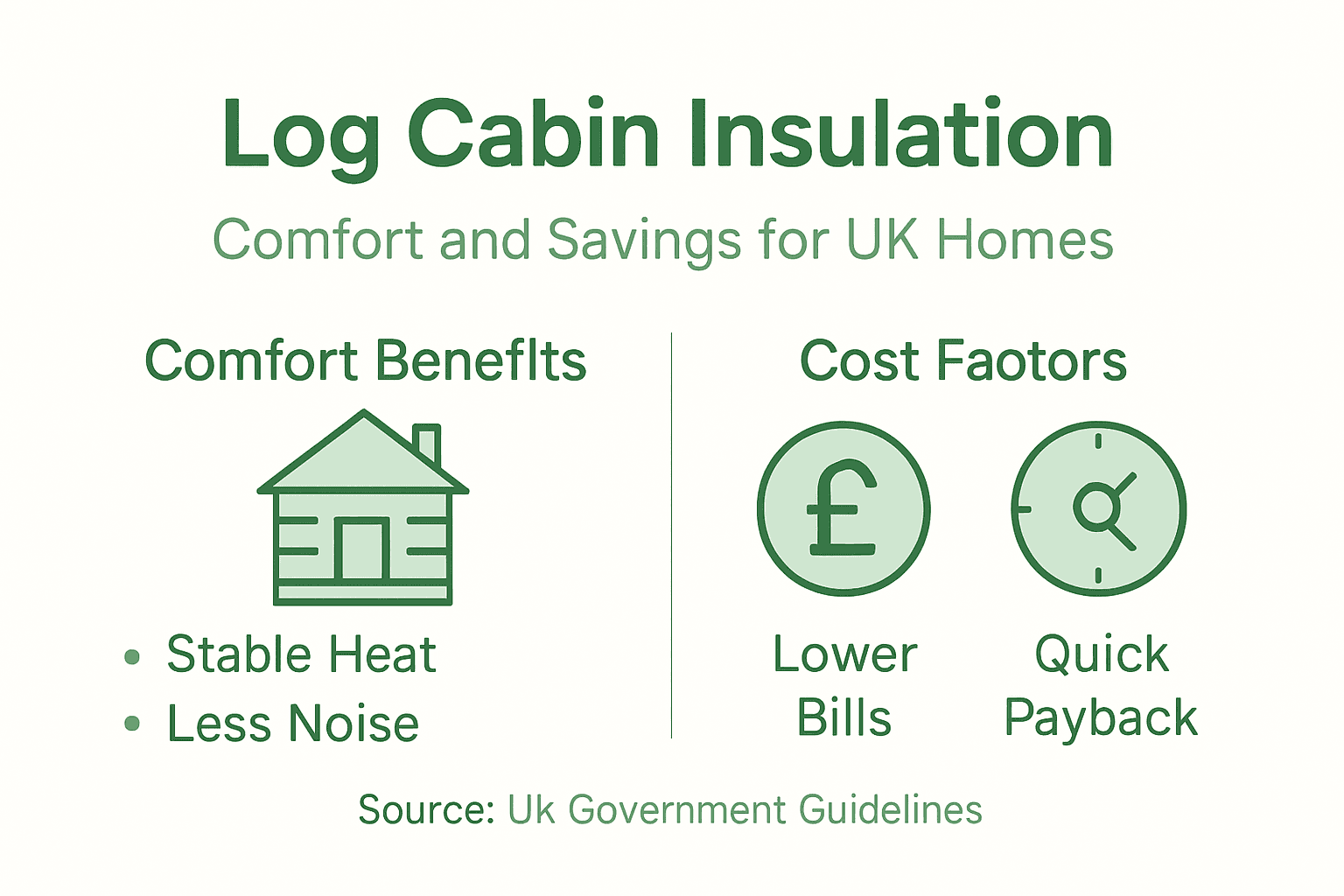
The financial impact of insulation appears immediately in your energy bills and accumulates significantly over time. A well-insulated cabin reduces heating demand by 40-60%, which translates to tangible savings during the UK’s lengthy winter season. The exact figures depend on your current insulation levels, the materials you select, and how rigorously you maintain your heating system, but the pattern remains consistent: better insulation equals lower heating costs. Consider this practical example: if your cabin currently costs £800 annually to heat and you improve insulation strategically, reducing that figure to £320-480 yearly, you’re looking at £320-480 in genuine savings every single year. Over ten years, that’s £3,200-4,800 recovered from your household budget. Initial insulation investment ranges widely depending on material choices and installation complexity, but most bespoke cabin owners recoup their spending within five to seven years through accumulated energy savings alone.
Beyond the heating season, insulation provides additional financial benefits often overlooked during planning. Properly insulated cabins reduce moisture damage that otherwise deteriorates timber structures over time, protecting your investment’s long-term structural integrity. Insulation also enables true year-round usability, transforming seasonal structures into comfortable spaces suitable for autumn, winter, and early spring occupation. This expanded use potential increases your cabin’s value and appeal if you ever choose to sell or rent the space. When making decisions about making your log cabin energy efficient, factor in not just the upfront material and labour costs, but the years of reduced utility bills, avoided repair expenses, and extended seasonal enjoyment that quality insulation delivers. The numbers tell a compelling story in your favour.
Pro tip: Calculate your actual payback period by dividing total insulation cost by your annual heating savings, then prioritise insulating the roof first since it typically delivers the fastest return on investment.
UK Requirements and Insulation Standards
Navigating UK regulations around log cabin insulation requires understanding which rules apply to your bespoke build and when compliance becomes mandatory. The landscape differs significantly depending on whether your cabin qualifies as a garden building, a habitable space, or a structure subject to Building Regulations. This distinction matters enormously because it determines which insulation standards you must meet, what documentation you’ll need, and whether professional certification is required.
The Building Regulations framework applies when your log cabin crosses certain thresholds. If your cabin functions as a habitable space with permanent heating, it typically falls under Building Regulations Part L, which governs conservation of fuel and power. This means your insulation must achieve specific U-value targets (measured in watts per square metre per Kelvin) that limit how much heat escapes through walls, roofs, and floors. Current standards require wall insulation to achieve approximately 0.30 W/m²K or better, roof insulation around 0.16 W/m²K, and floor insulation near 0.22 W/m²K. These aren’t suggestions but minimum requirements for compliance. Many UK homeowners discover these standards only when submitting building control applications, creating costly surprises if their insulation plan falls short. Building Regulations compliance requirements depend on your specific cabin configuration, so understanding where your build sits within the regulatory framework prevents problems later.
For quick reference, here’s a breakdown of key UK insulation standards for log cabins:
| Building Part | Required U-value (W/m²K) | Typical Material Choice | Compliance Needed |
|---|---|---|---|
| Walls | 0.30 or better | Mineral Wool, PIR | Yes for habitable |
| Roof | 0.16 or better | PIR Boards, Mineral Wool | Yes for habitable |
| Floor | 0.22 or better | PIR Boards, Foam Boards | Yes for habitable |
| Storage/Hobby | More relaxed | Flexible per use | Often optional |
For cabins used as storage, hobby spaces, or structures without permanent heating, regulations often relax significantly. Garden buildings under certain floor area thresholds may avoid full Building Regulations compliance, though local authorities retain discretion and some require notification regardless. This flexibility makes bespoke cabin planning more nuanced, as your intended use directly shapes which standards apply. A cabin designed for occasional weekend use faces different requirements than one intended for regular occupation. The critical step involves confirming your specific situation with your local building control authority before finalising insulation specifications. What passes inspection in one local authority area might require modification in another, so treating this as an assumption rather than a certainty creates risk.
Beyond Building Regulations, consider standards that enhance performance even when not legally required. The Government’s Energy Performance Certificate schemes and voluntary standards like PassivHaus principles offer frameworks for achieving superior insulation performance. Many UK homeowners pursuing these voluntary standards report greater comfort and lower running costs compared to minimum compliance builds. Additionally, fire safety regulations require insulation materials to meet certain reaction-to-fire standards, typically Class A1 or European classification equivalent. Materials like mineral wool excel at meeting these requirements, whilst some foam products demand closer scrutiny of their fire performance ratings. When selecting insulation for your bespoke cabin, balance the regulatory minimums with performance considerations that affect your actual lived experience throughout UK seasons.
Pro tip: Contact your local building control authority at the planning stage, not after construction, to clarify which insulation standards apply to your specific cabin design and intended use.
Installation Challenges and Common Mistakes
Installing insulation in a bespoke log cabin presents unique challenges that differ significantly from insulating conventional brick or block structures. Log cabins expand and contract seasonally, their timber absorbs and releases moisture continuously, and their structural design creates gaps and irregular surfaces that standard insulation methods struggle to address. Understanding these challenges before installation begins prevents expensive mistakes and protects your cabin’s long-term durability.
The most common installation error involves inadequate sealing of gaps between logs, around window and door frames, and where different building materials meet. Small gaps seem trivial when you first spot them, but they create pathways for cold draughts and moisture penetration that undermine your entire insulation strategy. Poor sealing of gaps allowing cold draughts represents one of the leading causes of insulation failure in UK log cabins. Many homeowners apply insulation boards or batts to walls without first addressing these penetration points, discovering only after occupying the cabin that heat still escapes freely. Spray foam excels at sealing these irregular spaces, but it requires professional application and careful planning to avoid creating vapour barriers that trap moisture within timber. The solution involves a staged approach: first seal all gaps using breathable sealants appropriate for timber, then install main insulation layers, then create controlled ventilation that allows moisture to escape gradually rather than accumulating dangerously.
Moisture management represents the second critical challenge and often the most catastrophic when overlooked. The UK climate delivers constant dampness from rainfall, ground moisture, and seasonal condensation that threatens unprotected timber. Lack of damp proof membranes leading to moisture and rot damage demonstrates why waterproofing comes before insulation installation, not after. Without proper moisture barriers beneath your cabin and between insulation layers and timber, water wicks into wood fibres, promoting rot fungi that weaken structural timbers over years. Floors demand particular attention, as standing water and rising damp from ground beneath can saturate insulation materials and degrade their performance whilst simultaneously attacking the cabin’s structural foundation. The correct sequence involves installing waterproof membranes first, allowing them to cure fully, then adding insulation with breathable properties that allow trapped moisture to migrate outward. Using impermeable materials like standard polyethylene sheeting creates a moisture trap that accelerates timber decay rather than preventing it.
Improper ventilation causes condensation accumulation within insulation and wall cavities, particularly during the UK winter when indoor warmth meets cold external surfaces. Many installers create perfectly sealed insulation systems that trap warm, moisture-laden air indoors with no pathway for escape. This accumulated condensation then condenses within insulation materials, rendering them ineffective and promoting mould growth. The solution requires understanding how your specific insulation configuration manages water vapour, whether through open ventilation pathways, breathable materials, or carefully designed ventilation gaps. Neglecting regular maintenance after installation compounds these problems significantly. Insulation only performs as intended when building envelopes remain intact, gutters drain properly, and ventilation pathways stay clear. Many cabin owners install excellent insulation then allow gutters to clog, roof membranes to degrade, or ventilation grilles to become blocked by debris, undoing months of careful installation work.
Pro tip: Before any insulation work begins, address foundation issues, ensure proper drainage around your cabin, and install damp proof membranes correctly, treating these foundational steps as prerequisites rather than optional additions.
Enhance Your Bespoke Log Cabin with Expert Insulation Solutions
Struggling with keeping your log cabin comfortable throughout the demanding UK seasons and frustrated by high energy bills caused by poor insulation Despite understanding the importance of wall roof and floor insulation challenges like moisture management and sealing gaps may still leave you feeling uncertain. At Log Cabin Kits we specialise in custom garden log cabins designed to meet UK needs including expert guidance on insulation choices and installation techniques that prevent common mistakes such as trapped moisture and heat loss.
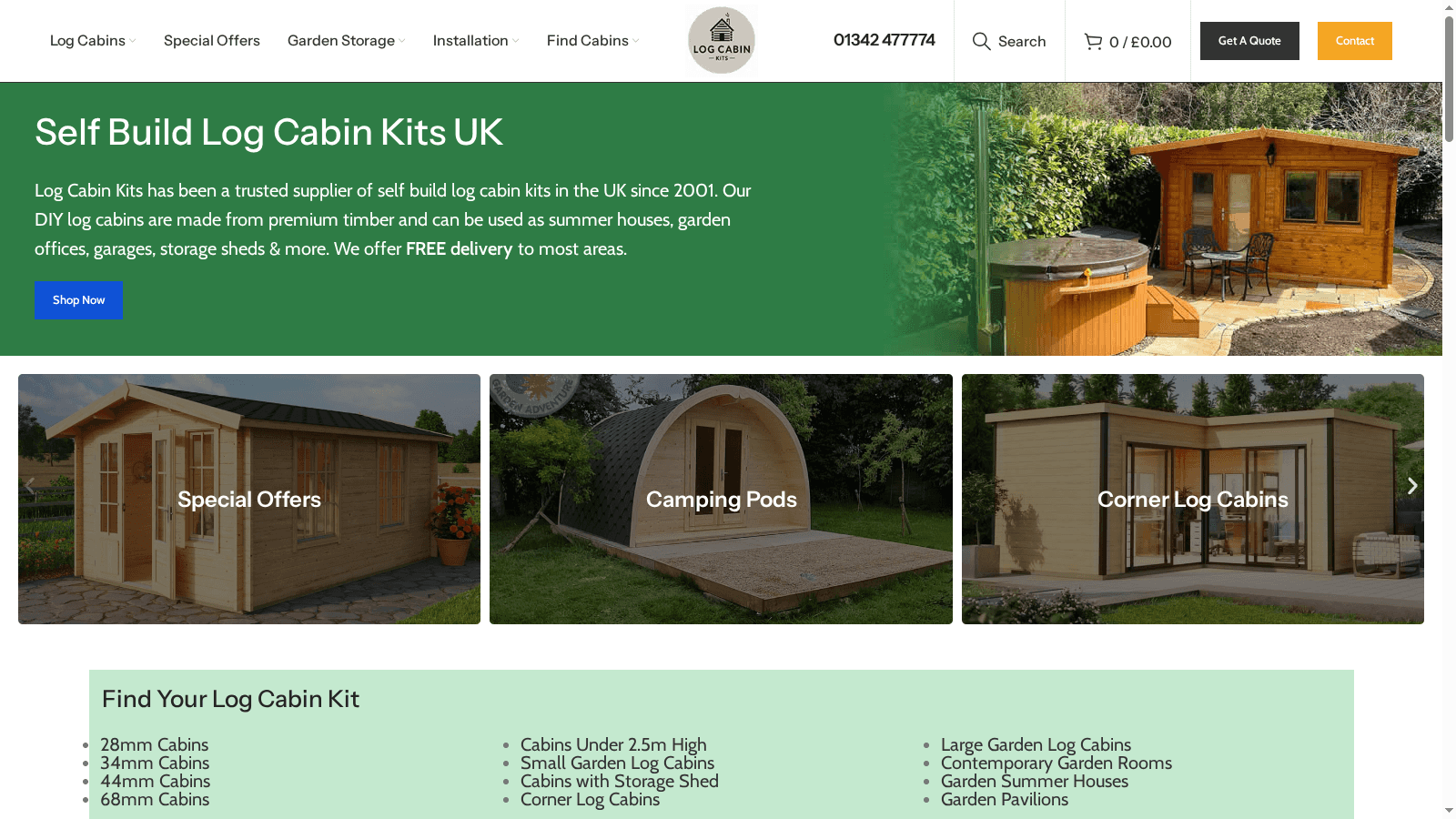
Discover how premium materials like PIR boards and mineral wool paired with professional advice can transform your bespoke cabin into a warm energy-efficient sanctuary. Don’t wait for costly repairs or uncomfortable seasons. Visit Log Cabin Kits today to explore our bespoke log cabin builds with tailored insulation options. Take control of your cabin’s comfort and cost efficiency now by selecting the right solutions that fit your lifestyle and UK regulations.
Frequently Asked Questions
How can insulation improve comfort in my log cabin?
Proper insulation maintains stable indoor temperatures, reduces cold draughts, and minimises temperature fluctuations, creating a more comfortable living environment throughout the year.
What are the different types of insulation suitable for log cabins?
Common insulation materials for log cabins include fibreglass, mineral wool, PIR boards, spray foam, natural wool, and cellulose. Each has unique advantages regarding thermal performance, acoustic dampening, and sustainability.
How does insulation affect energy efficiency and costs?
Effective insulation can reduce heating demand by 40-60%, resulting in significant savings on energy bills over time. This means lower utility costs during colder months when heating is typically needed the most.
What are the UK Building Regulations regarding insulation in log cabins?
When a log cabin is used as a habitable space with permanent heating, it must comply with specific U-value targets set by Building Regulations. Walls typically require a U-value of around 0.30 W/m²K, roofs about 0.16 W/m²K, and floors approximately 0.22 W/m²K.