

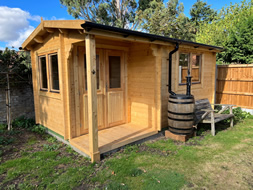
Start at 0.5 m: UK Garden Room Cable Depth and Checklist

The typical minimum burial depth for garden cables is 0.5 metres, but that number isn’t fixed in stone. If your ground is heavily dug, planted with trees, or you’re running a long distance to a garden room, you may need to go deeper or add extra protection. Before you dig, check whether the work needs reporting under Part P, and get a registered electrician involved early.
TL;DR:
- Burial depths should be increased to 600-1,000 mm in cultivated or heavily dug ground to prevent accidental damage.
- Correct cable types such as steel wire armoured or insulated ducts are essential for safety and future maintenance, with proper termination and earthing required.
- Longer cable runs and poor soil conditions demand larger conductors to manage voltage drop and heat dissipation effectively.
- Compliance requires early planning, including Part P regulations, route recording, warning tape, and proper sealing and bonding at entry points.
- Pre-planning cable route and entry points during cabin design simplifies installation, reduces rework, and ensures safe, compliant wiring for garden rooms.
Table of Contents
- 1. Recommended depths and when to increase them
- 2. Cable types and mechanical protection options
- 3. Cable size, voltage drop and soil thermal factors
- 4. Installation and compliance checklist
- 5. Practical site tips for laying cables to a garden room
- 6. LogCabinKits practical notes for garden rooms and wiring planning
- 7. An installer’s honest view on common wiring mistakes
- 8. How LogCabinKits can help with wiring and cabin planning
- Sources
- FAQ
1. Recommended depths and when to increase them
For most household gardens, IET guidance points to 500 mm (0.5 m) as the depth that keeps buried cables safe from ordinary digging and gardening. That’s the figure most electricians work to for a straightforward run to a garden room or outbuilding.
But your garden isn’t every garden. If you’re planting trees, running an allotment bed, or planning to rotavate a vegetable patch above the cable route, the same IET guidance recommends 600 to 1,000 mm for cultivated or agricultural ground. The deeper figure reflects how much further a spade or fork can reach when someone’s really digging in.

BS 7671 itself doesn’t hand you a single number. It asks for “sufficient depth”, which means you have to think about what’s likely to happen above the cable, not just copy a figure from a guide. That’s backed up by law: Regulation 14 of the Electricity Safety, Quality and Continuity Regulations requires every underground cable to be kept at a depth, or otherwise protected, that avoids damage from reasonably foreseeable land use, and to be marked so people know it’s there.
Ask yourself these questions before you settle on a depth:
- Will this ground ever be dug, rotavated or have trees planted in it?
- Is the route close to a path, patio or driveway that might be relaid one day?
- How long is the cable run, and does that change your protection choices?
- Will future owners know exactly where the cable sits?
2. Cable types and mechanical protection options
Once you know your depth, you need to pick the right cable and protection method. Steel wire armoured (SWA) cable is the common choice for direct burial because the armour gives strong mechanical protection. But armour has to be terminated correctly at both ends, and depending on the installation, it may need to be earthed as part of the bonding arrangement. Get this wrong and you lose the protection you paid for.
Twin-and-earth cable run inside conduit, or insulated and sheathed cable inside a duct, is also acceptable and can be easier to maintain. Ducts allow you to pull a new cable through later without digging up the garden again, especially if you include a draw pit at any bends or long straight sections.
Duct quality matters more than people expect. A cheap, thin-walled pipe can crack under soil pressure or from a stray spade strike years later. Recent IET Wiring Matters discussion confirms that even SWA buried direct still has to meet BS 7671, and that insulated and sheathed cable in a proper duct is a reasonable alternative when designers confirm it suits the site.
- SWA suits direct burial but needs correct termination and possible earthing.
- Twin-and-earth in conduit or duct suits sites where future access matters.
- Warning tape and a written route record cut the risk of anyone digging blind later.
Pro Tip: Keep a simple sketch of your cable route with measurements from a fixed point, such as the house wall, so nobody has to guess where it runs in five years’ time.
3. Cable size, voltage drop and soil thermal factors
Cable size isn’t just about the load you’re supplying. It’s also about how far the cable travels and what’s around it underground.
Voltage drop builds up as the cable gets longer, so a run that would be fine at 10 metres might need a bigger conductor at 30 metres. Technical guidance on outdoor supplies makes clear that SWA is robust, but robustness doesn’t fix an undersized cable. Voltage drop and current-carrying capacity both need proper calculation before you buy anything.
Soil itself plays a part too. Appendix 4 guidance in BS 7671 explains that soil thermal resistivity affects how much current a buried cable can safely carry. Disturbed garden soil, which is most garden soil, is usually given a conservative rating. If your soil is unusually dry or resistive, you may need a bigger cable or better bedding to shift heat away from it.
- Longer runs often need a larger conductor to keep voltage drop within limits.
- Poor soil conditions can lower a cable’s safe current rating.
- Use manufacturer cable tables, BS 7671 installation method tables, or ask an electrician to calculate the right size for your run.
4. Installation and compliance checklist
Getting the paperwork and safety devices right matters as much as the digging.
- Check whether your new circuit falls under Part P. Building Regulations Part P treats garden outbuildings and new outdoor circuits as special installations, and most of this work must be reported to building control or carried out by a registered electrician who can self-certify.
- Fit RCD protection with a rated residual operating current of 30 mA or less on socket outlets and other circuits feeding outdoor equipment.
- Lay warning tape roughly 225 mm above the cable so anyone digging later gets a clear warning before they reach it.
- Keep a record drawing of the route, with measurements, and attach it to the Electrical Installation Certificate.
- Seal cable entry points at the building wall properly, and check equipotential bonding where the supply enters the garden room.
Skipping any one of these steps can leave you with an installation that’s unsafe, uninsured, or both.
5. Practical site tips for laying cables to a garden room
Sand bedding protects a cable from sharp stones in the surrounding soil. If your soil is soft and stone-free and you’re using armoured cable, sand can be optional, though it’s usually worth the extra effort if you’re unsure.
Place your warning tape directly above the cable, not to one side, and route around tree roots and drainage pipes rather than through them. If the run has bends or a long straight section, a draw pit makes future maintenance far easier.
- Use sand bedding where soil contains sharp stones, even with armoured cable.
- Route around roots and drains rather than cutting through them.
- Add rodent protection where needed, since armour alone doesn’t always stop determined pests.
- Seal entry points at the garden room wall and keep a route record for future owners.
6. LogCabinKits practical notes for garden rooms and wiring planning
Deciding on your cable route before delivery day saves a lot of hassle. Where the cable enters the cabin affects the whole layout, and it can disturb insulation continuity if it’s added as an afterthought. Planning entry points early keeps your U-value detailing intact and avoids last-minute changes on site. Our garden log cabins and electrical installation guide are good starting points, alongside notes on delivery access and Part L thermal rules.

7. An installer’s honest view on common wiring mistakes
Shallow burial, missing RCDs, and no route record cause most of the rework I see. Bring in a registered electrician early, before you dig, and you’ll save yourself time and expense later.
— Martin
8. How LogCabinKits can help with wiring and cabin planning
Choosing a garden room shouldn’t mean juggling cable routes, insulation and delivery logistics on your own. Our Bespoke Log Cabin Service lets you plan cable entry points, wall thickness and layout together, so nothing gets bolted on as an afterthought once the cabin arrives. If you’d rather hand over the whole job, a professional installation service can coordinate the build and wiring routes on site.

Whether you’re after a compact garden office or something larger with multiple rooms, planning your wiring at the design stage makes the whole build smoother.
- Bespoke cabin design lets you fix cable entry points before the build starts.
- Professional installation coordinates wiring, insulation and delivery in one visit.
- Browse our garden log cabins or garden pavilions range to see what fits your plot.
Get in touch about a bespoke log cabin build to plan your wiring and layout together from day one.
Sources
- Buried conduits and ducts — IET Wiring Matters (July 2024)
- Part P of the Building Regulations — Electrical Safety First
- Regulation 14 — Underground cables (UK legislation)
FAQ
How deep should cables be buried in the UK?
Most household garden cables sit at around 500 mm (0.5 m), following IET guidance. Cultivated or agricultural ground often needs 600 to 1,000 mm because the soil gets disturbed more deeply.
What size cable do I need for a garden room?
The right size depends on the load, the length of the run and the soil around it, since voltage drop and current-carrying capacity both change with distance and soil conditions. Use manufacturer tables or ask a registered electrician to calculate the correct size for your specific run.
Is armoured cable ok for garden buildings?
Steel wire armoured cable is a common and suitable choice for a direct-buried supply to a garden building, provided it’s terminated correctly and earthed where required. IET guidance notes it must still meet BS 7671 requirements, so get the design checked rather than assuming armour alone covers you.
What are the regulations for outdoor electrical cable in the UK?
Buried cables must be kept at a depth, or otherwise protected, that avoids damage from foreseeable digging, under Regulation 14. New outdoor circuits for outbuildings also fall under Building Regulations Part P, which means the work must usually be reported or carried out by a registered electrician.