
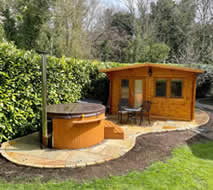
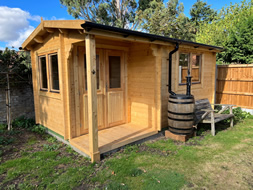
How cladding shapes your garden room’s style and comfort

TL;DR:
- Cladding in garden rooms protects against weather, moisture, pests, and structural damage, impacting long-term maintenance. Proper installation with adequate ventilation and appropriate material choice, like timber or composite, ensures durability, energy efficiency, and safety. Selecting the right cladding depends on your lifestyle, budget, and environmental conditions for a sustainable, attractive garden space.
Most homeowners spend a lot of time thinking about what their garden room will look like inside. The flooring, the furniture, the lighting. But the cladding on the outside? That often gets treated as a quick tick-box decision, something to sort once the structural choices are made. That’s a real shame, because your cladding does far more than set the tone for how your garden room looks from the patio. It shields the building from the British weather, keeps damp at bay, supports your insulation, and plays a direct role in how much you spend on maintenance for years to come. This guide will walk you through all of it, clearly and without jargon.
Table of Contents
- Understanding what cladding really does in garden rooms
- How installation methods shape performance and longevity
- Comparing cladding materials: Timber vs composite
- Choosing the right cladding for your needs
- Our view: What most cladding advice forgets
- Discover your perfect garden room
- Frequently asked questions
Key Takeaways
| Point | Details |
|---|---|
| Cladding is essential | It protects against weather, boosts insulation, and defines your garden room’s look and comfort. |
| Ventilation is crucial | A properly sized cavity and correct installation prevent moisture and mould issues. |
| Material impacts lifestyle | Timber suits those who value natural looks and can maintain it, while composite offers a modern, low-maintenance solution. |
| Regulations matter | Following UK standards for moisture and fire ensures long-term safety and performance of your garden room. |
Understanding what cladding really does in garden rooms
With the stage set, let’s break down exactly what cladding offers your garden room beyond just surface appearance.
Most people think of cladding as the skin of a building. That’s a fair starting point, but the skin has a very important job. In a garden room, the cladding forms the first line of defence against rain, wind, UV exposure, insects, and even temperature fluctuation. Get it right and everything behind it stays protected. Get it wrong and problems can creep in slowly, often invisibly, until they become expensive to fix.
There are a few key functions worth understanding properly:
- Weather resistance: Cladding deflects driving rain and prevents water from reaching the structural frame or insulation beneath.
- Moisture management: Working alongside a breather membrane and ventilated subframe, cladding helps moisture vapour escape rather than building up inside the wall.
- Thermal performance: By holding insulation securely in place, the right cladding system contributes directly to how warm or cool your garden room feels.
- Pest and rot protection: Quality cladding, correctly installed, reduces entry points for insects and eliminates the damp conditions that lead to timber rot.
- Structural integrity: Over time, a well-maintained cladding system protects the frame from weathering that would otherwise compromise the building’s stability.
Understanding these external finishes for garden rooms helps you see why the choice matters so much. It isn’t just about picking a colour or a profile you like.
One thing that often gets overlooked is fire safety. In the UK, regulations around garden buildings are becoming more stringent, and fire safety in garden buildings is something you should factor into your material selection from the start, not as an afterthought.
A properly designed cladding system uses OSB sheathing, a breather membrane, and vertical battens of 25 to 38mm, creating a ventilated cavity of 20 to 38mm that allows airflow and moisture evaporation behind the boards.
This cavity is what separates a cladding system that works from one that eventually causes problems. Air needs to move. Moisture needs to escape. When it can’t, that’s when mould, damp, and structural damage follow.
How installation methods shape performance and longevity
Understanding the function is one thing, but the way cladding is installed is equally crucial for real-world performance and value.
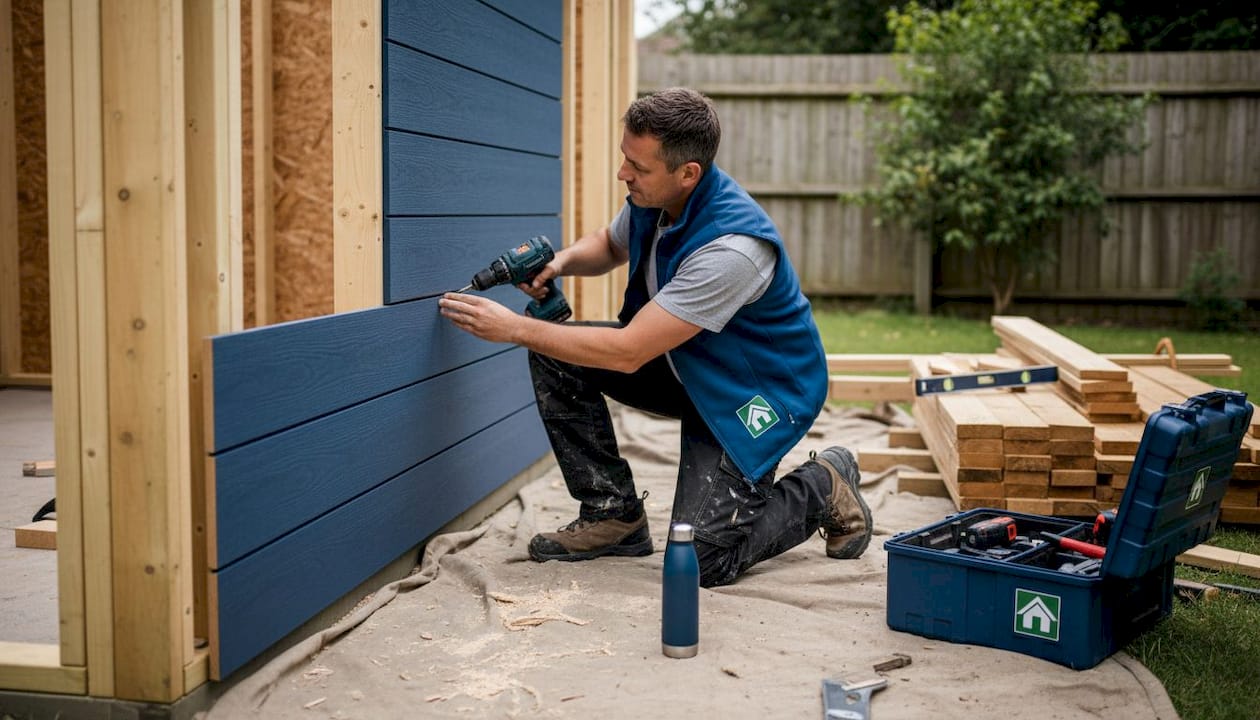
Think of the installation as a layered system. Each element has a purpose, and skipping or skimping on any one of them can undermine the whole thing. Here’s how a correct installation is structured:
| Layer | Material | Purpose |
|---|---|---|
| Structural sheathing | OSB board | Provides a rigid base and wind bracing |
| Breather membrane | Vapour-permeable sheet | Lets moisture out, keeps water out |
| Vertical battens | Timber, 25 to 38mm | Creates the ventilation cavity |
| Cladding boards | Timber or composite | Outer weather-resistant layer |
Batten spacing matters more than most people realise. Spacing battens more than 600mm apart reduces the structural support for the cladding boards, which can lead to bowing, warping, or even fixings working loose over time. Ideally, aim for battens spaced between 400mm and 600mm for the best combination of stability and airflow.
The ventilation cavity itself is also non-negotiable in most situations. A cavity under 20mm risks trapping moisture, which leads to condensation and mould forming inside the wall structure. This is the kind of damage you don’t see until it’s already significant.
There is one notable exception. Composite cladding behaves differently from timber and doesn’t rely on airflow in the same way. Because composite materials are highly resistant to moisture by nature, they can often be installed without the traditional ventilation cavity. This makes composite particularly useful in shaded or north-facing positions where moisture is more of a concern.
For anyone unsure about managing moisture in their garden building, ventilating a garden log cabin gives a useful overview of how air movement protects the whole structure, not just the walls.
Pro Tip: If your garden room sits in a shaded spot or backs onto a fence that restricts airflow, composite cladding with a correctly sized cavity is often the safer long-term choice, even if the upfront cost is slightly higher than standard timber options.
Comparing cladding materials: Timber vs composite
With the installation method covered, it’s time to look at what truly makes a difference day to day: the material you choose for your garden room’s cladding.
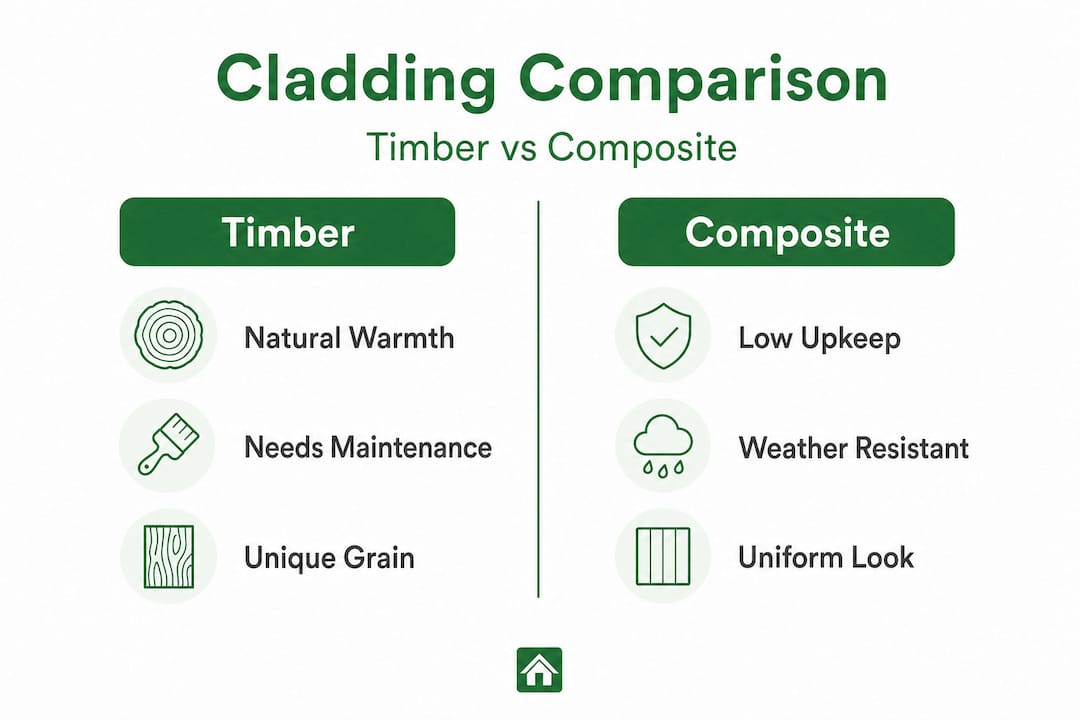
This is where personal preference starts to play a genuine role, but it’s important not to let aesthetics completely override practical reality. Both timber and composite have genuine strengths. The right choice depends on your lifestyle, your garden, and how much time you’re realistically willing to put into upkeep.
Timber cladding has a natural warmth that’s hard to replicate. It weathers beautifully if maintained well, developing a rich patina over the years. It’s also a renewable material, which matters to a lot of homeowners who want their garden room to be as eco-friendly as possible. The trade-off is maintenance. Timber needs annual attention: checking for cracks, applying preservative treatments, and touching up any areas where the finish has worn. In the UK’s damp climate, skipping a year isn’t ideal.
Composite cladding is made from a blend of wood fibre and recycled plastic. It looks like timber from a distance but behaves very differently. It resists rot, warping, and discolouration without needing regular treatment. The natural patina versus low-effort consistency debate is a real one among garden room owners. Composite costs more upfront but saves you time and money over the long term because the maintenance burden is minimal.
Here’s a simple comparison to help you weigh up the decision:
| Factor | Timber | Composite |
|---|---|---|
| Appearance | Warm, natural, evolving | Uniform, modern, consistent |
| Durability | Good with maintenance | Excellent, low degradation |
| Maintenance | Annual treatment needed | Occasional clean only |
| Eco-credentials | Renewable if sustainably sourced | Uses recycled content |
| Upfront cost | Lower | Higher |
| Long-term cost | Can increase with treatments | Generally lower over time |
Some specific situations suit one material far better than the other:
- Busy families or professionals who won’t realistically commit to annual maintenance will find composite a far better fit.
- Those who want the garden room to feel like a natural extension of a traditional garden will almost always prefer the look and feel of real timber.
- Shaded, damp positions, perhaps next to a boundary wall or under mature trees, are genuinely better suited to composite because the conditions accelerate rot in untreated timber.
- If sustainability is a priority, look for FSC-certified timber options, which are sourced from responsibly managed forests.
Exploring the best garden cabin cladding options available is a great way to see how different materials look in real settings before committing. And if you’re still working out whether a garden room is the right investment altogether, reading about the benefits of having a garden room can help confirm just how much value they add. Whether you choose timber or composite, a well-clad garden room gives you the weatherproof benefits that make year-round use genuinely comfortable.
Choosing the right cladding for your needs
Armed with the facts, here’s how you can confidently choose the right cladding based on your unique needs and property.
The decision doesn’t have to be complicated. It just needs to account for a few key factors: your available time for maintenance, the setting of the garden room, your aesthetic preferences, and your long-term budget. When you think through these honestly, the right choice usually becomes clear.
Here’s a practical checklist to help you get there:
- Assess your maintenance commitment honestly. Will you realistically treat, sand, and reseal timber once a year? If the honest answer is no, composite will serve you far better.
- Look at where the cabin will sit. North-facing walls, shaded spots, and areas prone to standing water all benefit from composite’s resistance to moisture.
- Set your full budget, not just the purchase price. Factor in the cost of annual timber treatments over ten years versus the higher initial cost of composite. The numbers often surprise people.
- Check UK moisture and fire standards for your specific situation. A ventilated subframe is essential for UK moisture control, and certain materials may require fire-retardant treatment depending on proximity to boundaries.
- Think about insulation. The cladding system you choose affects how effectively insulation is held in place and how airtight the wall build-up is. For a detailed overview, insulated garden rooms explained walks through everything you need to know.
- Consider the long-term energy savings. Proper insulation behind quality cladding can meaningfully reduce heating costs. If that matters to you, look at ways to boost energy efficiency in your garden cabin from the outset.
- Make your final material choice. Once you’ve worked through the above, revisit the comparison table and pick the material that genuinely fits your life, not the one that just looks good on paper.
Pro Tip: Good cabin insulation cuts heat loss significantly, but it only performs as well as the cladding system that surrounds it. Don’t invest heavily in insulation and then undermine it with poorly installed or unsuitable cladding.
Our view: What most cladding advice forgets
Before we wrap up, here’s our take on what really matters and what often gets missed in mainstream advice.
Most articles on cladding focus heavily on the technical side. Cavity depths, batten spacing, R-values, material grades. All of that matters, of course. But in our experience working with UK homeowners, the biggest source of regret isn’t a technical misstep. It’s a mismatch between lifestyle and material choice.
We’ve spoken to plenty of garden room owners who chose beautiful, natural timber cladding because they loved how it looked on the day it was installed. A year or two in, the maintenance has become a real chore. The cabin doesn’t look as good as it once did, and they feel a bit guilty about it. That’s not a pleasant relationship to have with a building you invested a lot of money in.
On the flip side, we’ve also seen homeowners choose composite purely for practicality, only to feel a little flat every time they look at the cabin because it doesn’t have the warmth they were hoping for.
The honest truth is that the best cladding choice is the one that fits your real life, not an idealised version of it. And if you do choose timber, don’t underestimate the importance of small gaps and airflow. Overlooking even a tiny gap in the breather membrane, or a slightly cramped installation of external finishes, can lead to moisture building up quietly behind your beautiful boards. By the time you notice a problem, the repair cost is almost always higher than what good installation would have cost in the first place.
Spend a bit more upfront on quality materials and proper installation. Future you will be genuinely pleased you did.
Discover your perfect garden room
Ready to put your new knowledge into action? Here’s where UK homeowners can find or design the ideal garden room with confidence.
At Log Cabin Kits, we offer a wide range of timber garden log cabins built with quality cladding and thoughtful design from the ground up. If you want something made precisely to your specifications, our bespoke garden cabins service lets you tailor everything, including the external finish, insulation level, and cladding material, to suit your priorities.

Not sure where to start? Browse our garden building inspiration hub for ideas and real examples of finished builds. Whether you’re after a low-maintenance composite exterior or a warm timber finish, we’re here to help you make a choice you’ll be happy with every day.
Frequently asked questions
Does cladding affect the insulation of a garden room?
Yes. The right cladding and installation create a properly sealed wall system that holds insulation in place and forms an airtight barrier, keeping your garden room comfortable in both winter and summer.
Is composite cladding really maintenance-free for UK weather?
It’s as close as you’ll get. Composite resists rot and discolouration effectively in UK climates and only needs an occasional wash down rather than any annual treatment programme.
What happens if the ventilation cavity is too small?
A cavity under 20mm can trap moisture behind the cladding boards, leading to condensation and mould forming inside the wall structure, which can cause serious damage over time.
Is fire resistance a concern with timber cladding?
Yes, especially for garden rooms close to boundaries or other structures. UK standards require attention to fire safety during installation, and fire-retardant treatments can be applied to timber cladding to bring it in line with current guidance.
How do I choose between timber and composite cladding for my space?
If you can commit to annual upkeep and want a natural evolving look, timber is a lovely choice. If you want a consistent modern finish with minimal effort, composite is the smarter long-term option.