
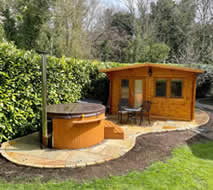
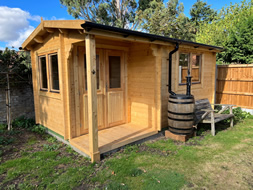
Many garden cabin owners assume timber is the only real option for cladding. It’s a reasonable starting point, but it’s not the full picture. The cladding you choose affects far more than just how your cabin looks. It shapes how much maintenance you’ll do each year, how well your cabin holds heat, and how it stands up to the wind and rain that the UK throws at it. In this guide, we’ll walk you through the main cladding types available, from classic timber profiles to modern composite and fibre cement, so you can make a confident choice that suits your garden and your lifestyle.
Table of Contents
- Cladding basics: what is garden cabin cladding?
- Overview of popular garden cabin cladding types
- Timber cladding: types, pros and maintenance
- Composite and fibre cement cladding: modern alternatives
- Factors to consider when choosing cladding for your garden cabin
- Find your perfect cabin cladding with us
- Frequently asked questions
Key Takeaways
| Point | Details |
|---|---|
| Timber needs routine care | Regular treatment every 1-3 years is essential for timber cladding longevity. |
| Composite is low-maintenance | Composite and fibre cement claddings require only occasional cleaning for upkeep. |
| Cladding suits different needs | Thicker loglap works well in exposed gardens, fibre cement is safer for fire-prone sites. |
| Aesthetics vs function | Timber evolves visually over time, while composite remains consistent and modern. |
Cladding basics: what is garden cabin cladding?
Cladding is the external layer of material that wraps around the outside of your garden cabin. Think of it as the cabin’s outer shell. It’s the first thing people see, and it’s the first line of defence against the elements.
But cladding does more than look good. It plays a key role in four areas:
- Aesthetics: The material and profile you choose sets the visual tone of your cabin, whether that’s rustic and natural or clean and contemporary.
- Protection: Good cladding keeps moisture, wind, and UV rays from damaging the cabin’s structure underneath.
- Insulation: Some cladding materials add a layer of thermal resistance, helping to keep your cabin warmer in winter and cooler in summer.
- Maintenance: Different materials demand very different levels of upkeep, and this is where many owners get caught out.
The main materials used for garden cabin cladding are timber, composite, and fibre cement. Each has its own personality, and the right choice depends on your priorities. If you’re curious about how cladding fits into the bigger picture, it’s worth reading up on garden cabin trends and checking out our cabin finishes guide for more context.
Overview of popular garden cabin cladding types
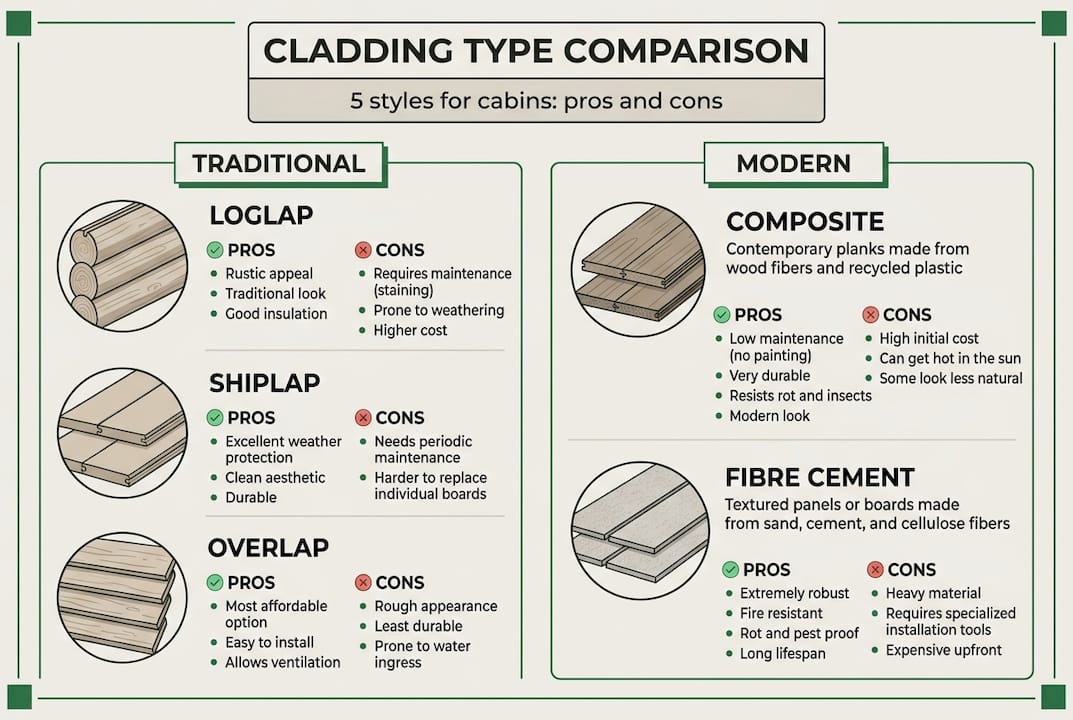
Let’s look at the main options side by side. This gives you a quick sense of what each material offers before we go deeper.
| Cladding type | Maintenance level | Typical lifespan | Insulation value | Best for |
|---|---|---|---|---|
| Loglap timber | Medium to high | 20 to 30 years | Good | Exposed, traditional look |
| Shiplap timber | Medium | 15 to 25 years | Moderate | Balanced aesthetics and cost |
| Overlap timber | Medium | 15 to 20 years | Moderate | Sheltered, budget-friendly |
| Composite | Low | 25 to 40 years | Moderate | Modern, low-maintenance |
| Fibre cement | Low | 30 to 50 years | Good | Harsh weather, fire safety |
Timber profiles like loglap, shiplap, and overlap are the most traditional choices and remain very popular. They give cabins a warm, natural character that many people love. Composite cladding is made from a blend of recycled plastics and wood fibre, offering a uniform, modern finish. Fibre cement is a robust, non-combustible option that handles tough conditions well.
One important thing to know upfront: timber needs re-treating every one to three years to prevent rot, while composite and fibre cement need only an occasional wash. That difference in upkeep is significant for many cabin owners.
If you’re exploring what’s possible with your build, take a look at our bespoke cabin possibilities page. And if insulation is a priority, our guide on heat loss reduction is well worth a read.
Timber cladding: types, pros and maintenance
Timber is the classic choice, and for good reason. It looks beautiful, it’s widely available, and it suits almost any garden style. But not all timber cladding is the same. The profile you choose makes a real difference.
- Loglap: This is the thickest of the three common timber profiles. The boards have a rounded, log-like face that gives cabins a traditional, rustic appearance. Because of its thickness, loglap offers good structural rigidity and handles exposed, windy locations well.
- Shiplap: Shiplap boards have a smooth, flat face with a rebated edge that allows each board to overlap the one below. The result is a clean, neat finish that sits somewhere between rustic and contemporary. It’s a popular mid-range choice for both looks and weather resistance.
- Overlap: Also called featheredge cladding in some contexts, overlap is the most cost-effective timber option. Boards are tapered and laid so each one overlaps the next. It works well in sheltered gardens where extreme weather isn’t a major concern.
For all timber types, maintenance is non-negotiable. Timber requires re-treating every one to three years to prevent rot and keep the wood in good condition. Skipping this is the most common mistake timber cabin owners make.
When it comes to location, exposed sites suit thicker loglap or cedar, while sheltered gardens can get away with overlap or shiplap. Matching the profile to your site conditions makes a real difference to longevity.
“The right timber profile for your cabin isn’t just about looks. It’s about matching the material to your site, your climate, and how much time you’re willing to put into upkeep.”
Pro Tip: Cedar timber contains natural oils that resist decay and insect damage without any treatment. If you want a low-maintenance timber option, cedar is worth the extra investment.
For more on keeping your cabin in top shape, our cabin maintenance guide covers everything you need. You can also learn about sustainable timber sourcing if that matters to you, and our decorative shutter tips can help you finish the look.
Composite and fibre cement cladding: modern alternatives
If the idea of treating your cabin every couple of years doesn’t appeal to you, composite and fibre cement cladding are worth a serious look. These materials have come a long way in recent years, and they’re increasingly popular for good reason.
Composite cladding is made from a mixture of recycled wood fibre and plastic. The result is a board that looks like timber but behaves very differently. Key benefits include:
- No rotting, warping, or splitting
- Consistent colour and finish over time
- Only an occasional wash needed to keep it looking good
- Available in a range of colours and profiles
- Environmentally friendly due to recycled content
One thing to be aware of: composite doesn’t develop the natural patina that timber does. Some people see that as a positive, others miss the organic character of real wood. As wood vs composite comparisons show, timber evolves beautifully over time, while composite stays consistent. Neither is wrong. It’s a personal choice.
Fibre cement cladding is made from cement, sand, and cellulose fibres. It’s extremely durable, non-combustible, and handles harsh weather without complaint. It’s particularly well suited to fire-prone areas, making it a smart choice if your cabin is near a boundary or in a location where fire safety is a concern.
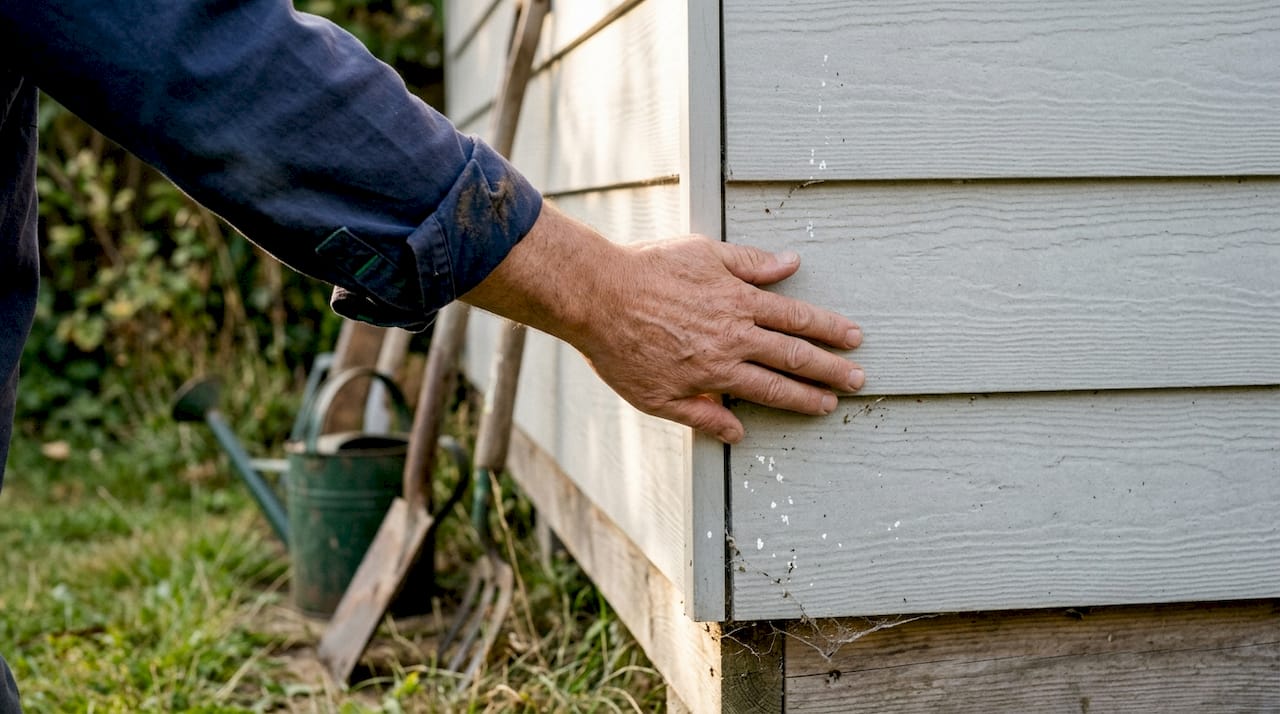
Pro Tip: Fibre cement cladding can be painted in almost any colour, giving you full creative control over your cabin’s appearance without sacrificing durability.
For guidance on finishing and protecting modern cladding materials, our finishes for modern cladding article has practical advice.
Factors to consider when choosing cladding for your garden cabin
Now that you know the options, how do you actually decide? Here are the key factors to weigh up.
| Factor | What to consider |
|---|---|
| Garden exposure | Windy or coastal sites need thicker, more robust cladding |
| Maintenance commitment | Be honest about how much upkeep you’ll realistically do |
| Insulation needs | If you use the cabin year-round, insulation value matters more |
| Visual preference | Do you want a natural patina or a consistent modern finish? |
| Budget | Timber is often cheaper upfront; composite and fibre cement cost more initially but less over time |
Exposure is probably the biggest practical factor. Exposed sites favour thicker loglap or fibre cement, while sheltered gardens give you more flexibility. If your cabin faces south-west, it’ll take the brunt of UK weather, so don’t underestimate this.
Maintenance commitment is equally important. Be honest with yourself. If treating timber every couple of years sounds like a chore you’ll keep putting off, composite or fibre cement will serve you much better in the long run.
Think about how you’ll use the cabin too. A year-round home office needs better insulation than a summer retreat. Our cabin insulation guide goes into detail on which materials and combinations work best for different uses.
Finally, think about appearance over time. Timber weathers and develops character. Composite stays the same. Both are valid. It just depends on the look you’re going for.
Find your perfect cabin cladding with us
Choosing cladding is one of the most personal decisions in your cabin build. Whether you’re drawn to the warmth of natural timber or the ease of composite, we’re here to help you get it right.
At Log Cabin Kits, we specialise in bespoke and custom garden cabin builds, which means you’re not stuck with a one-size-fits-all solution. We can help you match the right cladding to your garden, your budget, and your lifestyle. Browse our range online or get in touch with our team for a tailored quote. We love helping people create a cabin they’re genuinely pleased with, and we’ll make the whole process as straightforward as possible.
Frequently asked questions
How often should timber cladding be treated on a garden cabin?
Timber cladding needs re-treating every one to three years to prevent rot and keep the wood protected. The exact frequency depends on your local climate and how exposed the cabin is.
Which cladding type is best for fire safety?
Fibre cement is best for fire-prone areas, as it’s non-combustible and provides robust protection for garden cabins near boundaries or in higher-risk locations.
Does composite cabin cladding require much maintenance?
Composite needs only an occasional wash to stay looking good, making it far less demanding than timber over the long term.
Can timber cladding develop a natural patina over time?
Yes, timber naturally weathers and develops a patina over the years. As wood vs composite discussions highlight, some owners love this evolving character, while others prefer the consistent finish that composite provides.