

Blog


You’ve probably heard that solar panels can power your garden cabin year-round, making it completely self-sufficient. That’s a lovely idea, but the reality in the UK is more nuanced. Many believe solar panels can easily power a cabin year-round, yet our climate and seasonal light variations demand careful planning. This guide cuts through the myths and gives you practical, evidence-led advice on what solar power can genuinely offer your log cabin, helping you make informed choices for a greener, more sustainable garden retreat.
Table of Contents
- Understanding solar power in cabins: What it can and can’t do
- Types of solar setups for cabins: Portable, permanent, and hybrid
- How to size your solar system: UK garden cabin benchmarks
- Site assessment and installation tips: Getting the most from your panels
- Challenges, seasonal variations, and real-world case studies
- Expert tips and tech upgrades: Getting more from your solar cabin
- Ready to create your sustainable solar-powered cabin?
- Frequently asked questions
Key Takeaways
| Point | Details |
|---|---|
| Solar powers essentials | Panels reliably handle lighting, charging, and appliances in spring to autumn. |
| Winter backup is vital | No solar setup alone guarantees comfort through a UK winter—always plan secondary sources. |
| Right sizing saves money | Matching your system to your usage avoids overspending and disappointment. |
| Installation impacts output | Panel angle, sun access, and careful mounting greatly boost annual energy yields. |
| Upgrades and monitoring help | Latest batteries, bifacial panels, and solar monitoring maximise your cabin’s long-term sustainability. |
Understanding solar power in cabins: What it can and can’t do
To understand what’s possible, let’s clarify what solar power typically offers cabins in the UK. At its core, a solar setup includes panels, an inverter, batteries, and a charge controller. Solar panels primarily power off-grid cabins by generating DC electricity converted to AC via inverters, with batteries for storage. This means you can run lights, charge devices, power a small fridge, and operate low-load appliances comfortably.
Here’s what solar typically handles well:
- LED lighting throughout your cabin
- Mobile phones, laptops, and tablets
- Small refrigeration units
- Low-wattage tools and entertainment systems
Beyond electricity, solar thermal systems can heat water or provide space heating, which is brilliant for reducing reliance on traditional energy sources. You might explore adding solar power to your log cabin or consider solar heating for garden cabins as complementary options.
But let’s be honest about limitations. UK winters bring short days and frequent cloud cover, which drastically reduce output. Shading from trees or neighbouring structures can cut generation by half or more. If you’re planning to run high-demand appliances like electric heaters or power tools regularly, solar alone won’t cut it without significant investment. For more context on what’s realistic, check out solar panels in garden offices.
“Solar works beautifully for modest, well-planned energy needs, but expecting it to replace mains power entirely in a UK cabin requires realistic expectations and often backup solutions.”
Types of solar setups for cabins: Portable, permanent, and hybrid
Now you know what solar offers, let’s look at the main types of systems and which might suit your cabin ambitions. Each has distinct advantages depending on your budget, usage patterns, and long-term plans.
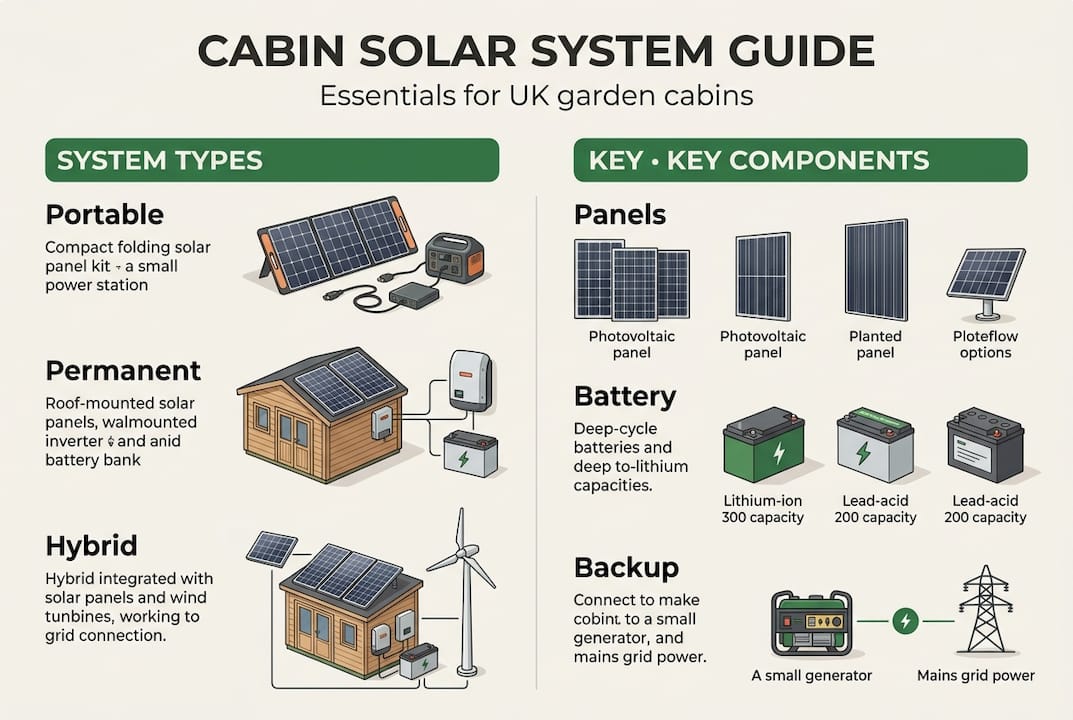
Portable and DIY kits are perfect if you want flexibility or you’re testing the waters before committing. Portable all-in-one kits start from £600, making them accessible for weekend retreats or seasonal use. You can move them around, angle them towards the sun, and expand gradually. They’re also ideal if you’re renting land or unsure about permanent installation.
Permanent fixed installations suit cabins where you’re planning long-term or year-round use. These roof-mounted systems cost from £3,500 upwards but deliver higher capacity and durability. They’re professionally installed, optimised for your roof angle, and integrate seamlessly with your cabin’s electrical setup. If you’re considering a portable solar garden office setup, permanent systems offer better value over time.
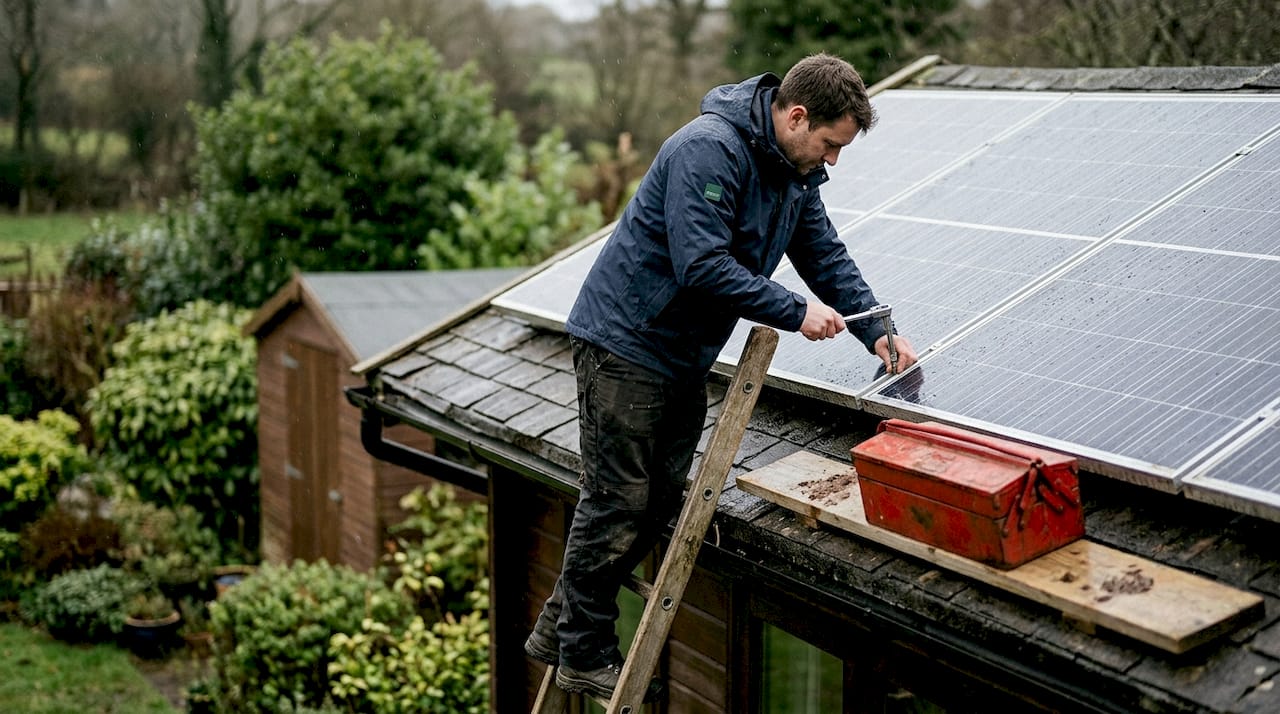
Hybrid setups combine solar with backup generators, wood burners, or even grid connection. This approach gives you resilience during winter months when solar output drops. Many UK cabin owners find hybrids the sweet spot, balancing sustainability with reliability. Explore solar options for timber cabins to see how different configurations work.
| System Type | Cost Range | Best For | Key Benefit |
|---|---|---|---|
| Portable/DIY | £600-£1,500 | Weekend use, flexibility | Low upfront cost, movable |
| Permanent Fixed | £3,500-£8,000 | Year-round, long-term | Higher capacity, durability |
| Hybrid | £4,000-£10,000+ | Full off-grid ambitions | Reliability, seasonal backup |
Pro Tip: Most UK garden cabins don’t need planning permission for solar panels, especially if they’re under 2.5 metres high and don’t protrude significantly. Always check with your local authority if you’re uncertain, but in most cases, you’re good to go.
How to size your solar system: UK garden cabin benchmarks
Once you’ve chosen your system type, it’s vital to size it to your needs. Let’s break down what that means for your garden cabin. Start by calculating your daily electricity consumption. List every device you’ll use, its wattage, and how many hours per day it runs. A typical weekend cabin might use 50W for lighting, 100W for a fridge, and 50W for device charging, totalling around 200W continuous draw.
A weekend-use cabin needs around 440W solar and 2kWh battery, while year-round cabins may require 1.6kW solar and 4-6kWh storage. Here’s a practical breakdown:
- Calculate daily watt-hours: Multiply each appliance’s wattage by hours used, then sum the total.
- Account for inefficiencies: Add 25% to cover inverter losses and battery inefficiency.
- Size your panels: Divide daily watt-hours by average UK sun hours (roughly 3-4 in summer, 1-2 in winter).
- Choose battery capacity: Aim for 2-3 days of autonomy to cover cloudy spells.
| Usage Pattern | Daily Consumption | Solar Panels | Battery Storage | Estimated Cost |
|---|---|---|---|---|
| Weekend only | 1-2 kWh | 440W | 2 kWh | £1,200-£2,500 |
| Regular use | 3-5 kWh | 880W | 4 kWh | £3,000-£5,000 |
| Year-round | 6-10 kWh | 1.6 kW | 6 kWh | £6,000-£10,000 |
UK sun hours vary dramatically. Summer might give you 5-6 hours of good generation, while winter drops to 1-2 hours on cloudy days. This seasonal swing is why many cabin owners oversize their systems or add backup power. For detailed guidance, visit solar sizing for log cabins or explore energy-efficient heating options to reduce overall demand.
Pro Tip: If you’re planning to add electricity to your log cabin, start with conservative estimates and monitor actual usage for a few months. You can always expand later. Check solar power benchmarks for more real-world data.
Site assessment and installation tips: Getting the most from your panels
Now you have a sense of system size, the next big factor is installation. This can make or break your solar investment. Start with a thorough site assessment. Walk around your cabin at different times of day and note where shadows fall. Trees, fences, and neighbouring buildings can all reduce output significantly.
South-facing roofs with a 30-40° tilt deliver optimal performance, and shading severely impacts output. If your roof faces east or west, you’ll still get decent generation, just slightly less. North-facing roofs are generally not worth it in the UK. Check your roof’s structural integrity too. Solar panels aren’t particularly heavy, but you want to ensure your cabin can support them safely, especially if you’re adding multiple panels.
Key installation considerations:
- Sun exposure: Aim for maximum southern exposure with minimal shading between 9am and 3pm.
- Tilt angle: Match your latitude (around 50-55° in the UK) or use adjustable mounts for seasonal optimisation.
- Cable routing: Keep cable runs short to minimise voltage drop, and use appropriate gauge wiring.
- Safety: Ensure all electrical work meets UK standards; consider hiring a qualified electrician for permanent installations.
For practical advice on positioning, see positioning tips for solar panels and roof maintenance tips to keep your setup in top condition. You’ll also find useful guidance on maximising solar efficiency.
Pro Tip: If your cabin roof isn’t ideal, consider ground-mounted panels. They’re easier to angle, maintain, and expand. Just ensure they’re securely anchored and positioned away from foot traffic. For detailed installation advice, visit installation advice for solar cabins.
Challenges, seasonal variations, and real-world case studies
Even the best-planned system faces obstacles. Let’s get realistic about them, with UK case studies to show what’s possible. The biggest challenge is seasonal variation. UK winter output drops to as low as 10-25% of summer, meaning backup power is essential for full off-grid use. December and January can be particularly tough, with short days and persistent cloud cover.
Shading is another major issue. Even partial shading on one panel can reduce the entire array’s output due to how panels are wired in series. Roof direction matters too. A south-facing roof generates roughly 20% more than east or west-facing alternatives.
Real-world examples help illustrate what’s achievable. Case studies include a Cornwall off-grid home, an Argyll remote cabin, and a workshop, all using solar panels with varying configurations and savings. The Cornwall home uses 3kW solar with 8kWh battery storage and a backup generator, achieving 80% solar coverage annually. The Argyll cabin relies on 1.2kW solar with wood heating, covering summer needs entirely but requiring wood heat in winter. The workshop uses portable 600W panels for tools and lighting, with grid backup for heavy machinery.
“Most people miss this: lifestyle adaptation is key. Successful off-grid cabin owners adjust their routines, running high-demand tasks during sunny periods and conserving energy on cloudy days.”
Common pitfalls include:
- Underestimating winter shortfalls and running out of power
- Ignoring shading from seasonal foliage growth
- Choosing cheap batteries that fail within 2-3 years
- Not planning for system expansion as needs grow
For inspiration and practical lessons, explore solar heating success stories and solar cabin lighting tips. Understanding winter solar challenges helps you plan backup strategies effectively.
Expert tips and tech upgrades: Getting more from your solar cabin
With challenges and possibilities clear, let’s finish with practical tips to help your cabin solar system shine. One of the smartest strategies is overpanelling. Overpanel by 130-150% for UK cloud cover, and bifacial panels and monitoring apps enhance yields and maintenance. This means installing more panel capacity than your battery can technically handle, ensuring you capture maximum energy even on overcast days.
Battery technology has improved dramatically. LiFePO4 (lithium iron phosphate) batteries last 10-15 years compared to 3-5 years for lead-acid alternatives. They’re more expensive upfront but offer better value long-term. Bifacial panels capture reflected light from the ground or roof surface, boosting output by 5-15% in ideal conditions.
Smart monitoring apps let you track generation, consumption, and battery status in real time. This helps you spot issues early and optimise usage patterns. Many modern charge controllers include Bluetooth connectivity, making monitoring simple.
Key upgrades to consider:
- LiFePO4 batteries: Longer lifespan, better performance in cold weather
- Bifacial panels: Extra generation from reflected light
- MPPT charge controllers: More efficient than PWM alternatives, especially in variable light
- Smart monitoring: Real-time data helps optimise usage and catch problems early
As your needs grow, plan for modular expansion. Start with a basic system and add panels or batteries as required. This spreads costs and lets you learn what works before committing to a larger investment. For ongoing efficiency advice, see energy efficient heating advice.
Pro Tip: Regular maintenance is minimal but important. Clean panels twice yearly, check connections for corrosion, and monitor battery health. A well-maintained system will serve you reliably for decades. For balanced perspective, review solar pros and cons to ensure you’re making an informed decision.
Ready to create your sustainable solar-powered cabin?
You now understand the essentials, from system types and sizing to installation and real-world challenges. Solar power offers genuine independence and environmental benefits for UK garden cabins, but it requires thoughtful planning and realistic expectations. Whether you’re dreaming of a weekend retreat or a year-round workspace, the right solar setup can transform your cabin into a sustainable, self-sufficient haven.
We specialise in bespoke cabin design that integrates seamlessly with solar installations, ensuring your structure is optimised for panel placement, cable routing, and energy efficiency from the start. Our custom build log cabins can be tailored to your exact specifications, with roof angles and orientations designed to maximise solar generation. We offer free UK delivery and personalised support throughout your project, making the journey from concept to completion straightforward and stress-free. Get in touch today to discuss how we can help you create a greener, more sustainable garden cabin that perfectly suits your needs.
Frequently asked questions
Do I need planning permission for solar panels on my garden cabin?
Most UK garden cabins do not require planning permission for solar panels, especially if panels are under a certain size and do not protrude excessively. No planning permission usually needed for portable or roof-mounted panels on garden cabins, but always check with your local authority if you’re uncertain.
How much solar power do I need for occasional weekend use?
A typical weekend-use garden cabin in the UK will require around 440W of solar panels and at least 2kWh of battery storage. This covers lighting, device charging, and a small fridge comfortably.
Can solar power my cabin all year round in the UK?
Solar can supply most power needs between spring and autumn, but UK winters require backup, such as a generator or wood burner. Full off-grid year-round is rare without lifestyle adjustments or supplementary power sources.
What is the typical lifespan of solar panels for a cabin?
Quality solar panels typically last 25-30 years with minimal maintenance for UK cabins. Batteries require replacement more frequently, with LiFePO4 types lasting 10-15 years and lead-acid 3-5 years.
Are there any surprising benefits or drawbacks to using solar in UK cabins?
Benefits include energy independence and eco-friendliness, but drawbacks are upfront costs and limited winter output. Many cabin owners find the lifestyle adjustments and backup planning more demanding than expected, but the rewards of sustainable living make it worthwhile.


