
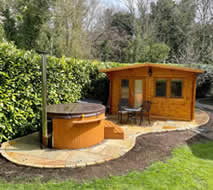
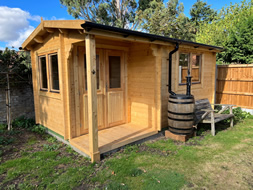
Garden cabins aren’t just simple storage sheds anymore. Modern homeowners are discovering that adding living vegetation to cabin roofs transforms ordinary outdoor structures into sustainable garden features that support local wildlife whilst reducing energy costs. Green roof cabins combine practical outdoor space with ecological benefits, offering insulation, stormwater management, and natural beauty. This guide explains what green roof cabins are, their advantages for UK gardens, and how to install and maintain them successfully in British conditions.
Table of Contents
- Key takeaways
- What is a green roof cabin?
- Benefits of green roof cabins for UK homeowners
- How to install a green roof on your cabin: practical UK considerations
- Green roof cabin options and maintenance tips for long-lasting sustainability
- Explore bespoke log cabin options with green roof potential
- Frequently asked questions about green roof cabins
Key Takeaways
| Point | Details |
|---|---|
| Definition and components | A green roof cabin is a small outdoor structure such as a log cabin, garden office, or shed with a living roof that includes a waterproof membrane, root barrier, drainage layer, growing medium, and vegetation. |
| Insulation benefits | The vegetation and soil layers provide natural insulation that reduces cooling loads and helps keep the cabin cooler in summer and warmer in winter. |
| Stormwater management | Green roofs absorb rainfall and slow runoff, reducing pressure on drainage systems. |
| Installation considerations | Extensive roofs with a shallow growing medium and a roof pitch of 2 to 20 degrees suit most garden cabins in the UK, enabling straightforward installation with sedum or similar plants. |
| Maintenance requirements | Extensive green roofs require minimal maintenance while intensive roofs demand stronger structural support and more upkeep. |
What is a green roof cabin?
A green roof cabin is a small outdoor structure such as a log cabin, garden office, or shed equipped with a living roof covered in vegetation like sedum, wildflowers, or turf. These structures combine traditional cabin functionality with ecological roofing systems that support plant life. Unlike conventional felt or shingle roofs, green roofs create miniature ecosystems right above your garden workspace or storage area.
The vegetation layer sits atop a carefully engineered system of protective materials. Each green roof includes several critical components working together:
- Waterproof membrane preventing moisture penetration into the cabin structure
- Root barrier stopping plant roots from damaging the waterproofing
- Drainage layer allowing excess water to flow away whilst retaining moisture for plants
- Growing medium providing nutrients and anchoring for vegetation
- Vegetation layer consisting of hardy, drought-tolerant plants suited to roof conditions
Green roofs fall into two categories: extensive and intensive. Extensive green roofs suit most garden cabins perfectly because they use shallow growing medium (typically 50 to 150 millimetres deep), support lightweight plants like sedum, and require minimal maintenance. Intensive green roofs feature deeper soil and larger plants but demand stronger structural support and more upkeep, making them less practical for typical garden cabins.
Low-pitch roofs work brilliantly for extensive green roof systems. Slopes between 2 and 20 degrees allow proper drainage without requiring additional retention systems to prevent soil erosion. This pitch range matches most garden log cabin designs available in the UK market, making green roof conversion straightforward for existing structures or new builds.
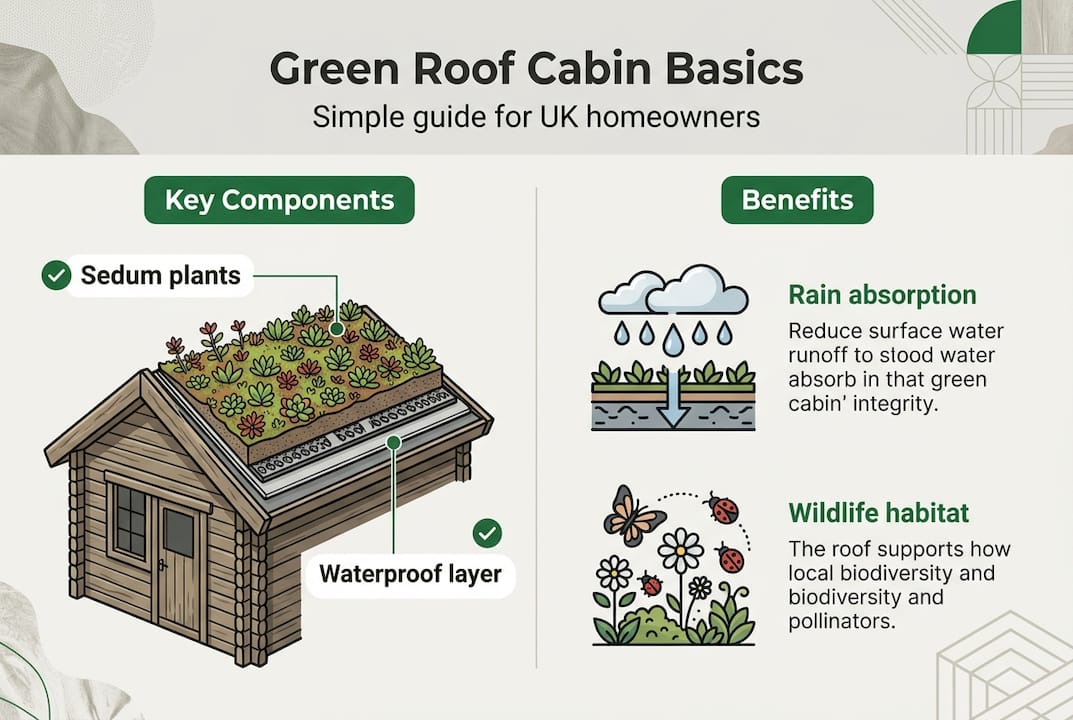
Sedum varieties dominate UK green roof cabins because these succulent plants tolerate British weather extremes beautifully. They survive dry summer periods without irrigation, withstand winter frost, and create year-round visual interest with changing colours. Wildflower mixes offer another option, attracting pollinators whilst adding seasonal blooms, though they may require slightly more maintenance than sedum.
Benefits of green roof cabins for UK homeowners
Green roofs deliver measurable environmental advantages particularly valuable in British gardens. The vegetation and soil layers create natural insulation that reduces cooling loads by 70% whilst cutting surface temperatures dramatically compared to traditional roofing materials. This thermal performance means your garden office stays cooler in summer and retains more warmth in winter, reducing heating costs if you’ve added electrical heating systems.
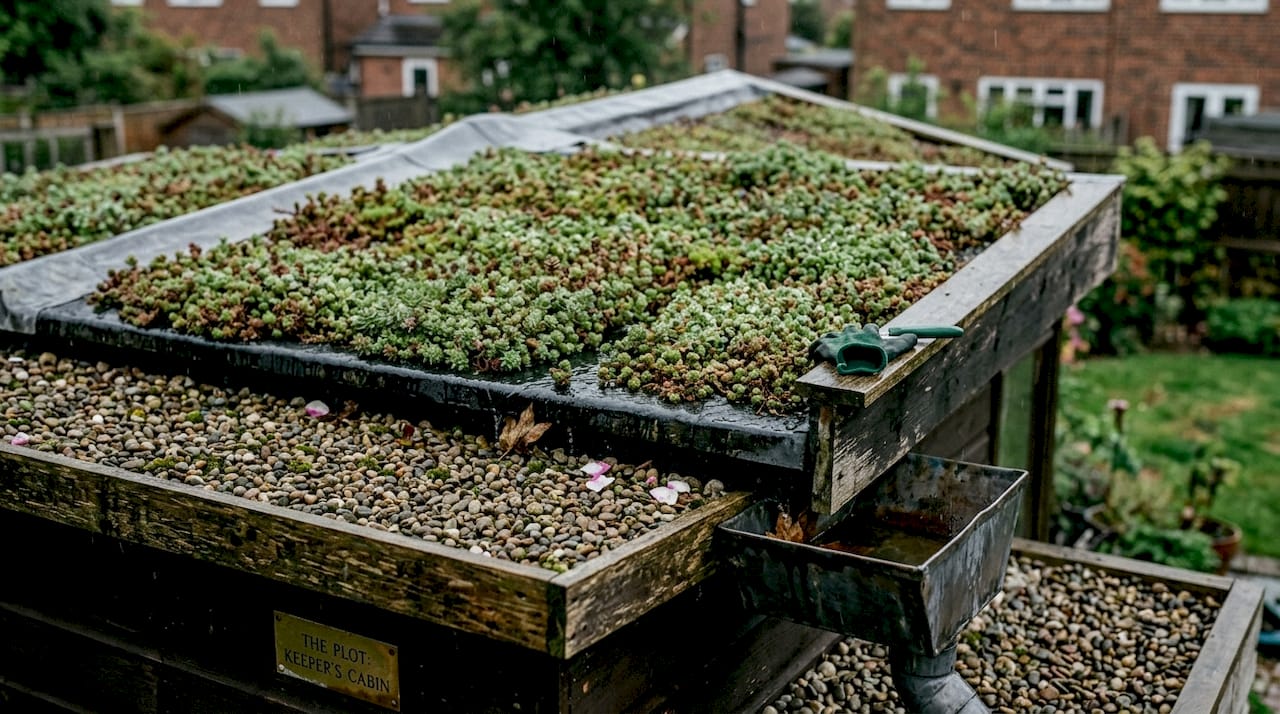
Stormwater management becomes increasingly important as UK weather patterns intensify. Green roofs absorb substantial rainfall, reducing runoff that would otherwise flow directly into drainage systems. The growing medium acts like a sponge, capturing water during heavy downpours and releasing it slowly through evapotranspiration. This natural water management helps prevent localised flooding around your property whilst reducing strain on municipal drainage infrastructure.
Biodiversity benefits extend beyond aesthetics. Green roofs support pollinators including bees, butterflies, and beneficial insects that contribute to healthier garden ecosystems. Even a small green roof cabin creates habitat corridors connecting different parts of your garden, allowing wildlife to move safely between areas. Birds appreciate the insects attracted to green roofs, whilst the vegetation itself provides nesting materials and shelter.
The visual integration with natural surroundings transforms how cabins sit within garden landscapes. Traditional roofing materials create stark contrasts with planted areas, but green roofs blend seamlessly into the garden design. Viewed from upper floor windows or neighbouring properties, your cabin becomes part of the garden rather than an intrusive structure. This aesthetic harmony particularly matters in conservation areas or properties with planning restrictions on outbuildings.
Real UK examples demonstrate these benefits practically. The Black Isle Permaculture and Arts centre in Scotland features green roof cabins that reduce heat loss whilst supporting local pollinator populations in challenging Highland conditions. Plymouth area farm cabins showcase how green roofs enhance rural garden buildings, proving the concept works across diverse British climates from Scottish highlands to southern English countryside.
Pro Tip: Combine your green roof with internal cabin insulation for maximum energy efficiency. The roof vegetation handles external temperature regulation whilst internal insulation maintains comfortable conditions year-round, creating a genuinely sustainable garden workspace.
How to install a green roof on your cabin: practical UK considerations
Structural assessment comes first before adding any green roof system. Saturated green roofs weigh approximately 100 kilograms per square metre, significantly more than traditional roofing felt. Your cabin frame must support this additional load safely, particularly during wet winter months when growing medium reaches maximum water saturation. Older cabins or those built without green roof consideration may need reinforced framing before installation proceeds.
Follow this installation sequence for successful green roof creation:
- Inspect and repair the existing roof structure, ensuring all timber remains sound without rot or weakness
- Apply professional-grade waterproof membrane across the entire roof surface with sealed overlaps and edges
- Install root barrier membrane preventing plant roots from penetrating the waterproofing over time
- Lay drainage mat or aggregate layer allowing water movement whilst retaining moisture for plants
- Add filter fabric preventing growing medium from washing into drainage channels
- Spread growing medium evenly to specified depth, typically 80 to 100 millimetres for sedum systems
- Plant vegetation using modular sedum trays for instant coverage or sedum cuttings for budget-conscious projects
- Water thoroughly and monitor establishment over the first growing season
Modular sedum trays offer the most practical solution for DIY installations. These pre-grown units arrive with established plants in lightweight growing medium, allowing immediate installation without waiting for seeds to germinate. The trays interlock securely, preventing movement during storms whilst creating uniform coverage across the entire roof surface. This approach suits weekend projects perfectly, with most small cabin roofs completable in a single day.
Professional waterproofing represents the most critical investment in any green roof project. Water damage from failed membranes costs far more to repair than initial professional installation. UK specialists understand British rainfall patterns and can recommend appropriate materials for your specific location and cabin design. Skimping on waterproofing quality creates expensive problems that undermine all other green roof benefits.
Maintenance expectations remain modest for extensive sedum roofs but require consistent attention. Plan for seasonal weeding to remove invasive plants that compete with your chosen vegetation. Check drainage channels quarterly, clearing any debris blocking water flow. During prolonged dry spells exceeding three weeks without rain, provide supplementary watering to prevent plant stress. Annual inspections should verify waterproofing integrity and identify any areas needing repair before minor issues become major problems.
Pro Tip: Schedule your green roof installation for spring or early autumn when plants establish most successfully. Avoid summer installation requiring constant watering or winter work when waterproofing materials become difficult to apply properly in cold, wet conditions.
Consider consulting roof maintenance specialists before starting your project. They can assess your specific cabin’s structural capacity and recommend appropriate reinforcement if needed, preventing costly failures after installation.
Green roof cabin options and maintenance tips for long-lasting sustainability
Modular sedum kits and traditional sedum mat installations represent the two main approaches for UK cabin green roofs. Modular systems from UK specialists arrive as pre-grown trays typically 500 by 500 millimetres square, containing established sedum plants in 80 millimetre deep growing medium. These units weigh approximately 60 kilograms per square metre when saturated, making them suitable for most cabin structures without reinforcement. Traditional sedum mat systems use thinner profiles around 50 millimetres deep with lighter weight but require more careful establishment and initial maintenance.
| Feature | Modular sedum kits | Traditional sedum mats |
|---|---|---|
| Installation difficulty | Easy, DIY-friendly interlocking trays | Moderate, requires careful laying and securing |
| Establishment time | Immediate coverage, instant green roof | 6 to 12 months for full coverage |
| Saturated weight | 60 kg/m² typical | 40 to 50 kg/m² typical |
| Growing medium depth | 80 to 100 mm standard | 50 to 80 mm typical |
| Cost | Higher initial investment | Lower material costs |
| Maintenance first year | Minimal, plants established | Regular watering, weed control |
Plant selection dramatically affects long-term success in British conditions. Sedum album, Sedum acre, and Sedum spurium thrive across UK climate zones, tolerating both coastal salt spray and inland temperature extremes. These varieties require virtually no supplementary watering once established, surviving typical British summers without irrigation. Wildflower additions like bird’s-foot trefoil, wild thyme, and sheep’s fescue grass create biodiversity whilst maintaining the low-maintenance ethos essential for practical cabin roofs.
Combining green roof insulation with proper cabin wall and floor insulation creates year-round comfort in garden offices and workshops. The roof vegetation moderates temperature extremes whilst internal insulation maintains stable conditions regardless of external weather. This dual approach proves particularly effective for heated garden rooms used throughout winter months.
Essential maintenance tasks follow seasonal patterns:
- Spring: Remove any dead vegetation, check for weed seedlings, verify drainage channels remain clear
- Summer: Monitor during dry spells exceeding three weeks, provide supplementary water if plants show stress
- Autumn: Clear fallen leaves from neighbouring trees before they smother vegetation
- Winter: Inspect after severe storms for any displaced growing medium or damaged plants
Root penetration checks prevent long-term waterproofing damage. Twice yearly, examine roof edges where root barrier meets cabin walls, looking for any plant roots attempting to grow beyond designated areas. Early detection allows simple trimming before roots compromise waterproof membranes. This preventive approach costs nothing but saves expensive repairs later.
Matching cabin styles with appropriate green roof types enhances both aesthetics and functionality. Traditional log cabins suit wildflower-enriched sedum mixes that echo rural surroundings, whilst contemporary garden offices pair beautifully with uniform sedum coverage in coordinated colour schemes. Consider your local environment when selecting vegetation, choosing plants that complement existing garden plantings and support local wildlife already present in your area.
Pro Tip: Keep a small bag of spare growing medium and sedum cuttings for repairs. Occasional bare patches develop from storm damage or animal activity, and quick repairs prevent weeds colonising empty spaces before your chosen plants can spread.
Explore customisation options that integrate green roof preparation during initial cabin construction, ensuring proper structural support from the start.
Explore bespoke log cabin options with green roof potential
Transforming your garden with a green roof cabin starts with the right foundation. Custom build log cabins can be designed specifically to accommodate green roof systems, with reinforced framing and appropriate roof pitches built in from the start. This approach eliminates retrofitting challenges whilst ensuring your cabin meets all structural requirements for safe, long-lasting green roof performance.
Expert support makes the difference between successful projects and costly mistakes. Bespoke cabin specialists understand the structural implications of green roofs and can recommend optimal designs for your specific requirements and garden conditions. Browse the log cabin gallery for inspiration on cabin styles that pair beautifully with living roofs, from traditional log construction to contemporary garden office designs.
Consider consulting during the planning stage to ensure your chosen cabin design accommodates green roof weight and maintenance access. Bespoke cabin design services can incorporate features like reinforced roof joists, optimal pitch angles, and edge details that simplify green roof installation and long-term upkeep.
Frequently asked questions about green roof cabins
What plants are best for UK green roof cabins?
Sedum varieties including Sedum album, Sedum acre, and Sedum spurium perform brilliantly across all UK climate zones, requiring minimal maintenance and no irrigation once established. Wildflowers like bird’s-foot trefoil and wild thyme add biodiversity whilst maintaining drought tolerance essential for roof conditions.
Can I install a green roof cabin myself?
Modular sedum tray systems enable successful DIY installation for homeowners with basic building skills and proper structural assessment. However, professional waterproofing installation remains essential to prevent expensive water damage, whilst structural reinforcement may require expert carpentry depending on your existing cabin’s frame strength.
How much maintenance do green roof cabins require?
Extensive sedum roofs need minimal upkeep: seasonal weeding three to four times yearly, drainage channel clearing quarterly, and occasional watering only during dry spells exceeding three weeks. Annual inspections verify waterproofing integrity and plant health, taking approximately one hour for typical cabin-sized roofs.
Are green roofs suitable for all garden cabin types?
Most garden cabins accommodate extensive green roofs with proper structural assessment and potential reinforcement. Low-pitch roofs between 2 and 20 degrees work best, whilst flat roofs require additional drainage consideration. Older cabins need structural evaluation before installation to ensure safe weight capacity.
Do green roofs increase the cost of a garden cabin?
Initial installation adds approximately £40 to £80 per square metre depending on system choice and professional installation requirements. However, improved insulation reduces heating costs for heated cabins, whilst increased biodiversity and aesthetic appeal add property value that often exceeds the initial investment over time.
How long do green roof cabins last?
Properly installed green roofs with quality waterproofing last 40 to 50 years, significantly longer than traditional felt roofing requiring replacement every 10 to 15 years. The vegetation layer protects underlying waterproofing from UV damage and temperature extremes, extending overall roof lifespan whilst reducing long-term maintenance costs.