
Most people think garden cabin lighting is just about choosing the brightest bulb, but that’s a costly mistake. Lighting your garden cabin well means balancing ambience, practicality, and energy efficiency to create a space that works for hobbies, relaxation, or entertaining guests. Whether you’re converting a cabin into a home office, art studio, or cosy retreat, the right lighting transforms how you use the space. This guide explores layered lighting strategies, eco-friendly options, and design tips tailored specifically for UK homeowners with garden log cabins.
Table of Contents
- Key takeaways
- Understanding lighting fundamentals for garden cabins
- Choosing the right lighting types for your garden cabin
- Designing functional and stylish lighting layouts
- Practical considerations and maintenance tips
- Find your perfect garden cabin and lighting solutions with Log Cabin Kits
- Frequently asked questions
Key Takeaways
| Point | Details |
|---|---|
| Layered lighting approach | Combining ambient, task and accent lighting provides flexible ambience and practicality for garden cabins. |
| Task oriented brightness | Light levels should match the activity from general use to detailed work, using recommended lumen ranges. |
| Dimmers boost efficiency | Installing dimmers lets you adjust mood and cut energy use without changing fixtures. |
| Wildlife friendly LEDs | Using warm 2700 to 3000K LEDs creates inviting light while reducing disturbance to wildlife outdoors. |
| Solar with backup | Solar lighting can be suitable for some cabins but often requires mains backup in winter or dull days. |
Understanding lighting fundamentals for garden cabins
Garden cabins need thoughtful lighting that adapts to multiple uses, from reading and crafting to hosting evening gatherings. Layered lighting avoids harsh overhead lights by combining three types: ambient lighting for general illumination, task lighting for focused activities, and accent lighting to highlight features or create atmosphere. This approach gives you control over how your space feels and functions at different times.
Understanding lumens helps you choose appropriate brightness without guessing. General shed lighting requires 10-20 lumens per square foot, whilst task areas like workbenches need 30-40 lumens, and detailed work such as painting or electronics demands 80-100 lumens. Pathways outside your cabin benefit from 50-100 lumens to ensure safe navigation after dark. These benchmarks prevent you from overlighting spaces, which wastes energy and creates uncomfortable glare.
Dimmers transform how you use your cabin by allowing mood adjustments and reducing energy consumption. Install dimmers on ambient lights to shift from bright workspace to relaxed evening setting without switching fixtures. Warm LED bulbs rated 2700-3000K create inviting atmospheres whilst minimising impact on local wildlife, which can be disrupted by cooler, bluer light temperatures.
Directional lighting reduces glare and enhances safety around your cabin. Position lights to illuminate pathways, steps, and entrances without shining directly into eyes or neighbouring properties. Angled downlights or shielded fixtures focus light where needed whilst preventing light pollution. This thoughtful placement makes outdoor spaces more usable after sunset and respects the natural environment surrounding your garden.
Pro tip: Test lighting positions with temporary battery-powered fixtures before committing to permanent installations. This lets you identify shadows, glare spots, and optimal angles without drilling holes or running cables prematurely.
Essential lighting layers for garden cabins:
- Ambient lighting provides overall illumination through ceiling fixtures or wall-mounted lights
- Task lighting targets specific work areas with adjustable desk lamps or under-shelf strips
- Accent lighting highlights architectural features, artwork, or plants with spotlights or uplights
- Safety lighting illuminates pathways, steps, and doorways with motion-activated or dusk-to-dawn sensors
Steps to calculate your cabin’s lighting needs:
- Measure your cabin’s floor area in square feet
- Multiply by 10-20 for ambient lighting lumen requirements
- Identify task areas and multiply their square footage by 30-40 lumens
- Add accent lighting as desired for atmosphere without strict calculations
- Choose fixtures that deliver total lumens whilst allowing dimmer control
Explore our comprehensive selecting lighting guide for detailed advice on matching fixtures to your cabin’s specific needs and uses.
Choosing the right lighting types for your garden cabin
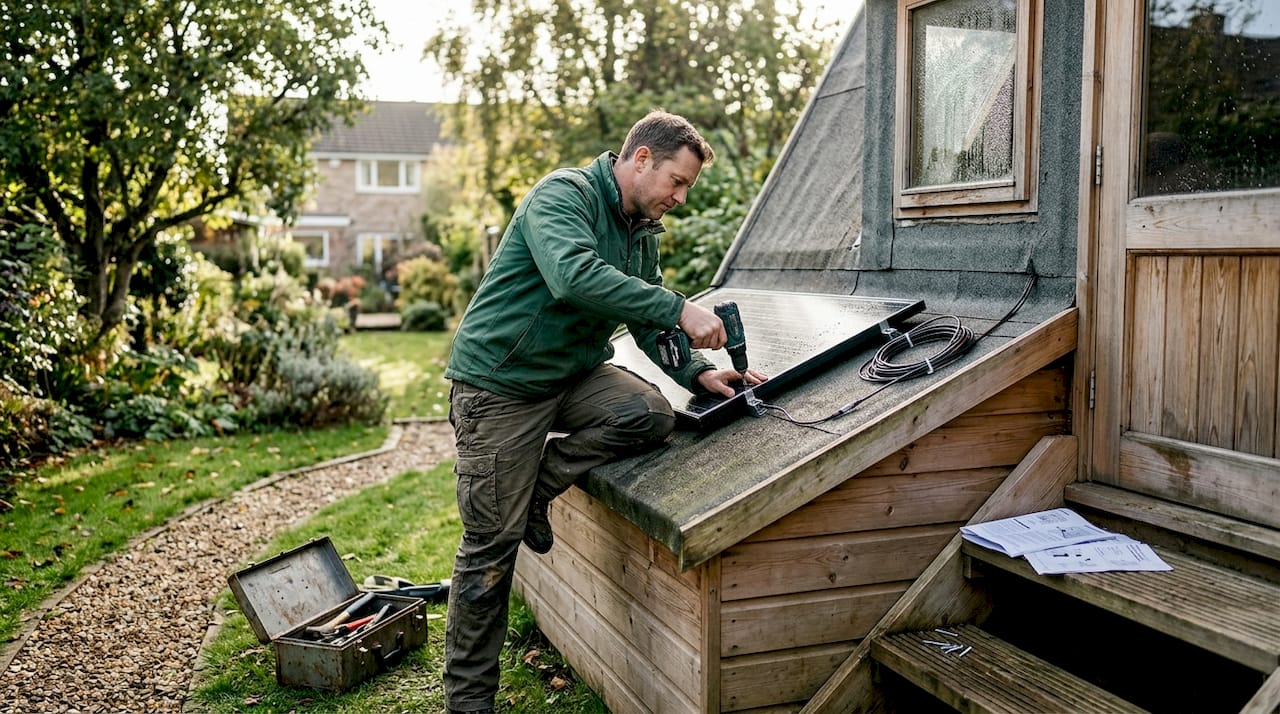
Solar lighting appeals to eco-conscious homeowners because it harnesses renewable energy without increasing electricity bills. Solar fixtures charge during daylight and automatically illuminate at dusk, making them ideal for pathway lighting and decorative accents around your cabin. However, solar is unreliable during winter when shorter days and frequent cloud cover limit charging capacity. UK weather patterns mean solar lighting often underperforms from November through February, leaving you with dim or non-functioning lights precisely when you need them most.
Battery-powered lighting offers installation flexibility without rewiring your cabin. Modern LED battery fixtures provide surprisingly long runtime, with some lasting weeks between battery changes. This option suits renters or anyone avoiding permanent electrical modifications. Battery lights work well for accent lighting, emergency backup, or seasonal decorations. The downside involves ongoing battery costs and the environmental impact of disposable batteries, though rechargeable alternatives mitigate this concern.
Mains wiring delivers consistent, reliable power ideal for task lighting and year-round use. Hardwired fixtures eliminate battery replacements and provide unlimited runtime for workshops, home offices, or entertainment spaces. Professional installation ensures safety and compliance with electrical regulations, though costs exceed solar or battery options. Log cabins expand and contract with seasonal temperature and humidity changes, so flexible conduit or cable routing accommodates this timber movement without damaging wiring.
Hybrid systems combine solar and mains power for maximum reliability and efficiency. Install solar lighting for ambient and decorative purposes whilst maintaining mains backup for essential task lighting. This approach reduces electricity consumption during summer months when solar performs well, then seamlessly switches to mains power during winter. Hybrid systems represent the most practical solution for UK garden cabins that serve functional purposes beyond occasional use.
Pro tip: Run mains cable in flexible conduit with expansion loops near connection points to accommodate timber movement. This prevents cable strain and potential damage as your log cabin settles and shifts seasonally.
Lighting type comparison:
| Type | Advantages | Disadvantages | Best uses |
|---|---|---|---|
| Solar | Eco-friendly, no running costs, easy installation | Weather dependent, weak winter performance | Pathways, decorative accents, summer use |
| Battery | Flexible placement, no wiring needed, portable | Ongoing battery costs, limited brightness | Accent lighting, temporary setups, emergencies |
| Mains | Consistent power, unlimited runtime, brightest output | Installation costs, requires electrician, permanent | Task lighting, workshops, year-round functional spaces |
| Hybrid | Reliable backup, reduced energy costs, seasonal flexibility | Higher initial investment, more complex setup | Comprehensive cabin lighting, mixed-use spaces |
Discover more strategies in our garden log cabin lighting tips article, which covers installation techniques and fixture selection for different cabin uses. Consider how your lighting choices align with broader sustainable garden cabin principles to minimise environmental impact whilst maximising functionality.
Designing functional and stylish lighting layouts
Layered lighting creates depth and versatility in garden cabins by combining ambient, task, and accent fixtures. Start with ambient lighting from ceiling-mounted fixtures or wall sconces that provide even, general illumination throughout the space. Add task lighting above workbenches, reading chairs, or craft tables using adjustable desk lamps or under-cabinet strips. Finish with accent lighting to highlight architectural features, artwork, or plants using spotlights or LED strips. This layered approach with dimmers avoids harsh overhead lighting whilst giving you complete control over atmosphere and function.
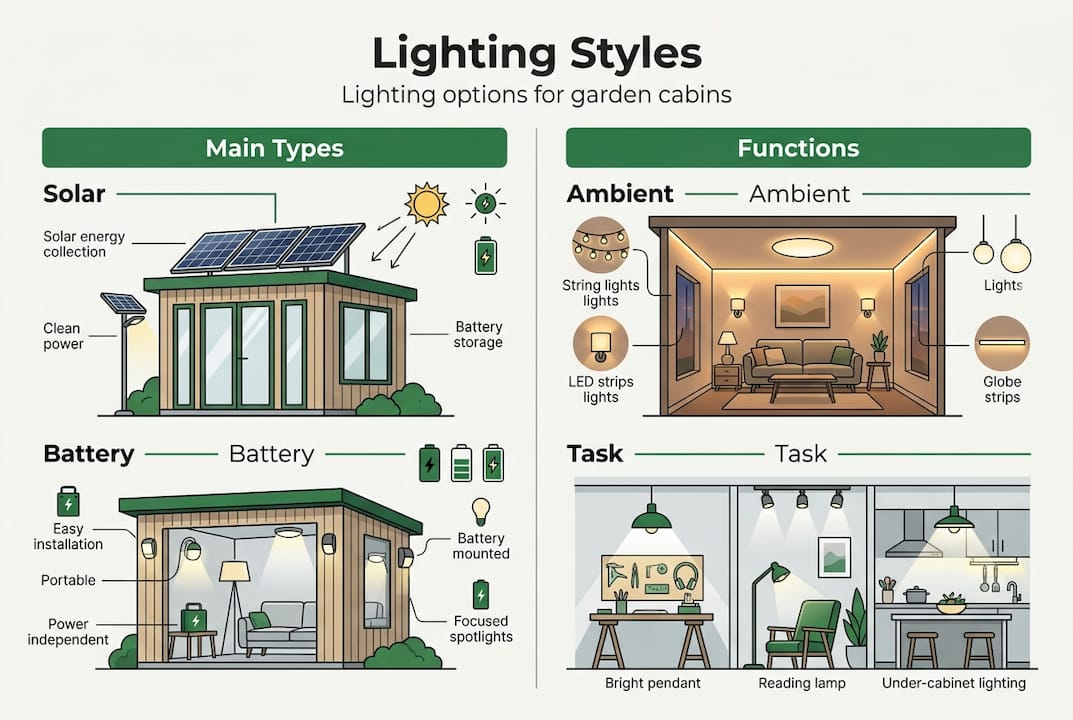
Position task lights to eliminate shadows in work areas where you need clear visibility. Place fixtures so light comes from the side or slightly behind your typical working position, preventing your body from casting shadows on the workspace. For right-handed users, position task lights on the left side; reverse this for left-handed users. Multiple light sources from different angles provide shadow-free illumination for detailed work like painting, woodworking, or electronics.
Dimmers transform single fixtures into multi-purpose lighting solutions. Install dimmer switches on ambient lights to shift from bright workspace during daytime to soft, relaxed lighting for evening entertaining. Dimmers also reduce energy consumption and extend bulb life by running fixtures at lower output when full brightness isn’t needed. Choose LED-compatible dimmers to avoid flickering or buzzing issues common with incompatible controls.
Warm LED bulbs rated 2700-3000K create cosy, inviting atmospheres whilst protecting local wildlife from disruption. Cooler, bluer light temperatures above 4000K interfere with animal behaviour patterns and contribute to light pollution. Direct outdoor lights downwards and shield them to prevent light spill into neighbouring properties or natural habitats. This consideration matters especially in rural areas where garden cabins often serve as wildlife-friendly spaces.
Accent lighting adds personality and guides movement through and around your cabin. Use LED strips under shelving or along floor edges to create subtle wayfinding without harsh spotlights. Highlight favourite plants, artwork, or architectural details with adjustable spotlights that draw attention to features you want visitors to notice. Pathway lighting outside your cabin ensures safe navigation whilst creating welcoming ambience for evening use.
Steps to design your lighting layout:
- Sketch your cabin’s floor plan including furniture and work areas
- Mark ambient lighting positions for even general illumination
- Identify task areas requiring focused, shadow-free lighting
- Add accent lighting for atmosphere and highlighting features
- Plan dimmer controls for ambient fixtures to enable mood adjustments
- Consider outdoor pathway and entrance lighting for safety
Lighting placement strategies:
- Position ceiling fixtures centrally for balanced ambient light distribution
- Mount task lights 15-18 inches above work surfaces for optimal illumination
- Angle accent spotlights at 30-degree angles to reduce glare and shadows
- Install pathway lights every 6-8 feet along walkways for continuous visibility
- Use motion sensors on entrance lights to welcome arrivals and deter intruders
Our natural light positioning tips guide explains how to complement artificial lighting with strategic window placement for daytime brightness. If you’re creating a hobby room in your garden cabin, tailored lighting becomes even more critical for activities requiring precision and focus.
Practical considerations and maintenance tips
Weatherproof fixtures rated IP65 or higher protect against moisture, dust, and temperature extremes common in UK outdoor environments. The IP rating indicates protection levels: IP65 fixtures resist water jets and dust ingress, whilst IP67 models withstand temporary immersion. Choose higher ratings for exposed locations and lower ratings for sheltered areas under eaves or inside partially enclosed cabins. Proper weatherproofing prevents corrosion, electrical faults, and premature fixture failure.
Flexible wiring accommodates the natural expansion and contraction of log cabin timber, which shifts with seasonal temperature and humidity changes. Install cables in flexible conduit with expansion loops near connection points rather than rigid, tightly secured runs. This prevents cable strain, insulation damage, and potential electrical hazards as timber moves. Leave slight slack in cable runs and use flexible junction boxes that tolerate minor positional shifts without compromising connections.
Energy-efficient lighting strategies reduce running costs and environmental impact without sacrificing illumination quality. LED fixtures consume 75-80% less energy than incandescent bulbs whilst lasting 15-25 times longer, making them the obvious choice for garden cabins. Install timers or motion sensors on outdoor lighting to limit operation to necessary hours rather than running all night. Solar lighting with mains backup during winter combines renewable energy benefits with reliable performance, optimising both sustainability and functionality.
Regular maintenance ensures safety and extends fixture lifespan. Clean light covers quarterly to remove dirt, cobwebs, and debris that reduce output and create fire hazards. Inspect cables and connections annually for wear, corrosion, or damage from rodents or weather exposure. Tighten loose fixtures and replace any showing signs of deterioration before they fail completely. Schedule professional electrical inspections every 3-5 years for mains-wired cabins to verify continued compliance with safety standards.
Combining solar and mains lighting provides reliable illumination year-round whilst maximising energy efficiency. Use solar for ambient and decorative lighting during spring and summer when charging conditions are optimal, then rely on mains power for essential task lighting and winter months when solar underperforms. This hybrid approach delivers the best balance of sustainability, reliability, and cost-effectiveness for UK garden cabins.
Maintenance checklist for garden cabin lighting:
- Clean fixture covers and lenses every three months
- Check cable connections for corrosion or looseness twice yearly
- Test motion sensors and timers monthly to verify proper operation
- Replace dimming or flickering bulbs promptly to prevent fixture damage
- Trim vegetation around outdoor fixtures to maintain clearance and airflow
- Verify weatherproof seals remain intact and replace if cracked or degraded
Energy-saving lighting practices:
- Install LED bulbs throughout for maximum efficiency and longevity
- Use timers or smart controls to limit operating hours
- Choose fixtures with integrated sensors for automatic operation
- Combine solar and mains power for optimal sustainability
- Dim lights when full brightness isn’t needed to reduce consumption
Review our detailed lighting tips for garden cabins for installation guidance and fixture recommendations suited to different cabin uses and budgets.
Find your perfect garden cabin and lighting solutions with Log Cabin Kits
Transforming your garden with a beautifully lit cabin starts with choosing the right structure for your needs. We offer an extensive selection of bespoke garden log cabins designed to accommodate your vision, whether you’re creating a workshop, studio, office, or entertainment space. Our garden log cabin gallery showcases diverse styles and sizes to inspire your project, with real examples of how thoughtful lighting enhances functionality and atmosphere.
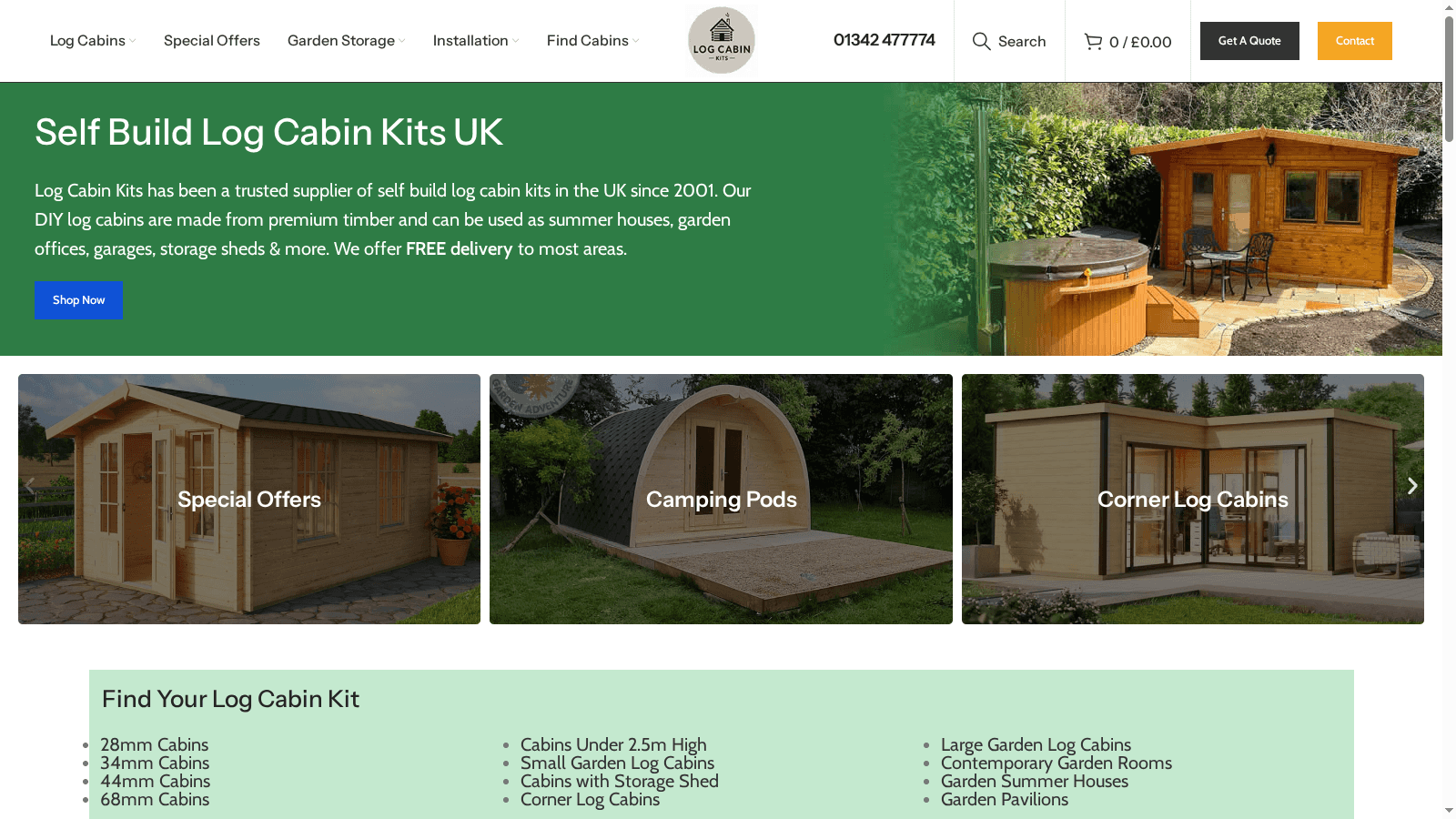
Every cabin we supply can be tailored through our custom build service, allowing you to specify dimensions, window placement, and electrical provisions that support your ideal lighting layout. Our team provides expert guidance throughout the design process, helping you plan for optimal natural and artificial light integration. Explore our garden building inspiration section for ideas on combining architectural features with lighting strategies that bring your cabin to life. We deliver free throughout the UK and support you from initial planning through final installation.
Frequently asked questions
What are the best lighting options for garden cabins?
The best approach combines ambient, task, and accent lighting with dimmer controls for flexibility. Warm LED bulbs rated 2700-3000K provide energy efficiency and wildlife-friendly illumination. Hybrid systems using solar for ambient lighting and mains power for task areas offer reliability across all seasons. Match brightness to intended use: 10-20 lumens per square foot for general areas, 30-40 for task zones, and 80-100 for detailed work. Visit our garden log cabin lighting tips for comprehensive fixture recommendations.
How can I make my garden cabin lighting wildlife-friendly?
Choose warm-coloured LED bulbs rated 2700-3000K and aim lights downwards to minimise disruption to nocturnal animals. Avoid bright overhead lighting that creates light pollution and interferes with wildlife behaviour patterns. Install timers or motion sensors to limit lighting duration to necessary hours rather than running all night. Shield fixtures to prevent light spill into surrounding natural areas and neighbouring properties.
What maintenance does garden cabin lighting require?
Clean fixtures quarterly to remove dirt and debris that reduce output and create potential fire hazards. Inspect cables and connections twice yearly for wear, corrosion, or damage from weather or rodents. Use weatherproof fixtures rated IP65 or higher for outdoor locations to prevent moisture ingress. Flexible wiring accommodates timber movement as your log cabin expands and contracts seasonally, preventing cable strain and electrical faults. Schedule professional inspections every 3-5 years for mains-wired installations.
Can I rely solely on solar lighting for my garden cabin?
Solar lighting alone proves insufficient for year-round UK use because winter solar can be unreliable due to short days and frequent cloud cover. Consider hybrid systems combining solar with mains backup for consistent illumination regardless of season. Solar works well for pathway and decorative lighting during spring and summer, whilst mains power ensures reliable task lighting for workshops, offices, or detailed activities. This combination maximises sustainability without compromising functionality when you need it most.