

Blog


Many UK homeowners assume traditional radiators offer the best heating solution for garden cabins, yet infrared heaters can provide warmth up to 30% faster and use less energy than radiators in similar conditions. Choosing the right heating system depends on your cabin’s size, insulation quality, and how you plan to use the space throughout the year. This guide explores efficient heating options that enable comfortable, cost-effective year-round enjoyment of your garden retreat.
Table of Contents
- Understanding Garden Cabin Heating Needs
- Types Of Heating Options For Garden Cabins
- Impact Of Insulation On Heating Efficiency
- Cost And Energy Efficiency Comparison
- Common Misconceptions About Heating Options
- Emerging And Renewable Heating Solutions
- Practical Recommendations For Heating Installation And Maintenance
- Explore Bespoke Garden Cabins With Expert Heating Solutions
- Frequently Asked Questions
Key takeaways
| Point | Details |
|---|---|
| Insulation impact | Proper insulation can reduce heating energy consumption by up to 40%, directly lowering running costs. |
| Fast heat delivery | Infrared and electric panel heaters provide rapid warmth ideal for intermittent cabin use. |
| Wood stove requirements | Wood-burning stoves demand strict ventilation, clearance, and compliance with UK building regulations. |
| Sustainable alternatives | Solar-powered heat pumps offer eco-friendly heating but require higher upfront investment and professional installation. |
Understanding garden cabin heating needs
The UK’s variable climate creates unique heating challenges for garden cabin owners seeking year-round usability. Temperatures frequently drop below comfortable levels during autumn and winter months, making effective heating essential rather than optional. Your cabin’s specific characteristics determine which heating solution delivers optimal performance and value.
Insulation for garden cabins forms the foundation of any efficient heating strategy. Without adequate insulation, even the most powerful heating system struggles to maintain comfortable temperatures whilst consuming excessive energy. Quality insulation materials in walls, floors, and roofs create a thermal envelope that retains warmth and prevents heat loss through gaps and cold bridges.
Cabin size directly influences heating requirements and system selection. Smaller spaces heat quickly with modest power outputs, whilst larger cabins demand more substantial heating capacity. Consider these factors when assessing your needs:
- Total floor area and ceiling height determine cubic volume requiring heating
- Window size and glazing quality affect heat loss rates
- Door placement and frequency of opening impact temperature stability
- Intended occupancy levels influence heating demand patterns
Usage patterns significantly affect which heating type suits your situation best. Occasional weekend use favours systems that heat spaces quickly without wasting energy during vacant periods. Year-round garden cabin use benefits from consistent background heating that maintains base temperatures efficiently. Understanding your typical usage helps match heating characteristics to actual needs rather than theoretical maximums.
Types of heating options for garden cabins
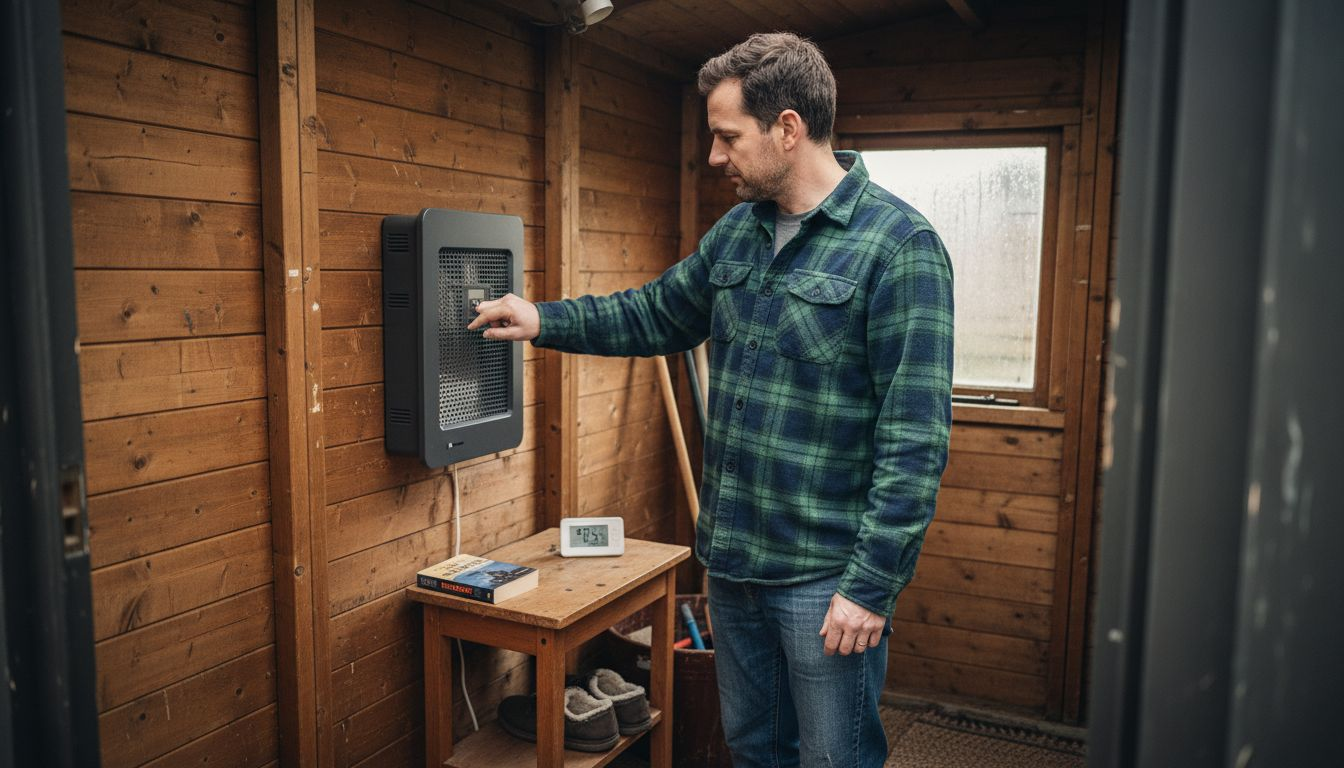
Electric panel heaters represent the most popular choice for garden cabins due to straightforward installation and moderate running costs. These units mount directly to walls, requiring only electrical connection without complex pipework or ventilation systems. They provide consistent convection heating that circulates warm air throughout the space, though they take longer to reach comfortable temperatures compared to radiant alternatives.
Wood-burning stoves deliver powerful heat output whilst creating an attractive focal point and cosy ambience. The crackling flames and radiant warmth appeal to many cabin owners seeking traditional character. However, these systems demand significant planning for proper installation, including:
- Adequate floor clearance and heat shields to prevent fire hazards
- Properly sized flue systems extending above the roofline
- Sufficient ventilation to supply combustion air and prevent carbon monoxide buildup
- Regular chimney cleaning and ash removal maintenance
Infrared heaters can provide warmth up to 30% faster than traditional radiators by directly heating objects and people rather than air. This radiant technology proves particularly effective in garden cabins, delivering immediate comfort without lengthy warm-up periods. The higher upfront cost balances against lower energy consumption and faster heating response, especially for intermittent use patterns.
Underfloor heating systems create uniform warmth across the entire floor surface, eliminating cold spots and providing luxurious comfort. Electric mat systems install beneath flooring materials, distributing heat evenly from ground level upwards. This approach requires excellent floor insulation to prevent heat loss into the ground below, and the installation process adds considerable expense compared to wall-mounted alternatives. The slow thermal response makes underfloor heating better suited to continuously heated spaces rather than occasional use.
Impact of insulation on heating efficiency
Thermal efficiency in log cabins depends heavily on insulation quality throughout the structure. The wrong insulation choices allow expensive heat to escape through walls, roofs, and floors whilst cold draughts infiltrate living spaces. Conversely, proper insulation creates a sealed thermal envelope that dramatically reduces heating requirements.
Several effective insulation materials suit garden cabin applications:
- Rigid foam boards provide excellent thermal resistance in compact thicknesses
- Mineral wool batts offer good thermal and acoustic insulation at moderate cost
- Spray foam insulation seals gaps and irregular spaces effectively
- Reflective foil barriers reduce radiant heat transfer through roof spaces
Insulation improvements directly translate to heating cost savings by reducing the energy needed to maintain comfortable temperatures. A well-insulated cabin retains warmth longer, allowing heating systems to cycle less frequently. This reduced runtime lowers electricity bills whilst extending equipment lifespan through decreased wear.
The correlation between insulation quality and heater sizing proves particularly important for new installations. Cabins with proper insulation as outlined by industry standards require smaller heating systems that cost less to purchase and operate. Undersized insulation forces homeowners to install larger, more expensive heaters that consume excessive energy compensating for heat loss.
Pro Tip: Prioritise ceiling and roof insulation first, as heat rises and escapes most readily through overhead surfaces. Adding 200-300mm of quality roof insulation delivers greater impact than modest wall improvements in most garden cabins.
Cost and energy efficiency comparison
Running costs vary significantly between heating systems depending on energy prices, usage patterns, and cabin characteristics. The following comparison assumes a typical 4m x 3m garden cabin with moderate insulation used three days weekly during heating season:
| Heating type | Monthly cost estimate | Energy efficiency | Key considerations |
|---|---|---|---|
| Electric panel heater | £45-65 | Moderate | Simple installation, no maintenance |
| Infrared heater | £35-50 | High | Fast warmth, higher upfront cost |
| Wood-burning stove | £30-60 | Variable | Fuel costs fluctuate, labour intensive |
| Underfloor heating | £50-75 | Moderate to high | Best for continuous use |
| Heat pump | £25-40 | Very high | Substantial installation investment |
Electric panel heaters have moderate running costs whilst requiring minimal maintenance beyond occasional cleaning. Their predictable electricity consumption makes budgeting straightforward, though continuous operation during cold weather increases expenses noticeably.
Wood-burning stoves present variable economics depending on fuel sourcing and labour willingness. Purchasing seasoned logs or kiln-dried wood creates ongoing expenses, whilst those able to source free wood dramatically reduce running costs. Factor in chimney sweeping fees and the time investment for fire tending and ash disposal.
Renewable options like solar-powered heat pumps deliver exceptional energy efficiency once installed. These systems transfer ambient heat rather than generating it directly, using electricity only to power circulation pumps and compressors. The substantial upfront investment takes years to recoup through reduced running costs, making financial sense primarily for frequently used, well-insulated cabins.
Several factors beyond base energy costs influence total heating expenses:
- Electricity tariff rates and standing charges from your supplier
- Actual usage hours versus theoretical estimates
- Thermostat settings and temperature preferences
- Heat loss rate through poorly sealed gaps and thin glazing
Pro Tip: Install a smart plug with energy monitoring on electric heaters to track actual consumption patterns. This data reveals real costs and identifies opportunities for efficiency improvements through better insulation or revised usage habits.
Common misconceptions about heating options
Several persistent myths about garden cabin heating lead homeowners toward inappropriate choices that waste money and compromise comfort. Understanding the reality behind these misconceptions prevents costly mistakes.
-
Traditional radiators always provide the best heating solution. Radiators excel in mains-heated homes with existing central heating infrastructure, but garden cabins rarely justify the expense and complexity of extending heating systems. Electric alternatives deliver comparable comfort without pipework, boilers, or antifreeze concerns during freezing weather.
-
Storage heaters suit cabins used occasionally. Storage heaters charge overnight using cheaper electricity rates, then release accumulated heat gradually throughout the following day. This delayed heat release proves completely unsuitable for intermittent cabin use requiring immediate warmth upon arrival.
-
Wood stoves pose minimal safety risks in any cabin. Small or poorly ventilated cabins create genuine hazards when fitted with wood-burning stoves. Inadequate combustion air leads to dangerous carbon monoxide buildup, whilst insufficient clearances risk fire. Only cabins meeting strict ventilation and clearance requirements should consider wood heating.
-
Infrared heating claims exaggerate efficiency benefits. Whilst marketing sometimes overstates advantages, infrared technology genuinely delivers faster perceived warmth by heating surfaces and bodies directly. This radiant approach feels comfortable at lower air temperatures, reducing actual energy consumption compared to convection systems heating entire air volumes.
“The right heating system matches your cabin’s insulation, size, and usage patterns rather than following generic recommendations. What works brilliantly for one situation may prove completely inappropriate for another.”
Emerging and renewable heating solutions
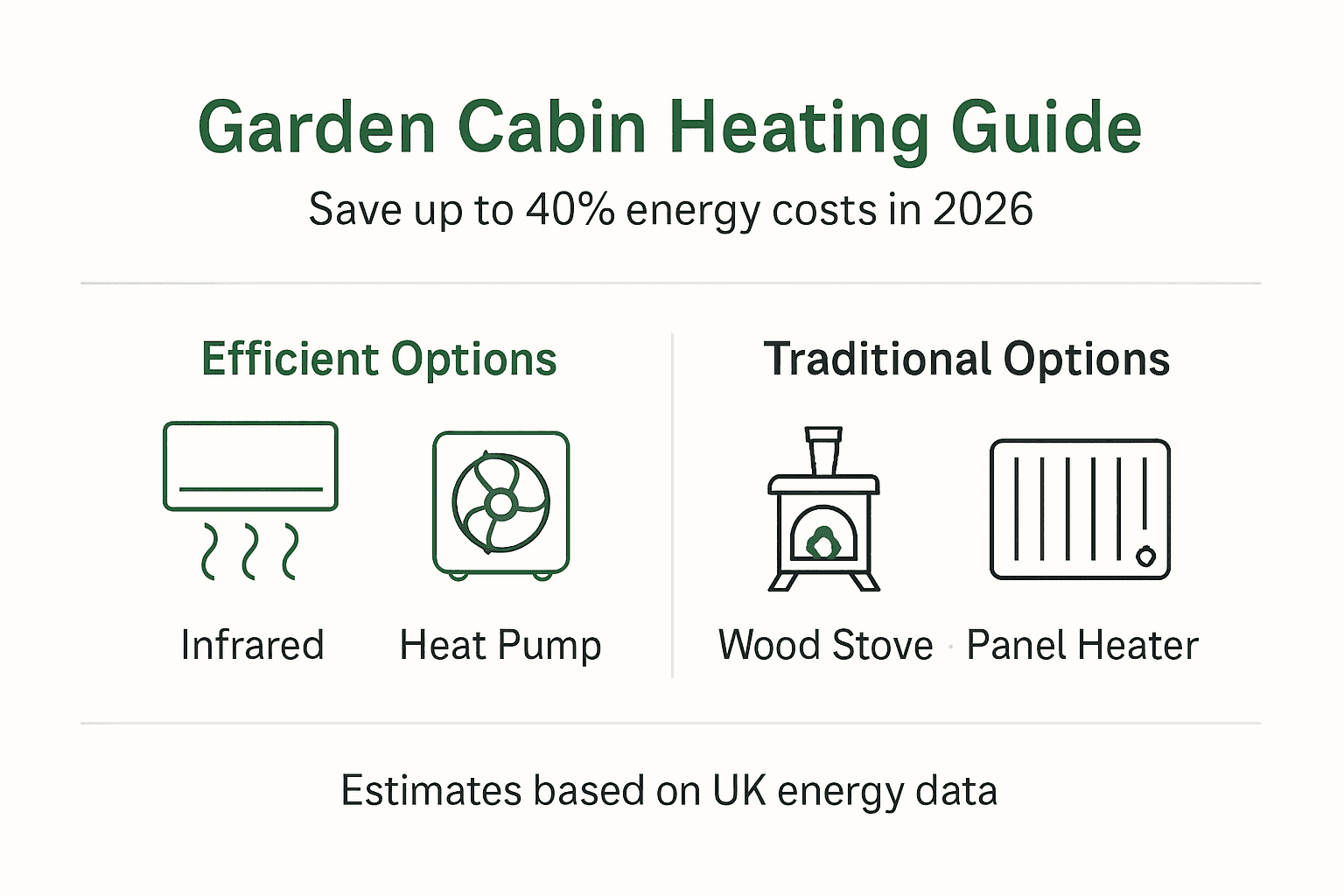
Solar-powered heat pumps represent the cutting edge of sustainable garden cabin heating, combining renewable energy generation with highly efficient heat transfer technology. These systems capture solar energy through photovoltaic panels, converting it to electricity that powers air source or ground source heat pumps. The result delivers comfortable heating with minimal environmental impact and reduced long-term running costs.
Installation complexity and upfront costs present the primary barriers to heat pump adoption. Professional design ensures proper sizing, optimal panel placement, and correct refrigerant circuit configuration. Expect total system costs ranging from £4,000 to £8,000 depending on cabin size and site conditions. The substantial investment takes years to recover through energy savings, making financial sense primarily for frequently used cabins replacing expensive heating systems.
Environmental benefits extend beyond reduced carbon emissions. Heat pumps eliminate combustion products and particulate emissions associated with wood burning. They operate quietly without disturbing neighbours or wildlife. The renewable electricity generation offsets grid consumption, potentially feeding excess power back during sunny periods.
Practical limitations affect heat pump suitability in UK conditions:
- Performance decreases as outdoor temperatures drop below freezing
- Shaded sites or north-facing roof orientations limit solar generation
- Battery storage systems add significant cost but enable heating after sunset
- Planning permission may apply for visible solar panels in conservation areas
Renewable heating options align with growing environmental consciousness whilst delivering genuine long-term savings. The technology continues improving with better efficiency ratings and declining equipment costs making adoption increasingly attractive.
Practical recommendations for heating installation and maintenance
UK safety and building regulations govern garden cabin heating installations to protect occupants and property. Electrical work must comply with Part P Building Regulations, typically requiring qualified electrician certification. Wood-burning installations demand Building Control notification and must meet HETAS standards for combustion appliances.
Ventilation requirements vary by heating type but remain critically important for safety and efficiency:
- Wood stoves require permanent ventilation openings sized according to appliance output
- Gas heaters need adequate combustion air and flue gas evacuation
- Even electric heating benefits from controlled ventilation preventing condensation
Clearance guidelines protect combustible materials from heat damage and fire risk. Wood stoves require minimum distances to walls, furniture, and flammable items specified by manufacturers. Heat shields reduce required clearances but must install correctly with proper air gaps.
Scheduled maintenance procedures extend equipment lifespan whilst maintaining safe, efficient operation:
- Electric heaters need annual cleaning to remove dust affecting heat transfer
- Wood stove flues require professional sweeping at least annually
- Infrared panel surfaces should remain clean for optimal radiant emission
- Heat pump filters and coils need regular cleaning per manufacturer schedules
Expert tips maximise heating system performance and longevity. Install thermostats in representative locations away from direct heat sources and draughts. Size heating capacity appropriately rather than vastly oversizing, as properly matched systems cycle efficiently. Consider backup heating options for critical applications where system failure creates serious problems.
Pro Tip: Document all installation work with photographs and retain certificates from qualified installers. This documentation proves invaluable for insurance claims, future maintenance, and property transactions involving the cabin.
Explore bespoke garden cabins with expert heating solutions
Transforming your garden cabin vision into reality requires more than selecting heating equipment from a catalogue. Our customised bespoke garden cabins integrate optimal insulation, heating infrastructure, and electrical systems during the design phase. This holistic approach ensures all components work together efficiently rather than retrofitting solutions into inadequate structures.
Expert guidance helps navigate the complex decisions around heating types, insulation specifications, and electrical requirements. Our team understands how different elements interact to create comfortable, energy-efficient spaces suited to your intended use. We match heating solutions to your specific needs rather than offering one-size-fits-all recommendations.
Explore our range of garden cabin models from compact retreats to spacious studios. The ultimate garden log cabins guide details construction quality, customisation options, and design possibilities. Sustainable garden cabins incorporate eco-friendly materials and renewable heating solutions for environmentally conscious homeowners seeking long-term value.
Frequently asked questions
What heating options are best for small garden cabins used occasionally?
Electric panel or infrared heaters provide ideal solutions for intermittent cabin use requiring fast warmth without wasted standby energy. Infrared models deliver perceived comfort within minutes through direct radiant heating. Avoid storage heaters that require overnight charging cycles completely unsuitable for occasional weekend use patterns.
How does insulation impact my garden cabin’s heating costs?
Proper insulation can reduce heating energy usage by up to 40% compared to poorly insulated structures, directly cutting monthly running costs. Better insulation allows smaller heating systems to maintain comfort, reducing both equipment costs and ongoing electricity consumption. Prioritising insulation improvements delivers better returns than upgrading heating equipment alone.
Are wood-burning stoves safe in small UK garden cabins?
Wood stoves require strict adherence to ventilation and clearance requirements that small cabins often cannot accommodate safely. Inadequate space creates fire risks and dangerous carbon monoxide accumulation. Only cabins meeting HETAS guidelines and Building Regulations with proper ventilation, clearances, and flue systems should consider wood heating installations.
What are the benefits of solar-powered heat pumps for garden cabins?
Solar heat pumps dramatically reduce running costs and environmental impact by combining renewable electricity generation with highly efficient heat transfer technology. These systems suit well-insulated, frequently used cabins with good solar exposure. Higher upfront costs and installation complexity require professional design but deliver long-term savings and sustainability benefits.
Recommended
- Energy-Efficient Heating – Log Cabin Kits To Buy Online
- Heating Your Garden Log Cabin: Easy Solutions For Year-Round Comfort – Log Cabin Kits To Buy Online
- Right Heating System For Your Garden Cabin – Log Cabin Kits To Buy Online
- Calculating Electric Heating Needs For Your Garden Log Cabin – Log Cabin Kits To Buy Online


