

Blog


Every homeowner dreams of a space that truly reflects their personality and supports their way of life. In rural England, creating a custom garden cabin is fast becoming the preferred way to bring that vision to life, blending comfort with practicality. Whether you need a peaceful home office or a cosy retreat for unwinding, designing your own outdoor structure means every detail matches your property, needs, and taste. Discover how a personalised cabin transforms both your garden and your daily routine.
Table of Contents
- Defining A Custom Garden Cabin In Britain
- Popular Cabin Types And Personalisation Trends
- Essential Design Features And Material Choices
- Planning Permission And Uk Legal Rules
- Budgeting, Installation, And Running Costs
- Common Mistakes In Garden Cabin Projects
Key Takeaways
| Point | Details |
|---|---|
| Customisation Is Key | A bespoke garden cabin allows for tailored dimensions, layout, and materials, reflecting individual homeowner preferences and garden aesthetics. |
| Year-Round Usability | Modern garden cabins should be designed for all-season use, requiring thoughtful insulation and heating solutions to maintain comfort throughout the year. |
| Planning Compliance | Understanding UK regulations for permitted development is crucial to avoid unnecessary costs and delays in cabin installation. |
| Budgeting for Success | Comprehensive financial planning, including initial costs and ongoing maintenance, ensures a smoother project execution without financial surprises. |
Defining a Custom Garden Cabin in Britain
A custom garden cabin isn’t a standard prefabricated box. It’s a personalised outdoor structure built to match your exact specifications, your garden’s unique dimensions, and your lifestyle needs. Unlike mass-produced alternatives, a bespoke cabin reflects your vision from the ground up.
In Britain, custom garden cabins have become increasingly popular as homeowners recognise the value of outdoor living spaces tailored specifically to their properties. These aren’t simply garden storage solutions. They’re fully-fledged extensions of your home, designed for relaxation, work, hobbies, or entertaining guests.
What makes a cabin truly custom is the flexibility involved. You decide the size, shape, interior layout, materials, insulation levels, and finishing touches. Whether you need a cosy retreat measuring 3m by 4m or a spacious entertaining space that doubles as a home office, the structure adapts to your requirements rather than forcing you into predetermined dimensions.
The British approach to custom cabins emphasises quality timber construction combined with practical design. Softwood and hardwood options allow you to match the cabin’s aesthetics to your home’s character whilst ensuring durability in the British climate. Features like proper ventilation, weather-resistant finishes, and adequate drainage are built in from the design stage, not added afterwards as afterthoughts.
When you choose to design a bespoke cabin for your garden space, you’re making a long-term investment that genuinely enhances your property’s value and your quality of life. The key difference from off-the-shelf options is that every element serves a purpose tailored to your circumstances.
Customisation also extends to positioning and placement. Your cabin’s orientation, access points, and relationship to existing garden features are planned specifically for your site rather than fitting a generic solution onto whatever space you have available.
Pro tip: Before committing to a design, spend time observing how light moves across your garden throughout the day and consider which direction would give you the best views and natural warmth for your intended cabin use.
Popular Cabin Types and Personalisation Trends
Garden cabins have evolved far beyond simple storage structures. Today’s custom cabins serve multiple purposes, and British homeowners are increasingly tailoring them to match their specific lifestyle needs rather than accepting generic designs.
The most popular category is the home office cabin. With remote working now commonplace, many people are investing in dedicated workspaces separate from their main house. These cabins typically feature proper insulation, electricity, and high-speed internet connectivity. A second major trend involves creative studios where artists, crafters, and makers establish dedicated workspaces for their hobbies. Musicians, photographers, and writers particularly favour these bespoke setups.
Guest accommodation cabins represent another growing segment. Rather than cramping visitors into spare bedrooms, homeowners are building standalone guest quarters that offer privacy and comfort. These often include basic kitchenette facilities and en-suite bathrooms. Leisure cabins designed purely for relaxation, socialising, and entertaining guests are equally popular, especially among those wanting to maximise their outdoor entertaining potential.
Personalisation trends in Britain increasingly reflect desires for year-round usability. Flexible living spaces that meet modern lifestyle changes are driving decisions around insulation quality, heating systems, and durable finishes. Homeowners want cabins that work in winter as effectively as summer.
Aesthetically, the trend leans towards blending the cabin with existing garden character rather than making it a bold statement piece. Timber finishes that complement your home’s style, subtle colour palettes, and thoughtful positioning create harmony with the surrounding landscape. Many people are also incorporating large windows and glazed doors to maximise natural light and create visual connection with their gardens.
Sustainability concerns influence personalisation choices too. Homeowners increasingly request eco-friendly materials, natural ventilation options, and energy-efficient heating solutions. Customisation options that reflect durability and eco-friendliness matter more than ever when choosing your cabin specifications.
Here’s a concise overview of popular custom garden cabin types and their key uses in Britain:
| Cabin Type | Typical Use | Notable Features |
|---|---|---|
| Home Office | Remote working environment | Insulation, internet, electrics |
| Creative Studio | Art, craft, or music projects | Daylight, bespoke layouts, soundproofing |
| Guest Accommodation | Private visitor stay | En-suite, kitchenette, privacy |
| Leisure Cabin | Relaxation or entertaining | Large windows, heating, garden views |
Pro tip: Consider how you’ll actually use your cabin across all seasons before finalising the design, then ensure your personalisation choices support that year-round functionality rather than optimising only for summer months.
Essential Design Features and Material Choices
The success of your custom garden cabin depends heavily on thoughtful design decisions made during the planning phase. Get these fundamentals right, and your cabin will serve you reliably for decades. Get them wrong, and you’ll face persistent problems that prove costly to fix later.
Roof design is critical for British weather conditions. A pitched roof sheds rain and snow far more effectively than a flat design, preventing water pooling and structural stress during harsh winters. Adequate overhang around the perimeter protects the cabin’s exterior walls from driving rain and extends the lifespan of your timber cladding significantly.
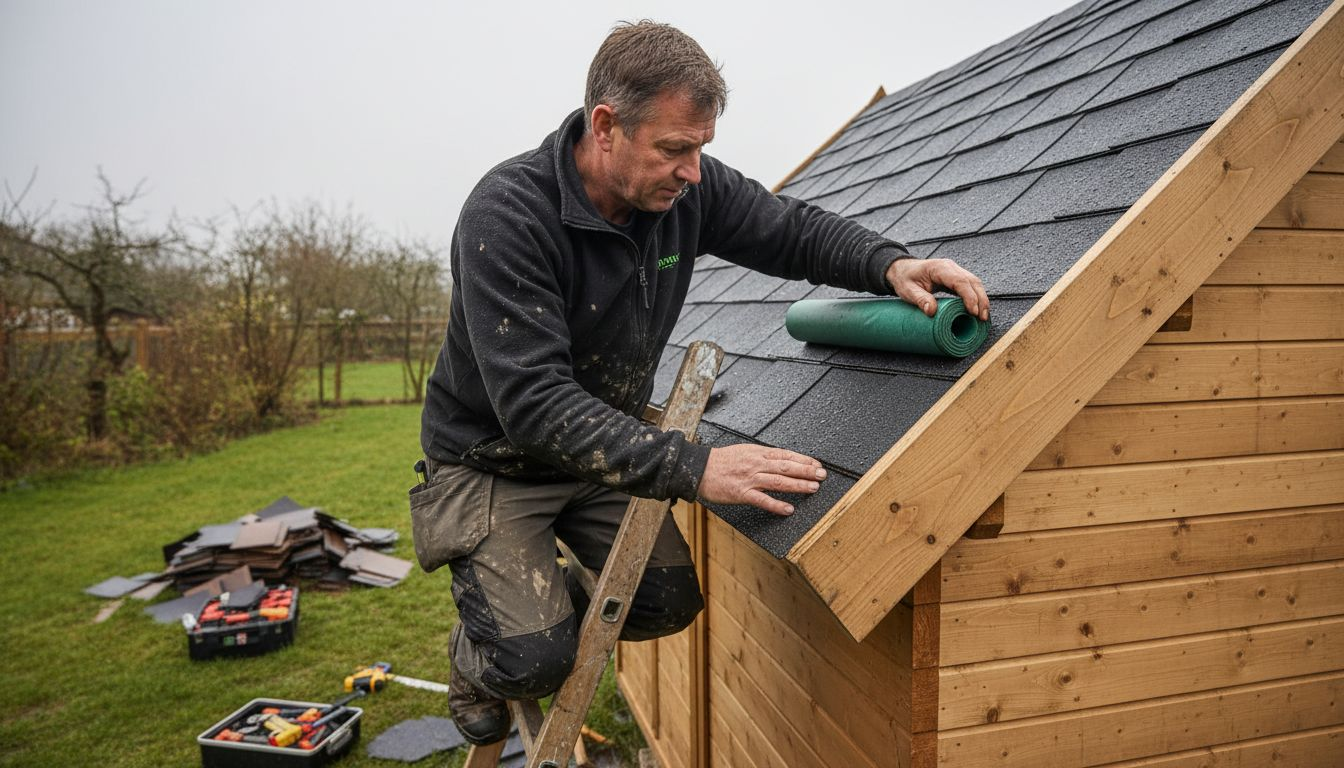
Windows and glazing deserve careful consideration. Large windows create a sense of space and bring natural light into darker months, but they need proper installation to prevent condensation and draughts. Double-glazed units with low emissivity coatings balance comfort with energy efficiency. Think about window placement to frame your best garden views rather than facing overlooked boundaries.
Ventilation often gets overlooked but proves vital for preventing moisture accumulation inside timber cabins. Adequate air circulation keeps the interior fresh and protects the cabin’s structural timbers from rot and decay. This becomes even more important if you’re installing a kitchen, bathroom, or using the space during humid months.
Material selection shapes durability and aesthetics. Garden building materials explained helps you understand the strengths of different timber species and finishes. Softwoods like spruce offer excellent value and environmental credentials, whilst hardwoods provide superior durability and natural colouration. External finishes matter too. Natural wood stains highlight grain character, whilst paint creates a bold statement and simplifies maintenance routines.
Insulation requirements depend on your intended use. A summer leisure cabin needs minimal insulation, whereas a year-round office or guest suite demands proper thermal protection. Mineral wool or rigid foam boards between timber frame members prevent heat loss whilst allowing natural ventilation to function correctly.
Electricity and plumbing must be planned during design, not retrofitted afterwards. Proper cable runs, socket positioning, and water supply locations integrate seamlessly rather than appearing as afterthoughts visually compromising your space.
Pro tip: Visit completed custom cabins if possible to see how design decisions actually perform in practice, paying particular attention to how windows perform in winter and where condensation tends to gather.
Planning Permission and UK Legal Rules
Navigating planning permission for your custom garden cabin can feel intimidating, but the good news is that many cabins qualify as permitted development, meaning you won’t need formal planning permission at all. Understanding which category your cabin falls into saves time, money, and stress.
Most garden cabins qualify as outbuildings under UK law. The key is meeting specific size and placement criteria. Your cabin must be single storey, with a maximum eaves height of 2.5 metres and an overall height of 4 metres if pitched roofed, or 3 metres otherwise. The building cannot cover more than half the land area surrounding your original house.
Location on your property matters significantly. If your cabin sits more than 2 metres from a boundary, these height restrictions are somewhat more generous. However, placing it within 2 metres of a neighbour’s boundary triggers stricter rules, with the maximum height capped at 2.5 metres regardless of roof style.
Certain situations always require planning permission regardless of size. Permitted development rights don’t apply to cabins in conservation areas, national parks, Areas of Outstanding Natural Beauty, or on listed property grounds. If your original house is listed, your cabin will need formal approval. Similarly, if the cabin would sit forward of the principal elevation facing the road, planning permission becomes mandatory.
Designated land presents particular complexity. Conservation areas, for example, have stricter rules because local authorities want to protect the character of these neighbourhoods. Check your property’s status early in the planning process by contacting your local planning authority.
Building regulations remain separate from planning permission. Even if your cabin qualifies for permitted development, it must still comply with Building Regulations covering structural safety, drainage, and electrical installations. This protects you legally and ensures the cabin meets modern safety standards.
Documentation matters. Keep records of your cabin’s dimensions, materials, and placement plans. If questions arise later, having clear documentation proves compliance. Many neighbours appreciate transparency, and showing plans prevents misunderstandings developing into disputes.
Pro tip: Contact your local planning authority before finalising your design to confirm your specific property doesn’t have restrictions that would require planning permission, saving you from designing a cabin that won’t get approval.
Budgeting, Installation, and Running Costs
Understanding the full financial picture of your custom garden cabin helps you make informed decisions and avoid budget surprises. Costs break down into three distinct phases: initial purchase and installation, then ongoing running expenses.
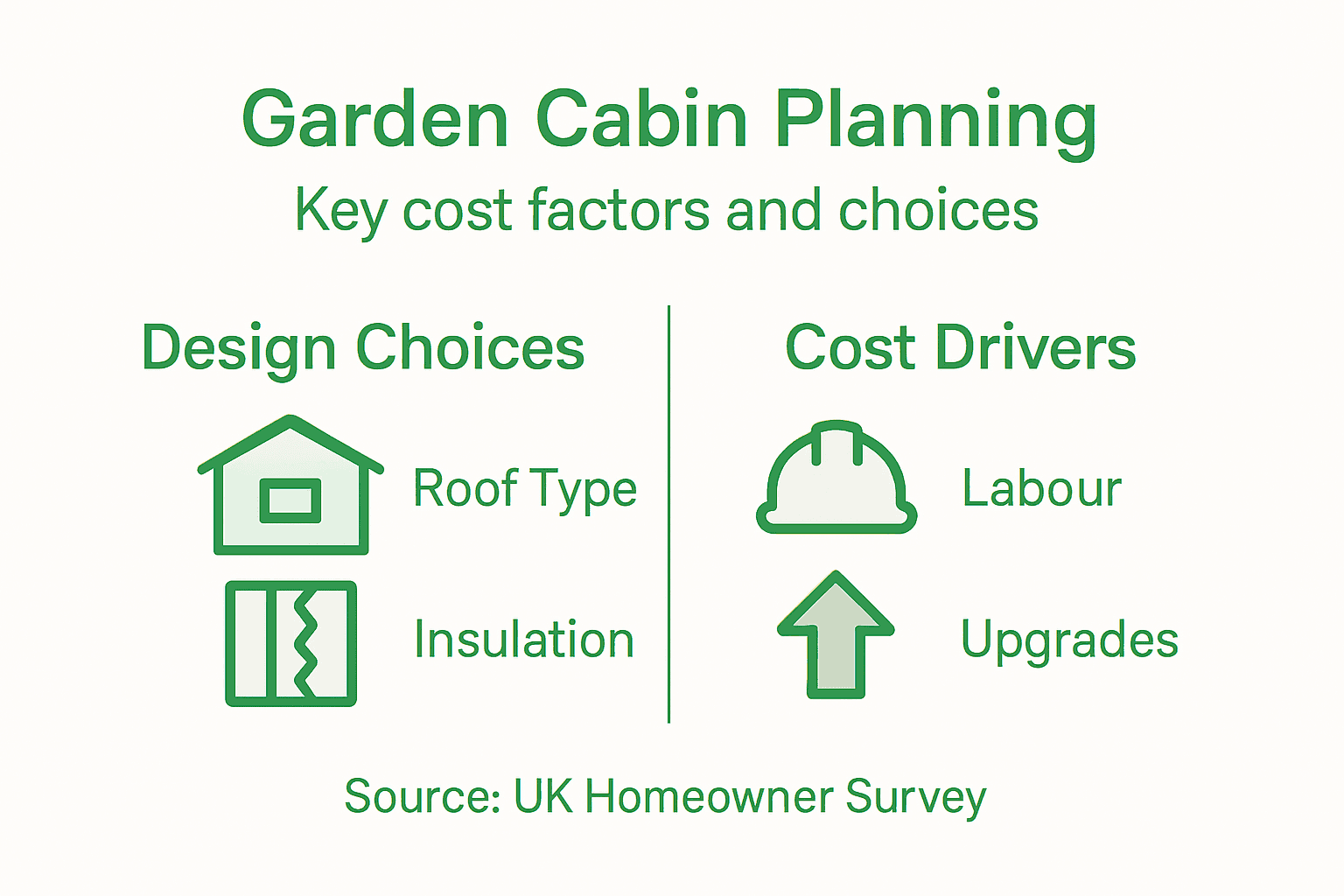
Initial cabin costs vary dramatically based on your specifications. Basic prefabricated units start around £5,000 for compact models, but custom designs with premium materials and bespoke dimensions typically range between £15,000 and £30,000 or higher. The price reflects timber quality, insulation standards, roof design, and finishing specifications you choose.
Installation labour adds significant expense beyond the cabin itself. Site preparation, foundation work, and assembly typically cost several thousand pounds depending on ground conditions and access. If you require electricity, water, or drainage connections, expect additional costs ranging from £2,000 to £8,000 depending on distance from your main house and complexity of installation.
Optional upgrades escalate expenses quickly. Interior insulation systems, underfloor heating, high-spec electrics with multiple circuits, plumbing for bathrooms or kitchens, and premium window glazing all add to your total investment. Cabin costs vary widely based on size, materials, and construction method, so detailed planning helps you allocate budget effectively across your priorities.
Running costs depend heavily on how you use your cabin. A summer leisure space costs virtually nothing to operate. However, a year-round office or guest suite with heating and lighting incurs ongoing expenses. Proper insulation significantly reduces heating bills during winter months, making it a worthwhile investment that pays dividends over time.
Annual maintenance typically costs £500 to £1,500 depending on climate exposure and timber type. This includes exterior treatments, roof inspections, gutter cleaning, and minor repairs. Natural timber finishes require more frequent attention than painted surfaces but offer superior aesthetics.
Electricity consumption varies based on usage patterns. A well-insulated cabin with efficient heating might cost £40 to £80 monthly during winter, whilst an uninsulated space could double these expenses. LED lighting and modern heating systems dramatically reduce energy consumption.
Below is a summary of main cost considerations for custom garden cabins:
| Phase | Typical Range | Key Cost Drivers |
|---|---|---|
| Initial Purchase | £15,000–£30,000 (custom) | Timber quality, design, insulation |
| Installation | £2,000–£8,000 (utilities) | Site prep, wiring, plumbing |
| Annual Running | £500–£1,500 (maintenance) | Treatments, repairs, heating |
Pro tip: Budget for 15 to 20 percent contingency on your total project cost to cover unexpected expenses like ground preparation issues or design changes discovered during installation planning.
Common Mistakes in Garden Cabin Projects
Most cabin project problems stem from avoidable mistakes made during the planning phase. Learning what others got wrong helps you sidestep costly errors and keeps your project on track.
Underestimating ground preparation ranks as the most common pitfall. Many homeowners assume they can simply place a cabin on existing grass or slightly levelled soil. Poor foundations lead to uneven settling, water pooling underneath, and structural problems within years. Proper ground assessment and preparation work costs hundreds upfront but prevents thousands in repairs later.
Ignoring ventilation creates persistent moisture problems. Condensation builds up inside poorly ventilated cabins, promoting mould growth and timber decay. This isn’t a minor cosmetic issue. Structural timbers deteriorate rapidly when consistently exposed to high humidity. Adequate ventilation prevents moisture accumulation inside timber cabins, protecting your investment and creating a healthier interior environment.
Placing the cabin without considering seasonal sun patterns proves regrettable. A cabin positioned to face harsh western summer sun becomes unbearably hot in afternoons. Poor winter sun access means gloomy interiors during darker months. Spend several weeks observing how light moves across your garden before finalising placement.
Underbudgeting for hidden costs catches many people off guard. Site access difficulties, unexpected ground conditions, or drainage complications inflate expenses beyond initial estimates. Electricity installation further north from your house costs significantly more than closer placements. Building a contingency buffer prevents financial stress when surprises emerge.
Neglecting local authority requirements wastes time and money. Not checking planning permission rules early means discovering mid-project that your design exceeds size limits or requires approval. Checking Building Regulations compliance prevents having to retrofit changes after construction. Avoiding mistakes in log cabin construction ensures your project remains compliant from conception through completion.
Failing to involve neighbours in early discussions sometimes creates relationship friction. A courteous conversation beforehand prevents disputes over placement, visual impact, or construction disruption. Most neighbours appreciate being informed rather than surprised.
Pro tip: Walk your garden at different times of year and different times of day before finalising your cabin position, noting sun patterns, potential drainage issues, and sight lines from neighbours’ windows.
Transform Your Garden Vision Into Reality with Bespoke Solutions
Planning your custom garden cabin in Britain comes with many decisions from sizing and positioning to materials and insulation. This article highlights common challenges like understanding permitted development rules and ensuring year-round comfort through thoughtful design. If you want to avoid costly mistakes such as inadequate ventilation or poor ground preparation choosing a customised cabin tailored precisely to your needs is key. Our expertise in bespoke builds helps you create a garden cabin that matches your lifestyle, optimises natural light, and complies with UK regulations.
Discover how our custom log cabins provide durable timber construction with flexible layouts that adapt perfectly to your garden space. Don’t wait until costly issues arise. Start your journey with us today to design a cabin that works for you throughout all seasons. Visit Log Cabin Kits now and turn your ideal outdoor living space into a reality with confidence.
Frequently Asked Questions
What are the key considerations when designing a custom garden cabin?
When designing a custom garden cabin, consider factors such as the intended use, size, layout, materials, insulation options, and the overall aesthetics to ensure it aligns with your lifestyle and complements your property.
Do I need planning permission for my garden cabin?
Many garden cabins qualify as permitted development and do not require formal planning permission. However, it’s essential to check specific criteria such as size, height, and placement, particularly if your property is in a conservation area or if the cabin will be positioned near boundaries.
What insulation options should I consider for a garden cabin used year-round?
For a garden cabin intended for year-round use, consider insulation materials like mineral wool or rigid foam boards. Proper insulation helps maintain temperature control, reduces heating costs, and supports the overall comfort of the space.
How can I prevent moisture problems in my garden cabin?
To prevent moisture problems, ensure proper ventilation to encourage air circulation and reduce humidity. Additionally, consider using breathable materials and installing vapour barriers, particularly if the cabin includes a kitchen or bathroom.


