

Blog


Over 80 percent of british homeowners now consider outdoor living spaces essential for modern lifestyles. Selecting the right external finishes for your garden room is far more than a matter of style, especially with British weather in play. This guide offers practical insights to help you navigate material choices and design, ensuring your garden room looks striking and stands strong for years to come.
Table of Contents
- Defining External Finishes For Garden Rooms
- Comparing Timber, Composite, And Render Options
- Weatherproofing And Insulation Techniques Explained
- Planning Permission And Regulatory Considerations
- Maintenance Demands And Longevity Of Finishes
- Cost Implications And Common Pitfalls To Avoid
Key Takeaways
| Point | Details |
|---|---|
| Importance of External Finishes | External finishes protect garden rooms from weather conditions while enhancing their visual appeal. Choosing the right finish is crucial for durability and aesthetic integration with the landscape. |
| Material Choices | Timber, composite, and render finishes each come with distinct advantages and maintenance needs. Homeowners should consider long-term costs and environmental factors when selecting materials. |
| Understanding Planning Regulations | Familiarity with local planning permissions is essential for garden room construction. Restrictions vary by area, and consulting local authorities ensures compliance and avoids legal complications. |
| Financial Considerations | Homeowners often underestimate the total cost of exterior treatments. Investing in quality materials and professional installation upfront can significantly reduce long-term maintenance expenses. |
Defining External Finishes for Garden Rooms
External finishes represent the protective and aesthetic outer layer of garden rooms, playing a critical role in both visual appeal and structural integrity. These finishes not only define the visual character of your garden room but also provide essential protection against British weather conditions. Exterior treatments for garden structures encompass a range of materials and techniques designed to enhance durability and style.
The primary categories of external finishes include painting, rendering, and cladding, each offering unique benefits for garden rooms. Painting provides a straightforward, cost-effective method of protection and aesthetic transformation, allowing homeowners to match their garden room’s exterior with existing landscape design. Rendering offers a robust weatherproof seal, particularly useful for structures requiring additional moisture protection. Timber cladding presents a natural aesthetic that integrates seamlessly with garden environments, providing both insulation and visual warmth.
When selecting external finishes, homeowners should consider several critical factors. Climate resilience is paramount, with materials needing to withstand temperature fluctuations, moisture exposure, and potential UV degradation. Aesthetic harmony with the surrounding garden landscape becomes equally important, ensuring the garden room complements rather than conflicts with existing design elements. Sustainable garden design principles recommend choosing finishes that not only perform functionally but also contribute positively to the overall outdoor aesthetic.
Pro Tip: Select external finishes that require minimal maintenance and offer long-term protection, considering factors like local weather patterns and your specific garden room’s positioning.
Comparing Timber, Composite, and Render Options
External finishes for garden rooms present homeowners with three primary material choices: timber, composite, and render, each offering distinct advantages and challenges. Exterior finish characteristics vary significantly across these options, making careful selection crucial for long-term performance and aesthetic appeal.
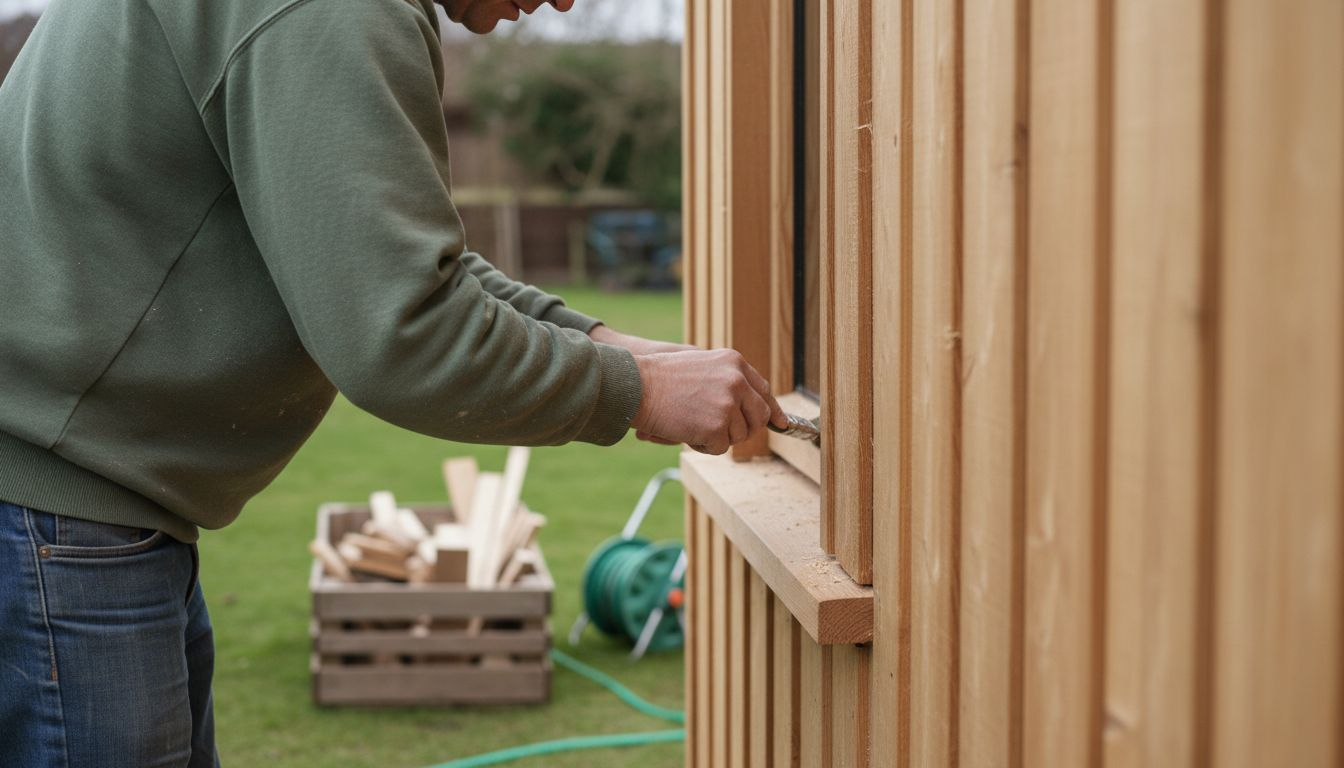
Timber remains a classic choice, prized for its natural aesthetics and organic warmth. Timber cladding finishes can be left to weather naturally or treated with protective stains and paints, offering remarkable design flexibility. However, timber demands regular maintenance to prevent decay, with exposure and orientation significantly impacting its longevity. Homeowners should anticipate annual treatments and inspections to maintain its structural integrity and appearance.
Composite materials represent a more modern alternative, engineered to provide superior durability with minimal upkeep. These engineered products combine synthetic and natural materials to create a robust finish that resists moisture, UV damage, and temperature fluctuations. While typically more expensive initially, composites offer reduced long-term maintenance costs and consistent aesthetic performance. Render finishes provide another robust option, delivering excellent weatherproofing and a smooth, contemporary appearance that can be customised through various colour and texture applications.
Pro Tip: Consider your garden room’s specific environmental exposure when selecting external finishes, prioritising materials that match your local climate conditions and maintenance capabilities.
Here is a comparison of the main external finish options for garden rooms:
| Material | Key Benefit | Main Drawback | Typical Longevity |
|---|---|---|---|
| Timber | Natural appearance | Requires annual upkeep | 15–60 years |
| Composite | Low maintenance | Higher upfront cost | 25–50 years |
| Render | Superior weatherproofing | Limited texture range | 20–40 years |
Weatherproofing and Insulation Techniques Explained
Weatherproofing and insulation are critical components in creating a durable and comfortable garden room, protecting the structure from moisture damage while maintaining optimal internal temperature. Insulation strategies for walls require careful consideration of material compatibility and breathability to prevent long-term structural issues.
For garden rooms, effective weatherproofing begins with selecting appropriate materials and implementing precise sealing techniques. Breathable waterproof coatings are essential, preventing moisture penetration while allowing internal water vapour to escape. Waterproofing external surfaces involves multiple layers of protection, including specialised paints, sealants, and membranes that create a comprehensive moisture barrier. Particular attention must be paid to potential weak points such as joints, window frames, and roof interfaces where water infiltration is most likely.
Insulation techniques vary depending on the garden room’s construction. Timber-framed structures benefit from breathable insulation materials like sheep’s wool or natural fibre alternatives that regulate moisture and provide thermal efficiency. Synthetic options such as rigid foam boards offer excellent thermal performance but require careful installation to prevent condensation. Modern garden rooms often incorporate multi-layered insulation systems combining reflective barriers, rigid insulation, and air gaps to maximise thermal resistance and minimise heat transfer.
Pro Tip: Invest in professional moisture metre testing to identify potential water ingress points and validate the effectiveness of your weatherproofing strategy before completing your garden room installation.
Planning Permission and Regulatory Considerations
Navigating the complex landscape of planning permission for garden rooms requires a nuanced understanding of local regulations and specific property characteristics. Planning permission guidelines vary significantly across different local authorities, making it essential for homeowners to conduct thorough research before commencing construction.
Most garden rooms can be constructed under permitted development rights, which allow certain building works without formal planning permission. However, critical restrictions apply that depend on factors such as the garden room’s size, location, and proximity to property boundaries. Local planning restrictions become particularly stringent for properties in conservation areas, near listed buildings, or with specific geographical constraints. Key considerations include maximum height limitations, total ground coverage, and distance from existing property boundaries.
Homeowners must also consider additional regulatory aspects beyond simple planning permission. Building regulations play a crucial role, particularly regarding structural integrity, electrical installations, and thermal efficiency. Special attention is required for garden rooms intended as habitable spaces, which demand more rigorous compliance with insulation, ventilation, and safety standards. Properties in conservation areas or with unique architectural characteristics may require additional approvals from local conservation officers, potentially involving more complex application processes.
Pro Tip: Always consult your local planning authority and obtain written confirmation of permitted development status before investing in garden room construction to prevent potential legal complications.
Maintenance Demands and Longevity of Finishes
Understanding the maintenance requirements and expected service life of garden room external finishes is crucial for homeowners seeking long-term durability and aesthetic appeal. Timber finish maintenance strategies highlight the critical importance of proactive care and appropriate material selection in preventing structural degradation.
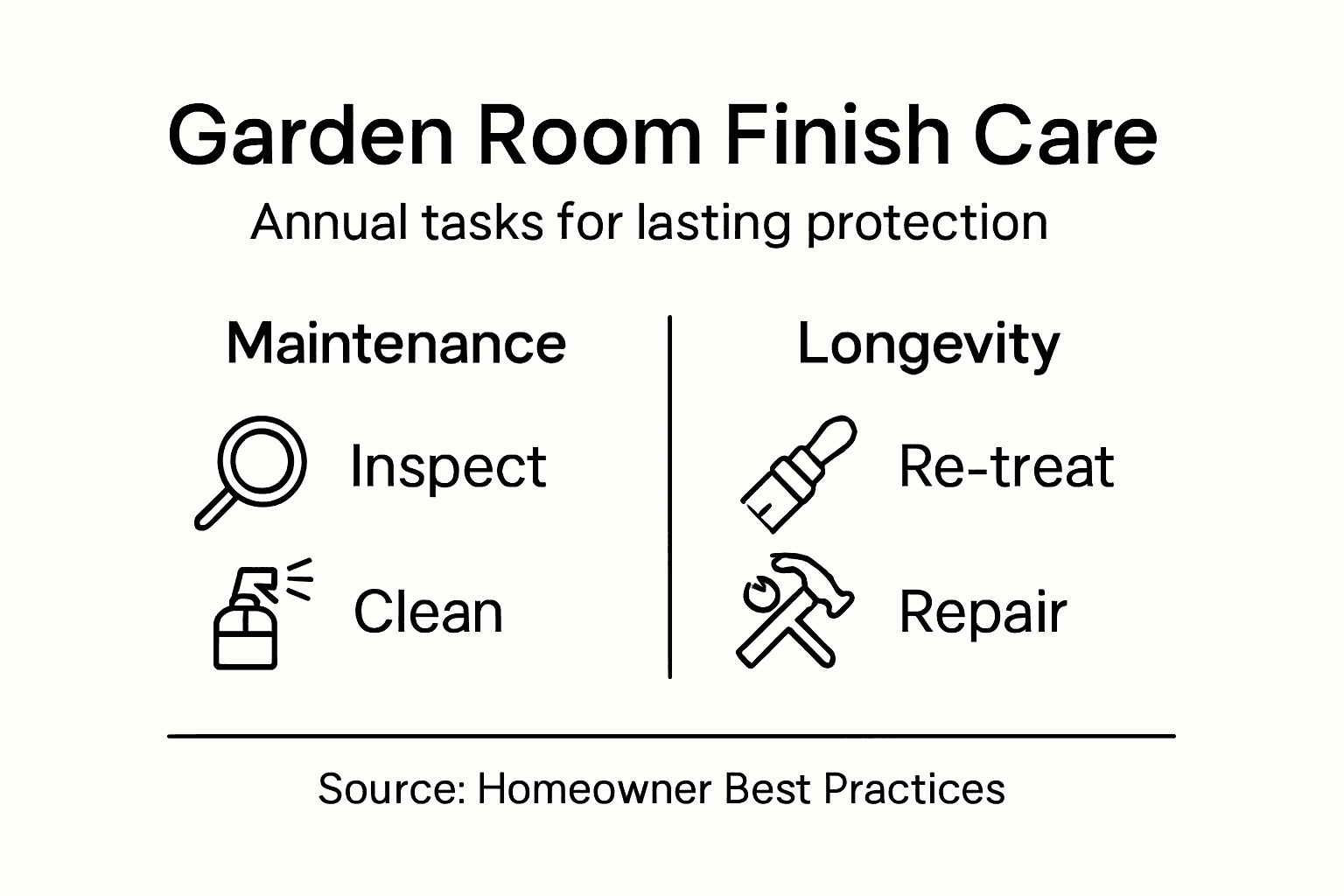
Different external finish materials demand varying levels of maintenance and present unique longevity profiles. Timber finishes, while aesthetically pleasing, require the most consistent attention, with regular treatments necessary to protect against moisture, UV damage, and potential decay. Cladding design considerations suggest that factory-finished timber with moisture-permeable coatings can achieve service lives ranging from 15 to 60 years when properly maintained. Composite materials offer a more low-maintenance alternative, typically requiring minimal intervention beyond occasional cleaning and inspection.
Factors influencing finish longevity extend beyond material selection, encompassing environmental exposure, application technique, and ongoing care. Geographical location plays a significant role, with coastal and high-humidity regions presenting more challenging conditions that accelerate material degradation. Orientation of the garden room, surrounding landscape features, and specific microclimate conditions can dramatically impact the performance and lifespan of external finishes. Professional installation, using high-quality materials and precise application techniques, becomes a critical factor in ensuring extended durability.
Pro Tip: Schedule annual professional inspections of your garden room’s external finishes to identify and address potential maintenance issues before they escalate into costly repairs.
Cost Implications and Common Pitfalls to Avoid
Understanding the financial landscape of garden room external finishes requires careful consideration of both initial investment and long-term maintenance expenses. House render considerations reveal that homeowners often underestimate the total cost of exterior treatments, which extend far beyond initial material and installation expenses.
The selection of external finish materials introduces significant cost variations. Timber finishes, while aesthetically appealing, demand higher ongoing maintenance investments compared to composite alternatives. Timber cladding design strategies highlight that initial material choices profoundly impact lifetime expenses. Cheaper materials might reduce upfront costs but can lead to substantial repair and replacement expenditures over time. Homeowners should prioritise quality materials and professional installation, recognising that investing 20-30% more initially can reduce maintenance costs by up to 50% across the garden room’s lifecycle.
Common financial pitfalls include neglecting surface preparation, choosing incompatible materials for specific environmental conditions, and underestimating maintenance requirements. Climate exposure, geographical location, and surrounding landscape dramatically influence finish performance and longevity. Coastal properties, areas with high humidity, or locations with significant temperature fluctuations require more robust and potentially more expensive finishing solutions. Professional consultation can help identify site-specific challenges and recommend cost-effective, durable external finish strategies.
Pro Tip: Budget for professional installation and high-quality materials by allocating an additional 15-20% beyond initial project estimates to cover potential unexpected expenses and ensure superior long-term performance.
Below is a summary of common cost pitfalls and how to avoid them when choosing garden room finishes:
| Pitfall | Description | Prevention Tip |
|---|---|---|
| Underestimating costs | Failing to account for lifetime maintenance | Include long-term care in budget planning |
| Poor surface preparation | Skipping proper base treatment | Ensure surfaces are clean and primed |
| Incompatible materials | Choosing finishes unsuited to local climate | Select materials matched to site exposure |
| Skimping on installation | Using non-specialist labour or tools | Invest in qualified professional services |
Discover Bespoke Garden Rooms Built to Last and Impress
Choosing the right external finishes for your garden room is essential to protect against British weather and make a bold style statement. If you want a solution that balances durability with stunning design, explore our range of bespoke garden buildings at logcabinkits.co.uk. We understand the challenge of selecting finishes that offer long-term weatherproofing and minimal maintenance while perfectly complementing your outdoor space.

Enhance your garden with expertly crafted garden rooms that feature premium materials designed for longevity and aesthetic appeal. Don’t let the uncertainty of finishes or maintenance burden your project. Take control now by visiting logcabinkits.co.uk and get inspired by options tailored to your unique environment and style preferences. Your perfect garden room is just a click away.
Frequently Asked Questions
What are the main types of external finishes for garden rooms?
The primary categories of external finishes for garden rooms include painting, rendering, and cladding. Each option offers unique benefits such as aesthetic appeal, weatherproofing, and insulation properties.
How do I choose the right external finish for my garden room?
When selecting external finishes, consider factors like climate resilience, aesthetic harmony with your garden landscape, and maintenance requirements. Opt for materials that withstand local weather conditions and complement existing design elements.
What maintenance is required for different external finishes?
Timber finishes typically require annual treatments to protect against decay, while composite materials demand minimal upkeep. Render finishes may need occasional inspections to ensure their protective qualities remain intact.
How can I ensure my garden room is well insulated while using external finishes?
Effective insulation involves selecting appropriate materials and sealing techniques. Breathable insulation, such as sheep’s wool, along with breathable waterproof coatings, can enhance thermal efficiency and prevent moisture issues in your garden room.


