
Cabin orientation: why it matters more than you think
TL;DR:
- Proper cabin orientation affects sunlight, privacy, and usable space in your garden. Choosing the ideal direction depends on your daily routine, not just automatic south-facing placement. Thoughtful design and positioning maximize comfort and garden enjoyment year-round.
Cabin orientation is defined as the compass direction your garden cabin faces, and it’s the single biggest factor shaping how much sunlight, comfort, and usable space you get from your garden building. Get it right and your cabin feels bright, warm, and perfectly placed. Get it wrong and you’ll spend half the year sitting in shadow or squinting into glare. The importance of cabin orientation goes well beyond simply picking a sunny spot. It shapes your privacy, your garden’s visual flow, and how much you actually use the space day to day. 68% of UK homeowners say garden appeal increases significantly in summer, which makes solar positioning a key decision from the start. Logcabinkits works with homeowners every day on exactly this kind of planning, and the difference a well-placed cabin makes is remarkable.
Why does the importance of cabin orientation matter so much in the UK?
The UK’s sun path is more dramatic than most homeowners realise. The sun reaches roughly 60° elevation in midsummer but drops to only about 15° in midwinter. That’s a huge swing, and it means shadows behave very differently depending on the time of year.
In summer, a low-pitched roof overhang can block harsh midday glare while still letting in morning and afternoon light. In winter, that same low sun angle means shadows stretch far across the garden. A 3-metre garden building can cast a shadow 6–8 metres long on a winter’s afternoon. That’s a significant chunk of your garden sitting in shade for months.
Understanding these seasonal shifts is the foundation of good cabin placement. Once you know how the sun moves across your specific plot, every other decision becomes much clearer.
| Season | Approximate sun elevation | Shadow length (3m cabin) |
|---|---|---|
| Midsummer | ~60° | 1.7–2 metres |
| Spring/Autumn | ~35–40° | 3.5–4 metres |
| Midwinter | ~15° | 6–8 metres |
Pro Tip: Visit your garden at different times of day before you commit to a position. Take photos at 9AM, 12PM, and 4PM on a clear day. You’ll see exactly where the sun falls and where shadows land.
What are the benefits and drawbacks of each cabin orientation?
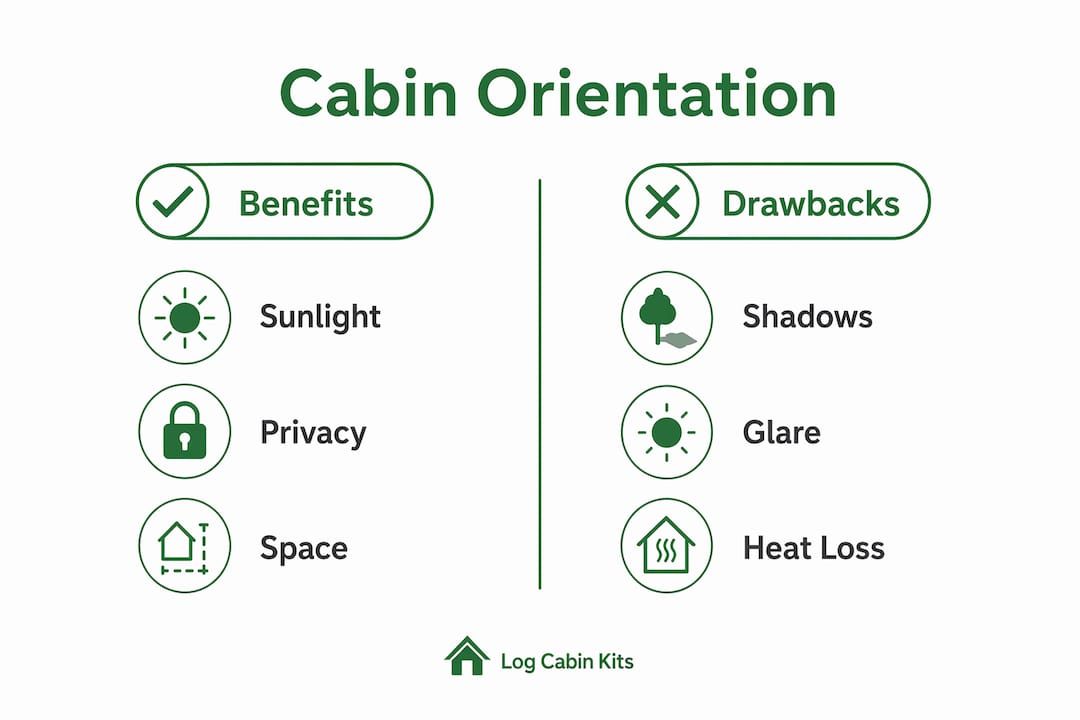
Most people assume south-facing is always best. It isn’t always. South-facing gardens get the longest period of direct sunlight, but without good design they can overheat and become uncomfortable in high summer. A south-facing cabin with large glazed panels and no overhang can feel like a greenhouse by july.
Here’s a practical breakdown of each orientation:
South-facing
- Longest daily sun exposure throughout the year
- Ideal for year-round use if you add roof overhangs or external blinds
- Can overheat in summer without shading features
- Best for homeowners who use their cabin regularly and want maximum light
East-facing
- Bright, gentle morning light
- Cool and shaded by afternoon, which suits working from home in summer
- Less useful for evening relaxation
- Good for garden summer houses used as studios or home offices
West-facing
- Afternoon and evening sun makes it ideal for unwinding after work
- Warm and comfortable on summer evenings
- Can feel cold and dark on winter mornings
- Often the most practical choice for families who use the garden after 3PM
North-facing
- Consistent, diffused light with no direct glare
- Cooler in summer, which suits certain uses like art studios or reading rooms
- Requires more thought around insulation for year-round comfort
- Often underestimated, but genuinely useful for the right lifestyle
The honest truth is that lifestyle routines matter more than compass direction. A west-facing cabin suits someone who works 9 to 5 far better than a south-facing one they never sit in at midday.
How does cabin positioning affect space and privacy in your garden?
Shadow casting is the most overlooked part of cabin placement. A poorly positioned cabin doesn’t just affect its own interior light. It can shade your lawn, your borders, and your seating areas for large parts of the day. Shadow modelling before installation is one of the most practical things you can do before committing to a position.
Privacy is the other big factor. Positioning your cabin near natural viewing points, away from neighbour sightlines, and behind existing fences or trees makes a real difference to how relaxed you feel using it. A cabin that feels overlooked rarely gets used as much as one that feels tucked away.
Here are the key space and privacy considerations to work through before you place your cabin:
- Shadow impact on planting. Check where winter shadows will fall. Avoid placing the cabin where it will shade a vegetable patch or flower border you rely on.
- Neighbour sightlines. Stand at the back of your garden and look toward your neighbours’ upstairs windows. If they can see directly into your cabin, consider rotating it slightly or adding a planted screen.
- Flow between house and cabin. A cabin that sits naturally on the route from your back door to the garden feels more connected and gets used more often.
- Existing trees and fences. These can be assets. A mature tree to the west provides afternoon shade in summer without blocking winter sun from the south.
- Corner placement. Corner log cabins are particularly good at using awkward spaces efficiently while keeping the main garden open.
Pro Tip: Use a compass app on your phone and stand in the spot where you’re thinking of placing the cabin. Check the direction at 8AM and again at 6PM. You’ll quickly see whether the position works for your daily routine.
What cabin design principles work best with your chosen orientation?
Orientation sets the stage, but cabin design determines how well you use it. The single most effective design principle is aligning the cabin’s long axis east to west. East-west alignment maximises winter sun exposure and reduces the light lost to north-south shadowing, which can cost you 20–30% of available winter light.
Roof design plays a bigger role than most people expect. A well-proportioned overhang on a south-facing cabin blocks high summer sun while letting in lower winter sun. This is passive solar design in its simplest form, and it works without any technology or ongoing cost.
Window and door placement should follow the sun, not the street. These design choices make a real difference to comfort:
- Place the largest glazed panels on the south or west wall to capture the most useful light for your lifestyle.
- Use smaller windows on the north wall for ventilation without heat loss.
- Position the main door on the sheltered side to reduce draughts and make entry more comfortable in winter.
- Add a small covered veranda or canopy on the sunny side to extend usable outdoor space and control glare.
- Consider planting a deciduous climber or shrub on the south or west side. It provides shade in summer and drops its leaves in winter, letting light through when you need it most.
Good landscaping and expert property planning can reinforce all of these design choices, tying the cabin into the wider garden in a way that feels natural rather than bolted on. A bespoke cabin design from Logcabinkits gives you the flexibility to move windows, adjust door positions, and tailor roof overhangs to suit your exact plot and orientation.
Key takeaways
Cabin orientation is the most important placement decision you’ll make, and getting it right depends on your lifestyle, your garden’s sun path, and thoughtful design choices rather than simply defaulting to south-facing.
| Point | Details |
|---|---|
| Sun angles vary dramatically | UK sun drops to ~15° in winter, making shadow planning critical before installation. |
| South-facing isn’t always best | Your daily routine matters more than compass direction when choosing orientation. |
| East-west alignment saves light | Aligning the long axis east-west retains 20–30% more winter light than north-south. |
| Shadow impacts the whole garden | A 3-metre cabin casts a 6–8 metre shadow in winter, affecting planting and usable space. |
| Design amplifies orientation | Overhangs, glazing placement, and planting all work with orientation to improve comfort. |
What I’ve learnt from watching homeowners get orientation wrong
Most people spend weeks choosing the right cabin style and almost no time thinking about where to put it. I’ve seen beautiful buildings placed with their main windows facing north because the owner wanted the door near the house. The cabin looked great in photos and felt cold and dim in real life.
The advice I give most often is this: spend a full day in your garden before you decide anything. Watch where the sun hits at breakfast, at lunch, and in the evening. Notice where you naturally gravitate to sit. That spot, the one you already choose without thinking, is usually the right place for your cabin.
I’d also push back on the idea that south-facing is the gold standard. A west-facing cabin used every evening after work delivers far more enjoyment than a south-facing one that’s only comfortable at midday when you’re not there. Good garden layout that creates multiple sun spots at different times of day often matters more than any single orientation decision.
The other thing I’d say is don’t be afraid of a less conventional angle. Rotating a cabin 15–20 degrees off the cardinal compass points can dramatically improve both the view from inside and the way the building sits in the garden. Rules are a starting point, not a constraint.
— Martin
Planning your cabin with Logcabinkits
Getting orientation right is much easier when you have the right cabin to work with. Logcabinkits offers a wide range of garden log cabins designed to suit different garden layouts, sun paths, and personal uses.
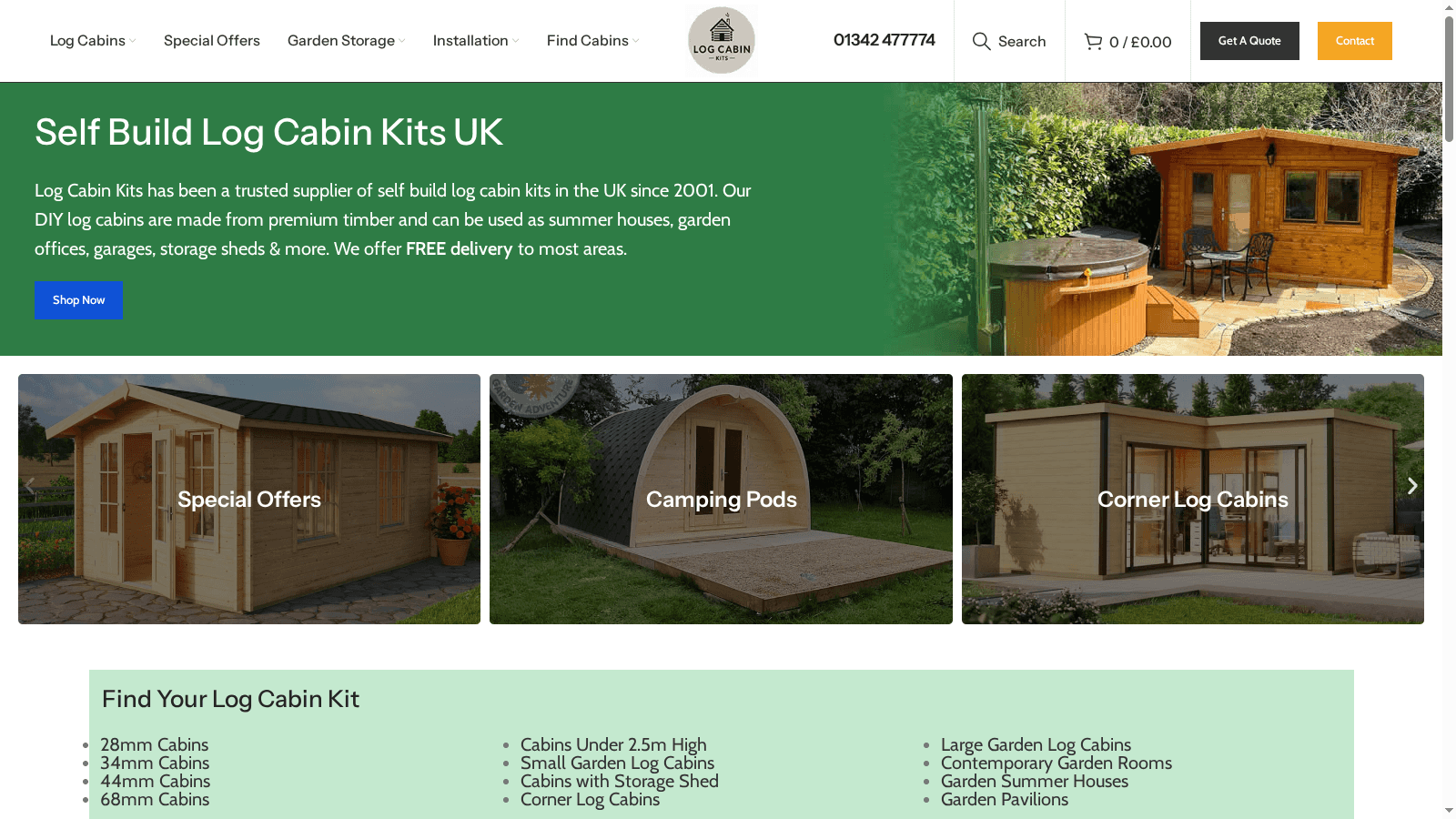
If your garden calls for something specific, the bespoke cabin design service lets you adjust window positions, door placement, and roof overhangs to match your exact orientation needs. Not sure where to start? The cabin selection wizard walks you through your options based on your garden size and how you plan to use the space. Whether you want a garden room that catches the morning sun or a relaxed evening retreat, there’s a cabin that fits.
FAQ
What is the best orientation for a garden cabin in the UK?
South or west-facing orientations suit most UK homeowners, but the best choice depends on when you use the cabin. West-facing works well for evening use, while south-facing suits those who want maximum year-round light.
How does cabin orientation affect sunlight in winter?
The UK winter sun sits at only around 15° elevation, so even a modest cabin casts long shadows. Positioning your cabin to face south and aligning its long axis east-west retains the most available winter light.
Does cabin orientation affect privacy?
Yes. Positioning your cabin away from neighbour sightlines and near existing fences or trees improves privacy significantly. Rotating the door and main windows away from overlooked angles also helps.
Can I change the impact of a poor orientation with design?
Yes. Roof overhangs, window placement, external blinds, and strategic planting can all compensate for a less-than-ideal orientation. A bespoke cabin build gives you the most flexibility to adapt the design to your plot.
How far in advance should I plan cabin orientation?
Plan orientation before you choose your cabin size or style. Visiting your garden at different times of day across different seasons gives you the clearest picture of where light falls and where shadows land.