
The role of base preparation for cabins explained
TL;DR:
- Proper base preparation ensures a level, square, and moisture-resistant foundation that prevents structural issues over time. Choosing the appropriate base type depends on site conditions, cabin size, and DIY skills, with timber frames being popular for ease of construction. Careful site grading, testing, and adherence to standards are essential to maintain the cabin’s stability and longevity.
Base preparation for cabins is the process of creating a level, stable, and fully supportive foundation before a single wall panel goes up. Get it right and your garden cabin stands firm for decades. Get it wrong and you face sticking doors, sagging floors, and moisture damage that no amount of maintenance will fix. The role of base preparation for cabins is not a finishing touch. It is the single most important step in the entire build process, and this guide walks you through everything you need to know to do it properly.
Why the role of base preparation for cabins matters so much
A garden cabin is not a shed. Interlocking timber walls have zero tolerance for an uneven base. Even a small level error causes the walls to misalign, leaving gaps that let in rain and cold air. A shed can be shimmed and adjusted after the fact. A log cabin cannot. This distinction is critical and it shapes every decision you make about your foundation.
The two main failure modes for any cabin base are settlement and subsidence causing structural issues. Settlement happens when the base sinks into soft soil over time. Subsidence is ground movement beneath the base. Both lead to the same result: sticking doors, cracked walls, and a cabin that is no longer weatherproof. A properly prepared base stops both from happening.
Experts describe the base as an active protector of your investment, not just a platform to build on. That framing is useful because it changes how you approach the groundwork. You are not just laying something flat. You are building a system that manages load, moisture, and movement for the life of the cabin.
The importance of cabin foundation work also extends to planning rules. In the UK, base height affecting permissions can push your cabin above the 2.5 metre threshold that triggers planning permission requirements. Factor that in before you start digging.
What does a properly prepared cabin base actually require?
A well-prepared base meets five clear standards. Work through each one before you move on to the next.
- It must be perfectly level. Use a spirit level or laser level across the full footprint. Check in multiple directions, not just front to back.
- It must be square. Measure both diagonals. Matching diagonal measurements confirm a square base. If they differ, your walls will not align correctly.
- It must be the right size. The base should match the full footprint of the cabin. Perimeter support is non-negotiable. Without it, the outer walls sag.
- It must manage moisture. Whether you use concrete, timber, or paving slabs, the base needs a moisture barrier or ventilation gap to protect the timber above.
- It must be stable underfoot. The ground beneath needs to be compacted and free of soft spots before anything is built on top.
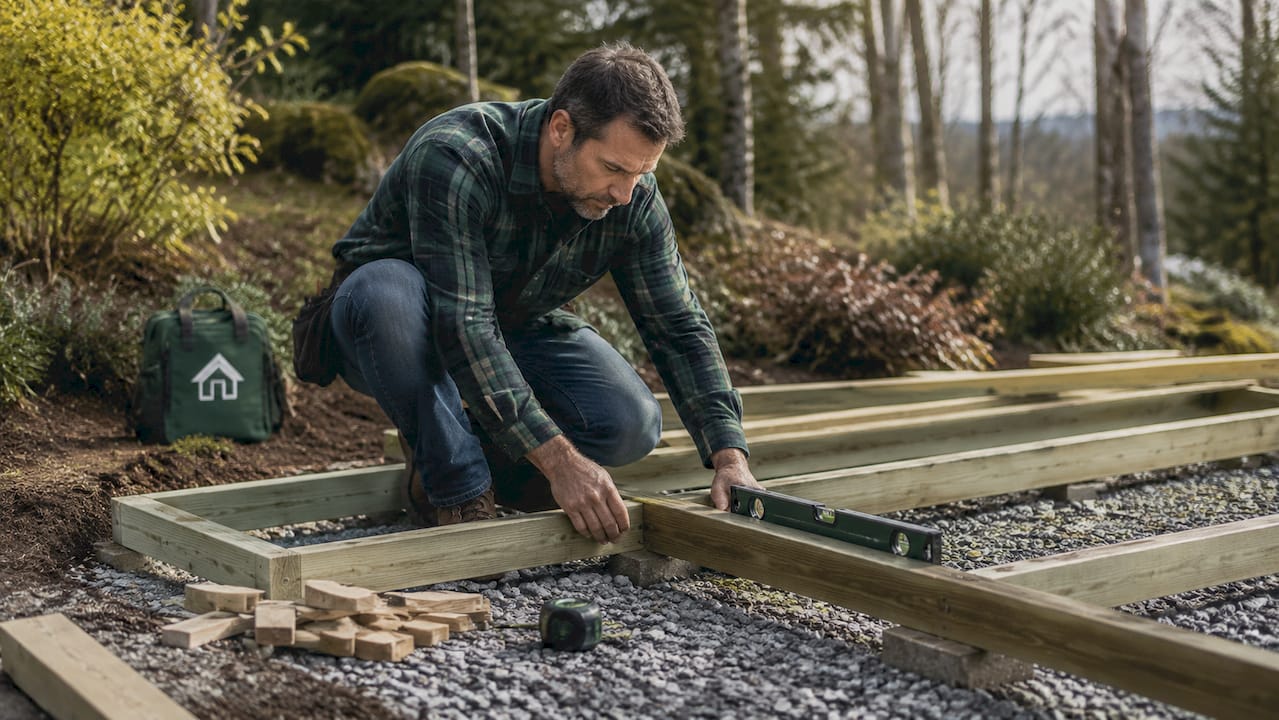
For timber frame bases specifically, floor joists need support every 1.5 metres or less, with standard 300mm joist spacing across the frame. These intervals replicate residential flooring standards and distribute the cabin’s load evenly, preventing sagging over time.
Pro Tip: Set the outer perimeter of a timber frame base 2 to 5mm inside the cabin’s footprint. This creates a drip edge for rainwater that directs water away from the base edge and prevents rot at the most vulnerable point of the structure.
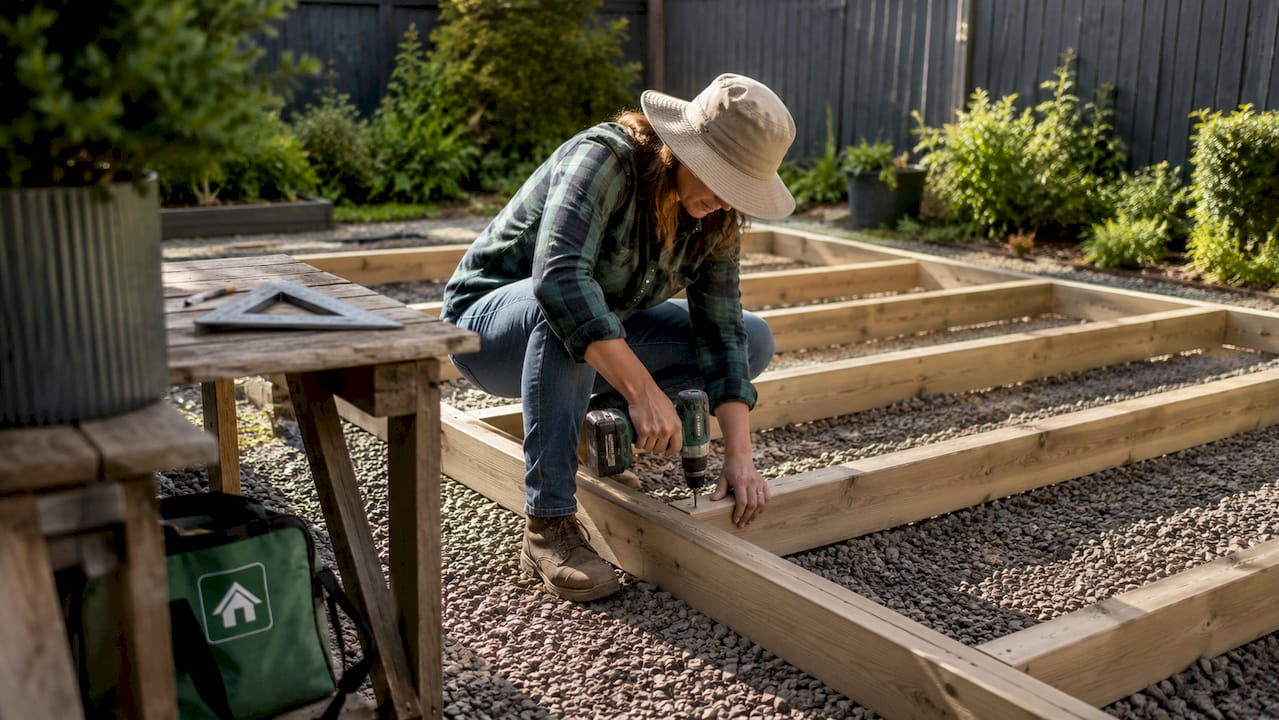
Ground preparation matters just as much as the base itself. Clear all vegetation and topsoil from the site. Grade the ground so it slopes very gently away from the base area. Compact the soil thoroughly before laying anything. Poor drainage beneath the base is one of the most common causes of long-term problems.
Which base type is right for your cabin?
Choosing the right base material depends on your site, your budget, and how confident you are with DIY. Here is a straightforward comparison.
| Base type | Cost | DIY difficulty | Best for | Main drawback |
|---|---|---|---|---|
| Concrete slab | High | Moderate to hard | Large cabins, permanent builds | Expensive, needs professional mixing |
| Timber frame | Low to medium | Easy to moderate | Most garden cabins, DIY builds | Requires moisture protection |
| Paving slabs | Medium | Easy | Smaller cabins, flat sites | Must be perfectly level, can shift |
| Pier foundations | Low to medium | Moderate | Sloping or uneven ground | Less suitable for very large cabins |
Concrete slab bases are the most durable option. Concrete slab advantages include a level surface, strong moisture protection, and long-term stability. They suit larger cabins well. The downside is cost and the fact that most homeowners will need professional help to pour and finish the slab correctly.
Timber frame bases are the most popular choice for DIY builders. They are adjustable, relatively affordable, and straightforward to construct with basic tools. The key is getting the joist spacing and support intervals right, and adding a damp-proof membrane beneath the frame.
Paving slabs sit in the middle ground. They are easy to lay on a flat, well-prepared site and work well for smaller cabins. The risk is that individual slabs can shift or settle unevenly over time, so the ground preparation underneath must be thorough.
Pier foundations are worth considering if your site slopes or has uneven terrain. Pier foundations reduce site prep costs by 40 to 60% compared to full concrete slabs and provide natural ventilation beneath the cabin floor. That ventilation is genuinely useful for timber longevity in wetter climates.
- Concrete slabs suit cabins over 4 x 3 metres or any cabin used as a home office or studio
- Timber frames work well for most standard garden log cabins and bespoke builds
- Paving slabs are a practical choice for flat gardens with good natural drainage
- Pier foundations are the go-to solution for sloping plots
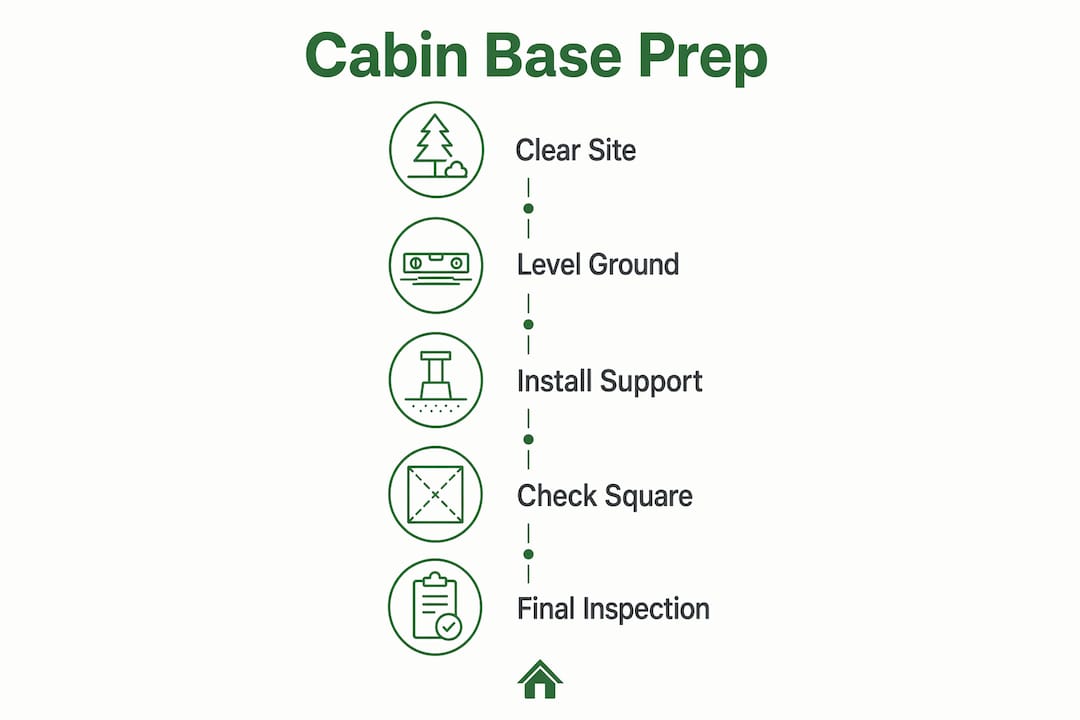
Step-by-step guide to preparing your cabin base
Follow these steps in order. Skipping ahead is the most common mistake DIY builders make.
-
Clear the site. Remove all grass, plants, roots, and topsoil from the area. Go down at least 150mm to get below the organic layer, which compresses and rots over time.
-
Mark out the footprint. Use pegs and string lines to mark the exact dimensions of your base. Measure the diagonals at this stage to confirm the layout is square before you do any more work.
-
Grade and compact the ground. Rake the surface level and use a plate compactor or hand tamper to firm up the soil. Soft ground is the enemy of a stable base.
-
Install drainage. If your site holds water, lay a layer of compacted hardcore or MOT Type 1 aggregate before the base goes down. Slope the surrounding ground gently away from the base area to direct surface water clear of the cabin.
-
Lay your chosen base. For a timber frame, use treated timber joists at 300mm spacing with supports every 1.5 metres. For concrete, pour to a minimum depth of 100mm on a compacted hardcore bed. For paving slabs, bed them on sharp sand over compacted hardcore.
-
Check level and square again. Once the base is in place, check it with a spirit level in all directions. Measure the diagonals one more time. Both measurements must match.
-
Perform the stability test. For timber frame bases, jump on the frame to check for flex. Any movement means the supports are insufficient and will fail under the static load of the cabin over time.
-
Set the drip edge. Position the outer perimeter of the timber frame 2 to 5mm inside the cabin footprint so rainwater runs clear of the base edge.
Pro Tip: Check your local planning rules before you finalise the base height. Building near property boundaries within 2 metres, or a base that pushes the cabin above 2.5 metres total height, can require planning permission. A quick check now saves a costly problem later.
For a full walkthrough of the installation process once your base is ready, the complete cabin installation guide from Logcabinkits covers every stage in detail.
Common mistakes that shorten your cabin’s life
Most base-related problems come down to a handful of avoidable errors. Knowing what they are makes them easy to sidestep.
- An undersized base. If the base does not support the full perimeter of the cabin, the outer walls have nothing solid beneath them and begin to sag within a few years.
- Ignoring squareness. A base that is level but not square causes the interlocking wall logs to twist as they are stacked. Doors and windows end up out of alignment and will not close properly.
- Poor drainage. Water pooling beneath or around the base is the fastest route to timber rot. It also softens the ground and accelerates settlement.
- Skipping compaction. Loose soil beneath the base compresses under load. Even a well-built base will tilt or sink if the ground underneath has not been properly compacted.
A correctly prepared base does not just support the cabin on day one. It prevents subsidence and settlement over years, keeping the structure true and the timber dry throughout its life.
Monitoring the base after installation is good practice too. Check the level once a year, particularly after a wet winter. Look for signs of moisture around the base edge and clear any debris that traps water against the timber. A little attention each year protects a significant investment.
For more on keeping the timber in good condition once the cabin is up, the log cabin waterproofing tips from Logcabinkits are well worth reading alongside this guide.
Key takeaways
A properly prepared cabin base is the single factor that determines whether your garden cabin remains stable, dry, and structurally sound for decades.
| Point | Details |
|---|---|
| Level and square is non-negotiable | Check diagonals match and use a spirit level across the full footprint before building. |
| Joist spacing matters | Timber frame bases need 300mm joist spacing with supports every 1.5 metres to distribute load evenly. |
| Choose the right base type | Match your base material to your site conditions, cabin size, and DIY confidence level. |
| Drainage protects the timber | Slope ground away from the base and use a drip edge to keep water clear of the structure. |
| Test before you build | The jump test on a timber frame catches weak spots before the cabin goes on top. |
What I have learned from watching homeowners prepare cabin bases
I have seen a lot of cabin builds over the years, and the pattern is always the same. The homeowners who rush the groundwork are the ones who call back six months later with sticking doors or a floor that has developed a noticeable dip. The ones who take their time on the base, who check the diagonals twice and do not skip the compaction step, rarely have problems at all.
The thing most people underestimate is how unforgiving interlocking log walls are. You cannot adjust them once they are stacked. If the base is even slightly off, that error multiplies with every course of timber you add. I always tell people: spend an extra half day on the groundwork. It is the cheapest insurance you will ever buy for your cabin.
My other piece of advice is to invest in a decent laser level if you are doing this yourself. A spirit level is fine for small bases, but on anything over 3 x 3 metres, a laser level saves time and removes the guesswork. The cost is modest compared to the cost of getting it wrong.
Weather is worth planning for too. Do not lay a timber frame base the day before heavy rain is forecast. Wet timber swells, and if the frame absorbs moisture before the cabin goes on, you will have fitting problems from the start. Check the forecast and give yourself a dry window of at least two or three days.
— Martin
Ready to find your perfect garden cabin?
If you have got your base sorted and you are ready to choose a cabin, Logcabinkits has a wide range of garden log cabins to suit every garden size and budget. From compact summer retreats to full-size multi-room builds, every cabin comes with free UK delivery and expert support to help you get the installation right.

Not sure which cabin suits your space? The team at Logcabinkits can help you match the right cabin to your site and base dimensions. If you want something tailored exactly to your plot, take a look at the bespoke cabin design service for a cabin built around your specific requirements. Getting the base right is the hard part. Choosing the cabin should be the enjoyable bit.
FAQ
What is the role of base preparation for cabins?
Base preparation creates a level, stable, and moisture-resistant foundation that supports the cabin’s full weight and prevents settlement, subsidence, and timber rot over time. Without it, interlocking log walls will misalign and structural problems will follow.
What is the best base for a garden log cabin?
A timber frame base is the most popular choice for DIY builds, using 300mm joist spacing with supports every 1.5 metres. Concrete slabs offer greater durability for larger or permanent cabins, while pier foundations work well on sloping ground.
How do I check if my cabin base is square?
Measure both diagonals of the base from corner to corner. If the two measurements match, the base is square. Even a small difference will cause the interlocking walls to twist as they are stacked.
Can a raised base affect planning permission?
Yes. In the UK, a base that raises the overall cabin height above 2.5 metres, or a cabin built within 2 metres of a property boundary, can trigger planning permission requirements. Check your local rules before finalising the base height.
How do I protect a timber base from moisture?
Set the outer perimeter of the timber frame 2 to 5mm inside the cabin footprint to create a drip edge that directs rainwater away from the base. Use a damp-proof membrane beneath the frame and treat all timber with a suitable preservative before installation.