
How to soundproof your log cabin for true peace
TL;DR:
- Timber’s flexibility makes external noise transmission challenging, requiring specialized soundproofing methods.
- Using mass and decoupling layers like resilient bars and acoustic membranes effectively reduces sound ingress.
- Proper sealing, layered materials, and thoughtful design improve cabin comfort and overall property value.
There’s nothing worse than settling into your log cabin retreat, only for a neighbour’s lawnmower or passing traffic to shatter the quiet you were looking forward to. Sound intrusion is one of the most common complaints among UK log cabin owners, and it’s easy to see why. Timber construction behaves very differently from brick and mortar when it comes to noise, and most standard fixes simply don’t cut it. This guide walks you through exactly what works, from choosing the right materials to sealing every gap, so your cabin becomes the peaceful haven it was always meant to be.
Table of Contents
- Understanding sound in log cabins: Why standard solutions often fail
- Essential materials and tools for log cabin soundproofing
- Step-by-step: How to soundproof your log cabin walls, roof, and floors
- Common pitfalls and how to check your results
- Why proper soundproofing is about well-being, not just silence
- Explore bespoke log cabins tailored for comfort
- Frequently asked questions
Key Takeaways
| Point | Details |
|---|---|
| Specialist materials matter | Rockwool, MLV, and soundproof plasterboard work far better than standard foam or DIY hacks. |
| Decoupling is crucial | Sound isolation strips and resilient bars prevent noise moving through timber frames. |
| Doors and windows need attention | Shutters and robust seals are essential for weak points like windows and cabin doors. |
| Testing ensures results | Always verify your improvements with a sound leak check for lasting quiet. |
Understanding sound in log cabins: Why standard solutions often fail
Before you spend money on materials, it helps to understand why noise gets into a log cabin in the first place. Timber is a living, flexible material. Unlike dense brick walls, it vibrates easily and transmits sound waves along its length. That means noise doesn’t just push through the wall in front of you. It travels through the floor joists, roof beams, and window frames simultaneously, a process known as flanking transmission.
This is why so many homeowners are disappointed after adding carpet or thick curtains. Those materials absorb echo inside the room. They make speech sound clearer and reduce reverb. But they do very little to stop external noise from entering. As acoustic specialists confirm, foam panels absorb echo but don’t block transmission. What you actually need is mass (heavy materials that resist sound waves passing through them) and decoupling (physically separating surfaces so vibration can’t travel easily from one layer to the next).
Here’s a quick comparison to show the difference between common home types:
| Feature | Brick/block home | Timber log cabin |
|---|---|---|
| Wall density | High | Low to medium |
| Flanking risk | Low | High |
| Vibration transfer | Minimal | Significant |
| Standard fix effectiveness | Moderate | Poor without specialist approach |
The best timber for log cabins does offer some natural acoustic benefit due to its density, but it’s never enough on its own. Even thick interlocking logs will let through low-frequency rumbles from traffic, bass music, and power tools.
Common mistakes homeowners make include:
- Ignoring flanking paths: Treating only the main walls and forgetting floor edges and roof junctions
- Using foam alone: Egg-box foam does almost nothing for external noise
- Skipping gaps and joints: Even a tiny gap lets a disproportionate amount of sound through
- Underestimating low-frequency vibrations: Bass sound is the hardest to block and needs real mass
“The biggest mistake people make is treating soundproofing like decoration. You can’t just add something to a surface and hope for the best. You need to think about the whole structure.”
Adding soundproof shutter benefits to windows is a popular upgrade that many cabin owners overlook entirely. Shutters add a physical mass barrier on the outside of your glazing, which can make a noticeable difference on busy garden boundaries.
It’s also worth thinking about insulating your log cabin roof at the same time, since the roof is one of the most common flanking paths for rain noise and general outdoor sound. Both acoustic and thermal insulation often share the same solution, so tackling them together saves time and money.
Essential materials and tools for log cabin soundproofing
Once you understand the problem, gathering the right materials makes all the difference. The good news is that the core products are widely available in the UK and work extremely well together when layered correctly.
Here are the main materials you’ll need:
| Material | What it does | Best used for |
|---|---|---|
| Rockwool (mineral wool) | Absorbs sound, fire-resistant | Inside stud walls, roof spaces, floor voids |
| Mass-loaded vinyl (MLV) | Adds mass without bulk | Walls, floors, ceiling layers |
| Acoustic membrane | Flexible sound barrier | Under flooring, behind cladding |
| Soundproof plasterboard | Dense finishing layer | Interior wall surfaces |
| Acoustic sealant | Fills gaps airtight | Edges, joints, cable/pipe penetrations |
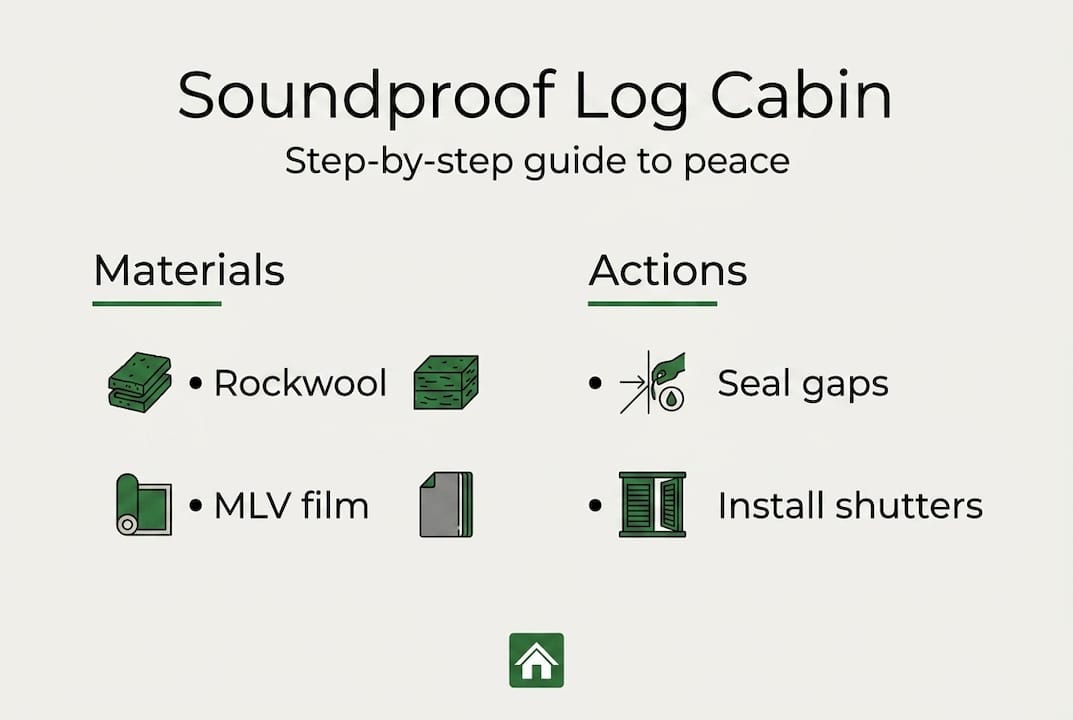
As key materials confirm, Rockwool is sound-absorbing and fire-resistant, making it ideal for filling cavities. MLV is heavier than it looks and acts as a flexible mass barrier that can be rolled out and cut to size easily.
You’ll also want these tools on hand before you start:
- Utility knife and straight edge for cutting MLV and membranes cleanly
- Sealant gun loaded with acoustic sealant (not standard filler)
- Tape measure for accurate sizing of panels and rolls
- Cordless drill and screwdriver bits for fixing resilient bars and boarding
- Heavy-duty staple gun for securing membrane layers
- Safety gear: gloves, dust mask, and eye protection when handling Rockwool
For windows and doors, acoustic glazing upgrades are helpful, but noise-blocking shutters are a quicker win if full window replacement isn’t in your budget. They add a solid barrier layer that your existing windows simply can’t provide alone.
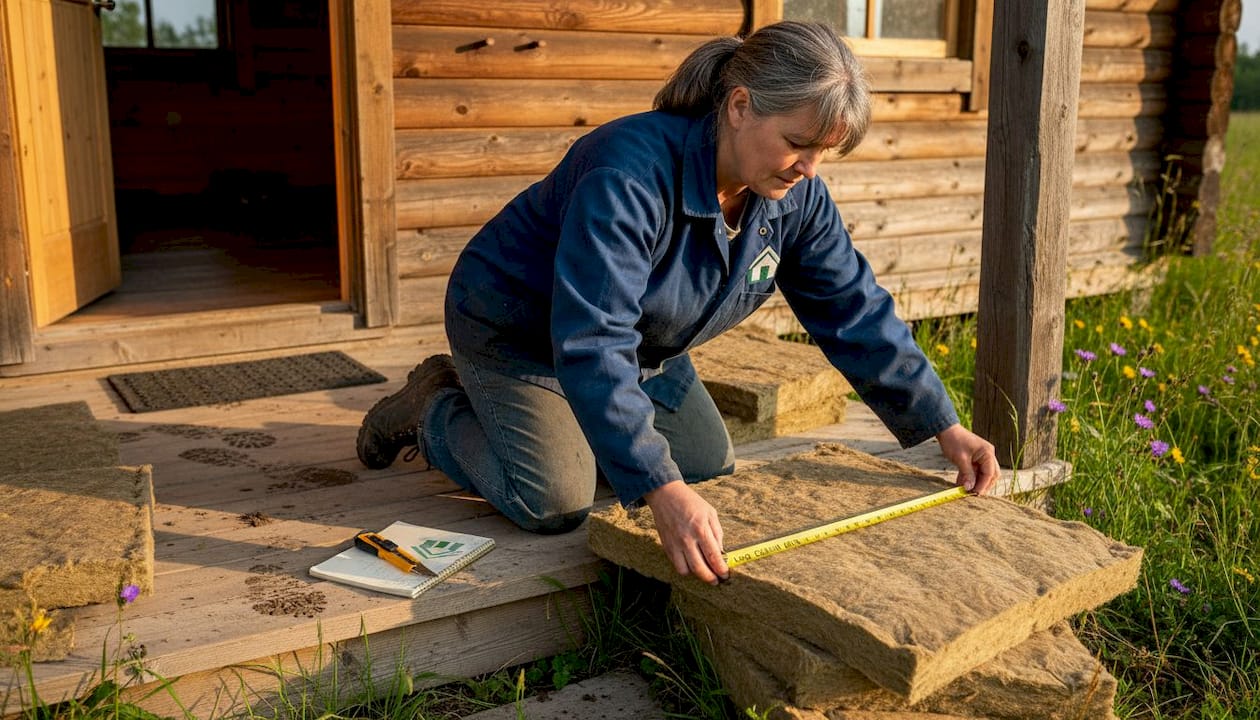
Pro Tip: When buying Rockwool, choose 50mm or 100mm slabs rather than the thinner rolls sold for loft insulation. The thicker the slab, the more effective it is at dampening mid and low-frequency noise, which is exactly what causes the most disruption in a garden cabin.
It’s also worth reading up on insulating your log cabin before you begin, as many insulation and soundproofing steps overlap. You might also find that the right materials help with making your log cabin energy efficient at the same time, giving you double value from a single project.
Step-by-step: How to soundproof your log cabin walls, roof, and floors
With materials ready, here’s how to approach the job methodically. Working through each surface in order means nothing gets missed.
-
Inspect all surfaces first. Walk around and feel for draughts, check for gaps around window frames, and look at where pipes or cables enter. Every gap is a potential sound path.
-
Start with the walls. Fix timber battens to the inside face of your cabin walls to create a small cavity. This creates the decoupling effect. Fill the cavity with Rockwool slabs, cut snugly to size. Cover with a layer of MLV, then fix soundproof plasterboard on top. This multi-layer approach adds mass and breaks the vibration path.
-
Install resilient bars on walls where needed. For rooms needing serious acoustic isolation (a home studio or a busy home office, for example), fixing soundproof plasterboard onto resilient bars rather than directly to battens gives even better results. As decoupling research confirms, avoiding direct contact between layers is crucial for reducing flanking transmission.
-
Move to the floor. Lay acoustic membrane directly onto the existing floor deck, overlapping edges by at least 50mm and taping the joins with acoustic tape. Add a floating floor layer on top, leaving a small gap around all edges. Fill this gap with acoustic sealant, not foam, for an airtight seal.
-
Tackle the roof from inside. If your cabin has a pitched roof with a void, pack Rockwool between the joists and fix MLV across the underside before boarding over it. For a flat-roof cabin, work with the ceiling layer in the same way as the walls, using battens for decoupling and finishing with dense boarding.
-
Seal windows and doors properly. Add foam compression seals around all door frames and check that window beading is tight. For added performance, consider upgrading to reinforcing your doors and windows with heavier-duty frames and sealed units.
-
Fit shutters as a finishing layer. Solid shutters, either internal or external, close over the window and add a final mass barrier. They’re especially useful on cabins facing a road or a noisy neighbour’s garden.
Pro Tip: If you’re considering a more serious upgrade, double skin construction offers outstanding acoustic performance by design. Two separate timber skins with an insulated cavity between them reduce noise transmission far more effectively than a single-skin cabin treated after the fact.
Common pitfalls and how to check your results
Even with the right materials and a clear plan, a few common errors can undermine all your hard work.
Watch out for these:
- Skipping decoupling: Fixing plasterboard directly to timber allows vibration to transfer straight through, cancelling out much of the mass you’ve added
- Using too little mass: A single layer of standard plasterboard simply won’t cut it. You need high-density acoustic board, ideally two layers where possible
- Forgetting the floor perimeter: Sound travels along floor edges and up walls. Always seal the gap between your floating floor and the wall with acoustic sealant
- Poor door seals: A hollow-core cabin door with worn seals undoes a lot of good wall insulation. Replace seals and consider a door sweep at the base
- Ignoring moisture: Damp timber transmits sound more readily and can cause insulation to fail over time. Check out moisture control in log cabins to protect your investment
As research shows, low-frequency vibrations require proper isolation and are the most commonly overlooked issue. Traffic noise and bass music sit in this range. Without real mass and decoupling, you’ll block the obvious sounds but still feel that low rumble.
Here’s a summary of what to check after installation:
| Check | What to look for | Action if problem found |
|---|---|---|
| Wall surfaces | Any gaps at edges or around fittings | Reseal with acoustic sealant |
| Floor perimeter | Sound audible at skirting level | Add extra sealing layer |
| Door seals | Daylight visible around frame | Replace compression seal |
| Window frames | Cold draught or sound leaking in | Rebed frame or add acoustic shutter |
| Roof/ceiling join | Echo or vibration from above | Check cavity fill and boarding |
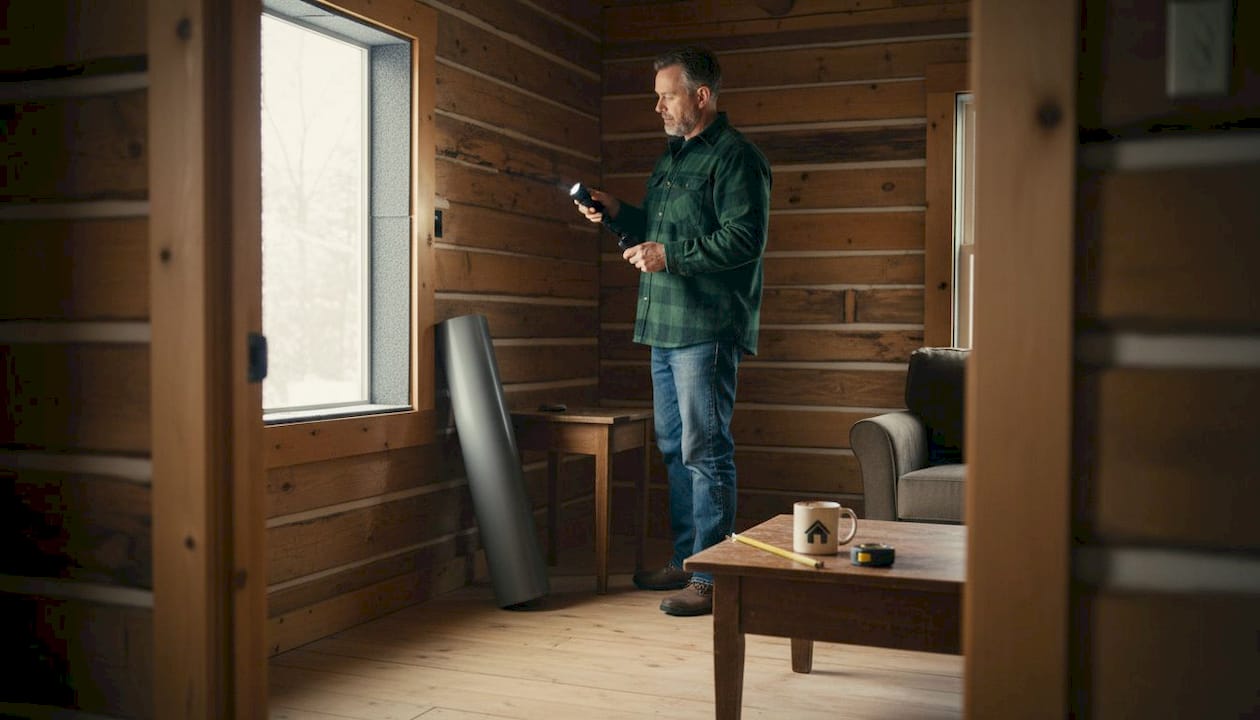
For a simple sound leak test, have someone play loud music outside the cabin while you move slowly around the inside walls with the lights dimmed. You’ll often hear and feel where sound is entering most. Pay attention to corner junctions, window edges, and the floor-to-wall join. Those spots are where most cabins fall short. Guidance on insulation and noise reduction can also help you plan any further upgrades after your initial test.
Why proper soundproofing is about well-being, not just silence
Here’s something worth sitting with. Most people approach soundproofing as a technical problem to solve. And yes, it is. But when you talk to homeowners who’ve properly soundproofed their cabins, the thing they mention first isn’t the decibel reduction. It’s how much better they feel in the space.
A quieter cabin means better focus for anyone working from home, more restful sleep in a garden studio, and genuinely relaxed conversations without straining over background noise. These are quality-of-life improvements that show up every single day.
We’ve seen customers who upgraded their cabins for acoustic comfort also report higher property valuations, simply because a well-built, properly insulated garden building reads as a premium feature. True peace in a log cabin comes from designing holistically: acoustics, thermal performance, and aesthetics working together.
That’s why we always encourage thinking about soundproofing alongside energy-efficient log cabins, because the materials and methods overlap so neatly. You’re not just blocking noise. You’re creating a space you genuinely love spending time in, year round, regardless of what’s happening outside the walls.
Explore bespoke log cabins tailored for comfort
If you’ve read this far and you’re thinking your existing cabin could do with a complete rethink, or if you’re planning a brand-new build with acoustic comfort in mind from day one, we’d love to help.

Our bespoke cabin designs can include thicker wall profiles, pre-planned insulation cavities, and premium glazing options, all specified before a single panel is cut. If you want to see what’s possible, browse the log cabin gallery for real-world inspiration, or take a look at our custom-built log cabins for full design flexibility. We offer free UK delivery and our team is always happy to talk through your options.
Frequently asked questions
What is the best material to soundproof a log cabin wall?
Rockwool combined with mass-loaded vinyl and soundproof plasterboard gives the most effective wall soundproofing in UK log cabins. Using all three layers together, with decoupling via resilient bars, delivers the best results.
Can I soundproof a log cabin without professional help?
Yes, many soundproofing steps like installing insulation and seals are DIY-friendly and straightforward for most homeowners. However, decoupling layers with resilient bars and fixing acoustic boards correctly can be tricky, so calling in a professional for those stages is worth considering.
How do I stop noise coming through the roof of my log cabin?
Layer Rockwool between roof joists, seal all edges carefully, and use a mass barrier like MLV with a floating ceiling structure for the best roof soundproofing. Decoupling the ceiling layer from the roof structure is essential.
Are window and door shutters effective for log cabin soundproofing?
Yes, specialist soundproof shutters add a valuable extra barrier against noise, especially for windows and doors where standard glazing alone falls short. They’re a cost-effective upgrade that works well alongside other acoustic improvements.
How can I check if my soundproofing is working?
Do a simple sound leak test by playing loud music outside while you move slowly around the interior, listening for weak spots. Adjust seals and add barriers wherever you detect sound entering, particularly at door frames, window edges, and floor perimeters.