
Off Grid Garden Room: Solar, Water and Winter Warmth

An off grid garden room is a cabin that makes its own power, and sometimes collects its own water, instead of plugging into your house or the mains. Itâs very doable in the UK. The trick is to keep it small, well insulated and honest about what it needs to do. Hereâs how it works, what to budget for and what the rules say.
TL;DR
- Off grid means the room needs no mains link. In the UK thatâs legal, but the building still has to meet planning and building rules.
- Solar panels, a charge controller and a battery will run lights, a laptop and a small heater. They wonât run a big electric heater all winter.
- Rainwater can be collected for non-drinking uses. Wastewater needs a proper, approved solution.
- Thick walls, good insulation and double glazing do more for winter comfort than any extra panel.
- We build and adapt log cabins to your spec, so you can plan the space for off grid use from day one.
Table of Contents
- What off grid really means for a garden room
- Solar power for a garden room
- Staying warm in winter
- Rainwater and water supply
- Planning and building regulations
- What does off grid cost, and what are the limits?
- Designing a cabin for off grid use
- Our view: keep it simple
- Plan your cabin with us
- FAQ
- Sources
What off grid really means for a garden room
Off grid sounds like a big lifestyle choice. For a garden room it can be much simpler. It means the building doesnât depend on mains electricity, mains water or a drain connection. You can pick one, two or all three.
Most people start with power. A cabin at the bottom of the garden needs a cable trench to reach it, and thatâs a cost and a bit of a chore. Going solar skips the trench.
Is it allowed? No UK law says a home must be connected to mains services, so youâre free to build something that never is. What the law does cover is the physical work, the equipment, drainage and waste. Planning and building rules apply to a building because of what it is, not because of how itâs connected.
So a garden office with a solar kit is simple. A garden room you plan to sleep in is a different matter, and we cover that further down.
Solar power for a garden room
This is the part most readers ask about, so letâs keep it plain.
What a basic system includes
A small off grid setup for a garden office usually has four parts:
- Solar panels, typically 100W to 400W in total, depending on how much roof or mounting space you have.
- A charge controller, which looks after the battery. An MPPT type is the one usually recommended.
- A battery, either deep-cycle or lithium, with something like 100Ah of storage as a starting point.
- An inverter (optional), around 300W to 500W, which turns the batteryâs DC power into 240V AC for ordinary plugs.
If you only want lights and USB charging, you may not need the inverter at all. Fewer parts means fewer things to go wrong.
How much power will you get?
A small 3m x 3m garden room might generate roughly 700 to 1,000 kWh a year from solar. Thatâs only a rough guide. Your roof angle, shade and where you live all change it.
The bigger point is timing. Solar follows the sun, not your diary. A battery lets you store extra power for later, such as after sunset or when youâre working late. In December, though, supply is low. Plan your demand around the darkest months, not the sunniest.
What it costs
One UK supplier puts a small 1kW to 2kW off grid system at about £4,000 to £7,000, and suggests thatâs the sort of size suited to garden offices and summer houses. Batteries are a big chunk of that. Smaller kits for a laptop and lights cost far less, but you get far less power.
Treat any figure as a guide and get a written quote from a qualified installer for your own setup.
Keep it cool and safe
Solar kit makes heat. Panels, batteries and inverters need ventilation or space for heat to escape. On a roof, that means leaving a gap beneath and around the panels. Donât box a battery into a tight cupboard.
Anything wired to 240V should be fitted by a qualified electrician. Thatâs one place where saving money isnât worth it.
Use less, so you need less
The cheapest power is the power you never use. Choose LED lights, a laptop rather than a desktop, and a small fridge only if you really need one. Daylight helps too. A bright room means fewer lights on in the afternoon, and there are good tips on making the most of natural light indoors.
When we design a cabin with you, we can place windows and doors to bring in light where youâll sit and work. Weâll talk more about that below.
Staying warm in winter
Heating is where off grid plans usually come unstuck. Solar panels give the least power exactly when you want the most warmth.
A low-wattage infrared panel heater, around 300W to 600W, suits solar better than a fan heater. Even so, it still takes a big share of what a small system makes. So the plan is to need less heat in the first place.
Hereâs what helps most:
- Thicker walls. A log cabin with a thicker wall holds warmth far better than a thin one. We offer a range of wall thicknesses.
- Insulation in the floor and roof, where heat escapes fastest.
- Double glazing on every window and door.
- A draught-free build. Good fitting matters as much as the materials.
- A smaller room. Less air to warm means less power to use.
If youâre not going fully off grid, our guide to winter heating costs for a well insulated garden room shows what running costs can look like when the building does its job. And if youâre weighing up wall build-ups, our garden log cabins range shows the options.
Be realistic too. A cabin used for a few hours at a time, with a small heater and a thick jumper, is easy. A cabin heated all day through January on solar alone is not.
Rainwater and water supply
You donât need water in a garden office. You might want it for a small kitchenette, a hobby room or a plant bench. Rainwater is the obvious off grid answer.
Collecting rainwater
Collecting rainwater for non-drinking uses generally doesnât need an abstraction licence in England, as long as it doesnât harm the environment or mix with groundwater. Thatâs the governmentâs regulatory position, so check the current page before you start.
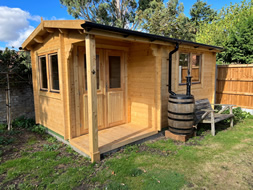
A simple set-up is a water butt fed from the cabinâs guttering. Keep the water for watering plants and cleaning, not for drinking.
Keeping it clean
The Drinking Water Inspectorate advises using screens or filters to keep leaves and other matter out of a rainwater system. It also suggests discouraging birds from perching on collection areas, because their droppings carry bacteria. A good filter helps too, and home water filtration is worth a look if you want cleaner water at a tap.
Wastewater is the tricky bit
Collecting water is easy. Getting rid of it is not. Greywater, which is water from sinks and showers, needs treatment before reuse in sanitary appliances to meet Parts G and H of the Building Regulations. Councils also say wastewater systems should be put in by specialists, with overflow going to foul drainage or a properly designed soakaway.

If you want a toilet, a septic tank or small treatment plant is the usual route. A system that meets the Environment Agencyâs general binding rules needs no permit, but a new treatment plant usually needs planning permission and building regulations approval. For most garden rooms, the easy answer is no plumbing at all, or a simple compost-style or portable option youâre happy with.
Planning and building regulations
This is the part that catches people out, so check it early.
Many outbuildings fall under permitted development if they stay within set limits and are used as part of the main home. Building Regulations typically donât apply to a detached building up to 15m² with no sleeping accommodation. The same goes for 15m² to 30m² if itâs at least 1m from the boundary. Any water, waste and drainage connections still have to comply.
Two things to keep in mind:
- Rules differ across the UK and between councils, and some areas, like conservation areas, have extra limits. Our guide to building in a conservation area explains what to check.
- Sleeping in the room changes things. Read our guide on sleeping in a garden room before you plan a bed.
For height, size and position limits, see our permitted development guide and our piece on boundary distances. When in doubt, ask your local council. A quick email can save a lot of worry.
What does off grid cost, and what are the limits?
Hereâs an honest picture, without hiding the awkward bits.
| Item | What to expect |
|---|---|
| Small solar kit for lights and a laptop | Lower cost, but limited power |
| 1kW to 2kW system with battery | Around £4,000 to £7,000 from one UK supplier |
| Water butt for garden use | Low cost, no drinking use |
| Septic tank or treatment plant | Higher cost, needs specialist fitting and may need approvals |
| Mains cable trench | Often the thing off grid saves you |
The main limits are simple. Winter sun is weak, batteries wear out over time, and heating drains power fast. If you want a cabin thatâs warm and bright every day of the year, a mains link may still be the better value. Many people go for a middle road: a well insulated cabin with a small solar kit for lights and devices.
Keeping the budget down
- Start small and add panels later.
- Spend first on insulation and glazing, not extra kit.
- Use low-power items, such as LED lights and a laptop.
- Get your electrician to check the plan before you buy anything.
Designing a cabin for off grid use
This is where a bespoke build earns its keep. A standard cabin is made for a typical use. An off grid cabin has different needs, and small changes make a big difference.
Here are things we can adjust with you:
- Size. A smaller footprint is easier to heat and power.
- Wall thickness. Thicker walls keep more warmth in.
- Door and window layout. Put the glass where the light is best, and keep it double glazed.
- Roof style. An apex roof cabin gives a clear, sloping roof thatâs handy for panels, and extra headroom inside.
- Layout. If you want a work area and a quiet corner, a multi-room log cabin keeps the spaces apart.
- Insulation and finish. Extra insulation and a factory-painted exterior look after the building and the heat.
If you want a relaxed space for the warmer months, one of our garden summer houses suits light use, with a small solar kit for lamps and a speaker. For a bigger, open feel, take a look at our garden pavilions.
Our view: keep it simple
We see lots of people start with the kit and forget the building. They price up batteries, then wonder why the room is cold. Our advice goes the other way.
Get the cabin right first. A well built, well insulated timber cabin with good glazing makes every watt go further. Then add only as much solar as you really use. Most people we talk to want somewhere calm for hobbies, working or reading, not a full home. Thatâs a job a small system does well.

Weâd also say: donât be afraid of a hybrid plan. You can design the cabin to be ready for solar now, and decide on a mains link later. Itâs a personal choice, and thereâs no wrong answer.
If youâre not sure where to start, just tell us how you want to use the room. Weâll help you shape the size, walls and layout around that.
â Martin
Plan your cabin with us
Want a cabin built around off grid living? Our bespoke log cabin service lets you choose the size, wall thickness, layout, windows and doors, with options like insulation and double glazing. You can also ask about professional installation. We deliver free across the UK mainland, and you can get in touch for a tailored quote. If youâd rather start from a ready-made design, browse our garden log cabins and tell us what youâd like to change.
FAQ
Is it legal to have an off grid garden room in the UK?
Yes. No UK law requires a building to be connected to mains power, water or drainage. The building must still meet any planning and building rules that apply, and drainage and waste have to be handled properly.
Can solar power run a garden room?
Yes, for lights, a laptop and small devices it works well. A basic system has panels, a charge controller, a battery and sometimes a small inverter. Winter output is low, so heating is the hardest thing to cover.
Do I need planning permission for an off grid garden room?
Often you donât, because many outbuildings are permitted development if they stay within the limits and arenât used as a home. Local rules vary, and some areas have extra limits. Check with your council before you buy.
Can I use rainwater in my garden room?
Yes, for non-drinking uses such as watering plants. In England it generally doesnât need an abstraction licence if it doesnât harm the environment. Use screens or filters, and donât drink it.
Will an off grid garden room be warm in winter?
It can be, if itâs well built. Thick walls, insulation and double glazing do most of the work, and a small low-wattage heater tops it up. Heating all day on solar alone is hard in the darkest months.
Sources
- Is It Legal to Go Off-Grid in the UK?
- Can You Use Balcony Solar to Power a Garden Office or Shed?
- Solar Panels for Garden Rooms: Costs and Is It Worth It
- How Much Does an Off-Grid Solar System Cost in the UK?
- Building Regulations renewables guidance
- Rainwater harvesting: regulatory position statement
- Protecting your private water supply
- Drainage requirements for domestic extensions
- Guidance note on the use of package treatment plants
- Advice on outbuildings
- Natural light tips
- Home water filtration