
Why add electrics to your garden room: key benefits
TL;DR:
- Electrifying a garden room transforms it from a simple storage space into a functional, year-round living and working environment. Installing proper electrical features, including dedicated circuits, heating, lighting, and data points, enhances usability, safety, and property value. Professional, compliant installation with proper certification ensures safety, future-proofing, and legal adherence, making the investment worthwhile.
Most people assume a garden room is just a glorified shed. A place to store garden tools, maybe a bike or two. But that assumption leaves a lot of value sitting unused at the bottom of your garden. The moment you add electricity to a garden room, everything changes. It becomes a proper space you can actually live and work in, whatever the season. This article walks you through the real-world benefits of electrifying your garden room, what features to include, how to stay safe and compliant, and whether the investment genuinely pays off.
Table of Contents
- How electrics expand garden room possibilities
- What electrical features do most UK garden rooms include?
- Safety, compliance and certification: What homeowners need to know
- Comparing cost and value: Is electrification worth it?
- Our practical take: Why smart electrics matter more than ever
- Explore our garden cabin solutions
- Frequently asked questions
Key Takeaways
| Point | Details |
|---|---|
| Electrification transforms usability | Adding electrics makes garden rooms usable for work, leisure, and year-round comfort. |
| Safety and certification are vital | Professional installation and compliance documentation protect your investment and peace of mind. |
| Typical features enhance value | Sockets, lighting, heating, and data points are standard in electrified garden rooms. |
| Upfront costs pay off long-term | Electrification increases property value and flexibility, offsetting installation expense. |
| Plan early for best results | Designing electrics into your garden room from the start avoids costly retrofitting and supports future needs. |
How electrics expand garden room possibilities
Think about how you use your home. Heating, lighting, devices, internet, all of it relies on electricity. Your garden room deserves the same treatment. Without electrics, it’s a cold, dark box for a few months of the year. With electrics, it becomes something genuinely useful every single day.
The range of uses opens up dramatically once your garden room is wired up. Here are just a few examples of what homeowners across the UK are doing with electrified garden rooms:
- Home office: Reliable sockets, data points, and heating mean you can work from the garden comfortably all year
- Gym or yoga studio: Lighting, sound systems, and a heated floor make exercise far more motivating
- Creative studio: Artists, crafters, and musicians need reliable power for equipment and proper lighting
- Guest bedroom or annexe: Add heating and lighting and overnight guests have a genuinely comfortable space
- Games room or cinema room: Entertainment setups need multiple sockets, data connections, and quality lighting control
Comfort year-round is one of the biggest factors here. The UK climate means you need proper heating from autumn through spring. A well-insulated cabin with electric heating holds warmth effectively, which is why it’s worth reading about insulated garden rooms before you commit to a design. Insulation and electrics work together. One without the other leaves you with a cold room or sky-high energy bills.
For inspiration on how other homeowners are using their garden rooms, take a look at these garden room ideas that cover everything from offices to social spaces.
From an installation standpoint, the standard UK approach is straightforward but must be done correctly. As this garden room office electrics guide explains:
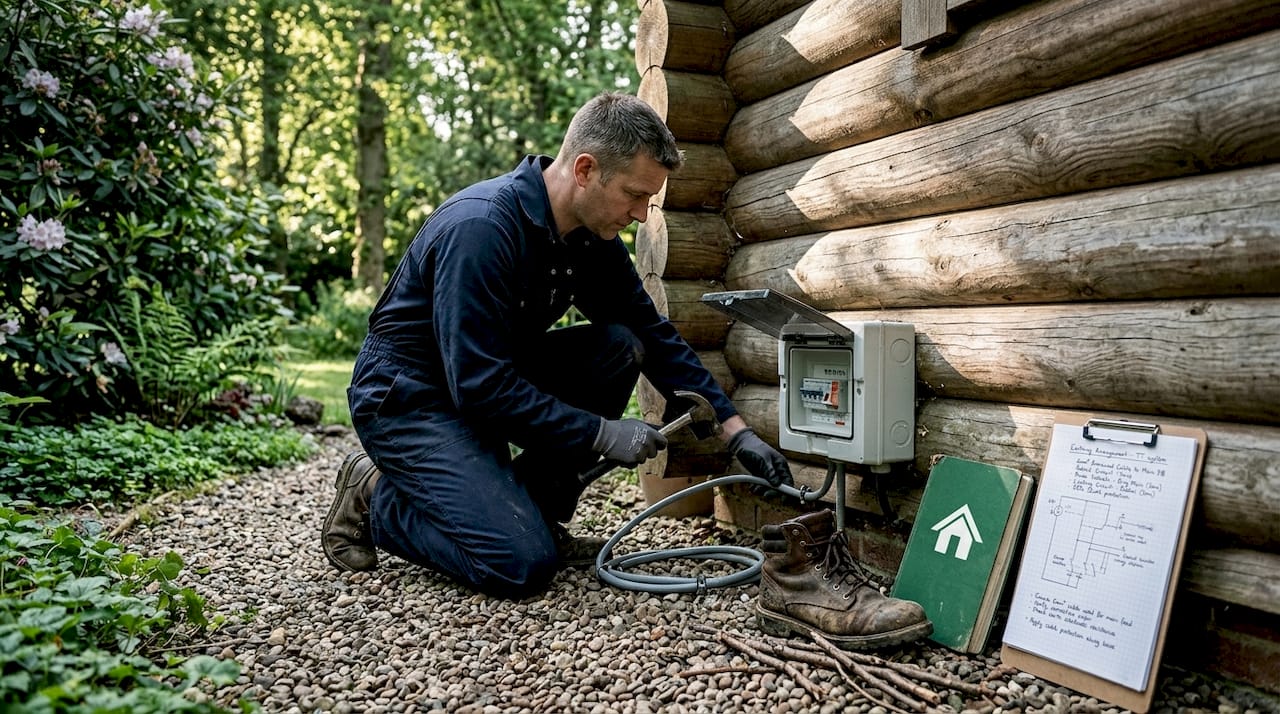
“Common UK methodology is a dedicated sub-main/armoured cable from the house consumer unit to a dedicated garden-room consumer unit with RCD protection, then internal circuits for sockets/lighting/data.”
In plain terms, this means a properly protected cable runs from your house to a small fuse board inside the garden room. That board then manages all the internal circuits safely. It’s a neat, reliable system when installed by a qualified electrician.
What electrical features do most UK garden rooms include?
Once you decide to electrify your garden room, the next question is what to actually include. The good news is there’s a pretty well-established set of features that most UK homeowners go for, and you can scale up or down depending on your budget and intended use.
Here’s a useful overview of the most common electrical features and what they add to your garden room:
| Feature | What it adds | Essential for |
|---|---|---|
| Double sockets | Power for devices and appliances | All uses |
| Dedicated USB outlets | Convenient device charging | Offices, studios |
| LED ceiling lights | General ambient lighting | All uses |
| Task lighting | Focused light for detailed work | Offices, craft studios |
| External security light | Safety and deterrence | All uses |
| Electric panel heater | Reliable, controllable warmth | Year-round use |
| Underfloor heating | Even, quiet heat distribution | Premium builds |
| Data/ethernet points | Fast, stable internet connection | Offices, streaming |
| RCD consumer unit | Circuit protection and safety | Mandatory for all |
| Smart switches | Remote control of lighting/heating | Modern builds |
As the garden room office electrics guide confirms, a dedicated consumer unit with RCD protection is the standard starting point, with internal circuits for sockets, lighting, and data built from there.
When planning what to include, think about:
- How many devices will you run simultaneously? More devices means more circuits, not just more sockets
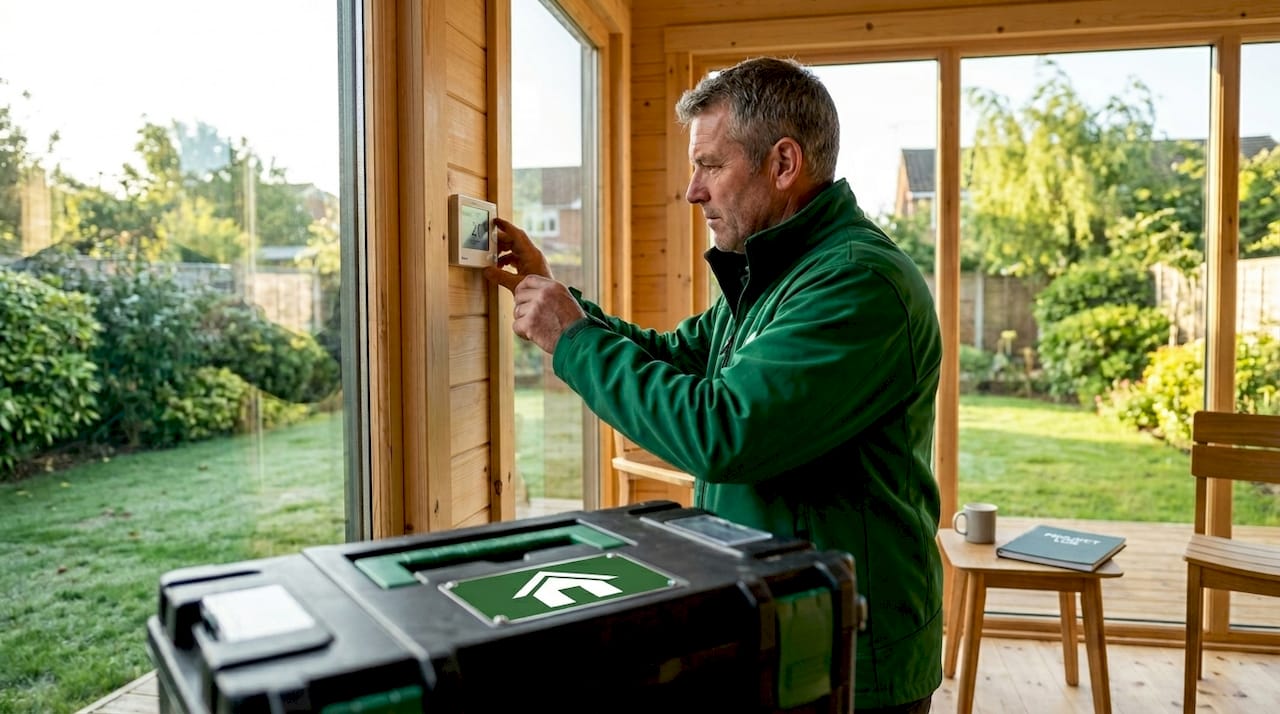
- Do you need heating that’s controllable remotely? Smart thermostats can warm the room before you head out
- Will you need video call quality lighting? Ring lights or panel lights matter more than you’d think
- Is high-speed internet critical? An ethernet cable to a dedicated data point beats Wi-Fi every time for remote working
For a practical walkthrough on the installation process itself, the article on electrics in garden rooms covers the key steps clearly. And if you want a more detailed technical overview, the electrical installation guide is a great reference.
Pro Tip: Plan for more sockets than you think you need. Adding sockets at the build stage costs very little extra. Retrofitting them later involves lifting floors, chasing walls, and far bigger bills.
Safety, compliance and certification: What homeowners need to know
This is where a lot of homeowners get caught out. It’s tempting to cut corners with electrical work, especially if you’re handy around the house. But garden room electrics are not a DIY job, and the reasons are more serious than you might expect.
Here’s what you need to follow to stay safe and legally compliant:
-
Use a qualified electrician. In the UK, electrical work on outbuildings must be carried out by a competent person. That usually means a registered electrician who can self-certify their work under Part P of the Building Regulations.
-
Ensure proper RCD protection. An RCD (Residual Current Device) cuts the power instantly if it detects a fault. It’s a legal requirement for garden buildings and could genuinely save your life.
-
Use armoured cable between the house and cabin. Standard cable is not suitable for outdoor or underground runs. Armoured cable is designed to handle the conditions and prevent damage.
-
Ask for compliance documentation. This is non-negotiable. As the guidance on garden room building regulations makes clear, homeowners should ensure their electrician provides compliance documentation, whether that’s a self-certification notice or a formal inspection and testing record.
-
Check your insurance. Non-compliant electrical work can invalidate your home insurance policy. If something goes wrong, you could face costs you’re simply not covered for.
Getting the paperwork right isn’t just about ticking boxes. It’s proof that your installation is safe, and it will matter when you come to sell your home.
Understanding the broader risks is also important. If you’re thinking about fire safety alongside electrical work, the article on fire safety in garden buildings covers what you need to consider carefully.
It’s also worth knowing the scope of what qualified electricians actually do in UK renovation and garden room projects. The detail on electrician compliance and roles gives a helpful overview for homeowners who want to understand exactly what they’re paying for.
For a straightforward guide on what adding electricity to your garden cabin actually involves, the resource on adding electricity to log cabins is a good starting point.
Pro Tip: Always ask your electrician whether they are registered with a competent person scheme such as NICEIC or NAPIT. Registered electricians can self-certify their work, which simplifies the compliance process for you significantly.
Comparing cost and value: Is electrification worth it?
Let’s talk money. Garden room electrification has upfront costs, but it’s important to weigh those against the long-term return. The short answer is that, for most homeowners, electrification is absolutely worth it. Here’s why.
Here’s a comparison of three electrification levels to help you see the difference:
| Level | What’s included | Estimated cost | Best for |
|---|---|---|---|
| Basic | 2 sockets, single lighting circuit, RCD board | £800 to £1,500 | Occasional use, storage with light |
| Mid-range | 4 to 6 sockets, full lighting, heater circuit, data point | £1,500 to £3,000 | Home office, studio, gym |
| Fully electrified | Multiple circuits, smart controls, underfloor heating, data, security | £3,000 to £6,000+ | Guest space, professional studio, annexe |
These figures vary depending on cable run length, ground conditions, and the complexity of your internal layout. A longer cable run from house to cabin increases material and labour costs. Always get at least two quotes from qualified electricians before committing.
The value argument comes down to a few key points:
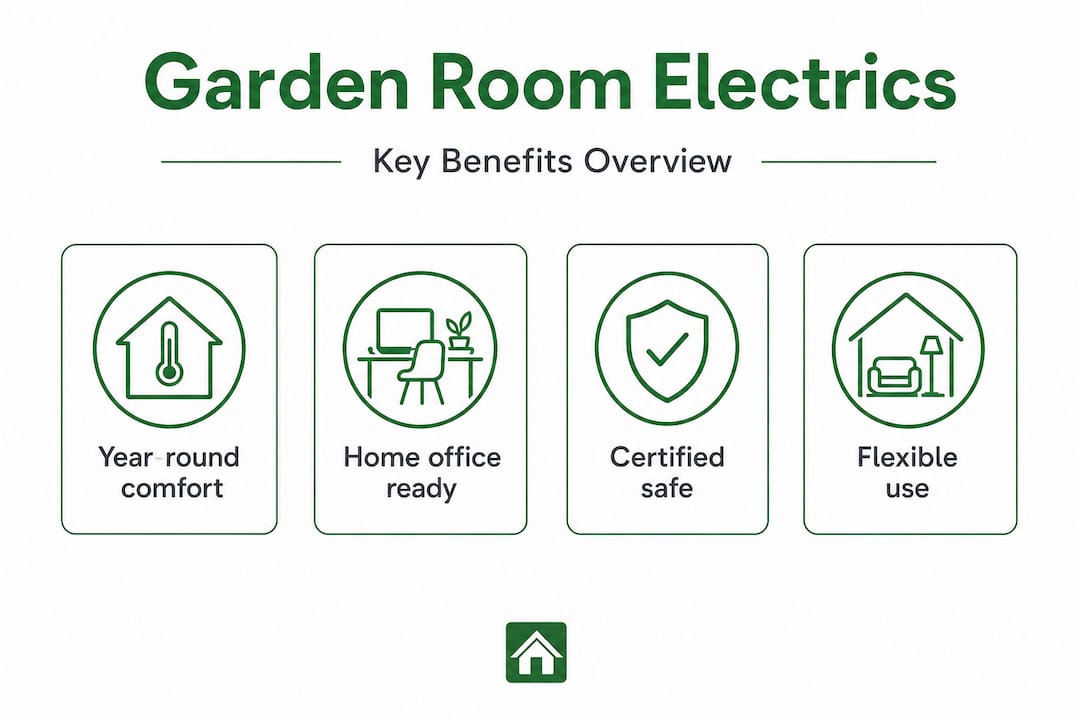
- Usable space all year round. A heated, lit, and connected garden room adds real daily value to your life, not just a seasonal bonus.
- Increased property value. Estate agents consistently report that garden rooms, particularly those with power and year-round functionality, add meaningful value to residential properties.
- The home office effect. With remote working now a permanent reality for millions of UK households, a dedicated, electrified workspace can justify its entire cost within a year when you factor in commuting savings and productivity gains.
- Flexible resale appeal. Future buyers see an electrified garden room as a ready-made office, gym, or studio. That’s a strong selling point.
As confirmed in the garden room office electrics guide, the standard approach with a dedicated consumer unit and RCD-protected circuits is the foundation for any electrified build that will hold its value. Cutting corners on this infrastructure reduces both safety and resale appeal.
If you’re thinking about the layout and how electrics interact with room configuration, the guide on multi room garden buildings is particularly useful for more ambitious builds.
Our practical take: Why smart electrics matter more than ever
We’ve seen hundreds of garden cabin projects over the years, and there’s one mistake that comes up again and again. Homeowners plan the structure beautifully but treat electrics as an afterthought. They add a single socket and a bare bulb and wonder why the space feels incomplete. Then six months later they’re asking about retrofitting, and that’s where it gets expensive.
The truth is, retrofitting electrics in a finished cabin is a real chore. Cables need routing through finished walls, floors get lifted, and the disruption can set you back more than doing it properly from day one. Planning your electrical layout at the design stage costs very little extra but makes an enormous difference to how the space actually feels and functions.
One thing we’d particularly encourage is thinking beyond your immediate use. You might be building a home office today, but in three years it could become a creative studio, a teenager’s retreat, or even a rental annexe. Wiring in extra sockets, a couple of spare circuits, and an ethernet point now means you’re ready for whatever comes next without any extra work.
Smart electrics are also becoming far more accessible and genuinely useful. Programmable thermostats that warm the cabin before you get there, lighting scenes that shift from bright work mode to relaxed evening ambience, even remotely controlled security lighting. These aren’t luxuries any more. They’re practical tools that make your garden room feel like a proper extension of your home.
And don’t overlook certification as a genuine asset. When you come to sell your home, a fully certified electrical installation is something buyers and solicitors look for. It signals that the garden room has been properly built, not cobbled together. It protects your insurance. And it gives you peace of mind every time you switch the lights on. For design inspiration on making the most of your electrified space, the garden room interior design guide is well worth a read alongside your electrical planning.
Explore our garden cabin solutions
If this article has got you thinking about what your garden room could become, we’d love to help you take the next step.

We specialise in bespoke, custom-built garden log cabins designed to be electrified from the start. That means proper insulation, thoughtful cable routing, and layouts that make full use of everything a well-wired garden room can offer. Whether you’re after a polished home office, a creative studio, or a guest retreat, our bespoke log cabins can be tailored to your exact requirements. Browse our garden building inspiration to see real examples of what’s possible, then get in touch and we’ll help you plan something brilliant.
Frequently asked questions
Does adding electrics require planning permission for garden rooms?
In most cases, electrification alone does not trigger planning permission, but the electrical work must comply with Building Regulations and relevant safety standards. Always check with your local authority if you’re unsure about your specific project.
What documentation should I ask my electrician for after installation?
You should ask for compliance documentation such as a self-certification notice or formal inspection and testing records, which confirm the work meets UK regulations. As garden room building regulations guidance confirms, this documentation is essential for safety and peace of mind.
Are standard sockets and lighting enough for a modern garden office?
Standard sockets and lighting cover the basics, but a fully functional year-round garden office also needs data points, a heater circuit, and ideally smart controls. The garden room office electrics guide confirms that dedicated circuits for sockets, lighting, and data are the UK standard for a well-equipped garden office.
Is it safe to install garden room electrics myself?
DIY electrical work in outbuildings poses real safety risks and typically lacks the legal compliance and insurance protection that qualified electrician work provides. Always use a certified electrician who can provide proper documentation, as confirmed by guidance on garden room building regulations.