
Beat Garden Room Overheating: 7 Quick UK Fixes + Spec Checklist
Yes, garden rooms overheat, and it happens more than most owners expect. It usually comes down to too much glazing, not enough shading, and ventilation that was never planned properly in the first place. The single most important thing you can do today is block the sun before it hits your windows and open up at night once the air outside cools down. For anyone in an at-risk group, UKHSA guidance points to 26°C as a sensible precaution indoors.
TL;DR:
- Overheating is primarily caused by excessive south or west-facing glazing, inadequate shading, and poorly planned ventilation, not just insulation.
- Simple measures like closing blinds early, opening windows at cooler times, and using temporary shading can significantly reduce heat buildup in a garden room.
- Proper design should prioritize external shading and usable vents before installing mechanical cooling, as insulation alone cannot prevent internal heat from accumulating.
- Selecting low g-value glazing, reflective roofing, and balancing window size with shading reduces solar gain, avoiding the greenhouse effect during summer.
- A bespoke garden room with integrated shading, ventilation, and appropriate insulation will perform better in heat than standard off-the-shelf options that often overlook these factors.
Table of Contents
- What causes garden room overheating in the first place?
- Quick fixes you can do today or this week
- Building fabric and glazing: what actually stops the heat getting in
- Ventilation strategies that actually work
- Active cooling: fans, air con, and heat pumps
- Buying or specifying a garden room: your checklist
- Martin’s notes from the workshop floor
- Why most overheating advice misses the point
- How Logcabinkits helps you get this right from the start
- Sources
- FAQ
What causes garden room overheating in the first place?
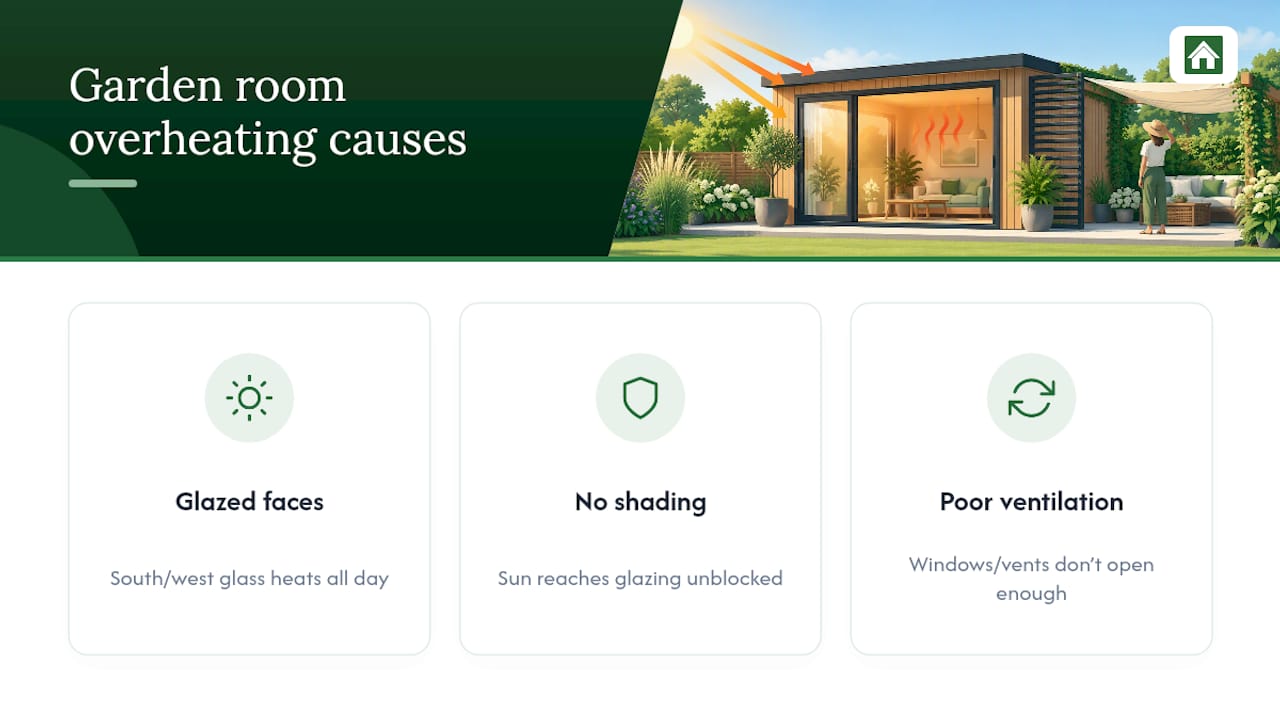
A timber garden room heats up fast because it’s a small, mostly glazed box sitting in full sun for most of the day. Once that heat gets in, it has nowhere to go unless you’ve built in a proper way out.
Three things drive it: too much glass facing south or west, no shading to stop the sun before it reaches the glazing, and windows or vents that don’t open enough (or at all). Add poor airflow and even a well-insulated cabin can turn into a greenhouse by mid-afternoon.
Quick fixes you can do today or this week
You don’t need a rebuild to take the edge off a hot garden room. Most of these changes cost nothing and take five minutes.
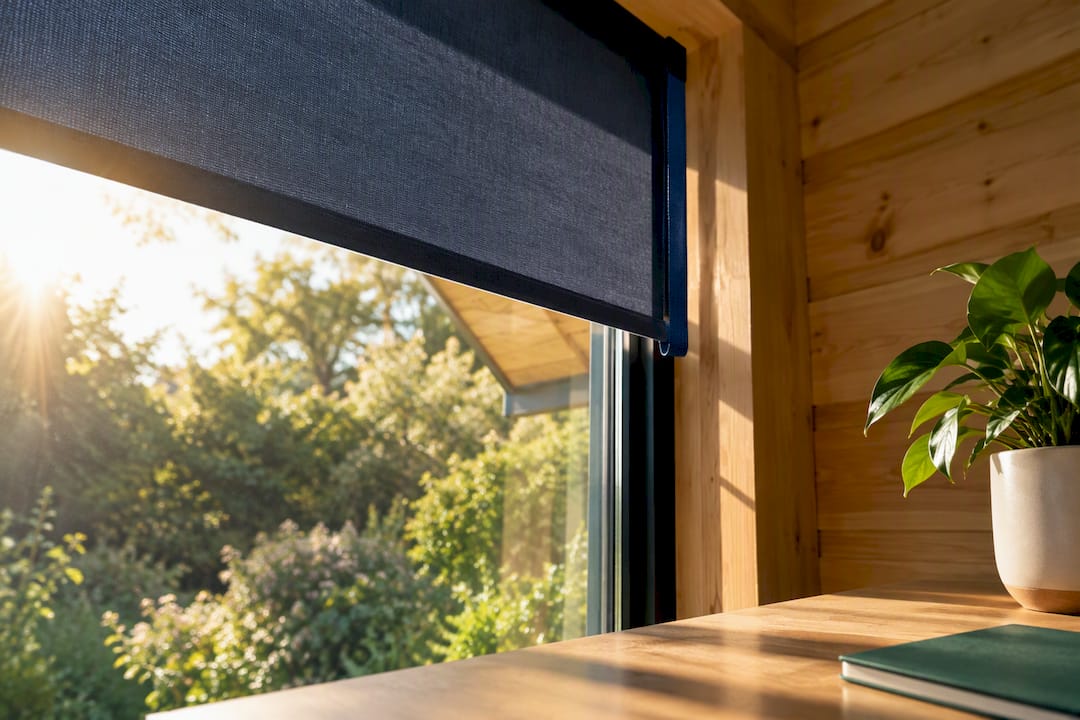
- Close blackout or reflective blinds and curtains as soon as the sun hits the windows, not after the room’s already baking.
- Open windows and doors early morning and again in the evening, when outdoor air is cooler than the air inside.
- Keep the room shut and shaded through the hottest part of the day, between roughly midday and 4pm.
- Use a fan to move air across your skin. It won’t lower the room temperature, but it makes the heat far more bearable.
- Skip evaporative coolers in a sealed room. They add moisture with nowhere to escape, which just makes things feel worse.
- Switch off laptops, printers, and anything else giving off heat when you’re not using them, and cook or run appliances earlier in the day.
- Rig up temporary shading, an old sheet, a garden umbrella, anything that blocks direct sun on the glass, while you plan something more permanent.
This routine matches what the British Red Cross recommends for any home during a heatwave, and it works just as well for a garden building.
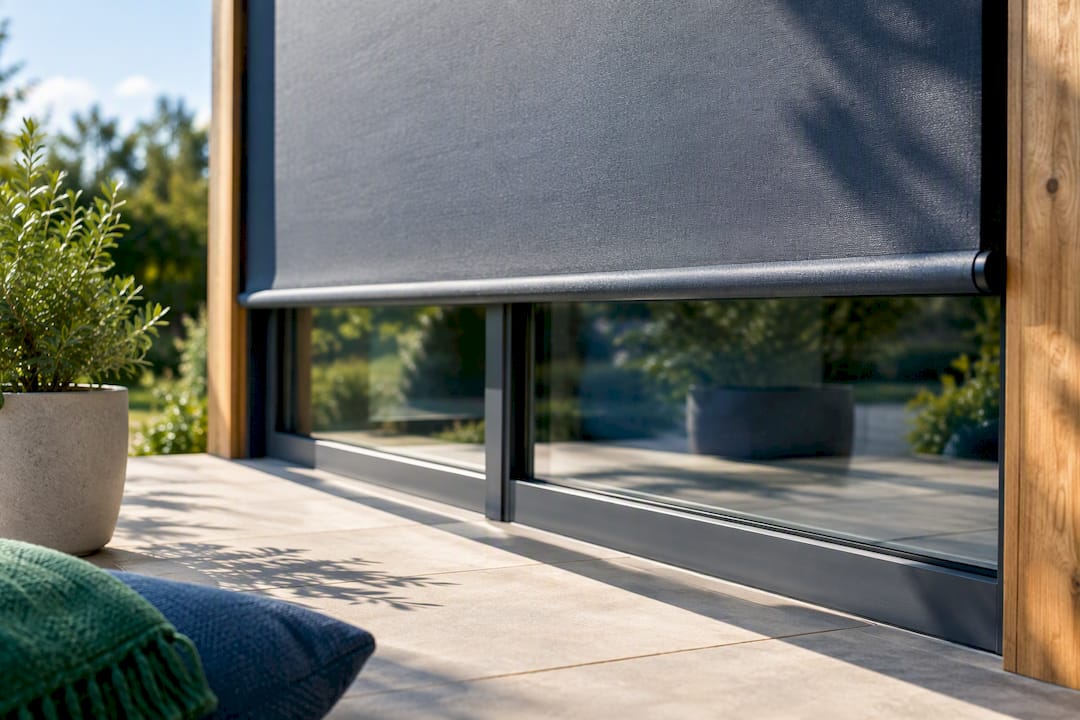
Pro Tip: Fit the blinds on the outside of the glass if you can, or choose a reflective fabric. Blocking heat before it reaches the glass works far better than trying to stop it once it’s already inside.
Building fabric and glazing: what actually stops the heat getting in
Insulation slows heat moving through your walls and roof, but it doesn’t get rid of heat that’s already built up inside. That’s why the Energy Saving Trust always pairs insulation advice with ventilation, not insulation on its own.
Two numbers matter when you’re specifying a cabin. The U-value tells you how much heat passes through a wall, roof or window (lower is better). The g-value tells you how much solar energy comes through the glass itself (again, lower means less heat gets in). Our guide to garden room U-values breaks this down if you want the fuller picture.
A few practical points worth weighing up before you order:
- Lighter, more reflective roof finishes absorb less heat than dark felt or dark composite roofing.
- Green roofs and reflective coatings both help, though they add cost and, in the case of a green roof, ongoing upkeep.
- Big sliding glass doors look fantastic and flood a room with light, but a wall of south-facing glass is exactly what turns a garden room into an oven by July.
- If you love the light, balance it with fixed shading, a smaller glazed area, or a lower g-value glass, rather than cutting windows altogether.
Approved Document O exists precisely because this trade-off between daylight and heat gain trips up so many new builds. It sets out limits on glazing and requires a workable way to shed excess heat, shading and ventilation first, mechanical cooling only as a last resort.
Ventilation strategies that actually work
Good airflow is the difference between a garden room you can use in August and one you can’t. Getting it right isn’t complicated, but it does need thinking about before the cabin goes up, not after.
- Use cross-ventilation. Windows or vents on opposite sides of the room let a breeze pass straight through, rather than just stirring hot air in one corner.
- Put openings at different heights. Hot air rises, so a low opening bringing in cool air and a high one letting hot air escape work together through what’s known as the stack effect, a principle VELUX explains well for garden buildings and roof spaces.
- Check your free area. Approved Document O talks about “usable openings”, meaning vents and windows that genuinely let air move, not just small trickle vents that look adequate on paper.
- Ventilate at the right time. Open up in the cool hours, night and early morning, and shut everything down once the outside temperature climbs above the inside.
- Never seal without a plan for airflow. RICS is blunt about this: tightening up a building without proper ventilation causes condensation and stuffy air, on top of trapping heat. Build tight, ventilate right.
- Think about security and noise before you leave vents open overnight. Lockable trickle vents or louvred openings let air through while keeping the room secure.
Our piece on ventilation in garden rooms goes into more detail on getting the balance right for your specific layout.
Active cooling: fans, air con, and heat pumps
Passive measures come first, always. Fans and air conditioning are backup, not the fix.
A fan is the cheapest option to run and genuinely helps below around 35°C, moving air across your skin so sweat evaporates faster. Above that, it stops making much difference and can even push hot air around without cooling anything down.
Air-to-air heat pumps and split air conditioning units can properly cool a room, and some do double duty for winter heating too, as the Energy Saving Trust notes. But sizing matters enormously. An installer working from floor area alone will often get it wrong. RICS guidance flags that orientation, glazing size, and how much equipment you run inside all affect the actual cooling load, get any of that wrong and you end up with a noisy, undersized unit that struggles on the hottest days.
- Fit shading and ventilation before you even think about a cooling unit.
- Only add mechanical cooling once passive fixes genuinely aren’t enough.
- Ask any installer how they’ve calculated the load, not just the square metres.
Pro Tip: If a supplier quotes a cooling unit based purely on room size, ask what allowance they’ve made for glazing and sun direction. If they can’t answer, get a second opinion.
Buying or specifying a garden room: your checklist
Whether you’re ordering a bespoke build or retrofitting an existing cabin, work through ventilation before you seal anything up. Adding insulation first and hoping for the best is how rooms end up stuffy, damp, and hotter than before.
- Glazing area and which way it faces (south and west-facing glass need the most shading).
- Fixed external shading, canopies, overhangs, or planting, agreed at the design stage, not bolted on later.
- Ventilation free area, enough usable opening to move air, not just a token trickle vent.
- Insulation level and how it’s paired with ventilation, never specified alone.
- Roof finish and colour, lighter and more reflective where possible.
- Whether active cooling is planned from the outset, so wiring and drainage can be built in properly.
| Ask your supplier | Why it matters |
|---|---|
| What’s the g-value of the glazing? | Lower g-value means less solar heat passes through the glass |
| What’s the U-value of the walls and roof? | Lower U-value means slower heat transfer both ways |
| What’s the vent free area? | Determines how much air can actually move, not just how many vents exist |
| Can you guarantee openings stay usable? | Some vents are decorative rather than functional |
Martin’s notes from the workshop floor
The retrofit mistake I see most often is someone bunging extra insulation into a garden room that’s already stuffy, without checking why it’s stuffy in the first place. Nine times out of ten the vents are blocked, painted shut, or there aren’t enough of them. Check for condensation on the inside of the glass first. If it’s there, you’ve got a ventilation problem, not an insulation problem.
Before adding insulation to an existing cabin, inspect the vents, look for condensation, and confirm trickle vents actually open. On a bespoke build, wall thickness, double glazing, and a factory-painted exterior all help manage heat, but only when they’re specified alongside proper ventilation, not instead of it. Our guide to insulation in garden buildings covers the sequencing in more depth.
Why most overheating advice misses the point
The conventional advice on garden room heat tends to jump straight to air conditioning, as if a hot room is simply a cooling problem. It isn’t. It’s usually a design problem that got solved in the wrong order.
Insulation gets sold as the answer to comfort, and it is, for winter. In summer, insulation without ventilation just holds heat in more efficiently. The evidence from Approved Document O and RICS both point the same way: shading and airflow come first, mechanical cooling comes last, and most owners have that order backwards.
If you take one thing from this, prioritise fixed external shading and genuinely usable vents before you spend a penny on anything mechanical. Fit those two things well and most garden rooms stay comfortable through a British summer without a fan ever running.
— Martin
How Logcabinkits helps you get this right from the start
Buying off a standard spec sheet means gambling on whether the glazing, shading, and ventilation actually work together for your garden. Logcabinkits builds bespoke cabins where you choose the wall thickness, glazing, and finish together, so overheating gets designed out rather than fixed afterwards.

Our Bespoke Log Cabin Service lets you specify insulation levels, window placement, and a factory-painted exterior in one order, rather than bolting on fixes once the cabin’s already up. Every option ties back to how the room will actually perform in summer, not just how it looks in a brochure. If you’re comparing standard ranges first, our garden log cabins and garden pavilions pages show typical glazing and ventilation setups, and our professional installation service makes sure vents and openings are fitted so they actually work, not just look the part.
Thinking about a new build or a retrofit? Get in touch about a bespoke specification, and we’ll talk you through glazing, shading, and ventilation before you commit to anything.
Sources
- Keep your home cool this summer – Energy Saving Trust
- UKHSA rapid review on indoor temperature thresholds
- Approved Document O: Overheating (Government guidance)
- RICS guidance on retrofit and ventilation
- How to keep your home cool in a heatwave – British Red Cross
FAQ
How can I properly ventilate my garden room?
Aim for cross-ventilation, with openings on opposite walls, plus a mix of low and high vents to use the stack effect. Ventilate during the cooler morning and evening hours, and check that vents have a genuine free area rather than being purely decorative, as flagged in Approved Document O.
Why is my garden room so hot in summer?
It’s almost always a combination of too much unshaded glazing, no fixed external shading, and vents that don’t open enough. Insulation alone won’t fix this, since it slows heat transfer but doesn’t remove heat that’s already trapped inside, as the Energy Saving Trust explains.
How hot is too hot for a garden room?
There’s no single official maximum, but UKHSA’s rapid review treats 26°C as a sensible precaution for anyone in an at-risk group, such as older people or those with health conditions. Below that, comfort becomes more of a personal preference than a health concern.
What are some ideas for heating a garden room in winter, without making it too hot in summer?
Choose insulation and glazing specified together, rather than maximum insulation on its own, and pair any heater with vents that still work in summer. An air-to-air heat pump can handle both jobs if it’s sized properly, though passive shading and airflow should always come first.
Does Logcabinkits offer bespoke ventilation and glazing options?
Yes, the Bespoke Log Cabin Service allows you to specify wall thickness, glazing, and ventilation together at the design stage. Current pricing depends on your specification and is available directly through the site.