


Stop Condensation in Garden Rooms: 10 Minutes Daily, Plus Build Fixes

Condensation in garden rooms is usually preventable and easy to manage once you know the fixes. Right now, do three things: crack open a trickle vent or window for ten minutes a day, keep a gentle background heat running rather than switching it on and off, and borrow or buy a dehumidifier if you’re already seeing wet windows. If your cabin is brand new, expect some condensation for the first few weeks. That’s just the timber and paint drying out.
TL;DR:
- Correctly installed vapour control layers and proper insulation at build stage are crucial for preventing long-term condensation issues in garden rooms.
- Steady, low-level heating and daily ventilation with trickle vents significantly reduce moisture buildup more effectively than intermittent high heat.
- Using a hygrometer regularly in the first month helps detect patterns of rising humidity, enabling early intervention before mould develops.
- Addressing ground moisture issues and sealing draughts around the base can prevent damp from originating below, reducing overall condensation risk.
- Quick fixes like properly sized dehumidifiers and post-activity purge ventilation can resolve current dampness, but ongoing prevention depends on better insulation and airflow management.
Table of Contents
- What causes condensation in garden rooms?
- Where does all the moisture actually come from?
- How to stop condensation in a garden room for good
- Quick fixes if your garden room is already damp
- Is condensation bad for a garden room, or is it normal?
- Real checks that catch condensation before it becomes a problem
- Why most condensation advice misses the point
- Choosing a cabin that’s built to resist condensation
- Sources
- FAQ
What causes condensation in garden rooms?
Condensation happens when warm, moist air hits a cold surface and can’t hold onto its water vapour any more. That cold surface, whether it’s a window, a wall, or a roof panel, is below what’s called the dew point, so the moisture turns straight into droplets you can see and wipe.
There are two types worth knowing about. Surface condensation is the visible stuff on windows and walls, annoying but easy to deal with. Interstitial condensation forms inside the wall or roof structure itself, where you can’t see it, and it’s the one that causes real damage because it sits against timber for weeks without anyone noticing.
Garden rooms are more prone to both types than a house, for a few practical reasons:
- They have a small volume of air, so moisture levels rise faster than in a larger room
- Airtight timber construction traps humidity if there’s nowhere for it to escape
- Thermal bridging (cold spots where insulation is thinner, like around door frames) gives moisture somewhere cold to land
- Polycarbonate roofing cools very quickly after sunset, making it one of the most common places condensation forms
Smaller, tighter, and often less insulated than the main house, a garden room concentrates every one of these problems into one compact space.
Where does all the moisture actually come from?
Before you can fix condensation in garden rooms, it helps to know what’s putting the water into the air in the first place.
Everyday activity is the biggest culprit. Simply being in the room adds moisture through breathing, and a kettle, a laptop generating heat, drying wet coats, house plants, or a home workout all pump water vapour into a small space fast.
If your cabin is new, the building itself is still wet. Fresh timber, plaster, and paint carry construction moisture that needs time to evaporate. This drying-out phase usually lasts two to eight weeks, sometimes longer in a cold, damp spell.
- Occupant moisture: breathing, kettles, laundry, plants, exercise
- Construction moisture: wet timber, plaster, and paint drying out after the build
- Ground moisture: a poor damp‑proof membrane, missing floor insulation, or puddling water around the base pushing damp upward
Ground moisture is easy to miss but worth checking. A base that holds standing water, or a damp‑proof membrane that wasn’t laid properly, feeds moisture into the structure from below, and no amount of ventilation upstairs fixes a problem coming from underneath.
How to stop condensation in a garden room for good
Long-term prevention comes down to four things working together: ventilation, heating, insulation, and glazing. Miss one and the others have to work harder.
- Ventilate every day, not just when it’s bad. Trickle vents give continuous background airflow without losing much heat, which matters in an airtight timber build. Add extract ventilation in any room where an activity generates a lot of moisture, such as a home gym, and purge ventilate (open everything for ten to fifteen minutes) straight after cooking, exercising, or a hot shower nearby.
- Keep gentle background heat running. A steady 16 to 18°C is usually enough. Intermittent blasts of high heat actually make things worse because the room cools quickly between bursts, dropping surfaces back below the dew point. Combining modest insulation improvements with low, steady heat keeps internal surfaces warm enough that moisture never gets the chance to condense.
- Get the vapour control right. A vapour control layer belongs on the warm (inside) face of the insulation, with a breathable membrane on the cold, outer side. Get this the wrong way round and you trap moisture inside the wall build‑up, which is exactly how interstitial condensation starts.
- Choose glazing and roofing that don’t act like cold magnets. Low‑E double glazing with warm edge spacers keeps the inner pane noticeably warmer than basic glazing, cutting window condensation. Polycarbonate roof panels cool fast after dark, so fitting a condensation channel or drip tray underneath stops that cold-roof drip landing on your desk or sofa.
Approved Document F sets the official baseline here: ventilation strategies must extract water vapour and supply outdoor air, whether that’s through natural vents or a mechanical system, and the same guidance backs regular monitoring with a hygrometer to keep humidity in a sensible range.
Pro Tip: Don’t chase quick drying with a blast of heat on a new cabin. Run trickle vents and low background heat instead. Rapid drying can crack fresh paint and timber, while gentle airflow gets you there just as fast without the damage.
For anyone weighing up specification before buying, our guide to how insulation transforms a garden building’s efficiency and how double glazing boosts garden office comfort covers the build side of this in more depth.
Quick fixes if your garden room is already damp
If you’re dealing with wet windows and a musty smell right now, you don’t need to wait for a building upgrade. These fixes work within a day or two.
- Size your dehumidifier correctly for the room, then set the hygrostat to around 45 to 55% relative humidity. Running it continuously until levels stabilise is more effective than switching it on only when you notice damp.
- Purge ventilate straight after moisture-heavy activity. Ten to fifteen minutes with windows open after cooking, exercising, or a shower clears the air fast; trickle vents can stay on for lighter, ongoing background airflow.
- Seal obvious draughts, clear gutters, and check drainage around the base so rainwater isn’t sitting against the walls.
- Mop up standing water immediately with an absorbent towel, then track progress with a hygrometer rather than guessing.
- Add extract fans or extra trickle vents as a retrofit if condensation keeps coming back in the same spot.
Keep that hygrometer reading between 40% and 60% relative humidity as your target range. Anything sitting above that for days at a time is a sign mould conditions are building, even if you can’t see anything yet.
Is condensation bad for a garden room, or is it normal?
A bit of misting on the windows during the first few weeks of a new build is completely normal. It’s the timber, plaster, and paint releasing moisture as they settle, and it usually clears once that drying phase finishes.
What isn’t normal is condensation that keeps coming back month after month, or any of these signs:
- Black or green mould spreading across walls, ceilings, or window frames
- Timber that feels soft, spongy, or is starting to discolour
- A musty smell that doesn’t lift even after airing the room out
- Recurring damp patches in the same spot every week, suggesting interstitial condensation inside the structure
If you spot any of those, wipe down hard surfaces with a mould-safe cleaner, step up ventilation immediately, and get a timber inspection or an accredited damp specialist to look at the structure before it becomes a repair job rather than a maintenance one.
Real checks that catch condensation before it becomes a problem
Martin’s case studies on garden room builds keep coming back to the same lesson: the owners who never have a condensation problem are the ones who check on their cabin in the first month, not the ones who react once mould appears.
A simple routine for that first month:
- Check trickle vents are open and not painted shut or blocked by furniture
- Set the heater to a steady schedule rather than manual on‑off switching
- Take a hygrometer reading at the same time each day, ideally at chest height away from windows
On the build side, a few features genuinely cut condensation risk without any daily effort from you: thicker insulated wall panels, double glazing rather than single, and a properly placed vapour control layer behind the internal lining. None of these need naming a specific brand to explain, they’re simply what separates a cabin that dries out once and stays dry from one that fights condensation every winter.
Pro Tip: Write your hygrometer readings on a phone note for the first month. A one-off high reading means nothing, but a pattern of readings creeping upward tells you to act before mould does.
Why most condensation advice misses the point
Most guides treat condensation in garden rooms as an emergency to react to: wipe the windows, buy a dehumidifier, move on. That’s backwards. Condensation is a symptom of a building’s heat and airflow balance, not a one-off nuisance, and treating the symptom without touching the cause just means you’re wiping windows every winter for the life of the cabin.
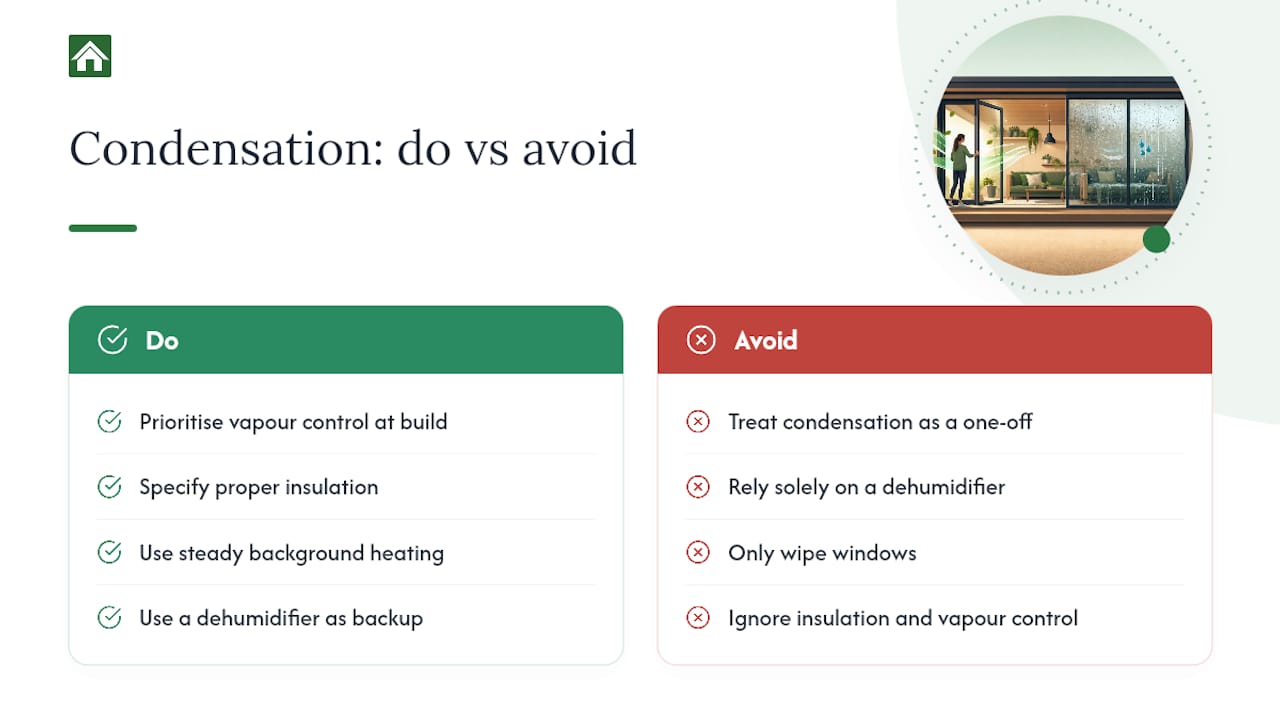
The conventional advice also overrates dehumidifiers and underrates boring, steady background heat. A dehumidifier is a genuinely good tool for pulling moisture out of the air fast, but it’s fighting a losing battle if your walls are still cold enough to sit below the dew point every night. Fix the temperature gradient first, and the dehumidifier becomes a backup rather than a permanent crutch.
If there’s one thing worth prioritising above everything else in this article, it’s the vapour control layer and insulation spec at build stage. Ventilation habits and heating schedules matter, but they’re managing a risk that good insulation and correct vapour control largely remove before it starts. Buy that right, and you’ll spend far less time thinking about hygrometers.
— Martin
Choosing a cabin that’s built to resist condensation
If you’re buying a new garden room, the specification decisions you make now save you years of wiping windows later. Look for proper wall thickness, factory‑fitted insulation, double glazing, and a vapour control layer placed correctly behind the internal lining. Get these right at the design stage and ventilation becomes a habit rather than a fight.

Every carefully built cabin includes these features, and bespoke adjustments let you tailor specifications beyond a fixed range. Want thicker walls, upgraded double glazing, or a different door and window layout to suit a damp corner of the garden? That’s exactly the kind of change we make as standard. Browse the full range of garden log cabins, compare styles across our garden summer houses and garden pavilions, or look at a multi-room log cabin if you need separate zones with different heating needs. If you’re not sure what wall thickness or glazing spec suits your garden, get in touch for bespoke cabin design advice and we’ll talk you through the options before you order.
Sources
- Approved Document F: Volume 2 (revised)
- Condensation in your garden room: causes and how to beat it - Self Build Garden Room
- Stopping condensation and damp in a garden room (UK guide) - BestGardenRoom
FAQ
How do I stop condensation in my garden room?
Ventilate daily with trickle vents or brief purge airing, keep a steady background temperature of 16 to 18°C, and run a dehumidifier set to 45 to 55% relative humidity if condensation is already visible.
Can you put washing‑up liquid on windows to stop condensation?
A thin smear of washing‑up liquid can reduce misting temporarily by changing how water beads on glass, but it doesn’t fix the underlying cause and needs reapplying often, so it’s a stopgap at best.
Will condensation clear up on its own?
Light condensation in a new build often clears on its own within two to eight weeks as construction moisture dries out, but condensation that keeps recurring after that point needs ventilation, heating, or insulation changes, not patience.
Do you need a vapour barrier in a garden room?
Yes, a vapour control layer placed correctly on the warm side of the insulation is essential in most insulated timber garden rooms, as it stops moist internal air reaching cold surfaces inside the wall structure where it can cause interstitial condensation.
Is condensation bad for a garden room?
Occasional surface condensation isn’t harmful, but persistent condensation left untreated leads to mould, softened timber, and structural damage over time, so ongoing dampness is always worth addressing quickly.