
The role of electrics in cabins: a 2026 guide
TL;DR:
- Proper electrics are essential to make a garden cabin safe, functional, and compliant with regulations.
- Professional installation and planning ensure future proofing, safety, and smooth property transactions.
Electrics are the single feature that transforms a garden cabin from a simple timber structure into a genuinely useful space. The role of electrics in cabins covers everything from basic lighting and heating to broadband, entertainment, and home office setups. Get it right and your cabin works year-round, day and night. Get it wrong and you face safety risks, failed property sales, and costly rework. This guide walks you through the legal requirements, practical planning steps, and the best electrical features for cabin design in 2026.
What legal and safety requirements govern cabin electrical installations?
Every new electrical circuit in a garden building is notifiable work under Part P Building Regulations. That means the work must either be carried out by a registered electrician or inspected and certified after completion. You cannot simply wire up a cabin yourself and leave it at that.
The size of your cabin affects which rules apply:
- Buildings under 15m² are usually exempt from full Building Regulations, but Part P compliance still applies to all electrical work.
- Buildings over 30m², or those with sleeping accommodation, require full Building Regulations approval.
- All garden cabin electrical supplies must have RCD (residual current device) protection due to the moisture risks of an outdoor environment.
- Fixed wiring must meet BS 7671 18th Edition standards and use weather-resistant materials for any external components.
- An independent earth electrode at the cabin is recommended as part of a BS 7671 compliant installation.
Engaging an electrician registered with a competent persons scheme, such as NICEIC or NAPIT, is the simplest route. Registered electricians can self-certify their work under Part P, which means you avoid applying for a separate permit. This saves time and reduces paperwork considerably.
Professional installation of an SWA (steel wire armoured) supply and sub-board typically costs £1,000 to £3,000 in 2026. That figure varies depending on the distance from your house to the cabin and the complexity of the circuits required.
How to plan cabin electrical wiring for current and future needs
Good planning at the start saves a lot of expense later. The most common mistake is underestimating how much power you will actually use. Electricians consistently advise installing more capacity than you think you need, because adding circuits after the fact means digging up cable runs and opening finished walls.
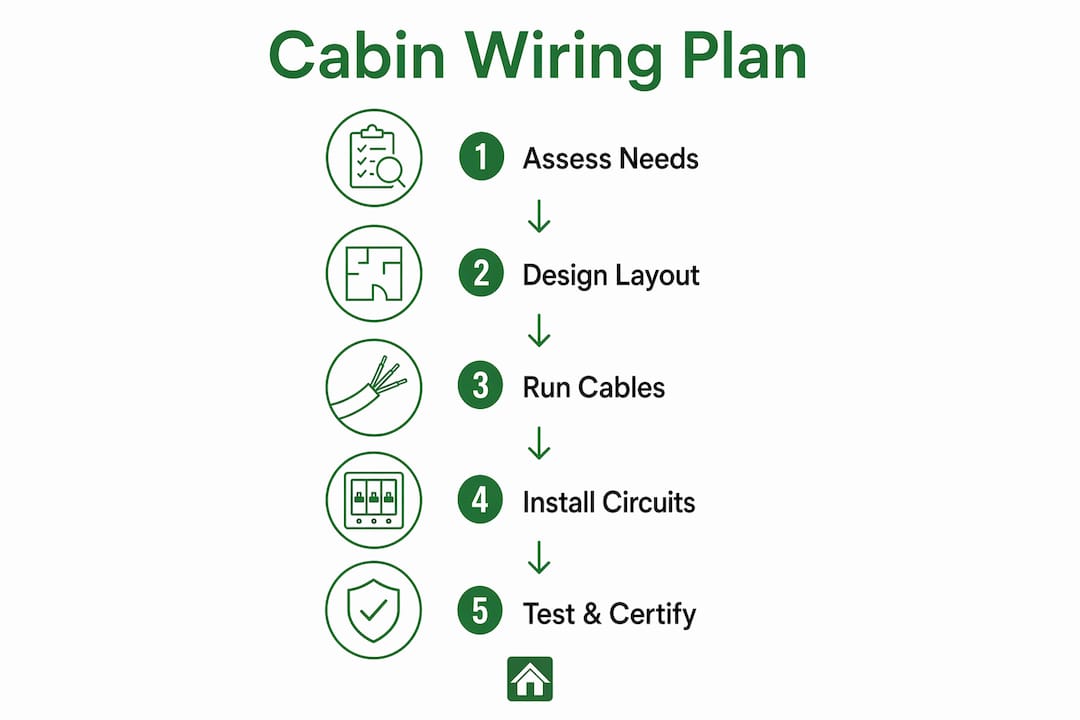
Here is a practical step-by-step approach to planning your cabin’s electrical system:
- Install a dedicated sub-consumer unit inside the cabin. A sub-consumer unit gives you local control over individual circuits and makes fault-finding straightforward. It also means a tripped breaker in the cabin does not affect your house supply.
- Plan separate circuits for lighting, sockets, and heating. Running everything off one circuit creates overload risks and makes it harder to manage faults. Heating in particular draws significant power and benefits from its own dedicated circuit.
- Include spare circuit capacity. Even if you only need two circuits now, fit a consumer unit with room for four or five. Future upgrades, such as adding a monitor, a printer, or an electric heater, become plug-and-play rather than a rewire.
- Choose the right socket types and positions. Place double sockets at desk height on every wall. Include at least one USB socket at your main work area. Position sockets near the door for a lamp or phone charger on arrival.
- Plan your lighting in zones. Task lighting over a desk or workbench needs to be bright and focused. Ambient lighting for relaxing or socialising should be warm and dimmable. Fitting both from the start gives you flexibility without extra cost.
Pro Tip: Plan your data and broadband infrastructure at the same time as your electrics. Running a CAT6 ethernet cable alongside your SWA supply costs very little extra during installation but saves a great deal of effort later.
You can find more detail on planning your setup in this cabin electrical installation guide from Logcabinkits.
What heating and lighting options work best in garden cabins?
Choosing the right electrical appliances makes a real difference to how comfortable and affordable your cabin is to run. The good news is that the options are wide, and you can mix and match to suit your budget and how you use the space.
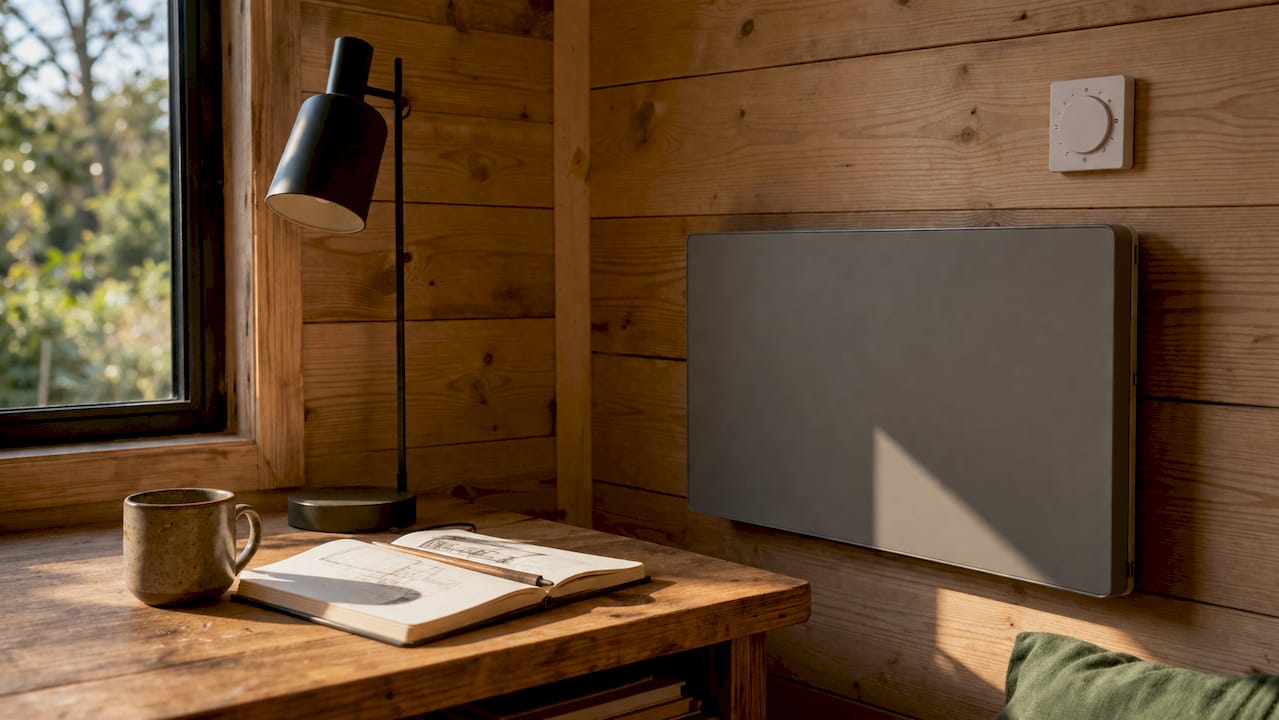
Heating options
Electrical heating choices for garden cabins include:
- Panel heaters are slim, wall-mounted, and cheap to buy. They heat up quickly and suit smaller cabins well.
- Infrared panels warm objects and people directly rather than the air. They work particularly well in well-insulated cabins and feel comfortable at lower air temperatures.
- Oil-filled radiators are portable and retain heat well after switching off. They suit occasional use rather than daily heating.
- Electric underfloor heating mats sit under floor coverings and provide even, background warmth. They work best when paired with good insulation beneath the floor.
A well-insulated cabin requires less heating power to stay comfortable. Insulation is not an electrical feature, but it directly affects how hard your heating system has to work and therefore your running costs.
Lighting options
LED task and ambient lighting is the standard choice for garden cabins in 2026. LEDs use a fraction of the energy of older bulb types and last far longer. Recommended office lighting sits between 300 and 500 lux at the work surface. That level of brightness supports focused work without causing eye strain.
Dimmable fittings with smart controls let you shift from bright working light to warm evening ambiance without changing a single bulb. A simple smart switch, compatible with voice assistants or a phone app, adds genuine convenience for very little cost.
Pro Tip: Fit a separate lighting circuit with a dimmer switch at the planning stage. Retrofitting dimmers into a finished cabin is fiddly and often means replastering or reboarding.
For a full breakdown of lighting choices, the garden cabin lighting guide from Logcabinkits covers everything from lux levels to fitting types.
Entertainment and data
If you plan to use your cabin for film nights, gaming, or video calls, run a dedicated socket circuit for your screen and audio equipment. A separate circuit prevents interference from heating loads and keeps your equipment running cleanly.
Common challenges and best practices for cabin electrics
The most frequent problems with cabin electrics come from cutting corners at the installation stage. These are the issues that cause the most trouble down the line.
- Extension leads are not a permanent solution. Extension leads are unsafe for permanent cabin power supply. They lack RCD protection, degrade in outdoor conditions, and do not meet BS 7671 requirements. They also void most home insurance policies if used as a fixed supply.
- SWA cable is the correct choice for outdoor runs. Steel wire armoured cable is tough, weather-resistant, and designed for direct burial. SWA cable buried at a minimum depth of 450–600mm, or run in protective ducting, meets the standard for permanent outdoor supplies.
- Mark your cable route. After burial, mark the cable route on a plan and keep a copy. Future gardening or landscaping work can damage buried cables if nobody knows where they run.
- Get your Electrical Installation Certificate. Once the work is complete, your electrician issues an Electrical Installation Certificate (EIC). Solicitors request this certificate when you sell your home. Missing documentation causes sale delays and can reduce your property’s value.
- Choose a qualified installer. DIY electrical work in a garden cabin is not compliant with UK law. Only certified work under BS 7671 and Part P carries legal standing. The cost of professional installation is small compared to the cost of remedial work or a failed property sale.
A robust electrical installation also protects your household insurance. Insurers can refuse claims related to garden buildings if the electrical work is uncertified.
Key takeaways
Proper electrical systems in garden cabins are the foundation of a safe, comfortable, and legally compliant space that adds real value to your property.
| Point | Details |
|---|---|
| Part P compliance is mandatory | All new cabin circuits require certified installation or inspection under Part P Building Regulations. |
| Plan for more capacity than you need | Install a sub-consumer unit with spare circuits to avoid costly modifications when you add devices later. |
| SWA cable is the only safe outdoor supply | Bury SWA cable at 450–600mm depth or in ducting. Extension leads are not compliant for permanent use. |
| Get your Electrical Installation Certificate | Solicitors request this document on property sale. Missing it can delay or devalue your sale. |
| Insulation and electrics work together | A well-insulated cabin needs less heating power, which reduces running costs and equipment size. |
Why I always say: plan your electrics before you build
People often treat electrics as an afterthought. They choose their cabin, plan the layout, order the kit, and then think about power. That order of events causes more problems than almost anything else I see.
The time to think about electrical systems in cabins is before you finalise the design. Where will the supply cable enter the building? Where does the consumer unit sit? How many sockets do you actually need on the back wall? These questions are easy to answer at the design stage and expensive to fix after the timber is up.
I have seen cabins where the only socket is near the door because nobody thought about the desk position in advance. I have seen heating circuits overloaded because the owner added a second heater to a circuit designed for one. And I have seen property sales stall for weeks because the original electrician never issued a certificate.
The good news is that none of this is complicated. A single conversation with a qualified electrician at the planning stage sorts out most of these issues before they become problems. If you are working with Logcabinkits on a bespoke cabin design, raise the electrical layout in that first conversation. It costs nothing to plan well and saves a great deal later.
— Martin
Logcabinkits garden cabins: built with your electrical needs in mind
Planning a garden cabin with proper electrics does not have to be complicated. Logcabinkits offers a wide range of garden log cabins designed to accommodate full electrical installations, from simple lighting circuits to complete home office setups.

Whether you want a standard cabin adapted for your needs or a fully custom-built design with electrical specifications built in from the start, the team at Logcabinkits is happy to help. You can also use the cabin selection wizard to find the right size and style for your garden. Get in touch for a no-obligation chat about your project.
FAQ
Does a garden cabin need Part P electrical certification?
Yes. Any new electrical circuit in a garden building is notifiable work under Part P Building Regulations. The work must be carried out or inspected by a registered electrician who can issue an Electrical Installation Certificate.
Can I use an extension lead to power my garden cabin?
No. Extension leads are not compliant for permanent cabin power supply. They lack RCD protection, degrade outdoors, and do not meet BS 7671 standards. SWA cable buried at the correct depth is the required method.
What electrical heating is best for a garden cabin?
Panel heaters and infrared panels suit most garden cabins well. Infrared panels are particularly efficient in well-insulated spaces. The best choice depends on your cabin size, insulation level, and how often you use the space.
How deep should SWA cable be buried?
SWA cable for a garden cabin supply should be buried at a minimum depth of 450–600mm, or run inside protective ducting. This protects the cable from physical damage and meets BS 7671 requirements.
Will cabin electrics affect my home’s resale value?
Certified electrical work adds value and prevents sale delays. Solicitors routinely request Electrical Installation Certificates for garden buildings. Uncertified work can cause delays or reduce your property’s value at the point of sale.
Recommended
- blog cabin electrical installation safe efficient guide | Specialist Garden Cabin Supplier
- blog why add electrics to your garden room key benefits | Specialist Garden Cabin Supplier
- Customisable Cabin Features: Your 2026 Guide
- blog the role of floor joists in cabins a 2026 guide | Specialist Garden Cabin Supplier