
Log cabin garden tool storage: your practical 2026 guide
TL;DR:
- Properly organized log cabin garden tool storage uses space-saving systems and secure fittings to protect tools and improve efficiency. Wall-mounted pegboards, vertical tool racks, and shallow shelving maximize space and keep tools accessible, while security upgrades prevent theft. Regular maintenance and customized cabins enhance durability and suit individual storage needs.
Log cabin garden tool storage is the practice of organising and storing gardening tools inside a timber log cabin using space-saving systems, secure fittings, and smart layout planning. Done well, it protects your tools from damp and theft, keeps your garden running smoothly, and turns a cluttered space into a proper working area. A garden log cabin gives you far more flexibility than a standard plastic box or a lean-to. With the right setup, you can store everything from spades and forks to fertilisers and seed trays, all within easy reach.
What are the best space-saving solutions for log cabin garden tool storage?
Wall-mounted storage systems can free up to 80% of floor space compared to leaning tools against walls. That is a significant gain, especially in a smaller cabin where every square metre counts.
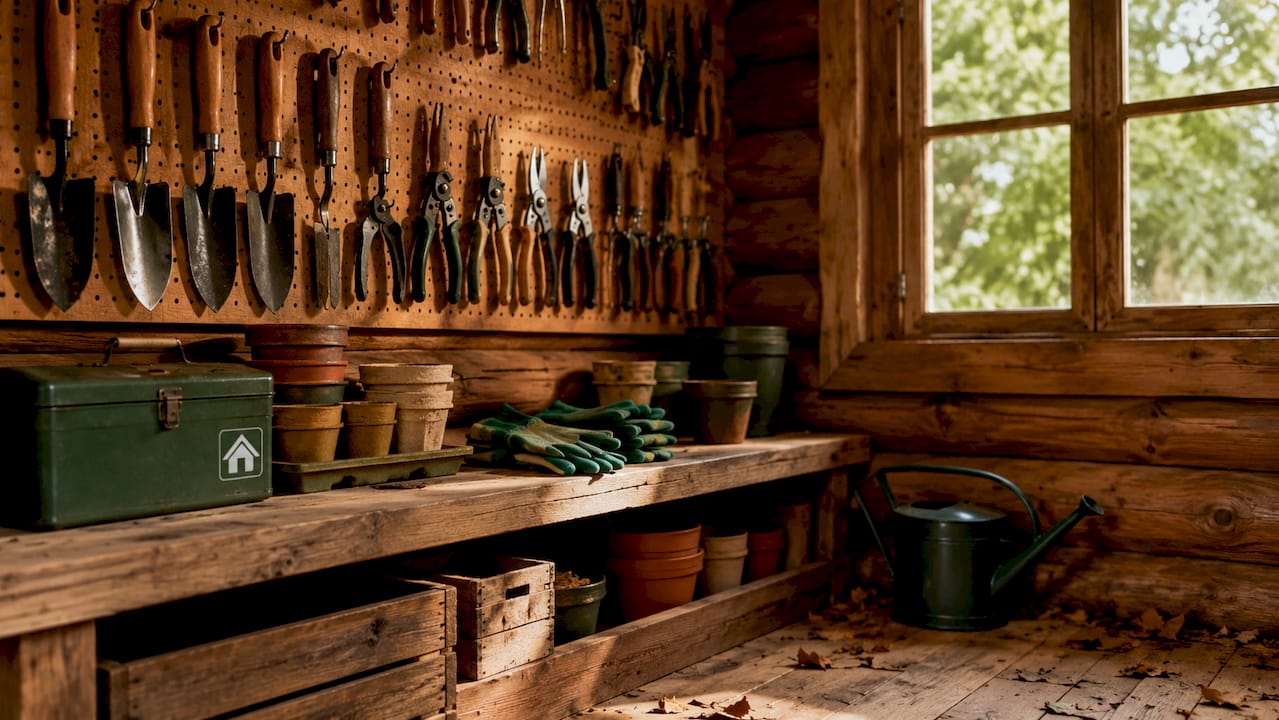
Pegboard is the most practical starting point. Sheets typically cost £8–£12 per 1.2m x 0.6m panel, making it one of the most affordable wall solutions available. The key is to mount pegboard on 25mm spacer battens so the hooks sit correctly and air can circulate behind the board. Without that gap, moisture builds up against the timber wall and causes damp problems over time.
Magnetic strips work brilliantly for small metal tools like trowels, secateurs, and hand forks. Fix a strip at eye level near your workbench and you will always know where your most-used items are. Ceiling hooks are ideal for seasonal items such as hanging baskets, hoses, or lightweight ladders, keeping them off the floor without taking up wall space.
Pro Tip: Stick to shallow shelving of 200–250mm depth rather than deep shelves. Deep shelves create dark corners where tools disappear and get forgotten. Shallow shelves keep everything visible and within reach.
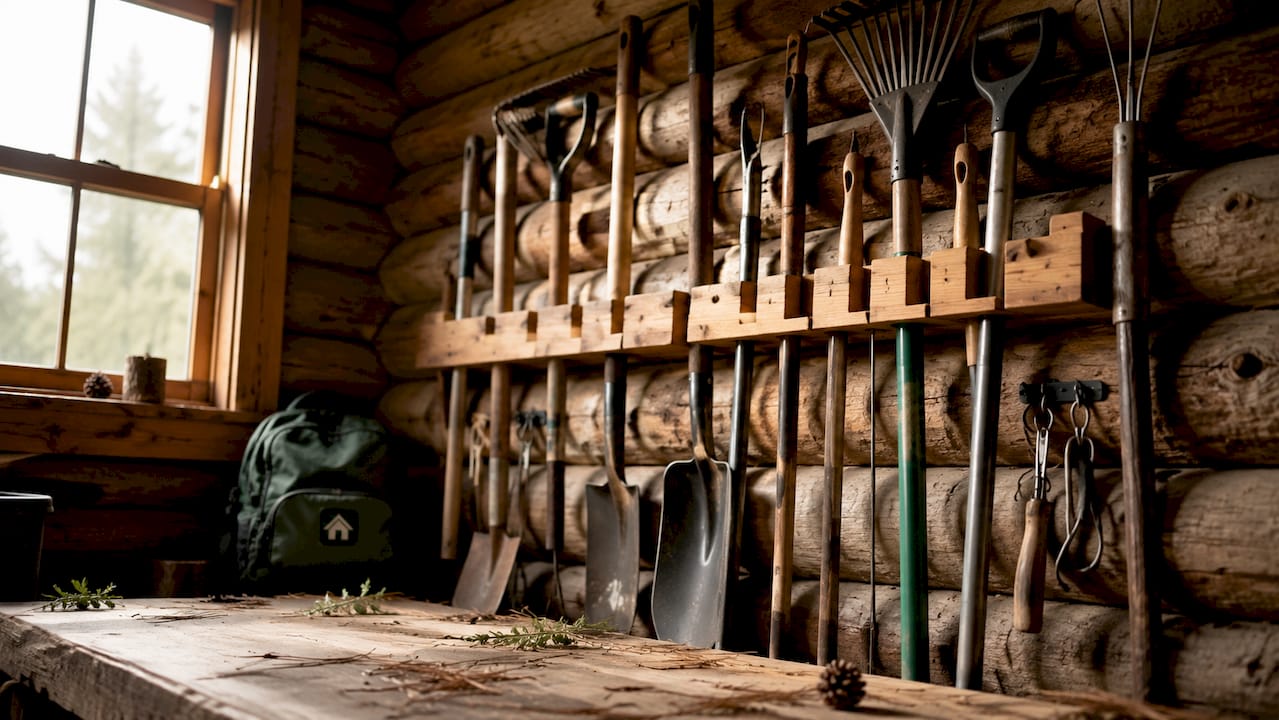
A 1m wooden or metal rack holds 8–10 long-handled tools vertically when mounted at shoulder height. That keeps spades, rakes, and hoes upright and accessible without cluttering the floor. Pair this with a pegboard section for smaller items and you have a complete wall storage system for under £50.
How should you organise tools inside a log cabin?
Good organisation is about placing the right tool in the right spot, not just finding somewhere to put everything. Professional garden designers recommend categorising tools by how often you use them, then positioning them accordingly. This single habit reduces wasted time and makes every gardening session more efficient.
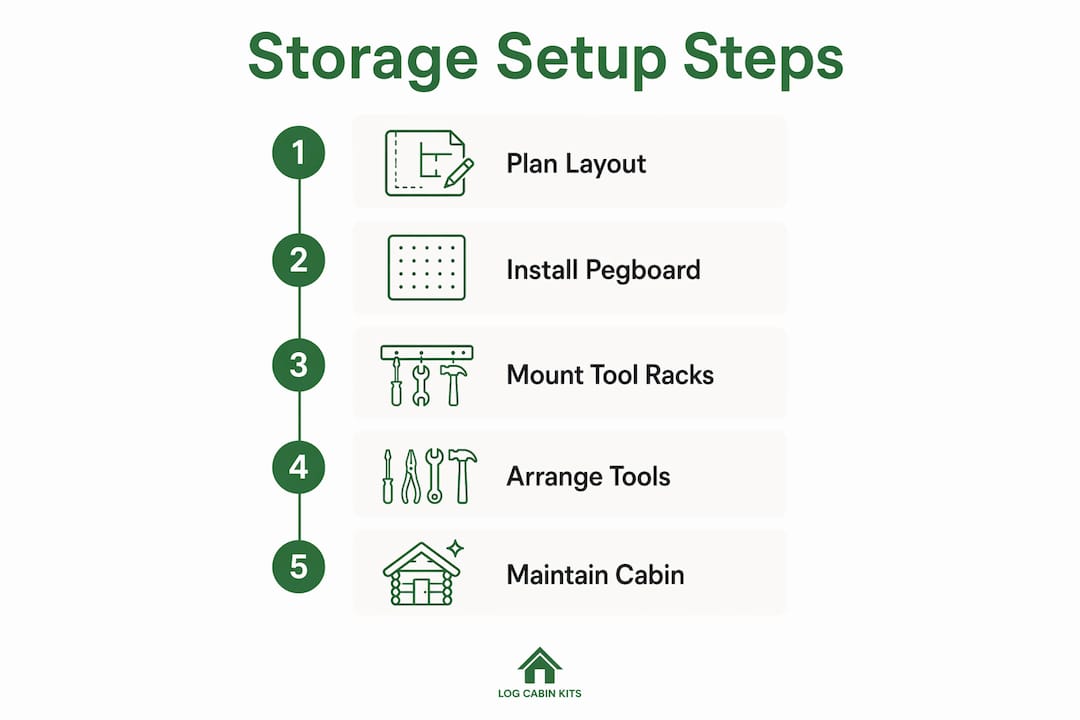
Here is a practical layout approach to follow:
-
Frequently used tools at waist height near the entrance. Trowels, secateurs, gloves, and hand forks should be the first things you reach when you walk in. Mount these on pegboard or a magnetic strip within arm’s reach of the door.
-
Medium-use tools on the main wall section. Spades, forks, and rakes sit well on a vertical rack along the longest wall. You use these regularly but not every single visit, so a couple of steps inside is fine.
-
Seasonal and heavy items at the back or overhead. Bulky items like lawnmowers, leaf blowers, or winter covers belong at the far end of the cabin or suspended from ceiling joists. They are out of the way but still accessible when needed.
-
Chemicals and fertilisers in a dedicated locked zone. Store these on a separate shelf with a lip to prevent bottles tipping. Keep them away from seeds and food crops. A small locked cabinet works well if you have children or pets.
-
A folding workbench near the window. Natural light makes potting and maintenance tasks much easier. A fold-down bench saves space when not in use, and under-bench shelving gives you extra room for pots, compost bags, and seed trays.
The key principle is that storage categorised by frequency of use reduces wasted time and improves your gardening efficiency significantly. Think of your cabin as a workshop, not a dumping ground.
What security measures protect tools in a log cabin?
Garden tool theft is a real concern, and a log cabin is only as secure as its fittings. The good news is that a few targeted upgrades make a substantial difference without costing a lot.
-
Replace exterior screws on hinges with internal coach bolts. Exterior-facing screws can be removed in seconds with a basic screwdriver. Internal coach bolts cannot be accessed from outside, which stops opportunistic theft at the door.
-
Fit a closed-shackle padlock rated CEN grade 3 or higher. These padlocks cost £15–£30 and resist bolt cutters far more effectively than standard padlocks. The closed shackle leaves almost no gap for a cutter to grip.
-
Add a battery-powered alarm. A basic shed alarm costs around £10–£20 and produces a 110dB siren. That is loud enough to deter most opportunistic thieves and alert neighbours.
-
Use ground anchors for high-value items. Expensive power tools or a quality lawnmower can be chained to a ground anchor bolted through the cabin floor. This stops grab-and-run theft even if someone does get inside.
-
Avoid storing genuinely irreplaceable valuables in the cabin. Tools are replaceable. Sentimental items or expensive electronics are better kept indoors.
How to maintain your log cabin and keep stored tools in good condition
A well-maintained cabin protects everything inside it. The timber structure itself needs regular attention, and so do the tools you store there.
Pro Tip: Treat your cabin’s timber with a spirit-based preservative every 12 months, ideally between may and september when the wood is dry. A 5-litre tin costs £15–£25 and extends the life of your cabin to 15–20 years.
Good airflow is just as important as the preservative. Make sure storage racks and pegboard sit away from the wall on spacer battens so air can move freely behind them. Trapped moisture causes timber to rot and metal tools to rust, both of which are expensive problems to fix.
A simple maintenance checklist keeps things on track:
- Check roof felt or shingles each spring for cracks or lifting edges
- Clear gutters and drainage channels after autumn leaf fall
- Inspect door and window seals annually and replace if cracked
- Oil metal tool heads and handles at the end of each season
- Store seeds in airtight jars with a silica gel sachet to maintain viability
For tools themselves, a wipe-down with an oily rag before storage prevents rust forming over winter. Hang tools rather than resting them on the floor, which keeps blades sharp and handles dry.
What materials and hardware do you need to fit out a log cabin for storage?
Getting the right materials before you start saves time and avoids repeat trips to the hardware shop. The list is shorter than most people expect.
| Material | Purpose | Approximate cost |
|---|---|---|
| Pegboard sheets (1.2m x 0.6m) | Wall-mounted tool display | £8–£12 per sheet |
| 25mm spacer battens | Mount pegboard away from wall for airflow | £5–£10 per pack |
| Spring-grip pegboard clips | Hold tools securely on pegboard | £5–£15 per set |
| Magnetic tool strip | Store small metal tools at eye level | £8–£20 |
| Vertical tool rack (1m) | Hold 8–10 long-handled tools upright | £15–£30 |
| Closed-shackle padlock (CEN grade 3) | Secure cabin door against forced entry | £15–£30 |
| Internal coach bolts | Replace exterior hinge screws | £5–£10 per pack |
| Battery-powered alarm | Audible deterrent against intruders | £10–£20 |
For shelving, adjustable slatwall or French cleat systems offer more flexibility than fixed shelves. You can reposition hooks and brackets as your tool collection changes, which is particularly useful in a bespoke cabin design where the interior dimensions may not match standard shelf kits. Fixed shelving is cheaper upfront but harder to adapt later.
The total cost of a basic wall storage setup, including pegboard, battens, clips, a tool rack, and security hardware, typically falls well under £150. That is a modest outlay for a properly organised workspace.
Key takeaways
A log cabin set up with wall-mounted systems, frequency-based tool organisation, and CEN-grade security hardware delivers the most efficient and secure garden equipment storage available to homeowners.
| Point | Details |
|---|---|
| Wall-mounted systems save the most space | Pegboard and vertical racks free up to 80% of floor space compared to leaning tools against walls. |
| Organise by frequency of use | Place daily-use tools at waist height near the door; seasonal items go overhead or at the back. |
| Security upgrades matter | CEN grade 3 padlocks and internal coach bolts stop most opportunistic theft at low cost. |
| Shallow shelving outperforms deep shelving | Shelves of 200–250mm depth keep tools visible and prevent the “black hole” effect of deep storage. |
| Annual maintenance extends cabin life | Timber preservative applied every 12 months can extend your cabin’s lifespan to 15–20 years. |
Why I think most gardeners underestimate their log cabin’s potential
Most people treat their log cabin as a place to dump things they do not want in the house. I have seen it time and again: tools piled on the floor, bags of compost blocking the door, and a padlock that a child could snap with a firm tug. The cabin ends up being a source of frustration rather than a genuine asset.
The shift happens when you start treating the space as a proper workspace. Once you mount a pegboard, set up a vertical rack, and sort your tools by how often you reach for them, the whole experience of gardening changes. You spend less time hunting for the right trowel and more time actually using it.
The security side is where I see the biggest gap. Most standard cabin fittings are genuinely inadequate. Swapping to a CEN grade 3 padlock and coach-bolted hinges takes an afternoon and costs under £50. That is a small price for real peace of mind.
One thing I always tell people: do not buy a cabin and then try to make storage fit around it. Think about your storage needs first, then choose or customise your cabin around those requirements. A bespoke build from Logcabinkits lets you specify internal dimensions, window placement, and door position to suit exactly how you want to work. That kind of planning pays off every single time you step inside.
— Martin
Logcabinkits can build the right cabin for your storage needs
If you are ready to move beyond makeshift solutions, a purpose-built timber cabin makes all the difference. Logcabinkits specialises in bespoke and custom-built garden log cabins designed to match your garden, your tools, and your way of working.

Every cabin comes with free UK delivery and a 10-year guarantee, so you are investing in something built to last. You can choose your dimensions, door position, window layout, and wall thickness to create a space that works exactly as you need it to. Whether you want a compact tool store or a larger cabin with a workbench area, the team at Logcabinkits can help you get the spec right. Use the cabin selection wizard to find the right starting point, or get in touch for a bespoke quote.
FAQ
What is the best wall storage system for a log cabin?
Pegboard mounted on 25mm spacer battens is the most practical and affordable option. It frees up to 80% of floor space and costs as little as £8–£12 per sheet.
How deep should shelves be in a garden log cabin?
Shelves of 200–250mm depth are ideal. Deeper shelves create dark corners where tools get lost and airflow is reduced, which encourages damp.
What padlock should I use on a log cabin?
Use a closed-shackle padlock rated CEN grade 3 or higher. These cost £15–£30 and resist bolt cutters far more effectively than standard padlocks.
How often should I treat my log cabin with preservative?
Apply a spirit-based timber preservative every 12 months, ideally between may and september when the wood is dry. This can extend your cabin’s life to 15–20 years.
Can I customise a log cabin specifically for tool storage?
Yes. Logcabinkits offers bespoke and custom-sized cabins where you can specify internal dimensions, door placement, and window position to suit your exact storage and workspace needs.