
How to optimise cabin storage: practical tips for 2026
TL;DR:
- Effective cabin storage focuses on vertical space, multi-functional furniture, and built-in solutions to maximize usability. Proper hardware and seasonal organization prevent clutter and ensure long-term stability. Starting with the bed and walls creates a solid foundation for a tidy, restful garden cabin.
Optimising cabin storage means making every inch of your garden cabin work harder, using vertical space, multi-functional furniture, and purpose-built features designed for log cabin structures. A well-organised cabin feels bigger, calmer, and far more useful. The techniques that work best here differ from standard home storage advice, because log cabin walls, settling gaps, and compact footprints create unique challenges. This guide covers the most effective cabin storage tips for homeowners and hobby gardeners who want a tidy, functional space without sacrificing the relaxed feel that makes a garden cabin so appealing.
How to optimise cabin storage with vertical solutions
The fastest way to free up floor space is to go upward. Vertical storage can increase usable capacity by up to 50% in small cabin-style spaces. That figure matters because most cabin owners focus on floor-level furniture and ignore the wall space above head height entirely.
Wall-mounted shelves are the simplest starting point. Fix them at varying heights to suit what you store: kitchen utensils near the worktop, garden tool hooks near the door, and seasonal items on the highest shelves. Hanging organisers work well on the backs of doors and inside cupboards, adding storage without taking up any floor area at all.
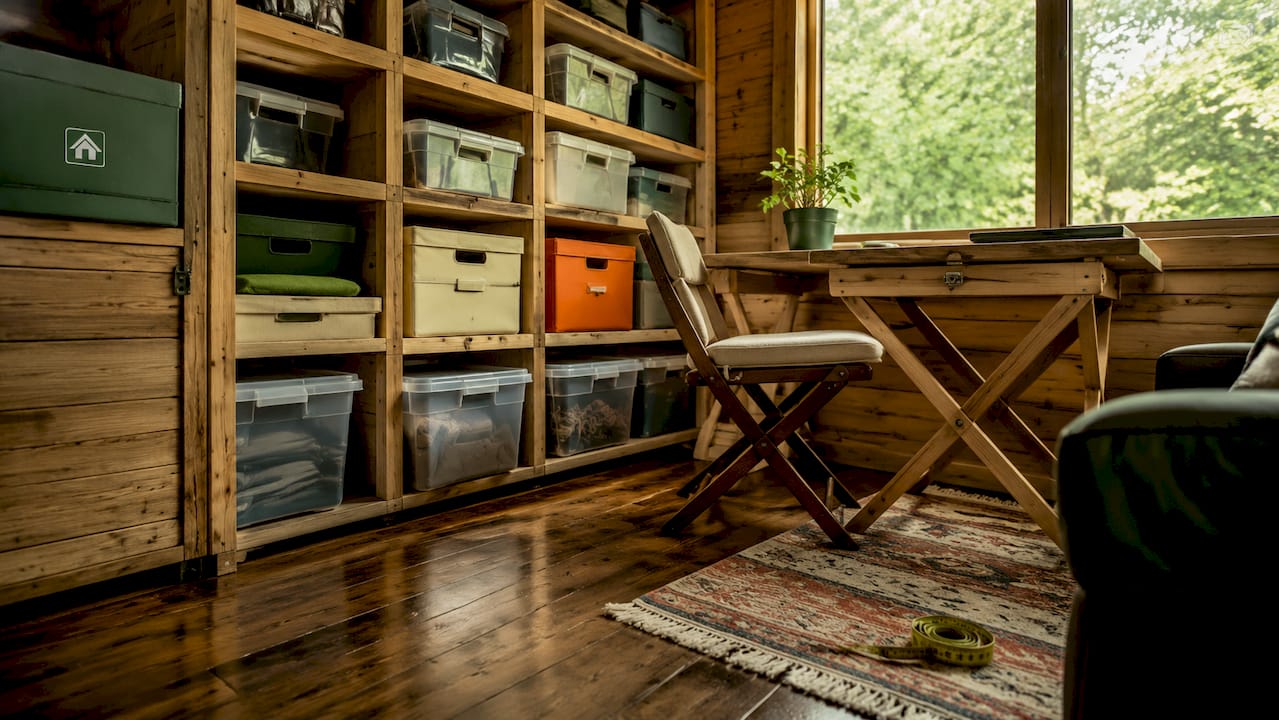
Floor-to-ceiling built-in shelving does two things at once: it increases usable storage and makes a small room feel taller and more open. This is a primary strategy in cabin design for good reason. A full-height bookcase fitted into an alcove or along a gable wall can hold everything from books and tools to labelled storage bins.
Before you mount anything, though, you need to think about the wall itself.
- Log cabin walls are not drywall. Standard wall plugs and lightweight fixings will not hold. Use heavy-duty anchors and specialised screws rated for timber.
- Check for settling gaps. Log cabins move and settle over time. Drill into solid log sections, not into gaps between courses.
- Caulk before you fix. Any gap opened during drilling needs sealing to prevent draughts and pests getting in.
- Space shelves for what you actually own. Adjustable shelf brackets let you reconfigure as your storage needs change across the seasons.
Pro Tip: Fix a French cleat system along one full wall. It’s a series of interlocking timber strips that let you reposition shelves, hooks, and bins anywhere along the wall without re-drilling. It’s especially useful in small log cabins where your needs change between summer and winter.
How to choose multi-functional furniture to maximise cabin space
Multi-functional furniture is the single biggest win for cabin organisation. One well-chosen piece can replace two or three single-purpose items and free up significant floor space in the process.
-
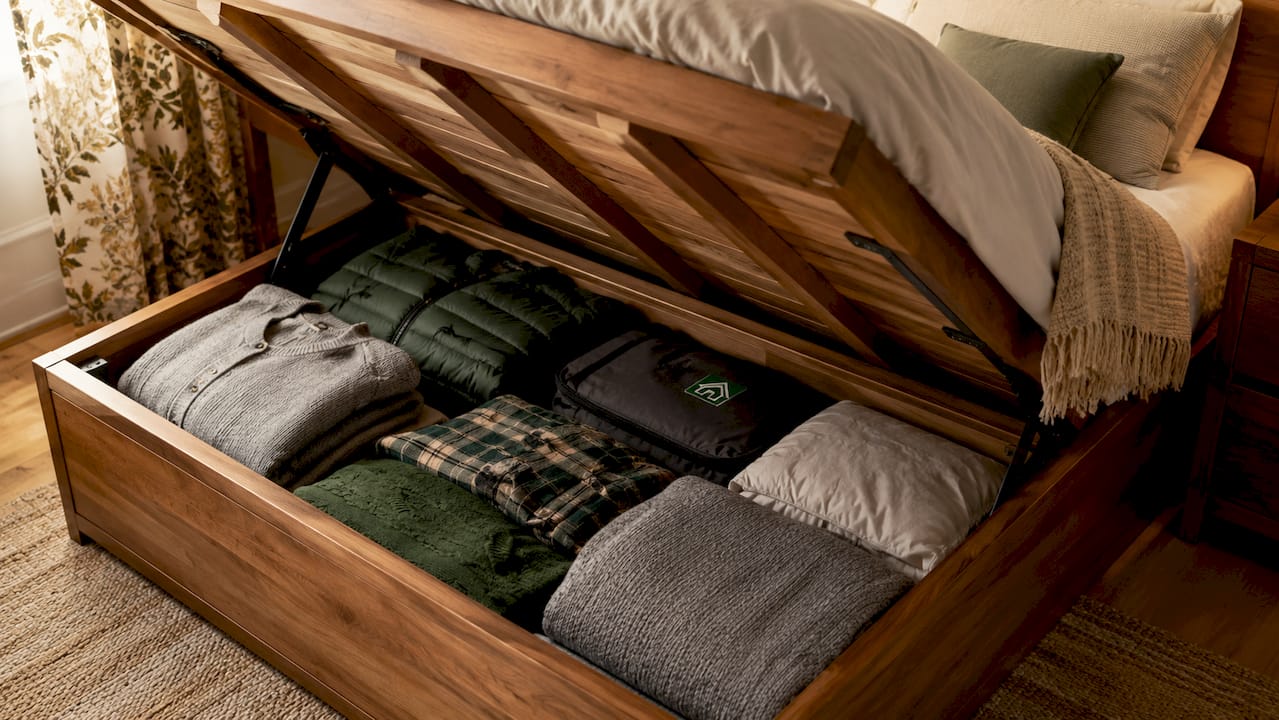
Start with the bed. Storage-integrated platform beds are the highest-impact upgrade you can make in a sleeping cabin. Lift-up frames or drawer bases store bulky items like off-season clothing, camping gear, and spare bedding. The space under a standard bed is usually wasted. A storage bed turns it into the equivalent of a large chest of drawers.
-
Add a built-in bench with a hinged lid. A bench seat running along one wall provides seating, defines a zone, and hides a surprising amount of clutter inside. The storage volume is roughly equivalent to a wardrobe. Use it for outdoor cushions, wellies, or hobby supplies.
-
Choose a storage ottoman or coffee table. In a sitting area, a lidded ottoman replaces a standard coffee table and stores throws, magazines, and games inside. It keeps surfaces clear without adding any extra furniture to the room.
-
Use a fold-down desk. If your cabin doubles as a workspace, a wall-mounted fold-down desk takes up almost no space when closed. Pair it with a pegboard above for tools or stationery.
The principle behind all of these choices is the same: every piece of furniture should earn its place by doing more than one job. A cabin that follows this rule stays organised almost automatically, because there are simply fewer loose items left without a home.
Pro Tip: When buying a storage bed or bench, measure the internal depth before you commit. Some lift-up frames have a shallow base that limits what you can actually fit inside. Aim for at least 25cm of internal depth to make the storage genuinely useful.
What are the best built-in storage solutions for garden cabins?
Built-in storage beats freestanding furniture in one key way: it uses the dead space that furniture cannot reach. Window seats with hinged lids create storage volume equivalent to a full closet, while the triangular space under a staircase can hold pull-out drawers or a small pantry. These are spaces that would otherwise sit empty.
Open shelving fitted between log courses gives a natural, integrated look that suits the cabin aesthetic well. The shelves appear to grow out of the wall rather than being added on top of it. This works particularly well for displaying plants, books, or decorative items alongside practical storage.
Built-in storage integrated into permanent cabin features, such as window seats and stair storage, is more effective than freestanding furniture because it uses architectural dead space that no piece of furniture can reach.
The table below shows the most practical built-in options and what each one suits best.
| Built-in type | Best use | Key consideration |
|---|---|---|
| Window seat with hinged lid | Bulky seasonal items, cushions | Needs a sturdy hinge rated for regular use |
| Under-stair drawers or pantry | Food, tools, hobby supplies | Measure triangular depth carefully before building |
| Floor-to-ceiling alcove shelving | Books, bins, display items | Fix into solid log sections only |
| Log-course integrated shelving | Decorative and light items | Keep loads light; logs shift with temperature |
| Built-in bench along a wall | Seating plus hidden storage | Combine with cushions for a comfortable finish |
One thing many cabin owners get wrong is treating log walls like plasterboard. Proper hardware and careful caulking are prerequisites before mounting any built-in storage. Skip this step and you risk shelves pulling away from the wall, draughts coming through drill holes, and, in the worst cases, pest entry points forming behind your new cabinetry.
For minimalist built-in ideas that keep a cabin feeling open and uncluttered, minimalist cabin interiors show how floor-to-ceiling shelving can be used without making a small room feel closed in.
How to organise cabin storage by function and rotate items seasonally
Organising by function rather than by category is the most efficient system for a garden cabin. Grouping items by task reduces setup time and mental clutter in multi-purpose spaces. Instead of keeping “all garden tools together,” keep “everything needed for potting” in one spot: trowel, gloves, labels, and compost bags all in the same bin.
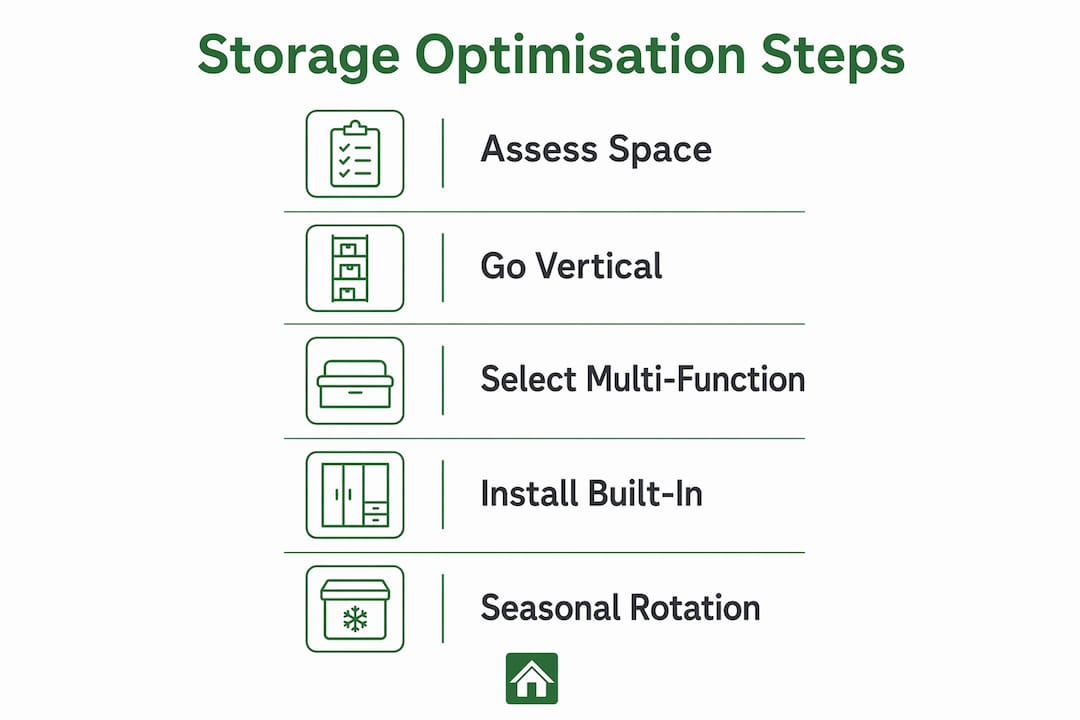
This approach works because you reach for things as a set, not individually. You open one container, do the task, and put it all back. There is no hunting across the cabin for the third item you need.
Seasonal rotation is the other half of the equation. Long-term cabin organisation depends on keeping daily essentials accessible and moving off-season items out of the cabin entirely. In practice, this means:
- Keep daily-use items at eye level or within easy reach. Mugs, tools you use every week, and hobby supplies you reach for regularly should never be buried.
- Move seasonal items to external storage. Garden furniture covers, winter clothing, and holiday decorations do not need to live inside the cabin year-round. A well-organised garden building or storage area outside the cabin keeps these items accessible without cluttering your main space.
- Label every bin clearly. A label on the outside of a storage bin saves time every single time you look for something. Use a consistent system: category plus season works well (e.g., “Seed packets: spring/summer”).
- Do a quarterly review. Walk through the cabin every three months and move anything that has not been touched back to seasonal storage. This prevents the slow creep of clutter that most cabin owners notice but rarely address.
Pro Tip: Take a photo of the inside of each labelled storage bin before you close it. Store the photos in a phone album labelled “cabin storage.” When you need something in february or march after months of not opening a bin, you can check the photo rather than pulling everything out.
Key takeaways
Effective cabin storage combines vertical shelving, multi-functional furniture, and built-in features, all secured with the correct hardware for log cabin walls.
| Point | Details |
|---|---|
| Go vertical first | Wall-mounted shelves and floor-to-ceiling units can increase storage capacity by up to 50%. |
| Use the right fixings | Log cabin walls need heavy-duty anchors and caulking before any shelving is mounted. |
| Choose furniture that doubles up | Storage beds and hinged-lid benches replace multiple single-purpose items and free floor space. |
| Build into dead space | Window seats and under-stair storage use architectural space that freestanding furniture cannot reach. |
| Rotate items seasonally | Keep daily essentials accessible and move off-season items out of the cabin to prevent clutter. |
What I’ve learnt from years of cabin storage mistakes
The most common mistake I see is people treating a garden cabin like a spare room and filling it with freestanding furniture until there is no floor space left. The cabin ends up feeling like a crowded garage rather than a useful, pleasant space. The fix is almost always to go vertical and go hidden.
My honest advice: start with the bed and the walls. A storage bed and one run of floor-to-ceiling shelving will transform a cabin more than any other single change. Everything else, the ottomans, the fold-down desks, the labelled bins, builds on that foundation.
The hardware point is one I cannot stress enough. I have seen beautiful shelving installations pull away from log walls within a year because the owner used standard wall plugs. Log cabin walls settle, expand, and contract with temperature and humidity. Only heavy-duty timber screws and anchors, fitted into solid log sections with gaps properly caulked, will hold long-term.
Intentional hidden storage is what separates a cabin that feels like a retreat from one that feels like a storage unit. When everything has a place and that place is out of sight, the cabin becomes genuinely restful. That is the whole point of having one.
Finally, do not try to do everything at once. Pick the highest-impact area, usually the sleeping or sitting zone, and get that right first. Then move on. Incremental improvements stick. A full weekend overhaul that leaves you exhausted rarely does.
— Martin
Garden cabins designed with storage in mind
If you are planning a garden cabin and want storage built in from the start, the design stage is the best time to get it right. Retrofitting shelving and built-ins is always possible, but a cabin designed with storage-friendly layouts makes the whole process much easier.
Logcabinkits specialises in bespoke cabin design that lets you specify internal layouts, wall configurations, and features suited to your storage needs from day one. Whether you want a garden log cabin with a dedicated hobby zone, a multi-room layout with built-in shelving walls, or a compact design that makes the most of every corner, the team can help you plan it properly. Use the cabin selection wizard to find the right starting point, or get in touch for a bespoke quote tailored to your space.
FAQ
What is the highest-impact cabin storage upgrade?
Replacing a standard bed frame with a storage-integrated platform bed is the single most effective upgrade. It stores bulky items like off-season clothing and camping gear without using any additional floor space.
Can I use standard wall plugs in a log cabin?
No. Log cabin walls require heavy-duty timber anchors and specialised screws, not standard drywall fixings. Gaps must also be caulked after drilling to prevent draughts and pest entry.
How do I stop my cabin becoming cluttered over time?
Seasonal rotation is the most reliable method. Keep daily-use items accessible and move off-season items to external storage every few months to prevent slow clutter build-up.
What is the best way to organise a multi-purpose garden cabin?
Group items by function rather than by category. Keeping everything needed for one task together in a single labelled bin reduces search time and keeps surfaces clear.
Does floor-to-ceiling shelving make a small cabin feel smaller?
No. Floor-to-ceiling shelving actually makes small rooms feel taller and more open. It draws the eye upward and uses wall space that would otherwise be blank, making the room feel purposeful rather than cramped.