
Why Choose a Log Cabin for Sustainable Living

Nearly half of British homeowners now consider sustainability when planning outdoor improvements. For garden enthusiasts in the United Kingdom, log cabins blend eco-friendly design with timeless style and practical versatility. These charming timber buildings offer more than just shelter. From garden offices to personalised retreats, discover how bespoke log cabins can transform your space while supporting greener living and relaxation.
Table of Contents
- What Is A Log Cabin? Core Definition And Uses
- Different Types Of Log Cabins In The UK
- Key Features And Customisation Possibilities
- Environmental And Wellbeing Benefits Explained
- Legal, Planning, And Building Regulations Overview
- Comparing Log Cabins To Other Garden Buildings
Key Takeaways
| Point | Details |
|---|---|
| Log Cabin Versatility | Log cabins can serve multiple functions, including offices, gyms, and relaxation spaces. |
| Sustainable Construction | Constructed from responsibly sourced timber, log cabins are energy efficient and environmentally friendly. |
| Customisation Options | Homeowners can personalise their log cabins with various design features to suit their needs. |
| Regulatory Compliance | Consult local planning authorities to ensure compliance with building regulations before construction. |
What Is a Log Cabin? Core Definition and Uses
A log cabin represents more than just a basic wooden structure; it’s a timeless architectural form with deep roots in rural and sustainable living. Originating as a simple dwelling, log cabins have evolved from practical shelters to versatile spaces that offer both aesthetic charm and functional utility.
Traditionally, log cabins are constructed using horizontally stacked timber logs carefully interlocked at the corners, creating sturdy and naturally insulated living spaces. This traditional building method provides excellent thermal performance, making log cabins inherently energy efficient. The raw timber materials create a strong connection with natural surroundings, offering homeowners a sustainable alternative to conventional brick or concrete structures.
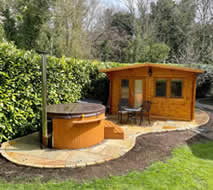
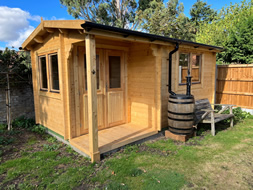
Log cabins serve multiple contemporary purposes beyond residential living. They can function as garden offices, relaxation spaces, home gyms, art studios, or additional accommodation. Their adaptable design allows for customisation to suit various personal and professional needs. Whether situated in rural landscapes or compact urban gardens, these structures provide a harmonious blend of functionality and natural aesthetics.
Pro tip: When planning a log cabin, consider positioning it to maximise natural light and minimise heat loss by strategically aligning windows and utilising passive solar design principles.
Different Types of Log Cabins in the UK
The United Kingdom offers a diverse range of log cabin styles, each catering to different residential and garden requirements. Contemporary log cabin designs have significantly evolved, moving beyond traditional rustic aesthetics to incorporate modern architectural principles and versatile functional spaces.
Key log cabin types in the UK include garden cabins, residential log homes, and multi-purpose structures. Garden log cabins are particularly popular, serving as home offices, gyms, studios, or relaxation spaces. These compact structures typically range from 2 to 6 metres in length and can be customised to complement existing garden landscapes. Residential log cabins, meanwhile, represent more substantial living spaces, often featuring advanced insulation, double-glazed windows, and modular construction techniques that enhance energy efficiency.
Specialised log cabin variations have emerged to meet specific UK homeowner needs. Some designs focus on minimal environmental impact, using sustainably sourced timber and incorporating eco-friendly features like solar panel compatibility and rainwater harvesting systems. Urban garden log cabins, designed for compact spaces, offer clever space-saving solutions with compact footprints and multi-functional interior layouts.
Here is a summary of popular log cabin types in the UK and their distinctive uses:
| Cabin Type | Main Purpose | Common Features |
|---|---|---|
| Garden Cabin | Office, gym, or studio | Compact, customisable design |
| Residential Log Home | Permanent living | Insulation, modular structure |
| Urban Garden Cabin | Small space solutions | Space-saving layout, eco features |
| Multi-purpose Cabin | Flexible activities | Partitioned, custom interiors |
Pro tip: When selecting a log cabin type, carefully assess your specific space requirements, local planning regulations, and intended usage to ensure you choose a design that maximises both functionality and aesthetic appeal.
Key Features and Customisation Possibilities
Log cabin customisation offers homeowners unprecedented flexibility in creating personalised outdoor spaces. Interlocking log cabin designs provide remarkable adaptability, allowing individuals to tailor structures precisely to their specific requirements and aesthetic preferences.
Key customisation features typically include modular wall configurations, multiple window and door placement options, and a range of roof styles. Homeowners can select timber types, colours, and finishes that complement their existing garden landscape. Advanced options might encompass integrated insulation systems, electrical wiring provisions, internal partitioning, and optional extras like veranda extensions or additional storage spaces. These personalisation choices enable log cabins to serve diverse functions from home offices and gyms to art studios and relaxation retreats.
Technical customisation possibilities extend beyond aesthetic considerations. Sustainable design elements can be incorporated, such as solar panel compatibility, rainwater collection systems, and energy-efficient glazing. Advanced log cabin manufacturers offer bespoke solutions that consider individual site constraints, local planning regulations, and specific environmental conditions. This means each log cabin can be a unique response to its intended purpose and surrounding landscape.
Pro tip: Consult with log cabin specialists early in your design process to understand the full range of customisation options and ensure your final design meets both functional requirements and local building regulations.
Environmental and Wellbeing Benefits Explained
Log cabins represent far more than aesthetic outdoor structures, offering profound environmental and personal wellbeing advantages. Scientific research on sustainable living demonstrates that these wooden structures significantly reduce carbon footprints through responsible material sourcing and exceptional energy efficiency.
From an environmental perspective, log cabins contribute to sustainability through multiple mechanisms. They typically utilise timber from responsibly managed forests, creating a renewable building material that actively sequesters carbon during its growth and lifecycle. The natural insulation properties of solid wood construction provide superior thermal regulation, reducing energy consumption for heating and cooling. This inherent efficiency translates into lower carbon emissions and reduced utility costs for homeowners committed to ecological living.
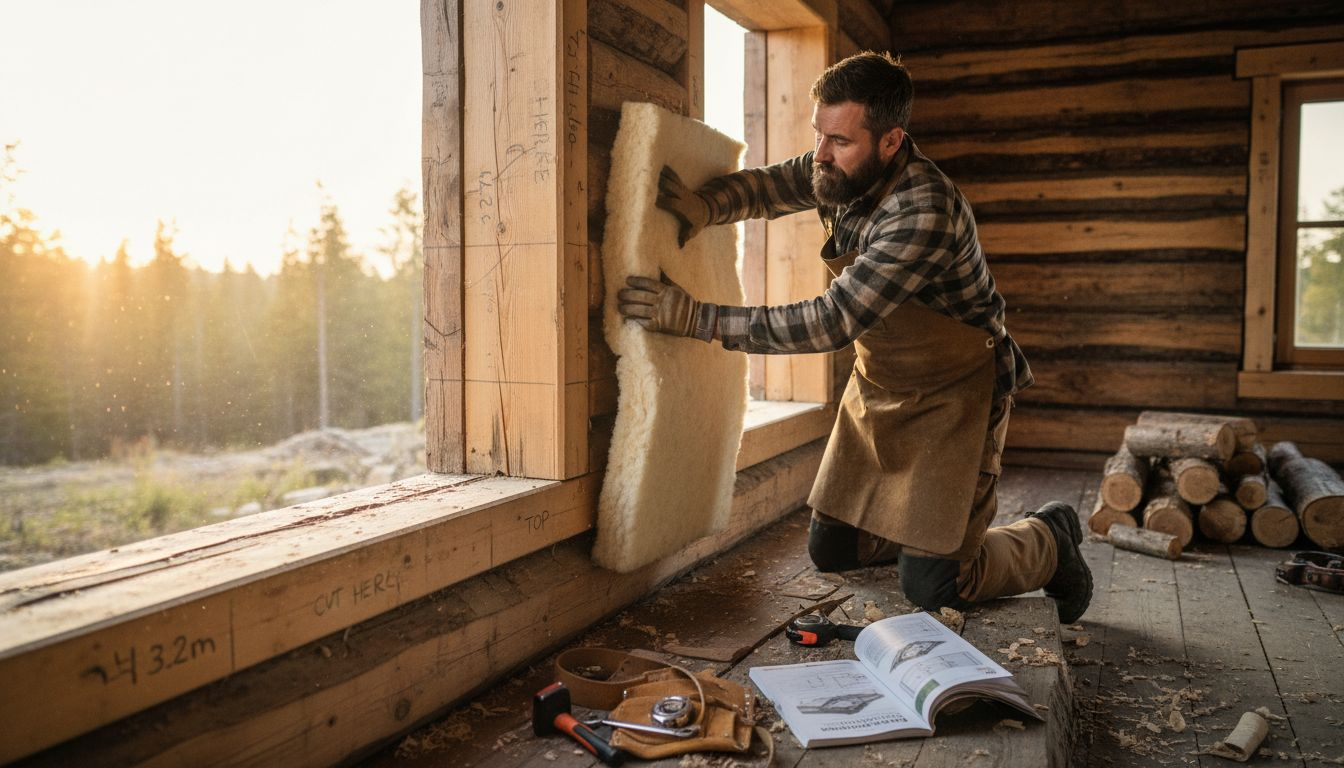
Extensive research by the Woodland Trust reveals significant mental health benefits associated with wooden living spaces. Proximity to natural materials like timber has been scientifically proven to lower stress levels, improve immune function, and enhance overall psychological wellbeing. Log cabins create a direct connection with nature, offering a sanctuary that promotes relaxation, mental clarity, and a sense of tranquillity often missing in traditional urban environments.
Pro tip: Consider positioning your log cabin to maximise natural light and incorporate surrounding greenery, creating a holistic space that supports both environmental sustainability and personal wellness.
Legal, Planning, and Building Regulations Overview
Navigating the legal landscape of log cabin installations requires careful consideration of UK planning regulations. Comprehensive planning guidelines provide crucial insights into the complex requirements for garden buildings, ensuring homeowners can make informed decisions about their log cabin projects.
Most log cabins fall under permitted development rights, which allow construction without formal planning permission, provided specific criteria are met. Key considerations include maximum height restrictions, total ground coverage, and proximity to property boundaries. Typically, garden log cabins must not exceed 2.5 metres in height, occupy less than 50% of the garden area, and be positioned at least 2 metres from any property line. However, these regulations can vary depending on local council guidelines, conservation area restrictions, and specific property characteristics.
Building regulations present another critical aspect of log cabin installation. While smaller structures under a certain size may be exempt, larger or more complex log cabins might require formal building regulation approval. This process ensures structural integrity, electrical safety, and compliance with thermal efficiency standards. Homeowners must consider factors such as foundation requirements, electrical installations, and potential impact on drainage systems. Some local authorities may require detailed plans and inspections to confirm the log cabin meets national building standards.
Pro tip: Always consult with your local planning department and a professional log cabin installer before commencing construction to ensure full compliance with current regulations and avoid potential legal complications.
Comparing Log Cabins to Other Garden Buildings
When considering outdoor structures, log cabins represent a superior alternative to traditional garden sheds, offering significantly more value and functionality. Garden cabins provide substantial advantages over budget garden sheds through their robust construction, versatile design, and long-term durability.
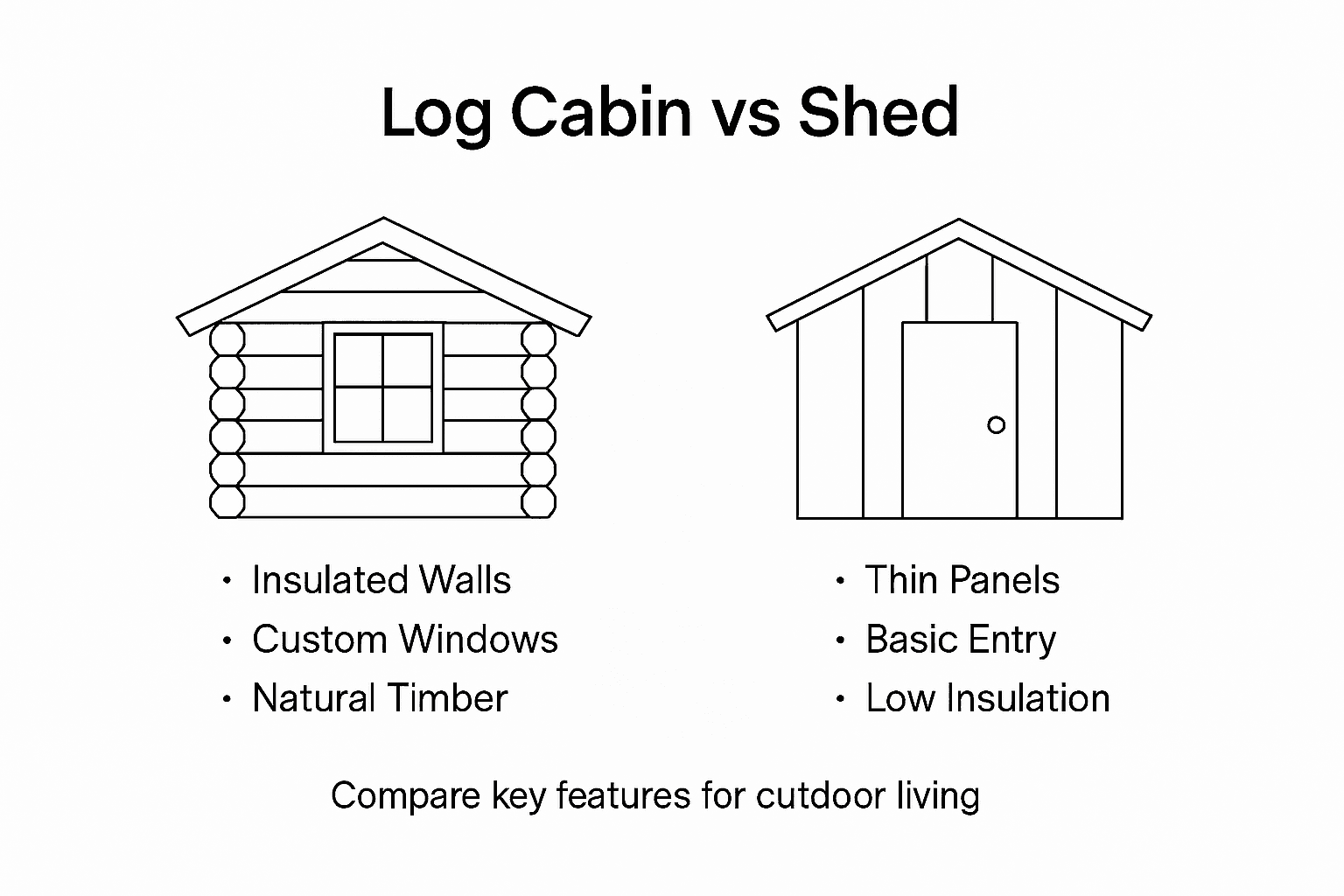
Unlike standard wooden sheds, which typically feature thin plywood panels and limited structural integrity, log cabins are constructed with thick, interlocking timber walls that provide exceptional insulation and weather resistance. Traditional sheds often deteriorate quickly, requiring frequent maintenance and replacement. In contrast, log cabins offer a more permanent solution, with superior thermal performance, stronger structural integrity, and the ability to serve multiple functions from home offices to leisure spaces.
The investment in a log cabin extends beyond mere storage capabilities. While garden sheds are primarily utilitarian, log cabins create genuine additional living spaces that seamlessly integrate with outdoor environments. They can be fully insulated, electrified, and customised to match specific aesthetic and functional requirements. This versatility means log cabins can increase property value, whereas standard sheds are considered temporary structures with minimal long-term benefit.
Compare how log cabins and standard garden sheds differ in key aspects:
| Aspect | Log Cabin | Garden Shed |
|---|---|---|
| Durability | Built to last decades | Prone to weathering |
| Insulation | Natural thermal properties | Minimal or none |
| Value Added | Increases property worth | Limited effect |
| Customisation | Highly adaptable layout | Few upgrade options |
Pro tip: Consider the total lifecycle cost when comparing garden buildings, factoring in maintenance expenses, potential usage versatility, and long-term durability rather than focusing solely on initial purchase price.
Embrace Sustainable Living with a Custom Log Cabin Today
If you are seeking an eco-friendly and versatile outdoor solution, a bespoke log cabin offers an ideal answer to challenges of energy efficiency and environmental harmony. With natural insulation and the option to personalise every detail, our log cabins at Log Cabin Kits help you create a sustainable sanctuary that enhances wellbeing while respecting nature. Building a space that truly reflects your lifestyle and values has never been easier or more rewarding.
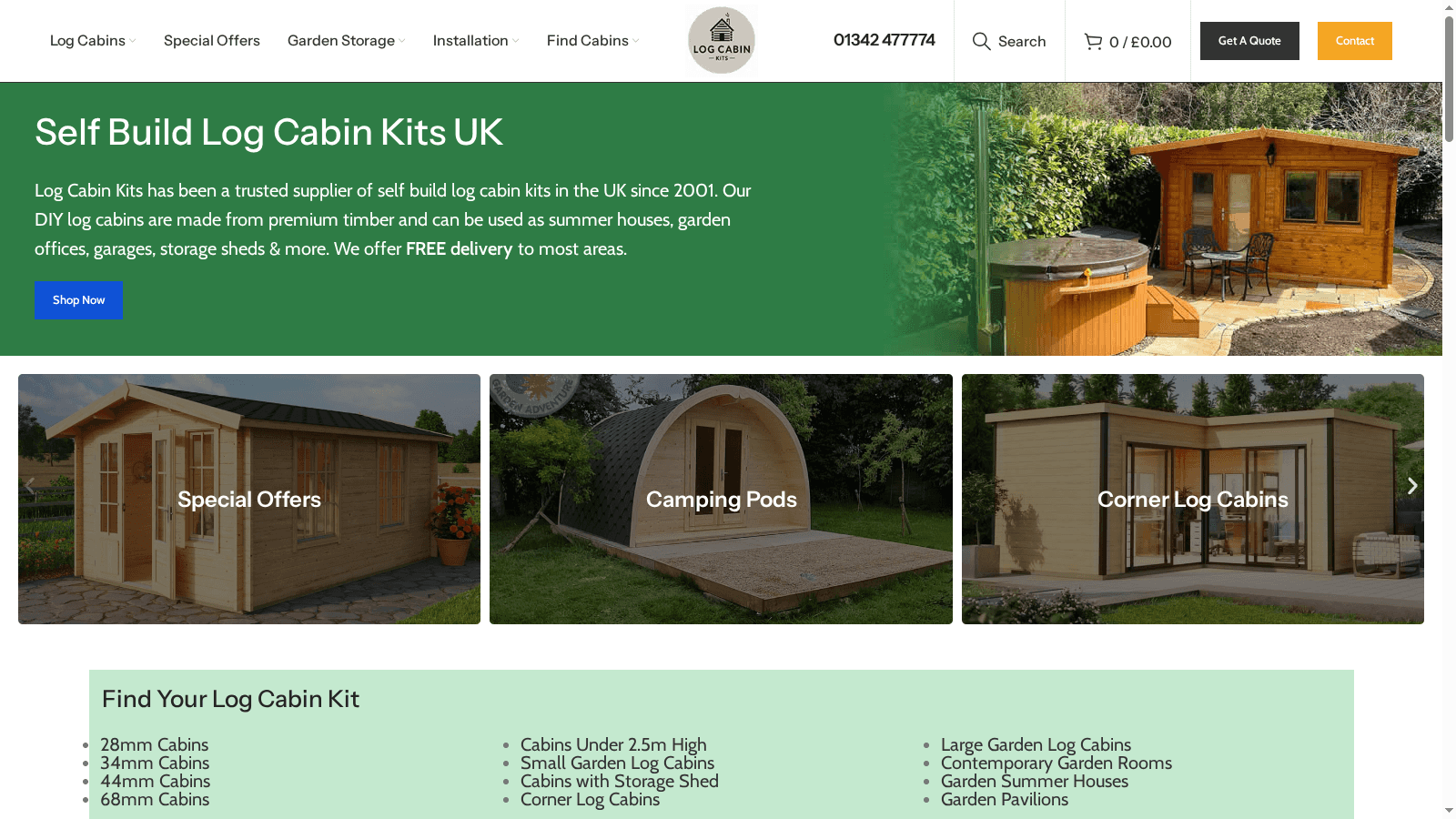
Discover how easy it is to combine style, functionality and sustainability with our range of customisable garden buildings. Visit our website now to explore flexible designs, expert advice and eco-conscious features that support your goals for healthier living. Take the first step towards a greener future by choosing a log cabin perfectly tailored to your space and needs today.
Frequently Asked Questions
What are the environmental benefits of log cabins?
Log cabins contribute to sustainability by using timber from responsibly managed forests, providing a renewable building material that sequesters carbon. Their natural insulation properties reduce energy consumption, resulting in lower carbon emissions and utility costs.
How do log cabins compare to traditional garden sheds?
Log cabins offer superior durability, insulation, and functionality compared to traditional garden sheds. They are built with thick, interlocking timber walls that provide substantial thermal performance, making them suitable for varied uses beyond simple storage.
Can log cabins be customised for specific functions?
Yes, log cabins can be extensively customised with options for modular designs, different timber types, and various features like insulation, electrical wiring, and internal partitioning to suit individual needs and aesthetic preferences.
What should I consider regarding planning regulations for log cabins?
homeowners should be aware of permitted development rights and local planning regulations, which outline height restrictions, ground coverage, and boundary placement. Consulting with local planning authorities and professionals is essential for compliance.