
Why cabins are ideal for home studios: a practical guide

TL;DR:
- A garden cabin offers a cost-effective, quick-to-assemble alternative to extensions for creating a home studio. It provides better soundproofing, separation from household distractions, and can add up to 10% value to a property. Proper planning of size, insulation, power, and placement ensures the cabin functions effectively for creative work.
A garden cabin is one of the most practical and cost-effective ways to create a dedicated home studio in the UK. Whether you’re a musician tired of recording in a spare bedroom, or a creative professional who needs proper space to focus, cabins solve problems that converting a room inside your house simply cannot. With 44% of UK adults now working remotely at least part of the week, demand for proper garden studio space has never been higher. This guide covers why cabins are ideal for home studios, how to design one well, and what it means for your property value.
Why cabins are ideal for home studios compared to spare rooms
A cabin gives you something a spare bedroom never can: genuine separation. The moment you step outside your house and into a dedicated studio space, your brain shifts into work mode. That psychological shift is not a small thing. Research confirms that the act of commuting to a detached cabin, even if it’s just across the garden, helps workers switch focus and reduces burnout over time.
Spare rooms come with constant interruptions. Family noise, the temptation to wander into the kitchen, and the general hum of home life all chip away at concentration. A cabin removes those distractions entirely. Physical separation reduces interruptions and creates a mental boundary between your creative work and your personal life. For musicians and artists, that boundary is the difference between a productive session and a wasted afternoon.
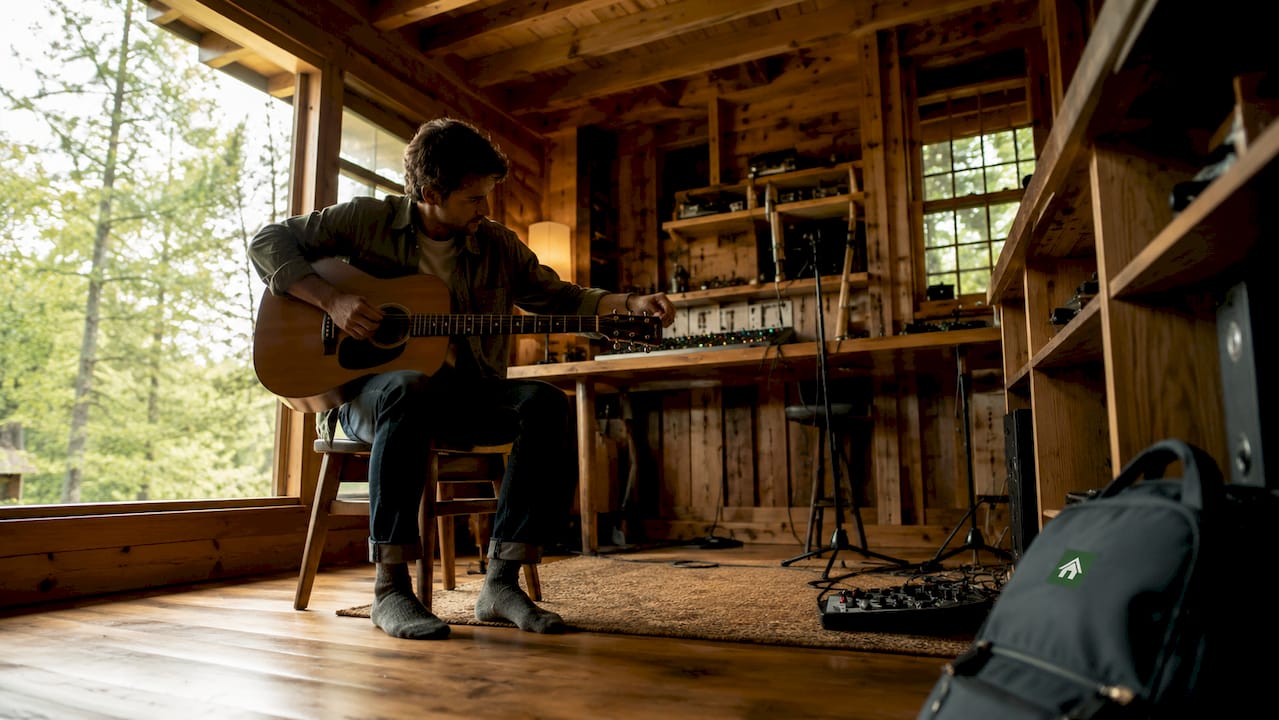
Then there’s the acoustic question. Timber walls in log cabins naturally dampen sound, which gives you a head start on soundproofing before you’ve added a single acoustic panel. A plasterboard bedroom wall offers almost no natural sound absorption. A solid timber cabin wall does.
Pro Tip: If you’re comparing a cabin to a loft conversion or extension, factor in the disruption cost. Extensions take months and turn your home into a building site. A log cabin kit typically assembles in 2–5 days, with minimal mess and no structural work to your house.
The cost difference is stark too. A 20m² cabin typically costs between £6,000 and £15,000. A comparable brick extension runs from £36,000 to £48,000. For most musicians and creatives, that saving alone makes the cabin the obvious choice.
- Soundproofing: Timber walls provide natural acoustic dampening from day one.
- Speed: Most cabins are fully assembled within a working week.
- Cost: Cabins cost a fraction of brick extensions for the same usable space.
- Separation: A detached building creates the mental and physical boundary creative work needs.
- Flexibility: Cabins can be repurposed as guest rooms or rental spaces if your needs change.
How to design a cabin studio that actually works for creatives
Getting the cabin design right from the start saves you money and frustration later. The most common mistake is choosing a cabin that’s too small. You need room for your equipment, cables, a comfortable chair, and space to move around without feeling cramped. For a music studio, a minimum footprint of 15m² is sensible. For a visual artist or podcaster, 12m² may be enough.
Here’s a practical order to work through when planning your cabin studio setup:
-
Fix your footprint first. Decide how much floor space you genuinely need before looking at cabin styles. Measure your largest pieces of equipment and add at least 1.5 metres of clear working space around them.
-
Prioritise insulation and heating. Modern cabins include insulation, heating, and integrated power as standard in many builds. A cabin you can only use in summer is not a studio. It’s a seasonal hobby space.
-
Plan your acoustic treatment. Timber’s natural sound-dampening qualities are a strong starting point, but acoustic treatment combined with timber creates a genuinely superior audio environment. Add acoustic foam panels, bass traps in corners, and a thick rug to manage reflections.
-
Sort your power and connectivity early. Run a dedicated circuit from your house before the cabin goes up. Trying to retrofit cabling through a finished timber cabin is a chore. Plan for enough sockets, a dedicated earth, and a broadband connection if you’re recording or streaming.
-
Choose your windows and orientation carefully. North-facing windows give consistent, glare-free natural light. South-facing windows are warmer but can cause glare on screens. For music studios, fewer windows on the side facing the house reduces sound bleed in both directions.
Pro Tip: Ask about bespoke cabin designs before assuming a standard kit will do. A custom layout can place doors, windows, and internal partitions exactly where your workflow needs them, without costing as much as you might expect.
Logcabinkits offers a range of garden log cabins that can be adapted to studio use, with options for thicker wall profiles, additional insulation, and custom internal layouts. Getting the specification right at the order stage is far easier than modifying a finished building.
Do cabin studios add value to your property?
A well-built cabin studio is not just a lifestyle purchase. It’s a property investment. A garden cabin can add 5% to 10% to the value of a UK home. That figure reflects buyer demand for ready-made additional space, particularly as remote and creative working continues to grow.
Planning permission is another area where cabins have a clear advantage. Most garden cabins fall under Permitted Development Rights, meaning you can build without going through a full planning application. That avoids an 8–13 week wait and the uncertainty that comes with it. You can read more about the rules in Logcabinkits’ guide to planning permission for log cabins.
Cabins also offer flexibility that a fixed extension cannot. Cabins can be repurposed over time as studios, guest rooms, or even rental units. That adaptability means the building keeps generating value even if your creative needs change.
| Factor | Cabin studio | Brick extension |
|---|---|---|
| Typical cost (20m²) | £6,000–£15,000 | £36,000–£48,000 |
| Build time | 2–5 days | 3–6 months |
| Planning permission | Usually not required | Often required |
| Property value uplift | 5%–10% | 5%–15% |
| Flexibility | High (repurposable) | Low (permanent) |
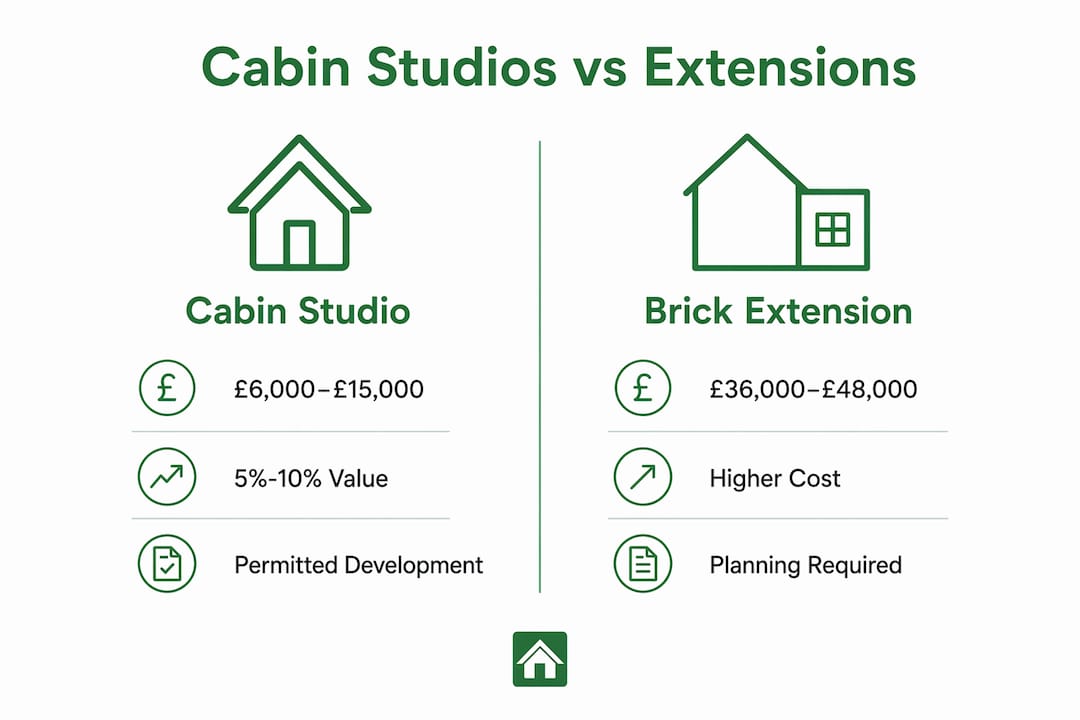
The dual return on a cabin studio is worth spelling out. You get an immediate lifestyle benefit in the form of a proper creative workspace, and a longer-term financial return when you sell. Very few home improvements deliver both at once.
What can go wrong and how to avoid it
The biggest hidden cost in any cabin studio project is the foundation. Concrete pads or adjustable screw piles are the standard options, and proper foundation preparation is not optional. A cabin sitting on uneven or poorly drained ground will settle, warp, and eventually suffer timber rot. Getting the base right adds cost upfront but saves a great deal more later.
A few other things that catch people out:
- Site drainage. Water pooling under or around a cabin accelerates timber decay. Check your garden’s drainage before choosing a location.
- Neighbour proximity. Placing a music studio directly against a shared fence is a quick way to create disputes. Leave adequate space and consider the direction of sound travel.
- Overbuilding. A cabin that’s too large for your garden can look out of place and may trigger planning scrutiny. Match the scale to your plot.
- Maintenance. Timber cabins need treating every few years to maintain their appearance and weather resistance. Factor this into your long-term budget.
- Ergonomics. A studio that’s uncomfortable to work in for long periods defeats the purpose. Plan your desk height, chair position, and monitor placement before you finalise the interior layout.
Logcabinkits’ guide on why garden cabins are trending covers some of the practical considerations UK homeowners are working through right now, and it’s worth a read before you commit to a specification.
Key takeaways
Cabins are the most practical and cost-effective way to create a dedicated home studio in the UK, combining natural soundproofing, fast installation, and genuine property value uplift in a single investment.
| Point | Details |
|---|---|
| Natural soundproofing | Timber walls dampen sound from the start, giving musicians a real acoustic advantage. |
| Fast installation | Most cabin kits assemble in 2–5 days, far quicker than any brick extension. |
| Cost efficiency | A 20m² cabin costs a fraction of a comparable extension, freeing budget for equipment. |
| Property value | A well-built cabin studio can add 5%–10% to your UK home’s value. |
| Design matters | Insulation, power, acoustic treatment, and orientation all need planning before you build. |
Why I think a cabin studio changes everything
I’ve spoken to a lot of musicians and creatives who’ve set up studios inside their homes, and the story is almost always the same. The spare bedroom works for a while, then the compromises start to pile up. The family can’t use the room. Recording stops when anyone else is home. The gear never quite fits. And the mental switch between “home” and “work” never really happens.
The moment someone moves into a dedicated cabin, that changes. It’s not just about the acoustics or the extra space, though both matter. It’s the ritual of walking out to a space that exists solely for creative work. That separation does something to your mindset that no amount of room rearranging inside the house can replicate.
What I find underappreciated is the long-term financial case. Most people think of a cabin as a lifestyle purchase and are pleasantly surprised when they realise it also adds measurable value to their property. The dual return on investment from a cabin studio is genuinely unusual in home improvement terms. You get the creative benefit immediately and the financial return when you sell.
My honest advice: don’t undersize it and don’t skip the foundation. Those two decisions account for most of the regret I hear from people who’ve done it. Get those right, and a cabin studio is one of the best things you can add to your home.
— Martin
Find your perfect cabin studio with Logcabinkits
If you’re ready to turn your garden into a proper creative space, Logcabinkits makes it straightforward. The range covers everything from compact single-room builds to larger multi-room log cabins with enough space for a full recording setup. Every cabin can be adapted to your needs, with options for thicker walls, extra insulation, and custom layouts that suit studio use.
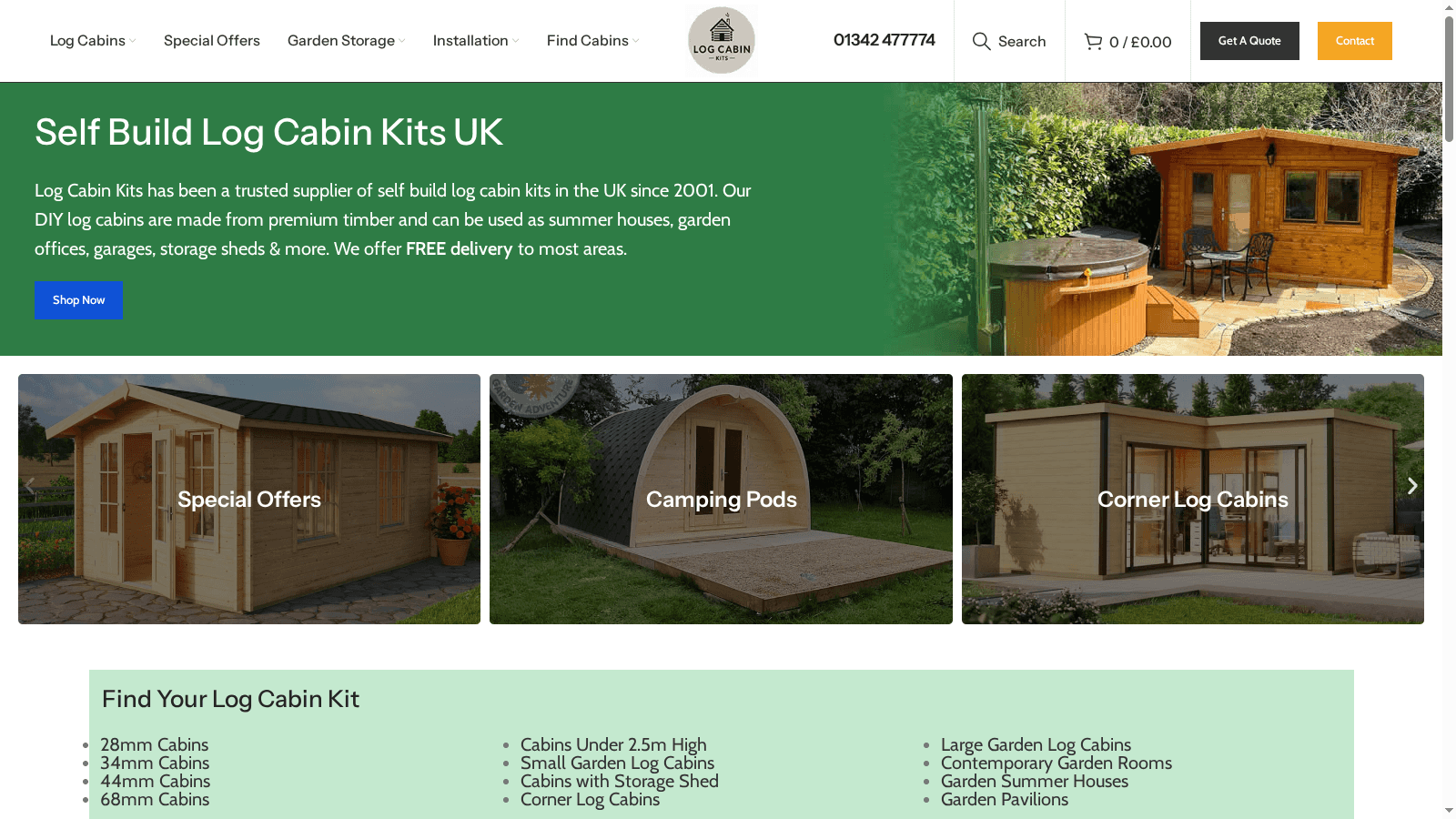
Logcabinkits specialises in bespoke and custom builds, so if a standard kit doesn’t quite fit your vision, the team can work with you on a design that does. Browse the full range of quality garden log cabins or explore custom build options to see what’s possible. Free UK delivery is included, and the team is happy to talk through your studio requirements before you commit to anything.
FAQ
Why are cabins better than spare rooms for home studios?
Cabins provide physical separation from household noise and distractions, which spare rooms cannot offer. Timber walls also naturally dampen sound, giving musicians a genuine acoustic advantage from the start.
Do I need planning permission for a cabin studio in the UK?
Most garden cabins fall under Permitted Development Rights and do not require a full planning application. Restrictions apply based on size, height, and proximity to boundaries, so it’s worth checking the rules for your specific plot.
How much does a cabin studio cost compared to an extension?
A 20m² cabin typically costs between £6,000 and £15,000. A comparable brick extension costs between £36,000 and £48,000. The saving is significant and leaves more budget for acoustic treatment and equipment.
Can a cabin studio add value to my home?
A well-built garden cabin can add 5% to 10% to a UK property’s value. Buyers increasingly value ready-made additional space, particularly for home working and creative use.
What size cabin do I need for a music studio?
A minimum of 15m² is a sensible starting point for a music studio. This gives you room for equipment, comfortable movement, and basic acoustic treatment without feeling cramped.