
Smart technology in garden cabins: a practical guide
TL;DR:
- Smart technology in garden cabins, when installed thoughtfully, enhances comfort, security, and energy efficiency without compromising their natural charm.
- Key upgrades like smart thermostats, locks, and discreet wireless devices improve functionality while preserving the cabin’s aesthetics and insulating integrity.
A lot of homeowners assume that adding smart technology in garden cabins means wires everywhere, blinking gadgets, and losing that cosy, natural feel they loved in the first place. It’s a fair concern. But done right, smart tech actually does the opposite. It makes your cabin more comfortable, more secure, and cheaper to run, while staying completely in the background. This guide walks you through everything you need to know, from the best tech to start with, to how to keep your cabin looking exactly as it should.
Table of Contents
- Key takeaways
- Smart technology for garden cabins: where to begin
- Keeping the cabin’s look intact
- Energy efficiency and sustainability
- Security and remote access
- Entertainment, connectivity, and automation
- My honest take on smart tech in cabins
- Ready to build a cabin that’s made for smart tech?
- FAQ
Key takeaways
| Point | Details |
|---|---|
| Start with purposeful tech | Choose smart features that solve real problems like security, heating, and lighting rather than adding gadgets for the sake of it. |
| Protect the cabin’s character | Wireless devices and hidden smart plugs preserve the natural look of bespoke log cabins without drilling or trailing cables. |
| Smart thermostats save money | Heating bills can drop noticeably with a smart thermostat managing your cabin’s temperature automatically. |
| Solar power suits off-grid cabins | A compact solar setup paired with battery storage can make a garden cabin largely self-sufficient. |
| Remote control is the real win | Managing your cabin’s heating, security, and lighting from your phone is especially useful for rentals or cabins at the end of the garden. |
Smart technology for garden cabins: where to begin
The world of smart home features for cabins is much broader than most people expect. You don’t need to install everything at once. In fact, picking two or three well-chosen upgrades will do far more good than filling a cabin with devices that don’t quite work together.
Here’s a clear breakdown of the core categories worth thinking about:
- Smart lighting. These systems let you automate lighting schedules, adjust brightness, and change colour temperature from your phone. Lights can switch on at dusk and off at dawn without you touching a switch.
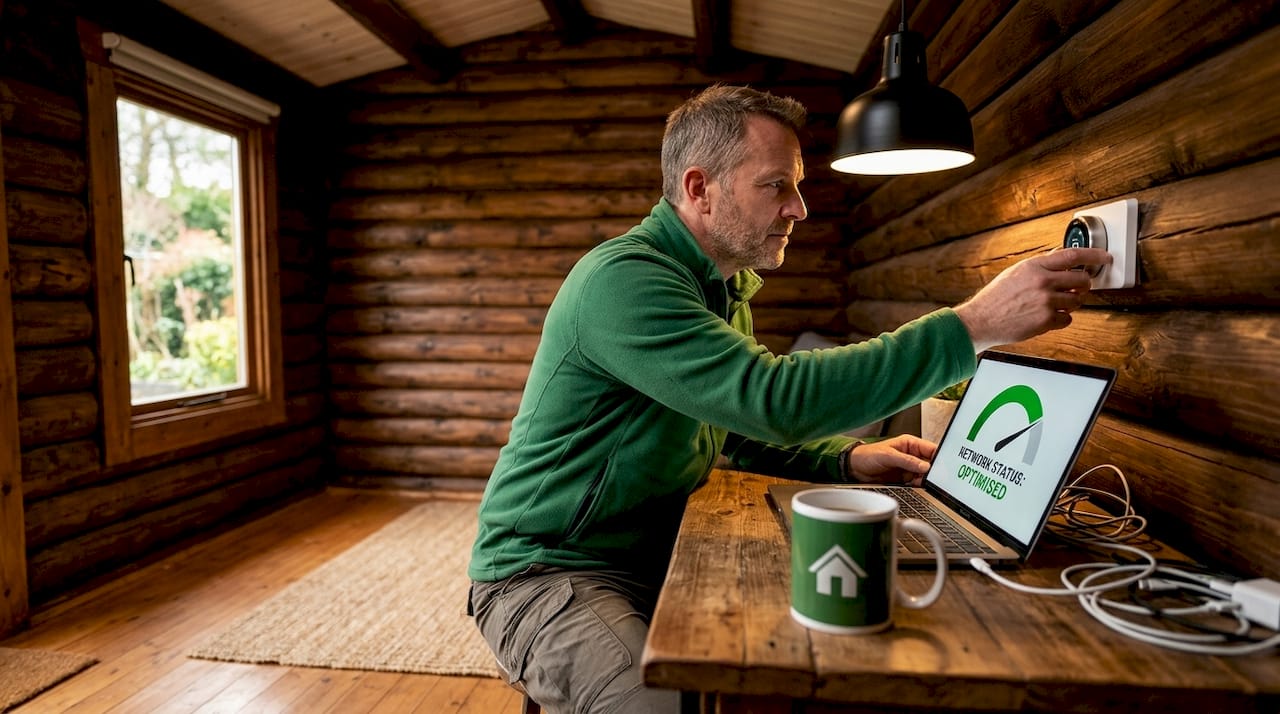
- Smart climate control. A smart thermostat learns your habits and adjusts heating and cooling automatically. It’s one of the highest-impact upgrades you can make for comfort and running costs.
- Security devices. Smart locks, cameras, and sensors give you real-time control over who can access your cabin, from wherever you are.
- Entertainment and connectivity. Wireless speakers, smart TVs, and voice assistants turn a garden cabin into a proper connected garden retreat for work or leisure.
- Energy systems. Solar panels paired with battery storage mean you can run a cabin off-grid or reduce your reliance on mains power considerably.
The key is to think about what your cabin is actually used for. A home office needs reliable Wi-Fi and smart lighting. A guest cabin benefits most from smart security and remote climate control. A creative studio might just need great sound and automated heating. Start there.
Keeping the cabin’s look intact
One of the biggest worries people have is that technology will spoil the warmth of a bespoke log cabin. The good news is that modern smart devices are designed to be discreet. The bad news is that wood can make connectivity trickier than in a brick building.
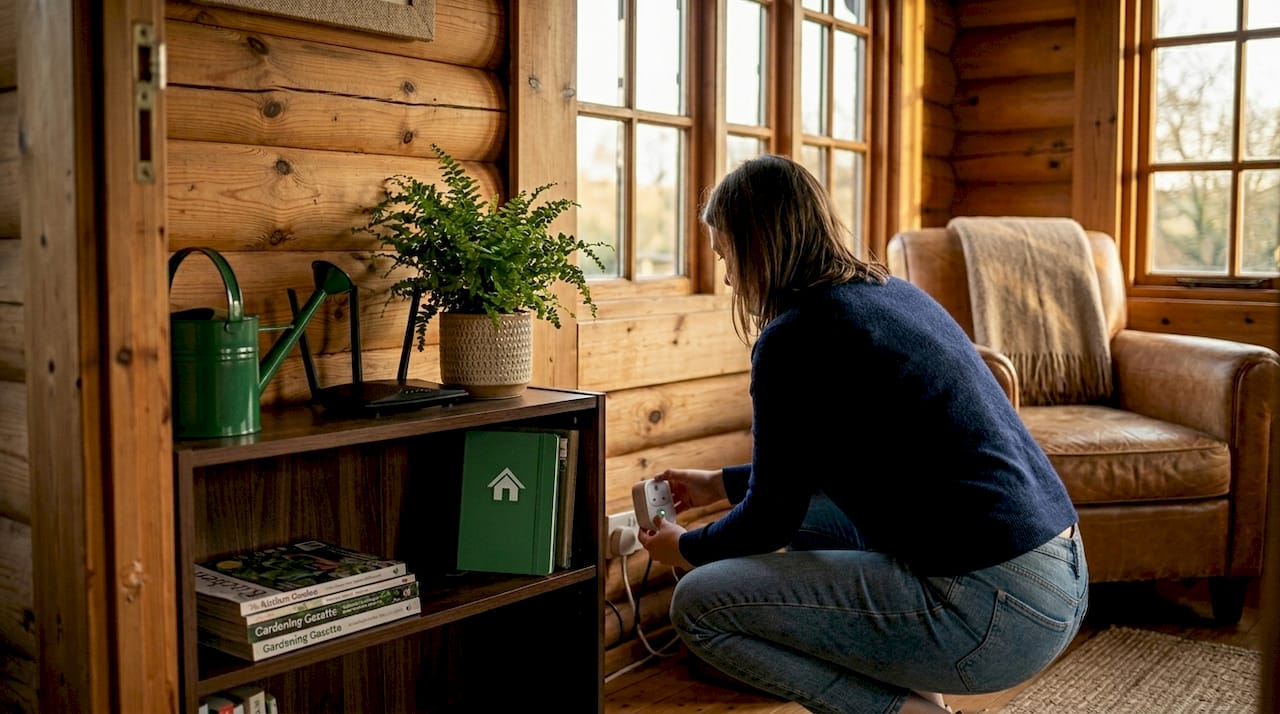
Thick log walls absorb wireless signals, so a standard Wi-Fi router in your house may not reach the cabin reliably. The answer is simple. Wireless repeaters improve coverage in wooden structures without any need to drill through solid walls. Place one midway between your house and the cabin, or just inside the cabin door, and you’ll notice the difference straight away.
For cables that do exist, the trick is concealment. Smart plugs hidden behind furniture keep the tech invisible without any structural changes. Wireless switches can be mounted without wiring and repositioned whenever you like. The goal is to add technology that solves problems without announcing itself.
Choosing wireless over wired wherever possible also protects the structural integrity of your log walls. Installing wireless relays rather than drilling keeps the timber exactly as it should be, which matters both aesthetically and practically.
Pro Tip: Before buying any smart device, check whether it works with your existing app ecosystem. Mixing too many different apps and hubs gets confusing quickly. Sticking to one or two compatible platforms keeps things simple and makes your cabin genuinely easy to manage.
Energy efficiency and sustainability
This is where smart technology really earns its place in a garden cabin. The running costs of heating and cooling a cabin can add up, especially if the space isn’t occupied all day. Smart tech fixes that.
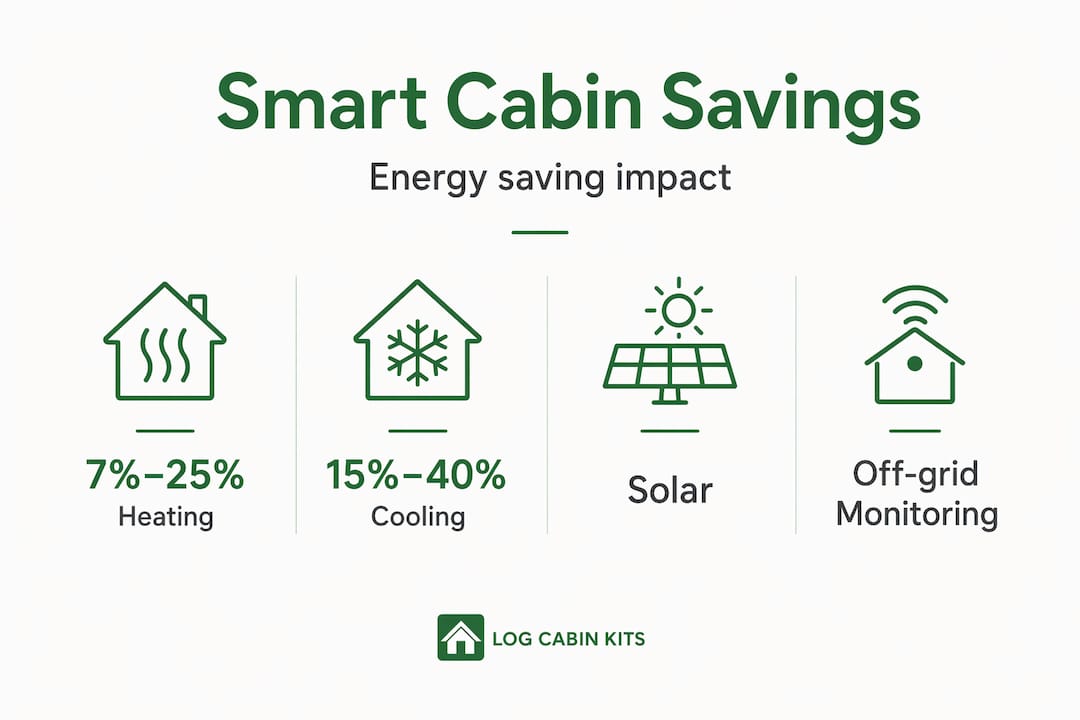
A smart thermostat adjusts heating based on when you actually use the space. The numbers speak for themselves.
| Smart tech type | Energy saving potential |
|---|---|
| Smart thermostat (heating) | 7%–25% reduction in energy use |
| Smart thermostat (cooling) | 15%–40% reduction in energy use |
| Automated lighting | Reduces unnecessary electricity from forgotten lights |
| Solar with battery storage | Covers much of daily cabin energy needs |
For off-grid setups or simply reducing your energy bills, solar is worth serious consideration. Off-grid cabins typically use 1.5 to 3kW of rooftop solar panels paired with lithium-ion batteries. That’s enough to cover lighting, charging, and modest appliances without drawing from the mains at all. You can read more about this in Logcabinkits’ guide to solar power for UK cabins.
Smart weather stations are another underrated addition. They monitor temperature, humidity, and rainfall in real time. Sensor data adjusts irrigation automatically based on actual conditions, which means your garden gets exactly the water it needs without waste. It’s one of those things that reduces maintenance without overcomplicating the space at all.
Pro Tip: Schedule your cabin’s heating to warm up 30 minutes before you plan to use it. Most smart thermostat apps let you set this up in a couple of minutes, and it means the cabin is always ready without running all day.
If you want a deeper look at heating choices, the Logcabinkits guide to energy-efficient cabin heating is a great next step.
Security and remote access
Security is one area where smart technology earns its place immediately. Whether your cabin is at the bottom of a long garden, used as a rental, or simply contains equipment worth protecting, smart locks and cameras give you proper control.
Here’s what a practical smart security setup looks like:
- Smart locks. These replace your standard key with digital codes. You can set time-restricted access codes per guest, revoke access remotely, and never worry about lost keys again. Look for retrofit kits that replace only the inner half of the lock, so the external appearance stays completely unchanged.
- Security cameras. A camera with smartphone alerts tells you the moment someone approaches the cabin. You can check the live feed from anywhere. This is especially useful for cabins used as rental or holiday lets.
- Motion and door sensors. These send instant alerts if a door or window opens unexpectedly. They’re inexpensive, wireless, and easy to install.
- Smoke and carbon monoxide alarms. Smart versions notify you on your phone even when you’re not at home, which is particularly useful for a cabin with a log burner or electric heater.
Remote control is genuinely the standout benefit of cabin smart security. Whether you’re at work or on holiday, you know exactly what’s happening. For more detail on protecting your cabin, take a look at the Logcabinkits guide to securing your garden cabin and their advice on installing CCTV in a cabin.
Entertainment, connectivity, and automation
Once the practical side of smart tech is sorted, the enjoyable part begins. Turning your cabin into a comfortable, automated retreat doesn’t take much.
Voice-activated lighting lets you adjust the mood without getting up. Smart blinds open and close on a schedule or at a voice command. A good wireless speaker system fills the cabin with sound without a single cable on show. These are the kinds of details that make a garden cabin feel genuinely luxurious rather than just functional.
Automation is where things get clever. You can set a scene called “morning” that turns the heating on, raises the blinds, and starts the coffee machine all at once. Or a “leaving” scene that turns everything off and locks the door. For people renting their cabins out, a no-code AI assistant can handle a surprisingly large share of guest queries automatically, freeing up your time considerably. In practice, AI can manage around 90% of guest questions without any input from you.
The Logcabinkits guide to multi-room garden cabins covers how smart features work across different room configurations if you’re thinking bigger.
My honest take on smart tech in cabins
I’ve spoken with a lot of cabin owners who went in expecting smart technology to be transformative and came out feeling like they’d wasted money on gadgets that created more hassle than they solved. Almost every time, the issue was the same. They tried to do too much at once.
What I’ve found actually works is starting with one problem. Is the cabin cold when you arrive? Get a smart thermostat. Are you unsure who’s been in there? Start with a smart lock. That single upgrade, done well, will show you exactly how useful smart tech can be without overwhelming you.
The restraint point matters more in log cabins than anywhere else. The character of a bespoke timber building is genuinely worth protecting. Blending smart tech with log cabin charm requires intentionality. Every device should earn its place by solving a real, specific problem.
My personal shortlist for features that genuinely add value: smart thermostat, smart lock, one quality wireless speaker, and automated lighting. That’s it. Everything else is optional, and most of it can wait until you know how you actually use the space.
The biggest mistake I see is people wiring up a cabin with tech before they’ve even spent a winter in it. Use it first. Then upgrade with purpose.
— Martin
Ready to build a cabin that’s made for smart tech?
If you’re planning a garden cabin with smart technology in mind from the start, a bespoke build makes the whole process far easier. Off-the-shelf cabins often need workarounds for cabling, insulation, and connectivity. A custom-built garden log cabin from Logcabinkits can be designed with smart integration in mind, so the space works the way you actually want it to.
Logcabinkits specialises in bespoke and custom build cabins that give you the flexibility to add insulation, power points, and connectivity exactly where you need them. Browse the full range of garden log cabins or get in touch to discuss a build tailored to your plans.
FAQ
Can smart technology work in a log cabin?
Yes. Most modern smart devices are wireless and work well in log cabins. Using a wireless repeater helps extend Wi-Fi coverage through thick timber walls without any drilling required.
What smart home features work best in garden cabins?
Smart thermostats, smart locks, and automated lighting offer the best return for most cabin owners. They improve comfort, security, and energy efficiency with minimal setup.
Will smart tech affect my cabin’s appearance?
Not if you choose wireless devices and use hidden smart plugs. Retrofit smart lock kits replace only the inner mechanism, leaving the external door hardware completely unchanged.
How much can I save with a smart thermostat in a garden cabin?
Smart thermostats can reduce heating energy use by 7%–25% and cooling by 15%–40%, depending on usage patterns and the existing setup.
Do I need to rewire my cabin to add smart technology?
No. The majority of smart home upgrades use Wi-Fi, Bluetooth, or Zigbee and require no new wiring at all. A few smart plugs and a wireless repeater are often all you need to get started.