
Treat Within 7 Days to Protect Your Log Cabin Lifespan in the UK
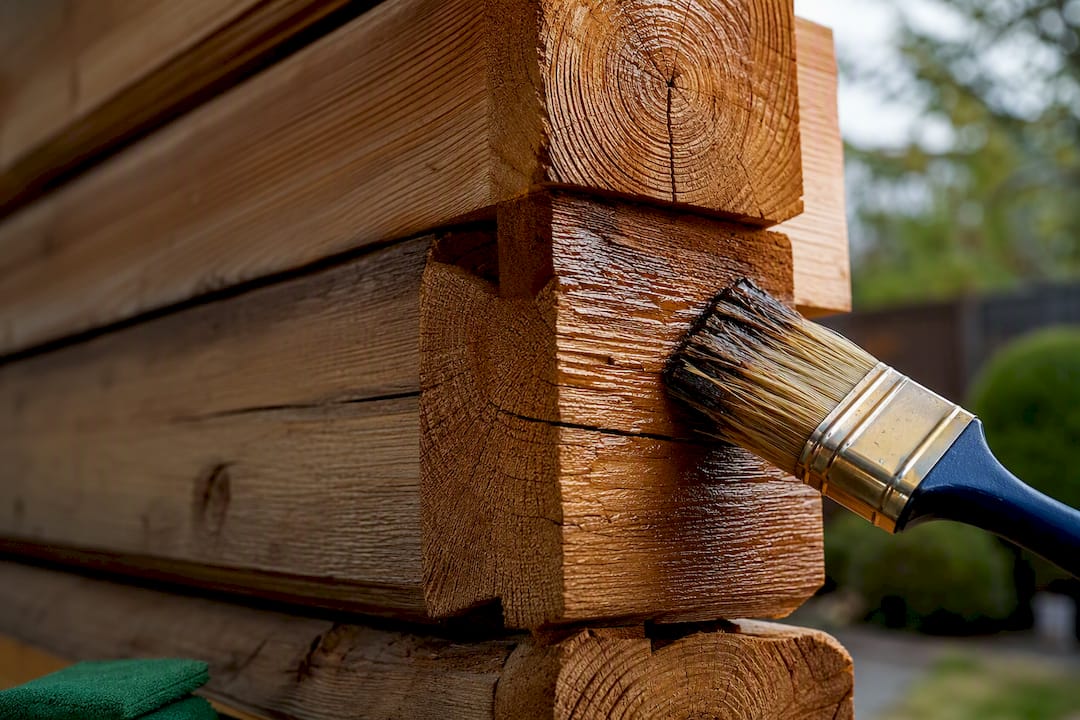
With poor care a cabin can struggle after under a decade; with regular treatment, many cabins last for several decades, and a well-built one can outlast that easily. The two things that decide which end you land on are build quality and how quickly you treat it after installation. Get both right and everything else in this guide, from the maintenance calendar to the warning signs, becomes easy to follow.
TL;DR:
- The longevity of a log cabin heavily depends on build quality, timber thickness, and consistent maintenance, with well-made and treated cabins lasting several decades or more.
- UK climate conditions, with frequent wet cycles, require thorough treatment of both external and internal timber to prevent early decay and extend lifespan.
- Proper installation, joint sealing, and avoiding overlooked moisture entry points like joint overlaps and log ends are crucial for preventing moisture ingress.
- Regular inspections and maintenance—such as applying protective coats, clearing vegetation, and checking for damage—are essential to catch issues early and prolong the cabin’s life.
- Investing in bespoke cabins with thicker walls, factory finishes, and tailored design features can significantly reduce maintenance needs and increase durability over time.
Table of Contents
- How long does a log cabin actually last?
- What factors determine a log cabin’s lifespan?
- When should you treat and maintain your log cabin?
- What signs mean your cabin needs repair?
- How can you extend your log cabin’s lifespan?
- Why building quality matters more than most guides admit
- Build in durability from the start with a bespoke cabin
- Where this guidance comes from
- Sources
- FAQ
How long does a log cabin actually last?
Most garden log cabinss fall into one of three bands, and the gap between them comes down to choices you make, not luck.
- Short lifespan (under about a decade): happens when timber is left untreated, joints are never sealed, or the cabin sits in constant shade with poor drainage.
- Typical lifespan (several decades): the range for a well-built cabin that gets treated on schedule and checked once or twice a year.
- Long lifespan (many decades or more): achievable with quality timber, a solid foundation, and consistent maintenance. Some historic log structures have stood for well over a century, though those buildings were built with thicker, often hand-hewn timber and different construction methods than a modern garden cabin.
The spread exists because timber is a living material that responds to moisture. It swells, shrinks, and moves with the seasons, and that movement is exactly what wears out joints, seals, and coatings over time.
Statistic Callout: UK weather is one of the biggest variables in this equation. Rainfall and the number of wet days across the year mean timber here goes through far more wetting and drying cycles than in drier climates, which is why UK climate patterns put extra strain on log cabins compared with buildings in more stable conditions. That’s not a reason to worry. It’s a reason to treat both faces of the timber, not just the outside.
What factors determine a log cabin’s lifespan?
Some of these you decide before you even order a cabin. Others are ongoing jobs. Either way, each one moves the needle.
- Timber species and drying method. Kiln-dried timber holds its shape better than green timber, which is still losing moisture and shrinking after it’s installed.
- Log thickness. Thicker logs weather more slowly and resist warping better, simply because there’s more material for moisture to work through.
- Foundation. A cabin sitting on a damp, uneven base will suffer long before the timber itself would otherwise fail.
- Roof pitch and overhang. A generous overhang throws rain clear of the walls; a shallow one lets water run straight down the timber face.
- Site and exposure. South-facing walls fade faster under UV, while walls facing prevailing wind and rain take the brunt of the weather. Splashback from nearby soil or planting beds is an often-overlooked source of damp at the base of the walls.
- Initial preservative and coat count. More protective coats mean a longer gap before the timber is exposed again.
- Ventilation. Poor airflow inside the cabin raises humidity and encourages decay from the inside out, which is just as damaging as rain from the outside.
Installation matters more than people expect too. Logs need to be jointed correctly and allowed to settle, and doors and windows often need adjusting once that settling happens. Our DIY installation pointers cover exactly where that settling tends to cause problems.
Pro Tip: Treating the overlap joints and exposed log ends is often skipped, but it’s one of the most effective ways to reduce moisture ingress, since these are the points where water finds its way in first.
When should you treat and maintain your log cabin?
Timing matters more than people realise, and missing an early deadline can affect your warranty as well as the timber itself.
- Within 7 days of installation: apply a preservative treatment. This is usually a warranty condition, not just good practice.
- Within 14 days of installation: apply your weatherproofing finish, typically three coats, or one colour coat plus two protective coats.
- Every spring: check for seal failures, soft or rot-prone spots, and clear any vegetation or debris that’s built up against the walls over winter.
- Once a year: inspect the roof and gutters for blockages or damage before the wetter months arrive.
- Every 3 to 5 years: plan a maintenance recoat, though watch for signs sooner on exposed or south-facing walls.
Beyond the calendar, a few tasks are easy to forget but worth doing properly:
- Treat the underside of floorboards and the topside of roofboards where you can reach them.
- Don’t skip joint overlaps or door and window seals, these are the main entry points for moisture, so proper exterior sealing is essential to protect your cabin.
- Never apply silicone before your finishing treatments are done. It stops the timber breathing and can trap moisture underneath.
What signs mean your cabin needs repair?
Not every problem means starting again. Most issues fall into one of two camps: something you can fix, or something that signals a bigger decline.
Watch for these warning signs:
- Soft or spongy timber when you press it, especially near the base of the walls.
- Flaking or delaminating logs, where the surface layer starts to separate.
- Persistent damp patches that don’t dry out even with decent ventilation.
- Mould that keeps returning despite regular airing.
- Sagging rooflines or spreading corners, which point to a structural problem, not a cosmetic one.
- Large gaps opening up between logs, or fasteners that have worked loose.
- Water no longer beading on the surface, along with widespread greying or cracking of the coating.
As a rough guide: small, localised rot or a failed seal is usually a repair job. Multiple structural failures, or clear decline in the roof or floor, mean it’s time to weigh up whether replacement makes more sense than patching things up.
How can you extend your log cabin’s lifespan?
A short, practical routine beats an expensive one every time. Here’s what actually moves the needle:
- Right after installation: hit the treatment deadlines, seal joints properly, and re-adjust doors and windows once the timber has settled.
- Spring: do a full inspection, looking for anything that moved or failed over winter.
- Summer: wash down the walls and clean off algae or grime before it takes hold.
- Autumn: clear gutters and check the roof before the wet season sets in.
- Winter: keep an eye on drainage and make sure snow or standing water isn’t sitting against the base.
A few low-cost site improvements make a real difference too: a gravel apron around the base keeps splashback off the walls, better drainage stops water pooling nearby, and keeping plants trimmed back gives the timber room to dry out properly.
Pro Tip: Bring in a specialist for a proper inspection every three to five years, even if nothing looks wrong. Small problems are far cheaper to fix before they become structural ones.
Why building quality matters more than most guides admit
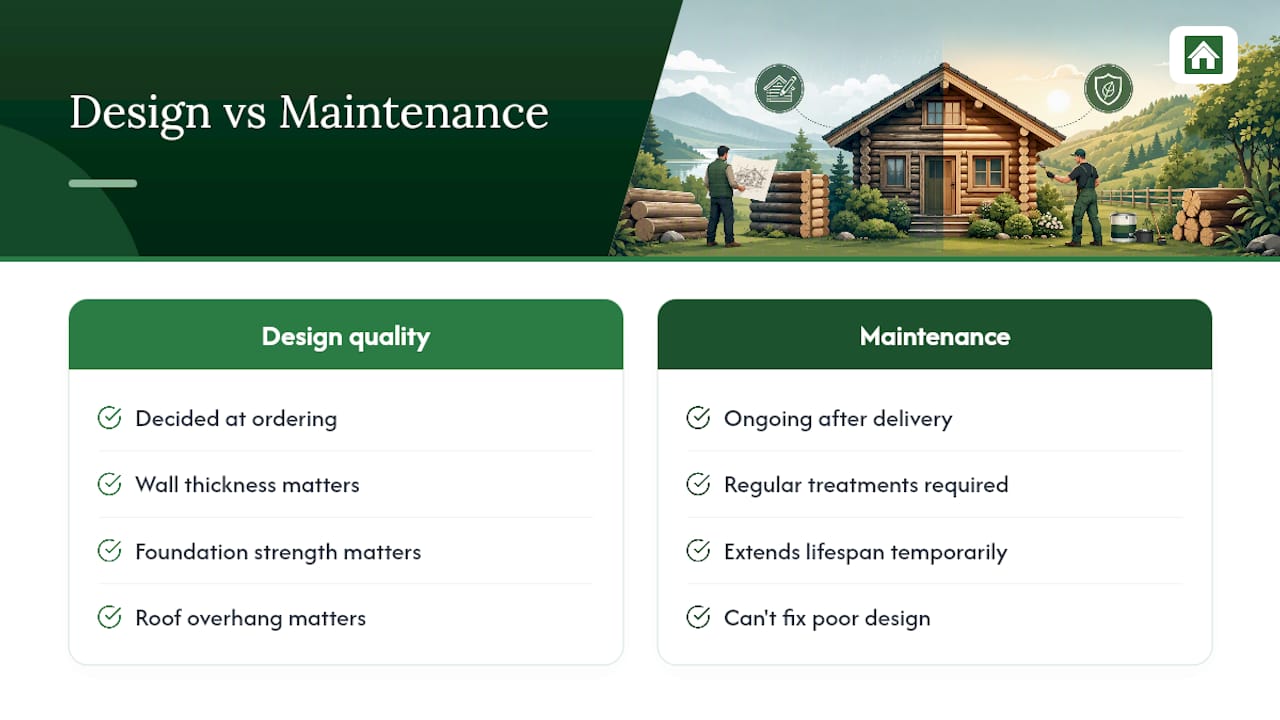
Martin here. Most advice on log cabin lifespan focuses almost entirely on maintenance, as if any cabin will last decades provided you treat it on schedule. That’s only half the story. A cabin built with thin walls, a poor foundation, or a shallow roof overhang is fighting an uphill battle no matter how diligently you maintain it. Maintenance buys you time. It doesn’t fix a design that was working against you from day one.
What gets underestimated is how much control a buyer actually has before the cabin even arrives. Wall thickness, roof design, and finish quality are decided at the ordering stage, not the maintenance stage. If you’re serious about longevity, the selection wizard is worth using properly rather than skipping to the cheapest option on a category page.
— Martin
Build in durability from the start with a bespoke cabin
You can’t fully control the British weather, but you can control what your cabin is built from and how it’s finished before it ever reaches your garden. That’s the real advantage of going bespoke rather than settling for a basic kit: thicker wall options, factory-applied finishes, and double glazing all reduce the maintenance burden before you’ve applied a single coat yourself.

If you’re comparing options, our range of garden log cabins includes thicker wall specifications built for the kind of exposure UK gardens see all year round. For a cabin shaped around your specific site, roof overhang, and finish preferences, our bespoke cabin design service lets you make those durability decisions upfront rather than retrofitting them later. Not sure which specification suits your garden? The cabin selection wizard will point you towards a build with the wall thickness and finish that matches your site’s exposure.
Where this guidance comes from
- Log cabin aftercare and warranty document covering treatment deadlines and coat counts.
- Restain timing guidance for exterior log-home finishes.
- Logcabinkits treatment and UK climate guides for practical steps.
Sources
- Log cabin aftercare — product document (May 2025)
- When to restain a log home: signs, timeline, and next steps
FAQ
Can you live in a log cabin permanently?
Standard garden log cabinss are built for garden use, not full-time residential living, and permanent habitation usually requires meeting separate building regulations. Check with your local council before treating any garden cabin as a permanent home.
Do log cabins get damp?
Yes, if moisture isn’t managed. Poor ventilation, missed treatment deadlines, or splashback from nearby soil are the most common causes, and treating internal surfaces alongside external ones significantly reduces the risk.
Do log cabins add value to your house?
A well-built, well-maintained cabin can add usable space and kerb appeal, though the exact value impact depends on build quality, condition, and local buyer demand. A cabin showing signs of rot or neglect is more likely to be seen as a liability than an asset.
How long does it take for a log cabin to rot?
Untreated timber left exposed to UK weather can start showing rot within a few years, sometimes sooner in damp, shaded spots. Cabins treated within the recommended deadlines and maintained on a 3 to 5 year recoat cycle can avoid rot entirely for decades.