
How log cabins resist weather: science and protection
TL;DR:
- Modern, well-maintained log cabins are highly resilient to UK weather due to their thermal mass and cellular wood structure, which help regulate temperature and reduce energy use. Proper weatherproofing through flexible, breathable sealants and consistent moisture management are crucial to prevent rot, mold, and water ingress. Regular maintenance, including inspecting sealants and roof integrity, ensures long-lasting performance, making log cabins a practical year-round outdoor space.
Most people assume that a wooden building is a weather risk. It’s an easy conclusion to reach, especially in the UK, where rain, frost, and damp seem to feature on the forecast about 300 days a year. But here’s the thing: that assumption is largely wrong. Modern log cabins, built and maintained correctly, are genuinely impressive performers in all four seasons. The science behind their resilience involves thermal mass, cellular wood structure, advanced sealants, and smart moisture management. By the time you’ve read through this, you’ll see exactly why so many UK homeowners are choosing log cabins for serious, year-round outdoor living.
Table of Contents
- The science of wood: why logs handle weather
- Sealing out the elements: essential weatherproofing
- Moisture management: keeping rot and mould at bay
- Energy efficiency and comfort: more than just protection
- What most guides miss about log cabins’ weather resistance
- Start your weatherproof log cabin journey
- Frequently asked questions
Key Takeaways
| Point | Details |
|---|---|
| Thermal mass advantage | Logs absorb and release heat to keep cabins comfortable and energy bills low. |
| Breathable weatherproofing | Flexible, modern sealants shield against wind and rain while letting moisture escape. |
| Moisture is the enemy | Keeping logs below 19% moisture and sealing end grain prevents rot and mould. |
| Regular upkeep vital | Routine inspections and timely sealing are essential for lasting weather resistance. |
The science of wood: why logs handle weather
Wood is not the fragile material most people picture. Solid logs, in particular, have a set of physical properties that make them surprisingly capable in Britain’s changeable climate.
The key concept here is thermal mass. This refers to a material’s ability to absorb heat, store it, and release it gradually. Solid log walls absorb heat during the day and release it slowly at night, which keeps indoor temperatures steady without constantly running a heater. That’s a big deal for comfort and running costs alike.
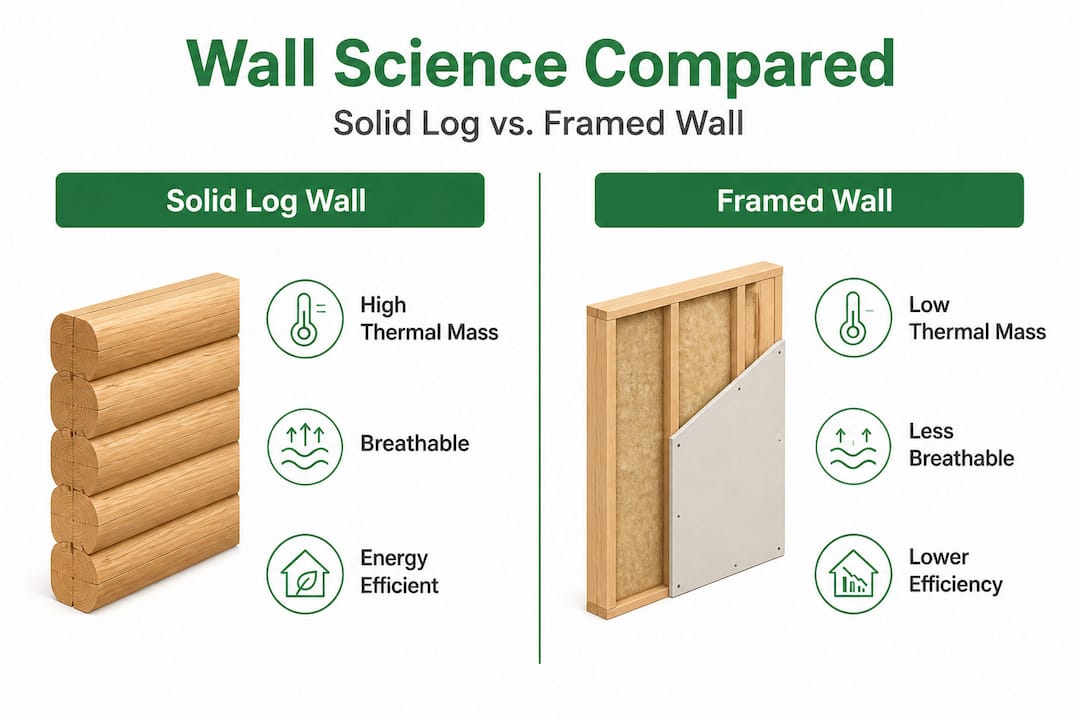
You might be wondering how this compares to a standard framed garden room or a brick extension. The data is quite striking. A study by the National Bureau of Standards found that 7-inch log walls used 46% less heating energy in spring and 24% less cooling energy in summer compared to R-12 framed walls. And that was despite the log walls having a lower R-value (a rating for insulation resistance) on paper.
“The thermal mass effect means that raw R-value figures don’t tell the whole story for log cabins. Real-world performance regularly outpaces what the numbers suggest.”
This is why log cabin energy efficiency is one of the most misunderstood topics in the outdoor building world. People focus on insulation ratings and miss the bigger picture.
Beyond thermal mass, wood’s cellular structure also plays a role. Dense, dried logs have low air permeability and a natural resistance to temperature extremes when properly finished. Wood expands and contracts with moisture, yes, but this is manageable with the right build approach and a design that accounts for movement. You can explore more about thermal efficiency in log cabins if you’d like to go deeper on this.
Here’s a quick comparison to put the key properties in context:
| Property | Solid log wall | Standard framed wall |
|---|---|---|
| Thermal mass | High | Low |
| Natural breathability | Yes | Depends on materials |
| Spring heating energy use | Up to 46% less | Baseline |
| Summer cooling energy use | Up to 24% less | Baseline |
| Response to temperature swings | Gradual, stable | Rapid fluctuation |
The numbers speak for themselves. Wood is not working against you. It’s working with you, if you give it the right support.
Sealing out the elements: essential weatherproofing
Understanding wood’s natural properties is only half the story. The other half is what you put between those logs and around them to stop wind, rain, and cold from getting in.
This is where chinking and caulking come in. Both are sealant systems used to fill gaps between logs, but they work differently.
Flexible, breathable sealants such as urethane-based products seal the gaps created by log movement without cracking or trapping moisture. This is critical. Logs move. They shrink and swell slightly with the seasons. A rigid sealant will crack as the wood shifts, letting water straight in. A flexible one moves with the log and stays intact.
Older sealants, including some silicone-based products, don’t bond well to wood and can actually seal moisture inside the log rather than letting it escape. That’s a recipe for rot.
Here’s a straightforward weatherproofing checklist for UK log cabin owners:
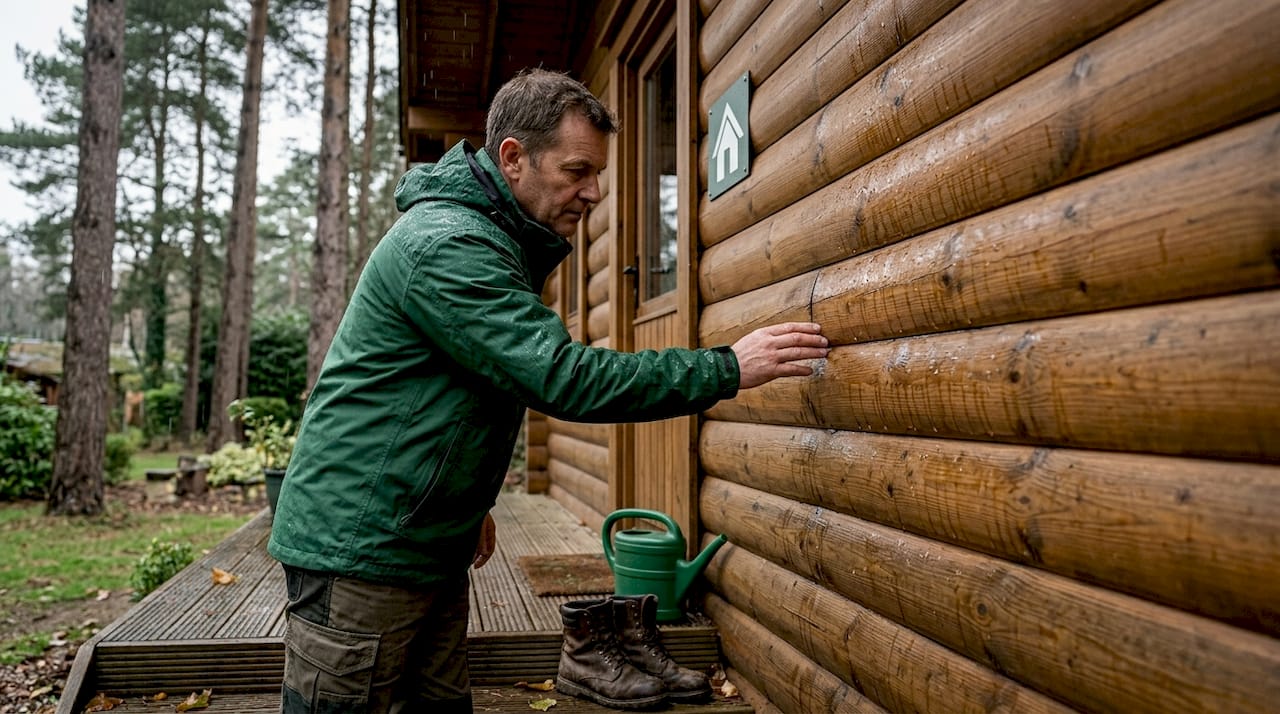
- Inspect all chinking and caulking annually, ideally before the autumn rains set in. Look for cracks, gaps, or areas where the sealant has pulled away from the wood.
- Apply a breathable wood preservative or stain every two to three years, depending on exposure. South-facing walls take more UV punishment and may need attention sooner.
- Check window and door frames for gaps where sealant may have failed. These are common entry points for water.
- Clear gutters and downpipes so that rainwater is directed away from the cabin walls and foundation. Pooling water at the base is one of the most common causes of early rot.
- Re-apply sealant to any newly cut or exposed wood promptly, especially after repairs or modifications.
- Examine the roof covering and flashing after any severe weather event. Even a small gap around a flashing joint can allow significant water ingress over time.
For more guidance on protecting your cabin from the elements, have a look at waterproofing your log cabin and our detailed advice on how to weatherproof a log cabin.
Pro Tip: Pay particular attention to upward-facing checks (natural cracks that form along the top of a log as it dries). These collect rainwater directly and are a prime spot for moisture to enter. Sealing them with a flexible, water-resistant compound is one of the highest-impact maintenance jobs you can do.
Moisture management: keeping rot and mould at bay
Weatherproofing deals with what comes from outside. Moisture management deals with what happens within the wood itself. Get this right and your cabin will last for generations. Get it wrong and the problems compound quickly.
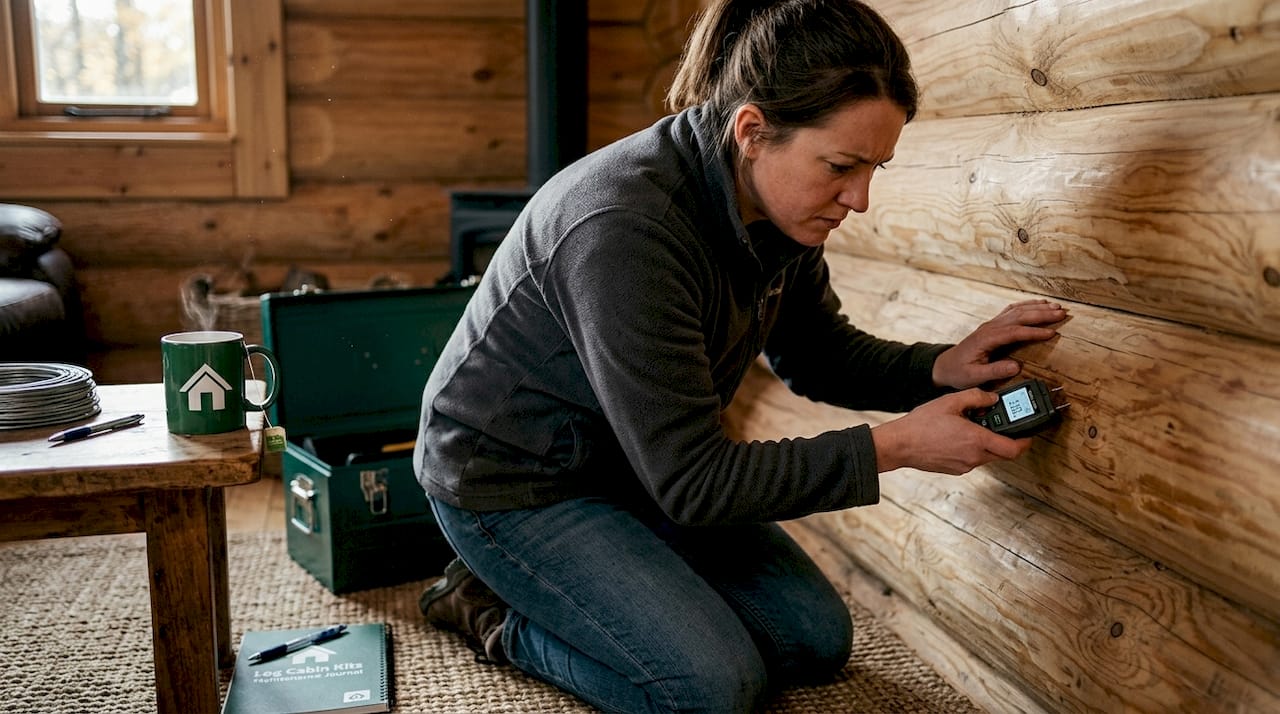
Logs must stay below 15 to 19% moisture content to avoid rot and mould taking hold. Above that threshold, you’re providing the conditions that fungi and bacteria need to break down wood fibre. And here’s the detail most people miss: up to 80 to 90% of moisture exchange in a log happens through the end grain, the cut ends of the timber. Sealing these areas properly, particularly during construction and after any cutting work, is absolutely essential.
| Moisture level | Condition | Risk |
|---|---|---|
| Below 15% | Dry, stable | Very low risk of rot or mould |
| 15 to 19% | Borderline | Monitor closely, improve ventilation |
| 20% and above | Wet | Active rot and mould risk |
| 30% and above | Saturated | Structural damage likely over time |
Keeping moisture levels in check isn’t complicated, but it does require consistency. Here are the key habits to build in:
- Ventilate well, especially if the cabin is used for storage or has limited airflow in winter. A small passive vent can make a big difference.
- Keep the cabin base dry. Ensure the structure sits on a proper foundation with a damp-proof course or similar barrier between the timber and the ground.
- Use a moisture meter to check your logs periodically, especially after a wet season. These are inexpensive and give you a clear picture of what’s happening inside the wood.
- Address any leaks immediately, no matter how minor they appear. A slow drip over a winter can push a log well above the safe moisture threshold.
- Treat any new wood added during repairs with end-grain sealer before it’s fitted into place.
For more practical advice on moisture control in log cabins, we’ve put together a dedicated guide. And if you’re already dealing with existing issues, our tips on restoring your log cabin walk you through the recovery process step by step.
Energy efficiency and comfort: more than just protection
Here’s where weather resistance becomes genuinely exciting for homeowners. A well-built, properly sealed log cabin doesn’t just survive British weather. It performs better in it than many people expect, translating directly into lower energy bills and a more comfortable space.
We’ve already touched on the thermal mass advantage, but let’s put a sharper figure on it. Research shows that real-world efficiency gains of 15 to 46% are achievable in log cabins when thermal mass and sealing are properly combined, even when the headline R-value is lower than fibreglass-insulated frame construction. This is a case where the paper spec genuinely undersells the actual experience.
What does that mean in practice? A log cabin used as a home office, garden studio, or leisure room can stay comfortable through the winter with far less heating input than a standard garden room of equivalent size. In summer, it stays cooler naturally, reducing the temptation to run fans or air conditioning.
The trade-off is maintenance. Log cabins do require more regular attention than a rendered brick wall or composite cladding. But that maintenance is straightforward and, done on schedule, it’s not a burden. Think of it like servicing a car. You wouldn’t skip an oil change and then be surprised when problems appear.
Pro Tip: Build a seasonal maintenance schedule and stick to it. A quick check in spring (after frost) and again in early autumn (before rain season) is usually enough to catch any sealant issues, surface wear, or moisture concerns before they develop into real problems. This small habit can add decades to the life of your cabin. For practical checklists, our autumn log cabin maintenance tips and guidance on energy efficient heating options are worth bookmarking.
What most guides miss about log cabins’ weather resistance
We want to share something that most general guides overlook entirely: the sealant is more important than the wood.
That’s a slightly provocative thing to say, but bear with us. A high-quality log, poorly sealed with the wrong product, will develop problems within a few years. A mid-grade log, sealed correctly with the right breathable, flexible chinking, will last decades without significant issues. The wood is the foundation, but the sealant system is the shield.
Caulk versus chinking is a distinction that many new cabin owners don’t fully appreciate. Standard caulk can trap moisture inside a log, creating exactly the rot conditions you’re trying to avoid. Proper chinking is elastic, breathable, and designed to move with the wood as it responds to seasonal changes. Modern synthetic chinking products significantly outperform the historical alternatives of mud, moss, and lime mortar. Yet we still see people reaching for a tube of general-purpose silicone caulk from the hardware shop and wondering why they’ve got damp problems two winters later.
In the UK’s climate specifically, where you can experience freezing nights followed by mild, wet days within the same week, the flexibility of your sealant matters enormously. A product that can’t accommodate freeze-thaw cycles will crack, and once it cracks, water gets in.
The other area that deserves more attention is roof maintenance. Most moisture damage in log cabins doesn’t start at the walls at all. It starts at the roof, works its way into the fascia or eaves, and travels down into the top logs before anyone notices. Keeping the roof in good condition, clearing debris, checking felt and coverings annually, is arguably the single most protective thing you can do for your cabin’s long-term health.
The lesson here is simple. Don’t buy a well-built cabin and then underinvest in maintaining it. The cabin will do its part. You just need to do yours.
Start your weatherproof log cabin journey
If this article has given you confidence that a log cabin can genuinely stand up to UK weather, you’re in the right place to take the next step.

At Log Cabin Kits, we specialise in helping UK homeowners choose and build outdoor spaces that are designed to last. Whether you’re looking for a straightforward structure or something completely tailored to your garden and lifestyle, we’ve got you covered. Browse our range of garden log cabins to get a feel for what’s available, explore our bespoke log cabin designs for something truly personal, or take a look at our custom build log cabins if you have a specific vision in mind. We’re here to make the process easy and enjoyable, from first browse to final build.
Frequently asked questions
How do log cabins cope with heavy UK rainfall?
With correct end-grain sealing and breathable chinking, modern log cabins are highly resistant to rain penetration. Keeping moisture content below 19% is the key to preventing rot and water damage over time.
What is thermal mass and why does it matter for log cabins?
Thermal mass is the ability of a material to absorb, store, and slowly release heat. Solid log walls stabilise indoor temperatures naturally, which reduces energy use and keeps your cabin comfortable through seasonal temperature swings.
Do log cabins need more maintenance than brick homes?
Yes, regular sealing and moisture checks are part of owning a log cabin. But 15 to 46% real-world energy savings are achievable with proper upkeep, making the effort well worthwhile compared to lower-performing alternatives.
Are all sealants suitable for log cabins in the UK?
No. Breathable, flexible sealants are essential for log cabins. Avoid silicone caulk, which can trap moisture inside logs and cause damage, particularly in the UK’s freeze-thaw conditions.
Recommended
- How To Weatherproof A Log Cabin: Extend Life By 15 Years
- Log Cabin In Exposed Areas - Log Cabin Kits To Buy Online
- Weatherproof Garden Cabin Guide For A Durable Outdoor Retreat
- How To Keep Your Log Cabin Warm This Winter - Log Cabin Kits To Buy Online
- Understanding the Benefits of a House with Insulation – WorkWearComfort