
Acoustic glazing garden office: is it worth the upgrade?
If your garden office sits near a busy road, a railway line, or a noisy neighbour, acoustic glazing is usually worth the extra cost. If you’re building somewhere quiet and just want a peaceful desk space, good quality standard double glazing with proper seals will do the job. That’s the short answer.
Here’s why. Standard double glazing typically gives you an Rw rating of around 30 dB, while acoustic glazing units regularly hit 40 dB or more. That gap sounds small on paper, but the decibel scale doesn’t work in a straight line, so it feels like a huge difference once you’re sat at your desk during rush hour.
- Traffic, rail or aircraft noise → acoustic glazing is worth it
- Occasional video calls in a quiet garden → standard double glazing is usually fine
- Music practice or band rehearsal → acoustic glazing helps, but it won’t solve everything alone
- Best time to decide → at build stage, not after the cabin is finished
If you think you’ll need it, ask for laminated acoustic units with lab-tested Rw data and bring your installer into the conversation early. Retrofitting glazing later almost always costs more and performs worse.
Key Takeaways
Acoustic glazing is worth specifying when a garden office faces traffic, rail, or regular music noise, and it performs best when built in from the start rather than retrofitted.
| Point | Details |
|---|---|
| Check your noise source | Acoustic glazing suits traffic, rail, or music noise; standard double glazing suits quiet gardens. |
| Know the Rw numbers | Standard double glazing gives around 30 dB, while good acoustic units reach 40 dB or more. |
| Specify at build stage | Integrating acoustic glazing during design is cheaper and more effective than retrofitting later. |
| Ask for lab data | Request the manufacturer’s Rw test report, not just a marketing figure, before ordering. |
| Go bespoke for heavier units | Logcabinkits can adjust frames and window layouts on bespoke garden log cabins to suit acoustic glazing. |
Table of Contents
- What is acoustic glazing garden office glass made from?
- What does an Rw rating actually mean for your workspace?
- Double glazing vs triple glazing vs acoustic glazing
- How to specify acoustic glazing for a garden office
- Retrofit vs integrated design: why timing matters
- What does acoustic glazing cost compared to standard options?
- When should you actually choose acoustic glazing?
- How do you know a glazing unit will actually perform?
- Building acoustic glazing into a bespoke garden cabin
- Frequently asked questions
- Sources
What is acoustic glazing garden office glass made from?
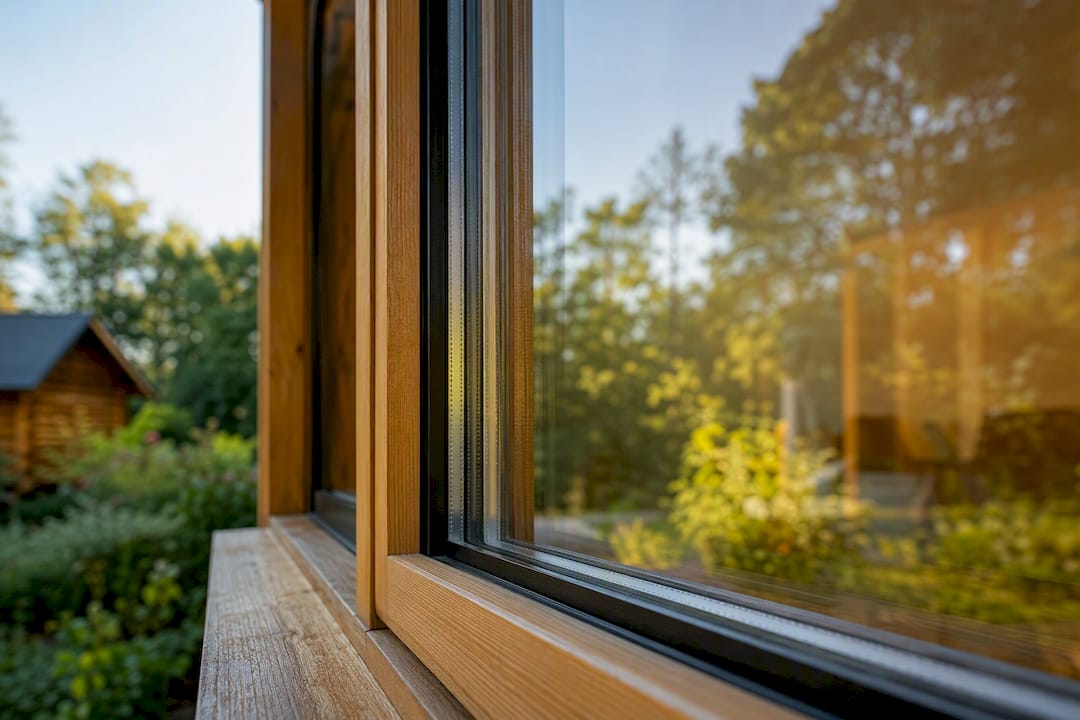
Acoustic glazing looks like ordinary double glazing from the outside, but the way it’s built is quite different. Instead of two plain panes of glass, one or both panes are laminated. That means two thin sheets of glass are bonded together with a soft plastic layer in the middle, usually acoustic PVB or a newer interlayer such as SAF or ESCL. This layer acts like a shock absorber. Sound waves make glass vibrate, and the interlayer damps that vibration before it can pass through to the other side.
Thickness matters too. Manufacturers often pair two panes of different thicknesses rather than matching ones. This is called asymmetry, and it stops both panes vibrating at the same frequency, which would otherwise create a weak spot where sound sails straight through.
The gap between the panes plays its part as well. A wider cavity, filled with air or an inert gas, generally improves performance against low, rumbling noise like traffic or trains.
You’ll see brands like Trosifol mentioned as an example of acoustic PVB technology, and products such as Guardian LamiGlass® as an example of laminated acoustic glass on the market. Think of these as illustrations of the category rather than a shortlist you need to chase down yourself.
What does an Rw rating actually mean for your workspace?
Rw and STC are the two numbers you’ll see quoted most often on a glazing spec sheet. They’re both single-figure ratings, worked out in a lab, that summarise how much sound a piece of glazing blocks across a range of frequencies. Higher is better, but because the scale is logarithmic, small jumps make a big practical difference.
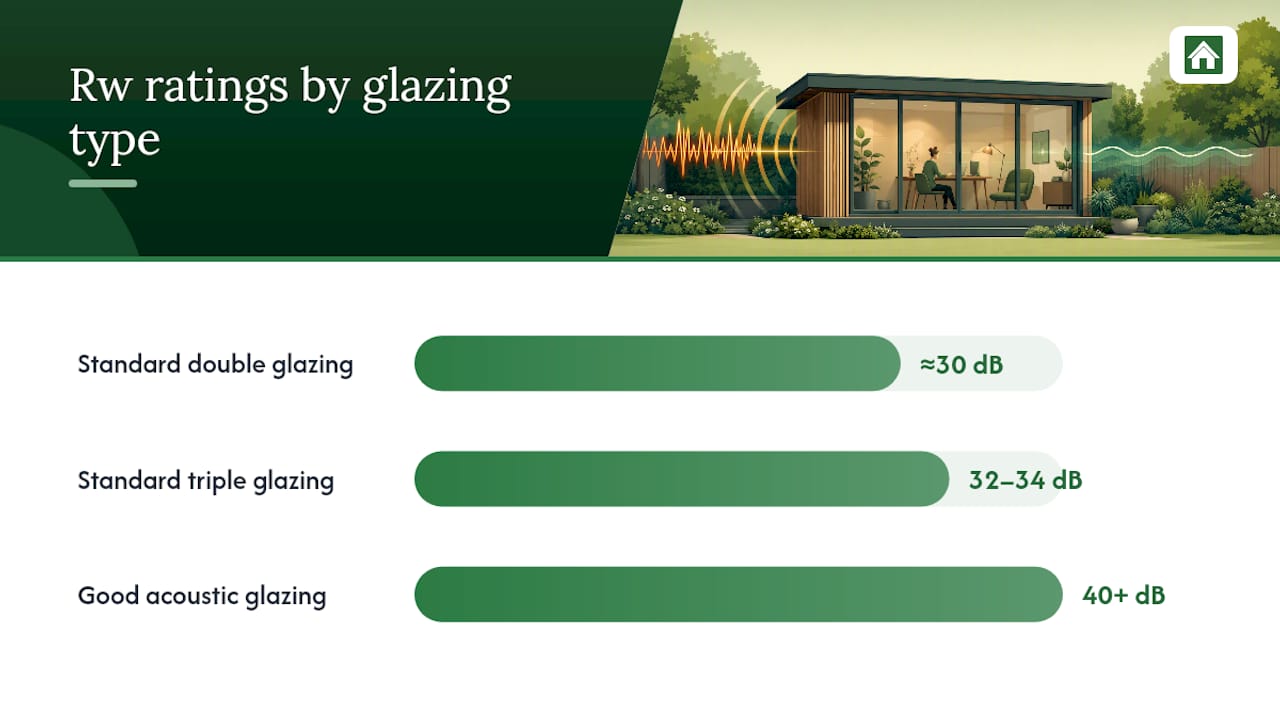
Standard double glazing: around 30 dB Rw. Good acoustic glazing: 40 dB or higher. Standard triple glazing: often only 32 to 34 dB unless it’s specifically laminated for acoustics.
That last point catches a lot of people out. Triple glazing is brilliant for keeping heat in, but adding a third pane of ordinary glass doesn’t automatically make it quieter.
Low frequencies, the deep drone of a lorry or a passing train, are the hardest to block. They need the asymmetric pane pairing and wider cavity mentioned earlier. It’s also worth remembering that lab figures are measured under controlled conditions. Real-world performance depends just as much on the frame, the seals and how well the unit is fitted as it does on the glass itself.
Double glazing vs triple glazing vs acoustic glazing
Choosing between these three options comes down to what you’re trying to solve: noise, heat loss, or both. Here’s how they stack up on the things that matter for a garden office.
| Factor | Standard double glazing | Standard triple glazing | Acoustic glazing |
|---|---|---|---|
| Noise reduction (Rw) | ~30 dB | ~32 to 34 dB | 40 dB or more |
| Low-frequency performance | Weak | Moderate | Strong (with asymmetric panes) |
| Thermal performance | Good | Better | Good to very good |
| Weight and frame needs | Standard | Heavier, needs stronger frame | Heavier, needs stronger frame |
| Retrofit complexity | Straightforward | Moderate | More involved, best at build stage |
A few things worth knowing before you decide; learn more about the considerations in The Luxury of Glass Interior Doors.
- Acoustic double glazing often beats standard triple glazing for noise reduction, because the laminated interlayer does more work than an extra pane of ordinary glass.
- If you’re mainly worried about heat loss and general comfort, our guide to how double glazing boosts comfort in garden offices is a good place to start.
- For music practice or frequent client calls, acoustic triple glazing (triple glazing with a laminated acoustic pane) is a sensible middle ground.
- Whatever glazing you choose, it only performs as well as the frame, seals and ventilation around it.
How to specify acoustic glazing for a garden office
Ordering acoustic glazing isn’t like picking a colour from a swatch. You need to be specific, or you risk paying acoustic prices for standard performance. Here’s what to ask for.
- Interlayer type – confirm whether the unit uses acoustic PVB, SAF or ESCL, and ask for the manufacturer’s technical note.
- Asymmetric pane thicknesses – request different thicknesses on each pane, not matching ones.
- Cavity width – a wider air gap generally helps with low-frequency noise; ask what width is being quoted.
- Lab Rw data – get the actual test report, not just a marketing figure.
- Unit weight and frame compatibility – acoustic units are heavier, so confirm your frame can take the load.
- Seals and installation – insist on compression seals, acoustic perimeter seals and proper sill treatment.
- Ventilation planning – check trickle vents or air paths won’t undo the acoustic benefit.
Pro Tip: Don’t specify the glazing in isolation. Talk to your installer about the wall build-up, roof insulation and door choice at the same time, since a great window next to a flimsy door won’t get you far. Our glazing options page shows what’s compatible with our cabin frames.
Retrofit vs integrated design: why timing matters
Fitting acoustic measures while a cabin is being designed is nearly always cheaper and more effective than adding them afterwards. Once walls and frames are finished, you lose easy access to the cavity, and heavier acoustic units may not suit the frame that’s already in place. Building it in from the start also avoids the extra internal linings that eat into your floor space later.
Pro Tip: If retrofitting is your only option, start with seals and secondary glazing before considering anything structural. Our guide on soundproofing a garden cabin step by step covers exactly this order of priority.
What does acoustic glazing cost compared to standard options?
Budgets vary by supplier and size, but as a rough guide, acoustic glazing sits noticeably above standard double glazing on a per-window basis, with acoustic triple units at the top of the range. Costs climb mainly because of the laminated interlayer itself, wider cavities that need bigger frame sections, and any bespoke frame reinforcement needed to carry the extra weight.
A few companion costs are easy to forget when budgeting:
- Upgraded or heavier doors to match the glazing performance
- Acoustic perimeter seals around the whole frame
- Secondary glazing as a lower-cost partial upgrade
- Ventilation adjustments so trickle vents don’t undo your hard work
Our page on why customers choose double glazed cabins is a useful starting point for comparing baseline pricing before adding acoustic upgrades.
When should you actually choose acoustic glazing?
Quiet desk work in a suburban garden: standard double glazing with good seals is usually enough.
Busy road or railway nearby: acoustic laminated units with asymmetric panes and a wider cavity are the sensible choice.
Regular music or band practice: acoustic glazing helps, but a full room-within-room approach handles the rest, so treat glazing as one part of the plan.
Occasional recording or mixed-use room: acoustic double glazing paired with internal treatments like Rockwool and damped plasterboard strikes a good balance.
How do you know a glazing unit will actually perform?
Ask for the paperwork before you commit. A genuine lab-tested Rw or STC report tells you far more than a sales brochure figure.
- Request the lab report – check the test conditions and whether standardised apertures were used, as detailed in technical notes on acoustic PVB.
- Check seal and frame installation on site – a perfect glazing unit fitted badly won’t hit its rated figure.
- Do an informal before/after check – a smartphone sound meter app gives a rough idea, but it’s no substitute for lab data.
Pro Tip: Ask whether the whole-system figure (frame plus glazing) is available, not just the glass on its own. That’s the number that actually reflects what you’ll hear in the room.
A few practical priorities worth remembering
Glazing gets a lot of attention, but it’s one piece of a bigger system. Walls, roof, doors, frames and ventilation all need to pull together, or your carefully specified glass won’t make the difference you’re hoping for. Bespoke cabins can take heavier acoustic units where standard frames can’t, so it’s worth discussing frame strength alongside glazing choice. Logcabinkits can talk through those adjustments as part of a bespoke design.
Building acoustic glazing into a bespoke garden cabin
Standard cabin ranges are a great starting point, but acoustic glazing often calls for stronger frames and different window layouts than an off-the-shelf spec allows. That’s exactly where a bespoke build earns its keep. Logcabinkits builds bespoke garden log cabins designed around your glazing choice from the start, rather than trying to squeeze a heavier acoustic unit into a frame that wasn’t built for it.

Whether you’re weighing up an acoustic double glazed unit for a road-facing office or need a stronger frame to carry acoustic triple glazing, our bespoke cabin design service can work through the specification with you before anything is ordered. Get in touch to talk through your glazing requirements, or use our cabin selection wizard to see which of our buildings suit your plans, then request a bespoke quote from there.
Frequently asked questions
Does acoustic glazing work with a garden office that already has standard double glazing? Yes, but replacing the units is a proper job rather than a quick swap. If a full replacement isn’t practical right now, secondary glazing or an acoustic door-seal kit can make a noticeable difference for far less cost.
Is acoustic triple glazing better than acoustic double glazing? Not necessarily. Acoustic double glazing with the right interlayer and cavity width often performs as well as, or better than, a triple unit for noise, while weighing less on the frame. Triple glazing’s real strength is heat retention rather than sound.
Will acoustic glazing alone stop noise from a garden office used for band practice? No. Glazing handles sound passing through the windows, but a room used for music practice usually needs treatment on walls, floors and ceilings too. Acoustic glazing solves part of the problem, not all of it.
How much heavier is acoustic glazing than standard glazing? It varies by unit, but the laminated pane and wider cavity add noticeable weight, which is why frame compatibility needs checking before you order. This matters more on bespoke builds than standard ranges, since frames need to be specified to match.
Sources
- Is acoustic glass effective and how does it work
- Acoustic glass (Guardian Glass)
- How to soundproof a garden room