

Blog


TL;DR:
- Proper drainage is essential to prevent rot, mould, and foundation issues in garden cabins.
- Regular inspection and maintenance of drainage systems safeguard the cabin’s longevity and comfort.
- Choosing and adapting the right drainage method depends on soil type, garden layout, and site-specific conditions.
A well-built garden cabin can still fail prematurely if the drainage beneath and around it is neglected. Many homeowners focus entirely on timber quality, roof design, and insulation, which are all important, but overlook the ground underfoot. In the UK, where rainfall is frequent and soils are often clay-heavy, poor drainage is one of the most common causes of rot, mould, and structural movement in garden cabins. The good news is that effective drainage is entirely manageable with the right approach. This guide walks you through the best solutions, how to adapt them to your specific garden, and how to keep everything working year-round.
Table of Contents
- Why garden cabins need effective drainage
- Best garden cabin drainage methods explained
- How to adapt drainage solutions for different garden types
- Maintaining your garden cabin drainage system
- Perspective: why drainage is the unsung hero of garden cabin longevity
- Next steps: discover your ideal bespoke garden cabin
- Frequently asked questions
Key Takeaways
| Point | Details |
|---|---|
| Drainage prevents damage | Proper drainage is vital for avoiding rot, mould and costly repairs in garden cabins. |
| Match methods to your soil | French drains and raised bases are best for clay-heavy UK gardens, while soakaways help in low areas. |
| Ongoing maintenance is key | Inspect and clean your drainage every quarter for year-round protection. |
| Professional advice for tough sites | Consult an expert when installing in low-lying or flood-prone gardens. |
Why garden cabins need effective drainage
Water is patient. It will find every gap, every low point, and every vulnerable timber joint if you give it the chance. For garden cabins, the consequences of poor drainage build up slowly but become very costly very quickly.
The most common problems caused by inadequate drainage include:
- Timber rot: Persistent moisture softens and decays wood from the base upwards, often starting where you can’t see it.
- Mould and mildew: Damp conditions inside a cabin make it uncomfortable and potentially unhealthy to use.
- Foundation movement: Waterlogged ground shifts and settles unevenly, causing floors to warp and walls to lean.
- Reduced cabin lifespan: A cabin that sits in poor drainage conditions can fail decades before one that’s properly protected.
In the UK specifically, the risks are amplified. Heavy and persistent rainfall, combined with clay-heavy soils that drain slowly, creates conditions where surface water pools quickly. Low-lying gardens and those surrounded by hard landscaping face even greater risk of localised flooding. Understanding moisture control in a garden log cabin is the first step to protecting your investment.
The RHS advises inspecting drainage quarterly, clearing gutters each autumn, and keeping timber moisture levels below 20% to maintain a healthy structure.
Once timber moisture rises above that 20% threshold, the conditions for rot and fungal growth are in place. Regularly monitoring moisture levels in your log cabin gives you early warning before damage becomes serious. Think of it like checking your tyre pressure. A small, regular check prevents a much bigger problem later on.
Effective drainage doesn’t just protect the cabin structure. It also improves how usable the space is. A cabin surrounded by soggy ground is unpleasant to reach in wet weather and can feel damp inside even with good insulation. Sort the drainage and you sort the comfort too.
Best garden cabin drainage methods explained
There are several proven methods for managing water around a garden cabin. The right choice depends on your soil type, garden layout, and budget. Here’s a clear breakdown.
| Method | Strengths | Weaknesses | Best for |
|---|---|---|---|
| Surface channels | Easy to install, low cost | Can block with debris | Hard-standing areas |
| French drain | Handles subsurface water well | Requires excavation | Clay soils, perimeters |
| Land drain | Good for large areas | Needs regular clearing | Sloped or open gardens |
| Soakaway | Self-contained, low maintenance | Not suitable for clay | Sandy or mixed soils |
| Sump pump | Works in very wet conditions | Requires power supply | Low-lying plots |
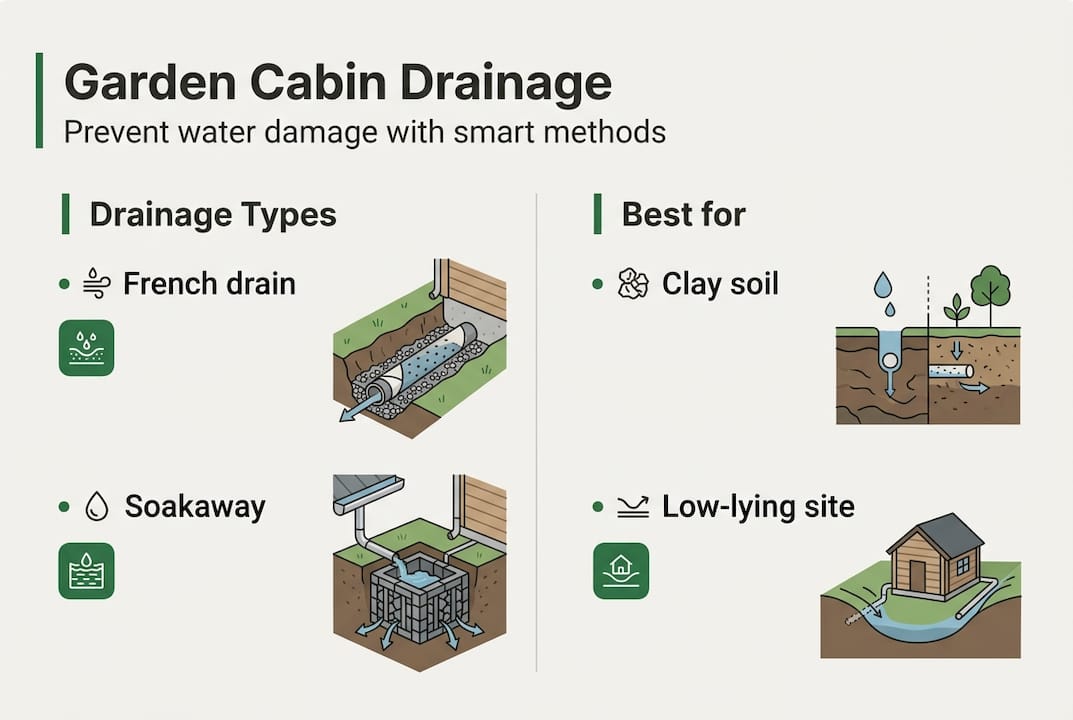
French drains and land drains effectively redirect both surface and subsurface water away from cabin perimeters, making them a reliable choice for most UK gardens. For clay-heavy UK soils, subsurface drainage like French drains is the priority over surface solutions alone.
Installing a French drain around your cabin is a straightforward project if you’re comfortable with basic groundwork. Here’s how it’s done:
- Mark the route around the perimeter of your cabin, keeping the trench about 30 to 50 centimetres away from the base.
- Dig the trench to a depth of around 60 centimetres, angling it slightly so water flows away from the cabin towards a suitable outlet.
- Line the trench with permeable geotextile fabric to stop silt from clogging the drain over time.
- Add a layer of gravel at the base, then lay a perforated pipe along the trench.
- Cover with more gravel, fold the fabric over the top, and backfill with soil.
- Direct the outlet to a soakaway, drainage ditch, or suitable discharge point.
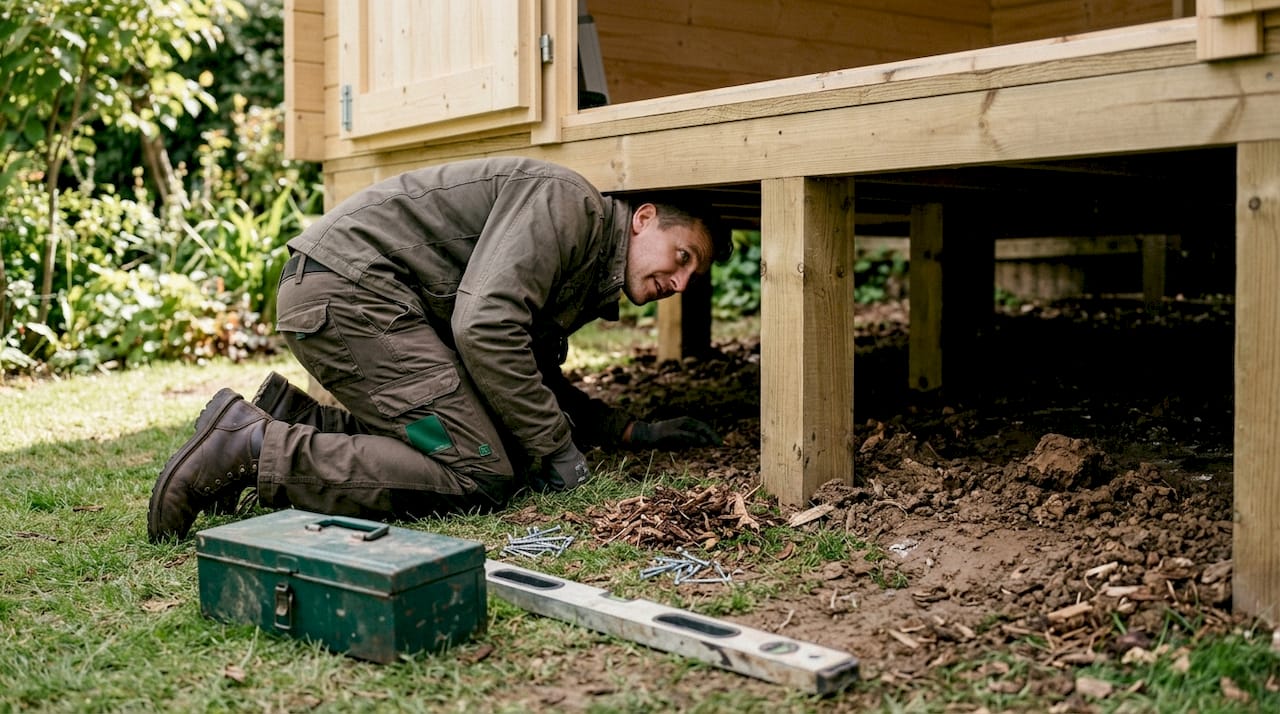
Pro Tip: On clay soils, raise your cabin base on piers or a slatted timber frame. This lifts the floor away from ground-level moisture and works brilliantly alongside a French drain to keep the structure dry. Pairing these two approaches is one of the most effective things you can do before your cabin is even installed. It also makes it easier to weatherproof your log cabin long-term. You can find more detail in our waterproof garden cabins guide.
How to adapt drainage solutions for different garden types
No two gardens are the same, and drainage solutions need to fit your specific conditions. Here’s how to match the method to your site.
| Garden condition | Recommended drainage | Notes |
|---|---|---|
| Heavy clay soil | French drain plus raised base | Avoid soakaways; clay won’t absorb |
| Sloped garden | Land drain or channel drain | Direct water downhill away from cabin |
| Low-lying plot | Sump pump or soakaway | Professional assessment recommended |
| Mixed or sandy soil | Soakaway or land drain | Good natural absorption helps |
| Hard landscaping nearby | Surface channels | Prevents runoff pooling at cabin base |
Before you choose a method, take time to assess your site properly. Walk the garden after heavy rain and note where water sits. Check whether your neighbours’ gardens are higher than yours, as this can push water onto your plot. Also consider whether your garden has flooded seasonally in the past.
Key steps for a basic site assessment:
- Check groundwater levels by digging a test hole 60 centimetres deep and observing whether water seeps in within an hour.
- Identify seasonal flooding patterns by speaking to neighbours or reviewing local flood maps.
- Note soil type by squeezing a handful of damp soil. Clay holds its shape firmly; sandy soil crumbles easily.
- Observe roof runoff to understand where water leaves the cabin roof and where it lands.
Low-lying sites require soakaways or pumps, and placing a cabin in a flood-prone area without professional assessment is a risk not worth taking. If your plot ticks more than one tricky box, such as clay soil in a low-lying area, bring in a drainage specialist before you commit to a cabin position. It’s a small cost compared to remedial work later.
For cabins with green roofs, drainage becomes even more layered. Explore green roof drainage options for specific guidance on managing water from living roofs. The RHS drainage advice is also a useful reference for understanding soil behaviour across different UK garden types.
Maintaining your garden cabin drainage system
Getting drainage right at the start is only half the job. Keeping it working well over time is what really protects your cabin for the long term.
A simple quarterly inspection routine keeps most problems at bay. Here’s what to check each time:
- Clear surface channels and gutters of leaves, moss, and debris. Autumn is the most important time for this, as falling leaves block outlets fast.
- Check French drain or land drain outlets to confirm water is still flowing freely. A blocked outlet means the drain is working against you.
- Inspect the cabin base for signs of moisture, discolouration, or soft timber. These are early indicators of a drainage problem.
- Test timber moisture levels using a handheld moisture reader. The RHS recommends keeping moisture below 20% to avoid rot and fungal growth.
- Look for animal activity near drains. Moles and rodents occasionally burrow into drain runs, causing blockages or collapses.
Common problems to watch for include silt build-up inside perforated pipes, which reduces flow over time, and surface channels that have shifted slightly and no longer slope correctly. Both are easy fixes if caught early.
Pro Tip: Tie your drainage check into your regular cabin maintenance visits. When you’re oiling or treating the timber, take ten minutes to walk the perimeter and check the drains. It becomes a habit rather than a chore, and you’ll catch issues before they grow. Read more about maintaining your garden cabin and make sure your winter prep for garden cabins includes a full drainage review before the cold sets in.
Perspective: why drainage is the unsung hero of garden cabin longevity
We’ve seen it time and again. A beautifully specified cabin, quality timber, a solid roof, double-glazed windows, and yet within a few years the base is soft and the floor is lifting. Every single time, the culprit is drainage that was never properly considered.
Modern cabin construction has come a long way. Timber treatments are better, joinery is tighter, and insulation options are excellent. But none of that protects a cabin from sitting in waterlogged ground. Water will always win eventually if you don’t manage it from the start.
From what we’ve seen in the field, the vast majority of costly cabin repairs are entirely preventable. The repairs that hurt most financially are always the ones rooted in drainage neglect, not poor build quality. That’s a striking pattern and one that rarely gets talked about openly.
Our honest advice is this: spend as much time planning your drainage as you do choosing your cabin design. Whether you’re looking at a bespoke cabin transformation or a straightforward garden room, the drainage beneath it is what determines how long it lasts and how much you enjoy it. Get that right first and everything else falls into place.
Next steps: discover your ideal bespoke garden cabin
Now that you know how to protect a cabin with proper drainage, the exciting part begins. Choosing the right cabin for your garden and your lifestyle is where we come in.

Browse our garden cabin gallery to see real-world designs and get a feel for what’s possible. Every cabin we build is designed with durability and practical site conditions in mind. If you’re ready to go further, explore our custom log cabin options or start planning with our bespoke cabin design service. We’ll help you get the drainage and the design right from day one.
Frequently asked questions
What is the best drainage solution for clay soil under a garden cabin?
A French drain combined with a raised base is most effective for clay soils, as it manages both surface and subsurface water. Clay soils need subsurface drainage rather than surface solutions alone, so don’t rely on channels or soakaways in these conditions.
How often should drainage around a garden cabin be maintained?
Inspect your drainage system every quarter and clear gutters in autumn to prevent blockages and ensure proper water flow. The RHS recommends quarterly inspections and keeping timber moisture below 20% as key maintenance benchmarks.
Do I need professional help for installing drainage under my cabin?
DIY is possible for most drains, but consult a professional if your plot is low-lying or prone to flooding. Low-lying sites require soakaways or pumps and a professional assessment before you commit to a cabin position.
Can I add better drainage to an existing garden cabin?
Yes, retrofit solutions like perimeter French drains and additional guttering can improve drainage even after the cabin is installed. French drains redirect subsurface water effectively around existing cabin perimeters with relatively straightforward groundwork.


