

Blog


TL;DR:
- Modular garden cabins are prefabricated, customizable, and made with quality building materials.
- They are assembled quickly on-site, often within days, and do not usually require planning permission.
- Cost-effective and versatile, they suit home offices, hobbies, gyms, and retreats better than traditional sheds.
Not all garden buildings are created equal. If you’ve been assuming a modular garden cabin is just a fancier shed, you’re in for a pleasant surprise. These structures are purpose-built, precision-engineered spaces that can genuinely transform how you use your garden. Whether you want a home office, a hobby room, a gym, or simply a quiet retreat, a modular cabin offers something a standard shed never could. This guide walks you through exactly what modular means, how these cabins are built, how they compare to other options, and whether one is right for your garden.
Table of Contents
- What defines a modular garden cabin?
- How modular garden cabins are built and installed
- Comparing modular cabins, annexes, and house extensions
- Who should consider a modular garden cabin?
- Our perspective: Why most people misunderstand modular garden cabins
- Take the next step: Explore bespoke garden cabins
- Frequently asked questions
Key Takeaways
| Point | Details |
|---|---|
| Modular defined | Modular garden cabins are prefabricated, highly customisable buildings assembled quickly in your garden. |
| Speed and ease | Most modular cabins take just one day to two weeks to install, saving you time and hassle compared to traditional builds. |
| Flexible uses | These cabins can be used for hobbies, workspaces, fitness, or relaxation, and often add value to your property. |
| Cost advantage | Modular cabins are generally more affordable than extensions while offering similar benefits for extra space. |
| Check your site | Before buying, always check your garden’s access, planning rules, and desired use to ensure the best outcome. |
What defines a modular garden cabin?
A modular garden cabin is a prefabricated building made from factory-built panels and components. Unlike a traditional shed that’s assembled on-site from scratch, a modular cabin arrives largely pre-made and is put together quickly once it reaches your garden. The word ‘modular’ simply means it’s constructed in sections or modules, each built to precise measurements in a controlled factory environment.
The materials used set these cabins apart straight away. Most quality modular cabins use C24-grade structural timber, which is a graded, load-bearing timber used in construction. You’ll also find mineral wool insulation (typically 70mm to 100mm thick), OSB (oriented strand board) roofing panels, and uPVC double-glazed windows and doors. These aren’t shed-grade materials. They’re proper building materials designed for comfort and longevity.
Here’s what you’d typically expect from a well-specified modular garden cabin:
- C24-grade timber frames for structural strength
- Mineral wool insulation for warmth and sound reduction
- OSB roof panels for weather resistance
- uPVC windows and doors for energy efficiency
- Bespoke sizing starting from as small as 2.1m x 2.2m
One of the biggest advantages is custom sizing. You’re not stuck with a fixed footprint. Many suppliers, including those specialising in modern production methods, can tailor dimensions to fit your specific garden layout.
It’s also worth knowing how modular cabins differ from traditional log cabins. A classic log cabin uses interlocking log construction, where horizontal logs stack and lock together. Modular builds use panel-based frames instead, which allows for faster assembly and greater flexibility in sizing.
“Modular garden rooms are precision factory built with insulation, timber frames, uPVC fittings, and OSB roofs, then assembled quickly on-site.”
For most UK homeowners, modular cabins also fall under Permitted Development rights, meaning no planning permission is needed as long as the structure stays under 2.5 metres high and meets other standard criteria. That alone makes them a very practical choice.
Pro Tip: Always check both the interior and exterior dimensions before ordering. The wall thickness of an insulated modular cabin can reduce internal floor space by 10 to 15 centimetres on each side.
How modular garden cabins are built and installed
Understanding the build process helps you know what to expect and why modular cabins are so much faster to install than traditional builds.
The process generally follows these steps:
- Design and engineering Your cabin is designed to your specifications, and all components are cut, insulated, and assembled in a factory. This controlled environment means consistent quality every time.
- Component manufacturing Wall panels, roof sections, and floor cassettes are built off-site. Insulation is fitted, frames are squared, and openings for windows and doors are pre-cut.
- Delivery to site The panels and components are transported to your property, usually on a flatbed vehicle. Most standard-sized cabins fit on a single delivery.
- On-site assembly A skilled team erects the cabin on your prepared base. Panels slot together, the roof goes on, and windows and doors are fitted.
- Utilities and finishing Electrics, lighting, and any internal finishing are completed. You can often move in within days of the shell going up.
The building method matters because it directly affects how long you’re waiting and how much disruption you experience. With traditional on-site builds, bad weather can delay progress for weeks. With modular, the bulk of the work is already done before anyone sets foot in your garden.
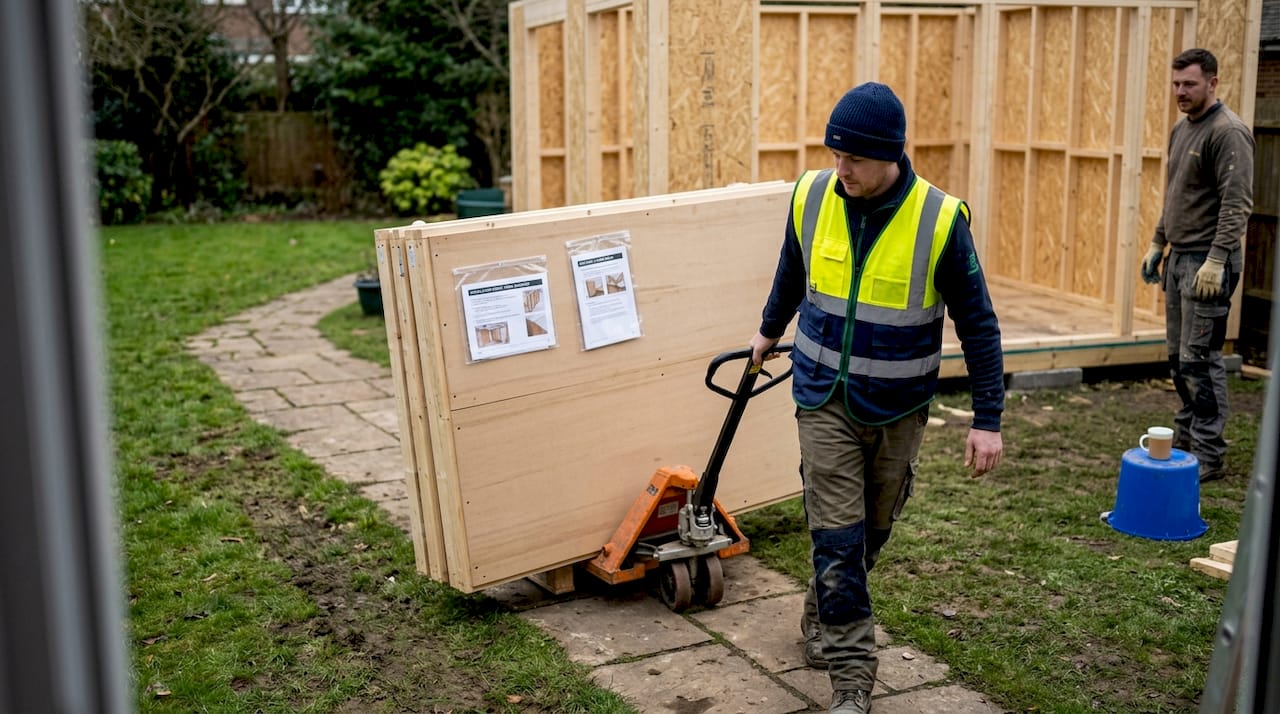
In terms of timelines, small cabins can be erected in a single day. Larger, more complex builds with electrics and full insulation might take up to two weeks from delivery to completion. Either way, that’s significantly faster than a brick extension.
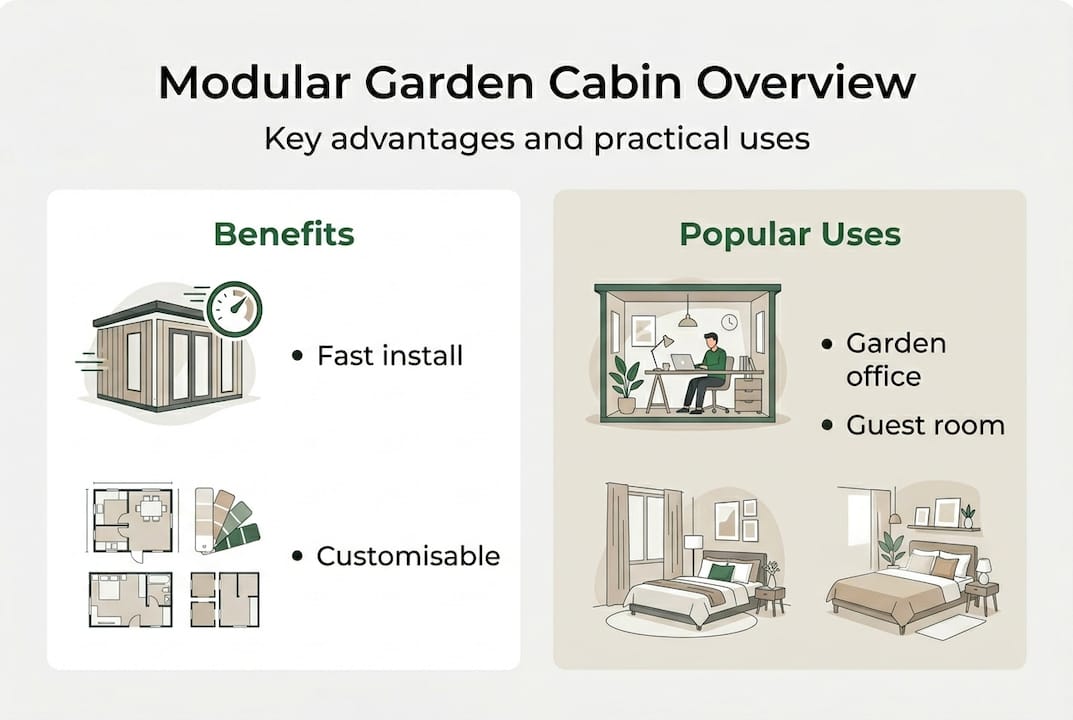
Modular cabins are constructed 80% off-site, reducing installation time by 50 to 80% compared to traditional builds. That’s not a small saving. For most homeowners, it means less mess, less waiting, and less disruption to daily life.
Pro Tip: Make sure your garden has clear access for a delivery vehicle before you order. A gap of at least 1 metre wide is usually needed to bring panels through a side gate or passageway.
Comparing modular cabins, annexes, and house extensions
Knowing how modular cabins are built is useful, but how do they actually compare to the other options you might be weighing up?
| Feature | Modular garden cabin | Garden annexe | House extension |
|---|---|---|---|
| Typical cost | £10,000 to £25,000 | £30,000 to £80,000 | £30,000 and above |
| Planning permission | Rarely needed | Often required | Almost always required |
| Build time | Days to 2 weeks | Weeks to months | Months |
| Property value uplift | 5 to 15% | 10 to 20% | 10 to 25% |
| Year-round usability | Yes, with insulation | Yes | Yes |
As you can see, modular cabins cost £10,000 to £25,000 and can add 5 to 15% to your property value, while traditional extensions start at £30,000 and take months to complete.
For most garden enthusiasts, a modular cabin is the sweet spot. You get a proper, insulated space without the planning headaches or the enormous cost of a full extension. It’s ideal for:
- Home offices where you need quiet and reliable broadband
- Garden studios for art, music, or crafts
- Home gyms with room for equipment
- Leisure retreats for reading, relaxing, or entertaining
That said, modular isn’t always the right answer. If you’re planning a full-time living space or a self-contained annexe for a family member, you’ll likely need planning permission and a more substantial structure. Similarly, if you live in a listed building or a conservation area, the rules are stricter.
You can read more about modular construction as a broader building method to understand why it’s becoming so popular across residential and commercial projects alike.
“The best choice depends on your intended use. For leisure, work, or fitness, a modular cabin wins on cost and speed. For permanent living, look further.”
Explore the full range of bespoke cabin uses to get a clearer picture of what’s possible before you commit.
Who should consider a modular garden cabin?
A modular garden cabin sounds appealing, but is it right for every garden and homeowner? Let’s be honest about who it suits best.
The ideal buyer is someone who wants flexible, usable space in their garden without the cost and complexity of a full building project. Here’s a quick breakdown:
| Scenario | Suitable for modular cabin? |
|---|---|
| Working from home, need a quiet office | Yes, excellent choice |
| Hobby room for art, music, or crafts | Yes, very well suited |
| Home gym with equipment | Yes, see cabins for home gyms |
| Full-time annexe for a relative | Not ideal, check planning rules |
| Listed property or conservation area | Requires careful checking |
| Tight access with no vehicle entry | May need alternative approach |
For garden lovers who want a proper space to enjoy the outdoors in comfort, modular cabins are a brilliant fit. If you enjoy spending time outside but want shelter, warmth, and a bit of style, take a look at how cabins suit garden lovers across different garden sizes and styles.
Site requirements are worth thinking about early. You’ll need a level, solid base (concrete or paving slabs work well), clear access for delivery, and ideally a power supply nearby if you want lighting and heating.
If your property has tight access or listed status, it’s always worth getting a site survey before you order. Surprises at the delivery stage are no fun for anyone.
Pro Tip: Before placing an order, walk the route from your garden gate to the intended cabin spot with a tape measure. Check for overhanging branches, narrow passages, or steps that could make delivery tricky.
- Ensure your base is level and load-bearing
- Confirm access width for delivery vehicles
- Check your title deeds for any restrictive covenants
- Speak to your local planning authority if you’re unsure about Permitted Development
Our perspective: Why most people misunderstand modular garden cabins
Most guides focus on specs and price comparisons. Fair enough. But in our experience, the biggest mistakes buyers make have nothing to do with timber grades or insulation thickness.
The real issues tend to be simpler. People overestimate their Permitted Development rights without checking the specific rules for their property. They focus on external dimensions and forget to account for wall thickness reducing internal space. And they underestimate access challenges, only realising the problem when the delivery lorry arrives.
There’s also a tendency to treat modular cabins as a one-size-fits-all solution. They’re not. A modular cabin is brilliant for a home office or a hobby space. It’s not the right tool for a full-time annexe or a complex sloped site without proper preparation.
Our honest advice? Think about how you’ll actually use the space day to day. Think about outdoor living benefits and how a well-placed cabin could genuinely change your routine. Then match the cabin to that real-life need, not just the spec sheet. Done right, a modular garden cabin isn’t just extra square footage. It’s a space you’ll use every single day.
Take the next step: Explore bespoke garden cabins
If you’ve read this far, you’re clearly serious about making the most of your garden. The good news is you don’t have to figure out the details on your own.
At Log Cabin Kits, we specialise in bespoke and custom-built garden cabins designed around your space and your needs. Browse our garden cabin gallery to see real finished projects and get a feel for what’s possible. When you’re ready to explore your own design, our bespoke cabin design service is there to help you get it right from the start. Get in touch and let’s talk through your ideas.
Frequently asked questions
Do modular garden cabins need planning permission in the UK?
Most modular garden cabins under 2.5 metres high don’t need planning permission under Permitted Development rights, though full annexes or larger studios may require approval.
How long does it take to install a modular garden cabin?
Small modular cabins can be installed in one day, while larger builds with full insulation and utilities may take up to two weeks from delivery to completion.
Are modular garden cabins suitable for year-round use?
Yes. With mineral wool insulation and uPVC windows, a quality modular cabin stays comfortable throughout the year, even in a typical British winter.
How much do modular garden cabins cost compared to house extensions?
Modular cabins typically cost £10,000 to £25,000, which is significantly less than a house extension starting at £30,000, and they’re completed in a fraction of the time.
Recommended
- Using Garden Cabins As Convenient Storage | Log Cabin Kits
- Luxury Garden Cabins: Bespoke Designs And UK Benefits
- Garden Cabin Sense: How It Enhances UK Outdoor Living
- Unlocking Storage Potential: The Benefits Of A Garden Cabin – Log Cabin Kits To Buy Online
- Modern living architecture: Sustainable, community homes


