
Blog
Thermal Efficiency in Log Cabins: Lower Bills, Year-Round Comfort


Trying to keep your garden log cabin cosy in winter and cool in summer can prove frustrating when your energy bills just keep rising. With heating costs on the minds of many UK homeowners, focusing on thermal efficiency in log cabins is more valuable than ever. From understanding how building choices impact heat retention to ensuring your design meets British energy standards, you will find key insights for a comfortable, cost-effective garden retreat.
Table of Contents
- Thermal Efficiency In Log Cabins Explained
- Types Of Insulation And Building Materials
- Optimising Heating And Reducing Energy Loss
- UK Regulations And Compliance For Log Cabins
- Cost, Savings, And Common Pitfalls
Key Takeaways
| Point | Details |
|---|---|
| Thermal Efficiency is Crucial | A well-insulated log cabin can reduce heating costs by 30-40%, improving comfort and lowering energy bills. |
| Bespoke Cabins Offer Control | Custom-designed cabins allow for tailored insulation choices and structural specifications that enhance thermal performance. |
| Material Selection Matters | Choosing the right wood species and insulation materials significantly impacts your cabin’s energy efficiency and longevity. |
| Regulatory Compliance is Essential | Ensuring your cabin meets UK building regulations for thermal performance can prevent costly retrofitting later on. |
Thermal Efficiency in Log Cabins Explained
Thermal efficiency in log cabins means how well your space keeps heat inside during winter and stays cool during summer. It’s about reducing the work your heating and cooling systems must do, which directly lowers your energy bills.
Log cabins have natural advantages when it comes to thermal performance. The wood itself provides decent insulation because it contains air pockets that trap heat naturally. However, not all log cabins perform equally—the build quality, wood thickness, and how well gaps are sealed make a huge difference.
What Makes Log Cabins Thermally Efficient
Wood is a natural insulator, but several factors determine how effectively your cabin maintains comfortable temperatures:
- Log diameter and density – Thicker logs provide better insulation than thin ones
- Wood species – Different woods have varying insulation properties
- Gaps and joints – Poor sealing allows warm air to escape
- Roof design – A well-insulated roof prevents heat loss through the top
- Foundation quality – Improper insulation underneath creates cold spots
- Window and door placement – Strategic positioning reduces draughts
Research shows that managing thermal comfort through building design significantly improves year-round comfort levels. This means your cabin’s thermal performance depends on thoughtful construction choices from the ground up.
The difference between a poorly sealed cabin and a well-constructed one can be 30-40% in heating costs during winter months.
How Bespoke Cabins Improve Thermal Efficiency
When you choose a bespoke log cabin built to your specifications, you control the thermal performance from day one. Custom builds allow you to:
- Select appropriate log thickness for your climate
- Specify insulation standards for your region
- Position windows to capture winter sun and block summer heat
- Plan ventilation that works with your landscape
- Choose materials that match your thermal needs
Off-the-shelf cabins often use standard designs that may not suit your specific location or usage patterns. A bespoke approach means your cabin is engineered specifically for your UK climate and garden conditions.
Learn about how insulated log cabins improve energy efficiency to understand what modern insulation standards can achieve for your build.
The Real-World Impact
Thermal efficiency isn’t just about comfort—it’s about money. A well-designed log cabin reduces reliance on heating systems, which means lower utility bills month after month. In the UK, where heating is a significant cost, proper thermal design pays for itself over time.
Your bespoke cabin builder should be able to explain exactly how the design choices translate into thermal performance. Ask for specifics about R-values, air-tightness standards, and seasonal comfort projections.
Pro tip: Specify double-glazed windows and roof ventilation in your bespoke design from the start—adding them later costs significantly more and requires disruption to your completed cabin.
This summary shows how build quality choices affect log cabin heating savings in the UK climate:
| Construction Detail | Impact on Efficiency | Potential Cost Saving |
|---|---|---|
| Log thickness (200mm+) | Significantly higher | 30-40% in winter |
| Air-tight window/doors | Improved comfort | £600-£800 per year |
| Roof insulation | Reduces heat loss | 25-30% of total loss |
| Proper foundation | Prevents cold spots | Stable year-round bills |
Types of Insulation and Building Materials
Choosing the right insulation and building materials for your log cabin directly affects how efficiently it maintains temperature. Different materials perform differently depending on your UK climate zone, usage patterns, and budget constraints.

Log cabins combine solid wood walls with additional insulation layers to create a thermal envelope. The combination matters more than any single component alone. Your bespoke cabin builder should explain exactly what goes into the walls, roof, and floor to meet modern energy standards.
Wood Species and Log Quality
Not all wood performs equally when it comes to thermal properties. The type of log you choose influences both insulation value and durability:
- Softwoods (pine, spruce, fir) – Lighter, easier to work with, decent insulation
- Hardwoods (oak, ash) – Denser, more durable, slightly better thermal mass
- Log diameter – Thicker logs (200mm+) provide significantly better insulation than thin logs
- Moisture content – Properly seasoned wood maintains its insulation properties longer
- Grain tightness – Tighter grain wood resists air infiltration more effectively
Your bespoke builder will select wood species based on your location and thermal requirements. Thicker logs cost more upfront but deliver better long-term performance and lower heating bills.
Additional Insulation Layers
Modern log cabins often use supplementary insulation between the logs or within wall cavities. Sustainable insulation choices help balance thermal performance with environmental impact.
Common insulation materials include:
Here’s a comparison of common log cabin insulation materials and their practical benefits:
| Material | Thermal Performance | Sustainability | Typical Cost (per m²) |
|---|---|---|---|
| Mineral wool | Excellent | Moderately eco-friendly | £10-£15 |
| Fibreglass batts | Adequate | Low ecological impact | £8-£12 |
| EPS (polystyrene) | Good | Non-renewable | £12-£18 |
| Natural fibres | Moderate | Highly sustainable | £15-£20 |
| Polyurethane foam | Outstanding | Very low sustainability | £18-£22 |
- Mineral wool – Excellent thermal performance, fire-resistant, breathable
- Fiberglass batts – Cost-effective, easy to install, adequate performance
- Expanded polystyrene (EPS) – Good insulation value, lightweight, moisture-resistant
- Natural fibres (hemp, sheep’s wool) – Breathable, sustainable, slightly lower R-values
- Polyurethane foam – Highest insulation per thickness, more expensive
The insulation material you choose should match the breathability of log construction—moisture management is crucial for long cabin life.
Roof and Foundation Materials
Heat escapes fastest through your roof, so this area deserves careful attention. Quality roof insulation combined with proper ventilation prevents condensation and ice dams during winter months.
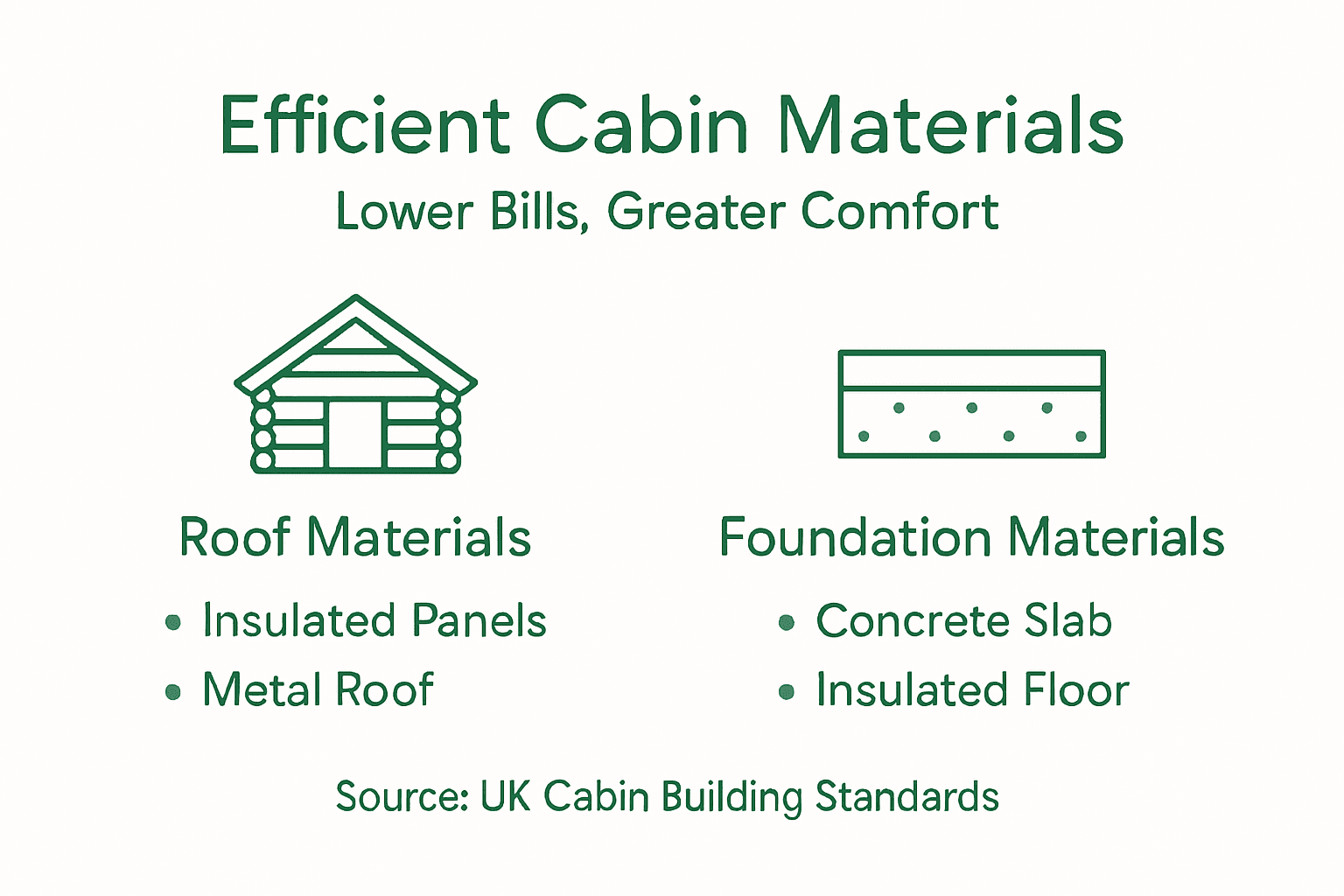
Floor insulation prevents cold air from below seeping into living spaces. Proper floor insulation reduces draughts and creates more even temperature distribution throughout your cabin.
Windows and Doors
Glazing accounts for significant heat loss if not properly specified. Double-glazed units with low-emissivity coatings dramatically improve thermal performance compared to single glazing.
Door frames should use thermal breaks to prevent cold bridging. Properly fitted seals around all penetrations prevent air leaks that undermine your insulation investment.
Pro tip: When selecting insulation, ask your builder for the combined R-value of all layers—this single number tells you exactly how well your cabin will resist heat transfer compared to building standards.
Optimising Heating and Reducing Energy Loss
Optimising your cabin’s heating means working with your cabin’s natural thermal properties rather than fighting against them. The goal is to reduce how hard your heating system must work, which directly cuts your energy bills.
Energy loss happens through three main routes: the roof, walls with poor sealing, and draughty gaps around windows and doors. Addressing these systematically makes a measurable difference in comfort and running costs.
Identify Where Heat Escapes
Understanding your specific heat loss patterns helps you prioritise improvements. Different cabins lose energy differently depending on their design and current condition.
Common heat loss areas include:
- Roof and ceiling – Heat rises, so poor roof insulation causes 25-30% of losses
- Air leaks – Unsealed gaps around penetrations account for 15-20% of losses
- Windows and doors – Single glazing and poor frames cause significant losses
- Floor and foundation – Cold rising from below creates comfort problems
- Thermal bridging – Metal fasteners and poorly designed connections bypass insulation
When calculating heat loss rates for your cabin, you’ll understand exactly where to focus your efforts first.
Sealing air leaks is often cheaper and faster than adding insulation, yet delivers immediate comfort improvements.
Heating System Selection
Your heating system should match your cabin’s thermal envelope, not exceed it. An oversized system wastes energy and money. An undersized system leaves you cold.
Common heating options for bespoke cabins include:
- Wood-burning stoves – Efficient for smaller spaces, requires fuel storage and maintenance
- Air source heat pumps – Highly efficient, works well in well-insulated cabins
- Electric panel heaters – Simple installation, moderate running costs
- Oil or gas boilers – Traditional approach, requires regular servicing
- Hybrid systems – Combine multiple heat sources for flexibility
Choosing the right heating system depends on your budget, cabin size, and how often you use the space.
Reduce Draughts and Air Leaks
Air leaks undermine even expensive insulation. Sealing them costs very little compared to the comfort gains.
Priority areas to seal:
- Where pipes and cables enter the cabin
- Around window and door frames
- Gaps between log courses (if visible)
- Where roof meets walls
- Foundation rim joists
Weatherstripping, caulk, and foam sealant address most problems. Your builder should specify these details in the original design rather than adding them later.
Ventilation and Moisture Control
You need fresh air, but you don’t want draughts. Controlled ventilation removes moisture that damages wood and reduces thermal efficiency. Proper ventilation design balances fresh air intake with heat retention.
Pro tip: Install a thermostatic radiator valve on each heating zone—this allows you to heat only the areas you’re using, cutting energy costs by 10-15% without sacrificing comfort.
UK Regulations and Compliance for Log Cabins
Installing a bespoke log cabin in your garden requires meeting UK building standards and planning regulations. These rules exist to protect your investment, ensure safety, and maintain energy efficiency across all properties.
The good news is that modern log cabins can easily meet or exceed these requirements when designed properly from the start. Understanding what applies to your cabin helps you avoid costly problems later.
Building Regulations and Energy Efficiency Standards
Building Regulations set minimum standards for construction quality, safety, and energy performance. Your log cabin must comply with these standards to be legally acceptable and insurable.
The UK uses the Standard Assessment Procedure (SAP) to measure energy efficiency in homes. SAP ratings evaluate insulation, boiler upgrades, and glazing performance to determine overall thermal performance.
Key thermal performance requirements include:
- Wall U-values – Maximum heat transfer allowed through walls (typically 0.30 W/m²K)
- Roof U-values – Maximum for roof sections (typically 0.20 W/m²K)
- Floor U-values – Maximum for ground-level surfaces (typically 0.25 W/m²K)
- Window and door standards – Double glazing with low-emissivity coatings
- Air-tightness targets – Measured to prevent uncontrolled draughts
Your bespoke cabin builder should design the cabin to meet these U-values from the outset.
Meeting building regulations at design stage costs less than retrofitting improvements after construction.
Planning Permission and Permitted Development
Planning permission rules vary depending on your cabin’s size, location, and intended use. Most garden cabins fall under Permitted Development rights if they meet specific criteria.
Typically, you need planning permission if your cabin:
- Exceeds 15 square metres in floor area (in most cases)
- Is positioned too close to property boundaries
- Blocks views or impacts neighbouring properties
- Is located in a conservation area or designated heritage zone
Building regulations approval is always required regardless of planning permission status. These are separate processes with different requirements.
Energy Efficiency Compliance
UK energy efficiency policies now mandate insulation standards across all properties. When your cabin is designed as habitable space, compliance with building regulations insulation standards becomes legally essential.
This means your cabin must achieve target thermal performance through proper specification of materials, construction methods, and finishing details.
Documentation and Certification
Your builder should provide comprehensive documentation showing compliance with all regulations. This includes:
- Building Regulations approval documentation
- Energy Performance Certificate (if required)
- Thermal calculations proving U-value compliance
- Installation records for all insulation and heating systems
Keep these documents for insurance and future resale purposes.
Pro tip: Request your builder provide a thermal calculation report before construction begins—this confirms your cabin meets regulations and prevents expensive design changes later.
Cost, Savings, and Common Pitfalls
Thermal efficiency improvements require upfront investment, but they pay dividends through lower bills and increased comfort. Understanding the real costs and realistic savings helps you make smart decisions about your bespoke cabin build.
A well-insulated cabin costs more initially than a basic build. However, the monthly savings on heating add up quickly, and you’ll enjoy comfort that poorly insulated cabins simply cannot provide.
Initial Investment Costs
The cost of thermal efficiency features depends on your cabin size, location, and specification choices. Larger cabins need more insulation material, so costs scale accordingly.
Major cost factors include:
- Log diameter and quality – Thicker, higher-grade logs cost 15-25% more
- Insulation materials – Varies from £8-20 per square metre depending on type
- Double-glazed windows – Approximately 40-50% more expensive than single glazing
- Roof insulation – Critical investment that prevents significant heat loss
- Thermal bridging prevention – Proper design adds modest cost upfront
- Heating system specification – Can range from £2,000 to £15,000 depending on type
A bespoke cabin built to modern thermal standards typically costs 10-20% more than a basic build. This premium varies based on your choices and your builder’s approach.
Long-Term Savings
The monthly savings from proper thermal efficiency are real and measurable. A well-insulated cabin reduces heating costs significantly compared to poorly insulated alternatives.
Typical savings include:
- Winter heating costs – Reduction of 30-40% compared to standard builds
- Year-round comfort – Reduced reliance on supplementary heating or cooling
- Energy bill predictability – Lower and more stable monthly costs
- Resale value – Energy-efficient cabins command premium prices
- Insurance benefits – Some insurers offer discounts for efficient properties
Over 10 years, thermal efficiency improvements typically pay for themselves and continue saving money indefinitely.
A £3,000 thermal efficiency upgrade paying 35% heating cost reduction saves approximately £600-800 annually, breaking even in 4-5 years.
Common Construction Mistakes
Avoiding mistakes during construction protects your investment and maintains thermal performance throughout the cabin’s life.
Common pitfalls that compromise efficiency:
- Poor sealing of gaps – Air leaks undermining expensive insulation
- Inadequate roof insulation – Heat escaping where it matters most
- Thermal bridging – Metal fasteners or connections creating cold paths
- Inadequate ventilation – Moisture trapping inside walls and degrading insulation
- Window installation errors – Gaps around frames allowing draughts
- Improper foundation preparation – Cold air rising from below
Your builder should specify exactly how each detail addresses thermal performance. Ask for written confirmation of how specific construction methods prevent common problems.
Planning Your Investment Wisely
Prioritise thermal improvements that deliver the best return on investment. Not all upgrades are equally cost-effective.
High-priority investments:
- Adequate log diameter (200mm minimum)
- Comprehensive roof insulation
- Double-glazed windows with thermal breaks
- Proper air-tightness design
These fundamentals provide the largest impact on comfort and bills. Secondary improvements like premium insulation types or heated floor systems can be considered based on budget.
Pro tip: Request a cost-benefit analysis from your builder showing which thermal improvements deliver the fastest payback—focus your budget there first before considering premium options.
Discover Bespoke Log Cabins Designed for Thermal Efficiency and Lower Energy Bills
If you are looking to solve the challenge of high heating costs and year-round discomfort in your garden space choosing a bespoke log cabin tailored to your needs is the smartest decision. Our bespoke builds at Log Cabin Kits allow you to select thicker logs double-glazed windows and superior insulation materials that meet UK building regulations and provide real savings on your energy bills.
Experience the benefits of a custom-designed cabin where every detail from log diameter to roof insulation is optimised for maximum thermal efficiency. Don’t settle for off-the-shelf models that risk draughts and heat loss. Act now to secure a bespoke log cabin that brings year-round comfort while reducing your heating costs significantly. Start your journey to a warmer more energy-efficient garden cabin today by exploring our options at Log Cabin Kits.
Frequently Asked Questions
What is thermal efficiency in log cabins?
Thermal efficiency in log cabins refers to their ability to retain heat during the winter and remain cool in summer, thereby reducing energy consumption and lowering utility bills.
How do different wood species affect thermal efficiency in log cabins?
Different wood species have varying insulation properties, with denser hardwoods generally providing better thermal mass than softwoods. The choice impacts how effectively the cabin maintains comfortable temperatures.
What are some effective ways to improve the thermal efficiency of a log cabin?
Improving thermal efficiency can be achieved by using thicker logs, sealing gaps and joints, installing quality insulation and double-glazed windows, and ensuring proper roof design and ventilation are in place.
How do I identify heat loss areas in my log cabin?
Common heat loss areas include the roof and ceiling, unsealed air leaks around windows and doors, and inadequate floor insulation. Conducting a heat loss assessment can help pinpoint specific areas for improvement.