
Bespoke security features for your garden building
TL;DR:
- Garden sheds and outbuildings are frequent targets for theft, holding valuable tools and equipment worth thousands.
- Effective security involves mechanical upgrades, electronic deterrents, natural barriers, and layered protection strategies.
Most homeowners lock the front door without a second thought, yet the building at the bottom of the garden gets far less attention. That’s a problem worth taking seriously. 29% of UK residents have experienced an attempted or actual break-in to a shed or outbuilding, with the average theft claim reaching £4,205 in 2024. Garden buildings are holding thousands of pounds worth of tools, bikes, and equipment, often behind nothing more than a basic padlock. This guide covers every practical security upgrade you need to know about, from mechanical features to smart electronic deterrents, so you can protect your investment with confidence.
Table of Contents
- Why garden buildings are prime targets for thieves
- Essential mechanical security features: Locks, bars, and anchors
- Electronic deterrents: Lighting and alarms for modern protection
- Natural and layered security: Simple strategies for added peace of mind
- Why real security combines technology, mechanics, and common sense
- Upgrade your garden building security with bespoke solutions
- Frequently asked questions
Key Takeaways
| Point | Details |
|---|---|
| Sheds are prime targets | Garden buildings are frequently targeted by thieves, costing UK homeowners thousands per break-in. |
| Layered security works | Combining mechanical, electronic, and natural features offers the strongest protection. |
| Insurance requirements matter | Fitting the correct locks and anchors is vital for valid insurance claims after theft. |
| Simple upgrades deter crime | Visible security measures and clever design choices can deter opportunistic criminals effectively. |
Why garden buildings are prime targets for thieves
It’s easy to assume that thieves focus entirely on the main house. The reality is quite different. Garden sheds, log cabins, and outbuildings are often crammed with lawnmowers, power tools, bicycles, kayaks, and sports gear. In many cases, the contents are worth more than the buildings themselves.
Theft from outside dwellings increased by 20% to 622,000 incidents year-on-year, which tells you just how much thieves have started focusing on outbuildings. It’s no longer a niche concern.
| Item commonly stored | Typical value |
|---|---|
| Electric lawnmower | £200 to £800 |
| Mountain bike | £500 to £3,000 |
| Power tool set | £300 to £1,500 |
| Garden ride-on mower | £1,000 to £5,000 |
| Kayak or canoe | £400 to £2,000 |
The value adds up quickly. And the risk is compounded by timing. 67% of shed break-ins coincide with an attempted home intrusion. That means a thief casing your property might try the shed first, then move on to the house. A secure outbuilding doesn’t just protect your tools. It can actually help protect your home too.
“Most outbuilding thefts are opportunistic. A thief walking past spots an unlocked shed or a cheap padlock and decides it’s worth a try. Remove that opportunity and most will simply move on.”
This is encouraging news. It means that visible, credible security upgrades genuinely work. You don’t need a fortress. You just need to make your garden building a less attractive target than the next one. For more practical context, our guide on securing your log cabin walks through the fundamentals in plain language.
Essential mechanical security features: Locks, bars, and anchors
Mechanical security is your first line of defence. It’s the physical barrier between a thief and your belongings. Let’s break down the main options.
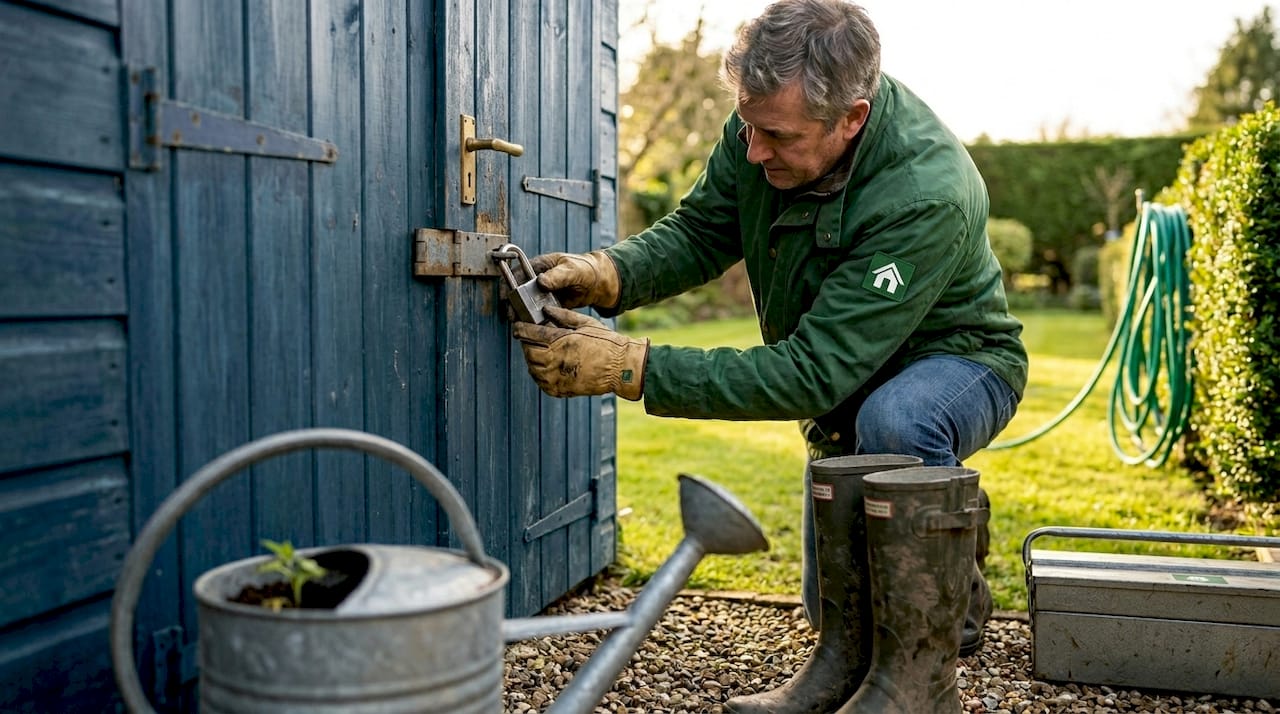
Padlocks. Not all padlocks are equal. A standard open-shackle padlock can be cut in seconds with bolt croppers. A closed shackle padlock (where the metal loop is almost entirely enclosed by the body of the lock) is dramatically harder to cut. Look for locks rated to at least CEN Grade 4 or higher for meaningful protection.
Hasp and staple. The hasp and staple is the metal fitting that your padlock clips onto. A cheap one defeats even an excellent padlock, because a thief can simply lever it off the door with a crowbar. Fitting a heavy-duty hasp and staple using carriage bolts (which have smooth, round heads on the outside, making them almost impossible to unscrew) is one of the most cost-effective upgrades you can make.
Security bars. Windows and doors can be reinforced with steel security bars or grilles. These take minutes to fit but add significant resistance. Even if a thief breaks the glass, bars prevent them from actually getting inside.
Ground anchors. A ground anchor is a steel ring bolted into concrete in the floor of your building. You loop a heavy chain through it and around your bicycle, mower, or other valuables. Even if a thief gets through the door, they can’t walk out with the goods. It’s a simple idea that works extremely well. Closed shackle padlocks, hasp and staple fittings, security bars, and ground anchors are all recommended by security professionals as core mechanical upgrades.
| Feature | Cost | Effectiveness | Ease of fitting |
|---|---|---|---|
| Closed shackle padlock | £20 to £80 | High | Very easy |
| Heavy-duty hasp and staple | £10 to £40 | High | Easy |
| Steel security bars | £30 to £120 | Very high | Moderate |
| Ground anchor and chain | £30 to £100 | Very high | Moderate |
| Door reinforcement kit | £40 to £150 | High | Moderate |
Here are some quick wins you can act on today:
- Replace any open-shackle padlock with a closed shackle alternative rated CEN Grade 4 or above.
- Fit a heavy-duty hasp and staple using carriage bolts on all external doors.
- Install steel bars or grilles over windows, especially those hidden from the street.
- Bolt a ground anchor into the floor and chain high-value items to it.
- Reinforce door hinges, which are a common weak point that’s often overlooked.
For a deeper look at the full range of options, our article on security features for garden cabins covers the topic in detail. If you’re starting from scratch, our guide to building a secure garden shed will also be useful.
Pro Tip: Mark all your tools and equipment with your postcode using a UV marker or engraver. Marked property is far less attractive to thieves because it’s harder to sell on, and far more likely to be returned to you if it’s recovered by police.
Electronic deterrents: Lighting and alarms for modern protection
Mechanical locks stop thieves who actually try the door. Electronic deterrents stop many of them before they even get that far. The two work best together.
Here’s how to set up electronic deterrents properly:
- Install PIR motion sensor lights. PIR stands for passive infrared, meaning the light activates when it detects body heat moving through the sensor’s range. Place these lights above the door and around the sides of the building. A sudden flood of bright light is alarming to anyone trying to be discreet.
- Choose a shed alarm with a PIR or vibration sensor. A PIR alarm triggers when someone enters the space. A vibration alarm triggers when someone tries to force or tamper with the structure itself. The best systems use both. PIR motion-sensor lights and shed alarms with vibration and PIR sensors are highly effective at deterring intruders before they gain access.
- Connect to a loud external siren. A silent alarm is useful for alerting you, but an external siren that your neighbours can hear is far more effective as a deterrent. Most opportunistic thieves will flee immediately if a siren sounds.
- Consider a GSM dialler alarm. This type of alarm sends a text message or calls your mobile when triggered. You get an instant notification even if you’re away from home.
- Pair with a trail camera or CCTV. A visible camera is a deterrent in itself. Even a basic wireless trail camera can capture footage that helps police identify a thief if a break-in does occur.
Motion lights can reduce break-ins by up to 50% in some areas. That figure alone makes them one of the highest-value, lowest-cost upgrades available to any homeowner.
For more on how alarms and lighting work together, take a look at our advice on deterring intruders with alarms.
Pro Tip: Position your lights at least 2.5 metres high. This makes them very difficult to reach and disable quickly. Tune your PIR alarm’s sensitivity carefully. Too sensitive and it’ll trigger every time a fox wanders past. A well-calibrated system is reliable without being a constant source of false alerts.
Natural and layered security: Simple strategies for added peace of mind
Here’s something that surprises many people. Some of the most effective garden building security measures cost almost nothing, and they’ve been recommended by police for decades.
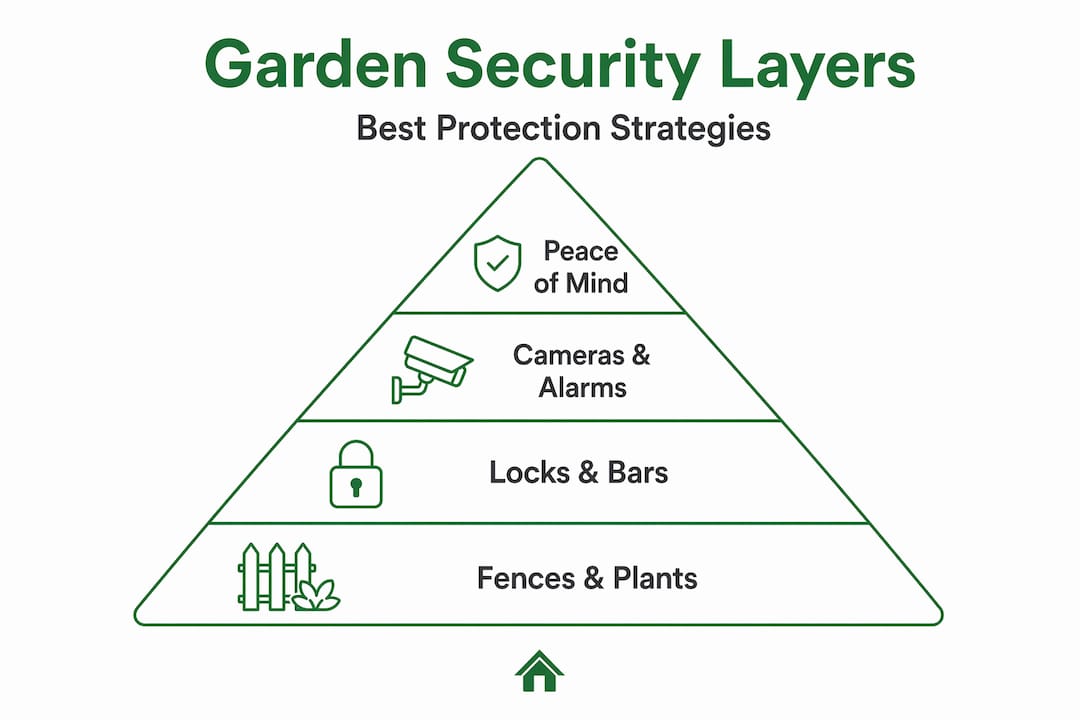
A single lock is not a security plan. It’s a starting point. Real security means layering multiple measures so that even if one fails or is bypassed, the others are still in place. Think of it like this. If a thief gets past your padlock, are they also going to deal with a motion-triggered flood light, a blaring siren, a chain anchoring the bike to the floor, and thorny shrubs making their exit route uncomfortable? Probably not.
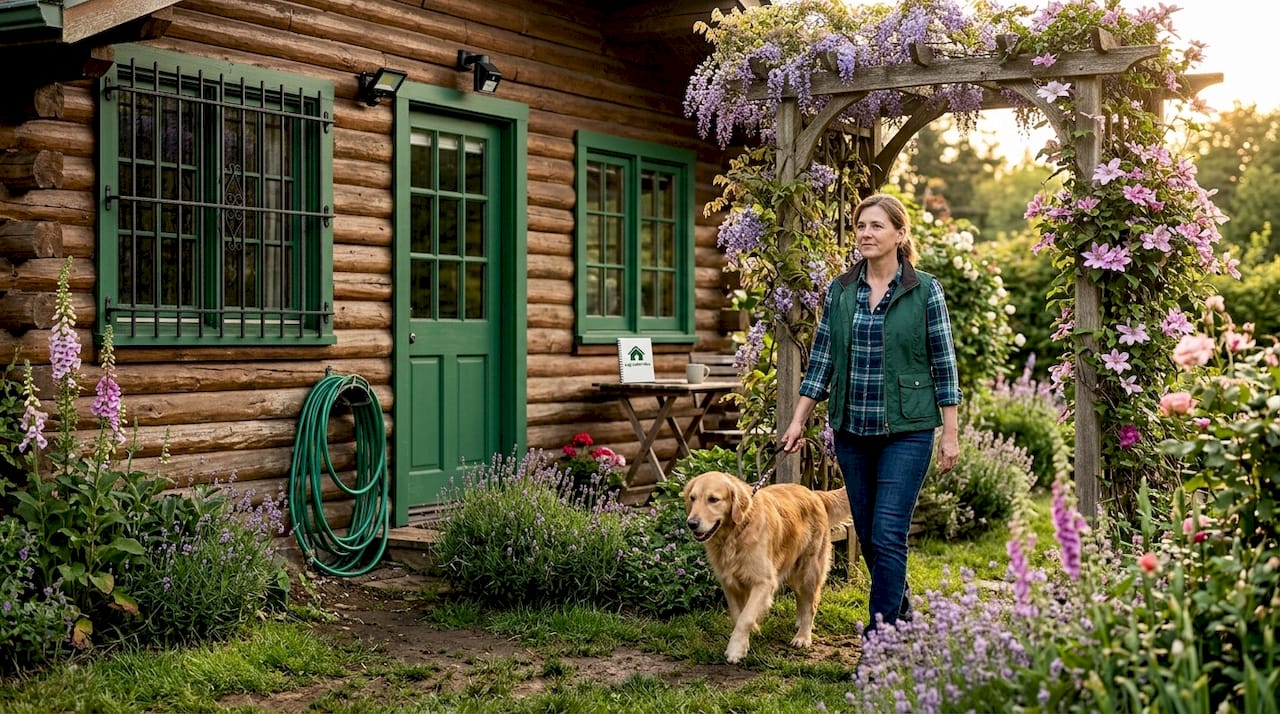
Thorny shrubs are recommended by police as a natural barrier alongside mechanical security. Plants like hawthorn, pyracantha, and berberis are attractive in your garden but deeply unpleasant to push through quickly. Planted around the sides and back of a garden building, they make access difficult without drawing any attention to the security measures themselves.
Here are other natural and low-cost options worth considering:
- Gravel paths. Loose gravel is noisy underfoot and makes it very hard for anyone to approach quietly. It’s a common deterrent recommended by neighbourhood watch schemes.
- Good fencing. A solid fence with no obvious footholds makes it harder to move equipment out of your garden unobserved.
- Clear sightlines. Don’t hide your shed behind dense foliage. A building that’s visible from the house or the street means thieves are more exposed while working on it.
- Visible security signage. A sticker indicating CCTV or an alarm system is present can deter opportunistic thieves even before they get close enough to check.
Opportunistic thieves are deterred by visible upgrades, and insurance often requires specific locks or anchors to be fitted before they’ll pay out on a claim. Check your policy carefully. If you’re not using an approved padlock or don’t have a fitted anchor, you might find your claim is refused even if you thought you were covered.
“Layering is everything. One measure reassures you. Multiple measures actually protect you.”
Our full guide on garden cabin security tips covers all of this in more detail, including practical steps for different building types.
Why real security combines technology, mechanics, and common sense
Here’s our honest perspective, and it’s one that most product listings won’t tell you.
Spending £200 on a smart alarm system but keeping a £10 padlock on the door is a mistake. The alarm might alert you, but a determined thief can be through that padlock in under 30 seconds. By the time you’ve seen the notification on your phone, they’re gone. Real security means every layer is strong. Not just the flashiest one.
We’ve seen cases where a thief has actually broken through a shed door, only to find every bike and piece of equipment chained to a ground anchor. They left empty-handed. That’s the power of layering mechanics over electronics over natural deterrents over traceability. Each one adds friction. Together, they make your garden building simply not worth the effort.
The most common mistake homeowners make is underestimating the value of what they store outside. A decent lawnmower, two bikes, and a set of power tools can easily add up to £5,000 or more. That’s worth protecting properly. Our thoughts on the broader topic of garden building protection lessons expand on this, including the insurance implications that catch many people out.
The uncomfortable truth is that insurance exclusions are far more common than people realise. Many homeowners assume they’re covered, claim after a theft, and then discover their policy required a specific type of lock or anchor that they didn’t have fitted. Reading the small print before an incident happens is not exciting, but it’s essential.
Security isn’t a product. It’s a habit of thinking about every layer, every access point, and every valuable stored in your garden building.
Upgrade your garden building security with bespoke solutions
If you’re thinking about your garden building security, it’s also a great time to consider whether the building itself is doing its job. A well-built, robust log cabin or garden outbuilding is far easier to secure than a lightweight flatpack shed.
Our range of timber garden log cabins is built to last and designed with security in mind from the ground up. Solid timber walls, reinforced door frames, and proper window fittings all give mechanical and electronic security measures a much stronger foundation to work with. If you want something tailored entirely to your needs, our bespoke log cabins allow you to specify exactly the features, dimensions, and security integrations you want. Get in touch with us and we’ll help you design a garden building that protects your investment from day one.
Frequently asked questions
What is the best lock for a garden shed?
Closed shackle padlocks paired with a heavy-duty hasp and staple fitted using carriage bolts offer the strongest protection for most garden sheds and outbuildings.
Do motion sensor lights really deter burglars?
Yes. Motion lights can reduce break-ins by up to 50% in some areas, making them one of the most cost-effective deterrents available.
Are insurance claims for shed theft often rejected?
Claims can be rejected if approved locks or anchors aren’t fitted, so it’s worth checking your insurer’s requirements before a theft occurs rather than after.
How can I prevent false alarms from animals?
Tune your PIR alarm’s sensitivity carefully and position sensors away from areas frequented by pets or wildlife. The right calibration settings make a big difference to reliability.
Can natural barriers really help secure a shed?
Absolutely. Planting thorny shrubs such as hawthorn or pyracantha around your outbuilding is recommended by police as a genuinely effective natural deterrent alongside locks and alarms.