
Why timber suits garden aesthetics: a UK guide for 2026
Why timber naturally suits garden aesthetics
Timber suits garden aesthetics better than almost any other material because it is, quite simply, part of nature itself. Its warm tones, varied grain, and tactile surface create an instant connection with the plants, soil, and greenery around it. No composite panel or metal frame can replicate that feeling.
Here is why timber works so well outdoors:
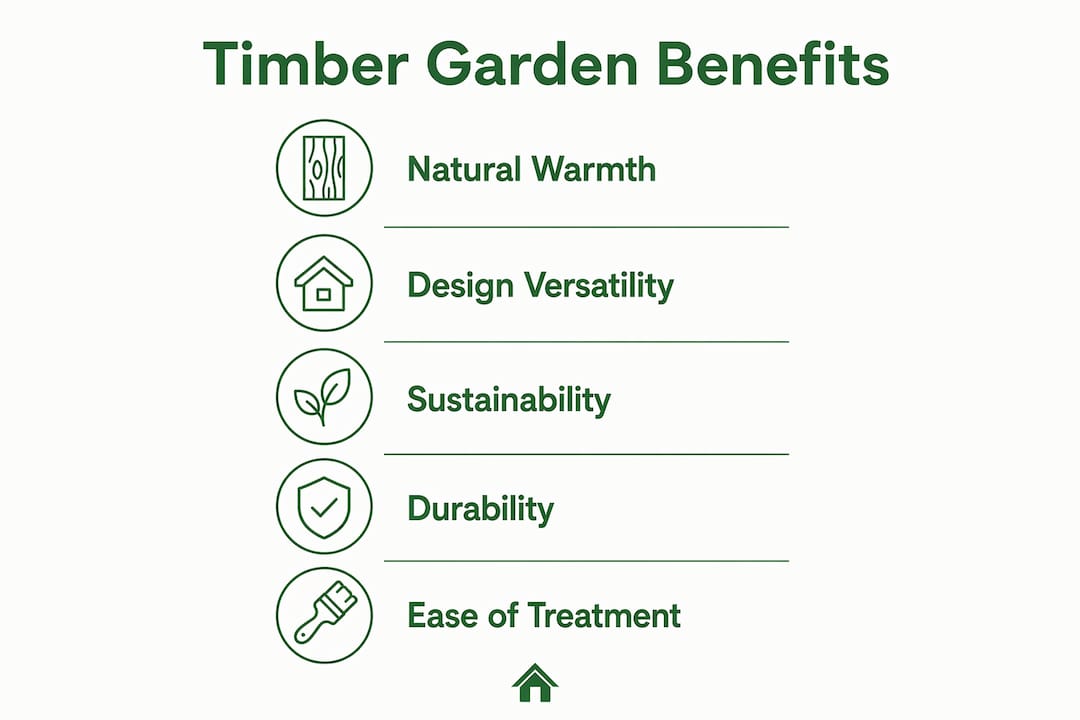
- Natural warmth. Timber is warm to the touch, making outdoor spaces feel welcoming rather than cold or clinical.
- Organic texture. Every plank carries its own grain pattern, knots, and colour variation, so no two timber features ever look exactly the same.
- Harmony with plants. Timber’s earthy tones sit comfortably alongside foliage, flowers, and bark without competing for attention.
- Design flexibility. From a classic picket fence to a contemporary slatted screen, timber adapts to almost any garden style.
- Sustainable credentials. As a renewable, biodegradable material, timber reinforces the garden’s connection to the natural world rather than working against it.
These qualities together explain why timber remains a highly popular choice for UK garden enthusiasts.
Which timber types suit UK gardens best?
![A close-up of English Oak planks showing golden-brown grain and natural knots, laid out in a sunny garden setting]
Different timbers bring different personalities to a garden. Choosing the right one depends on the look you want and how much maintenance you are happy to do.
- English Oak. One of the most iconic native species in the UK, oak starts with rich golden-brown hues and ages to silvery grey over time. That natural patina is a genuine design asset, not a flaw. It suits both formal and relaxed garden styles and pairs well with stone, steel, or contemporary concrete.
- Scandinavian softwoods. Scandinavian timber is prized for its tight grain, consistent density, and clean aesthetic. It is the timber of choice for quality garden log cabins and structures, offering durability alongside a light, fresh appearance.
- Cedar. Naturally aromatic and resistant to moisture, cedar weathers to a soft silver without treatment. Its fine, straight grain gives it a refined look that suits contemporary garden designs particularly well.
- Pine. Affordable and easy to work with, pine takes stains and paints readily, making it ideal when you want a specific colour to tie in with your home’s exterior.
- Larch. Dense and naturally durable, larch develops a warm amber tone that deepens with age. It is increasingly popular for cladding and raised beds in UK gardens.
Pro Tip: If you want a low-maintenance option that still looks beautiful, Scandinavian softwood treated at the factory is hard to beat. It arrives ready for the UK climate and needs far less upkeep than untreated alternatives.
How timber treatment protects its appearance over time
![A split image showing untreated timber planks on the left and pressure-treated timber with a rich, even finish on the right]
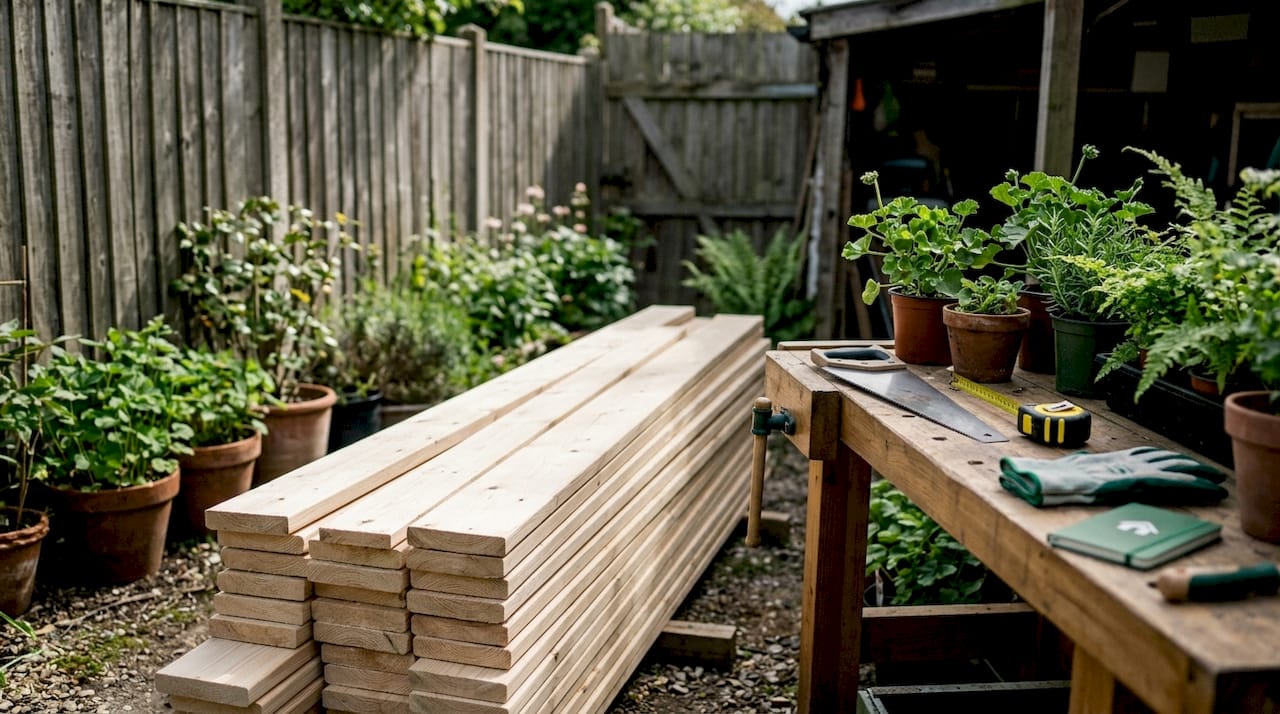
The UK climate is tough on outdoor timber. Rain, frost, UV rays, and ground moisture can all cause untreated wood to warp, split, or decay within a couple of seasons. The right treatment keeps timber looking good for years.
- Pressure treatment. Pressure-treated timber forces preservative deep into the wood fibres, giving long-lasting protection against rot and pests while keeping the natural look intact with a good finish on top.
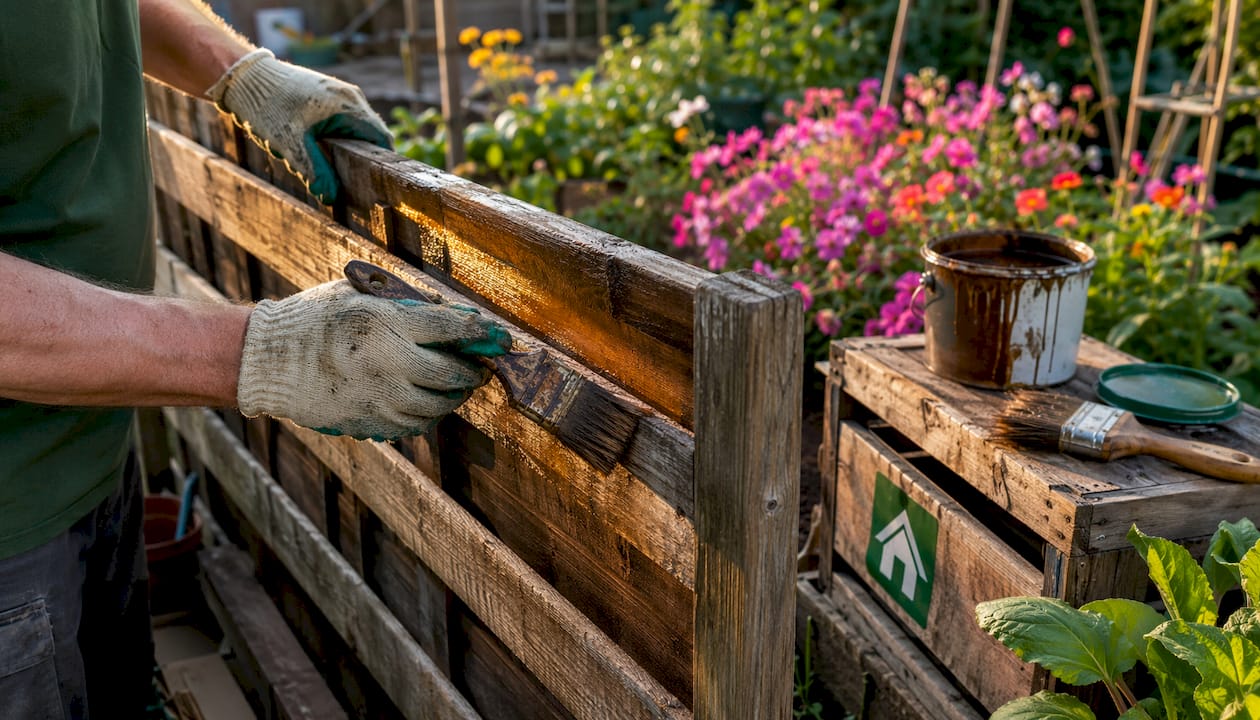
- Natural oils. Linseed, tung, and Danish oil feed the wood, enhance its colour, and repel moisture without forming a surface film that can crack or peel. They need reapplying every year or two but are easy to do yourself.
- Thermally modified wood. Heat treatment changes the wood’s cell structure, making it far more resistant to moisture and decay without using chemicals. It is a great choice if you prefer a more natural, eco-friendly approach.
- Stains and paints. Coloured stains let you tie timber features to your home’s palette while still showing the grain. Opaque paints offer maximum protection but hide the wood’s natural character.
Choosing the right treatment is not just about durability. It directly affects how your timber looks, how it ages, and how much time you spend maintaining it. Sustainability matters here too: natural oils and thermally modified timber avoid the chemical preservatives that some gardeners prefer to keep out of their outdoor spaces.
Design principles that make timber work in your garden
Good timber design is about cohesion. When timber features share a consistent finish or species across fencing, decking, raised beds, and garden buildings, the whole garden feels considered rather than cobbled together.
- Create a timber backbone. Use timber to link different levels and zones: a fenced backdrop that flows into a decked walkway, then into a raised bed, gives the garden a unified structure that planting can then soften and fill.
- Respect the spirit of place. The spirit of place concept means choosing timber styles that genuinely suit your home and its surroundings. A heavily grained oak suits a period property; clean-lined Scandinavian softwood fits a modern extension.
- Match timber to your plants. Slatted battens and fencing profiles can be chosen to echo the shapes and colours of nearby planting. A fine-grained, pale timber sits beautifully behind silver-leaved plants; a darker stained board makes bright flowers pop.
- Balance textures. Pair rough-sawn timber with smooth stone or gravel for contrast, or combine planed timber with clipped hedging for a more formal feel.
- Think bespoke. Standard sizes rarely fit every garden perfectly. Adjusting dimensions, adding a veranda, or specifying a particular finish turns a good garden feature into a great one.
Pro Tip: Before you commit to a timber finish, hold a sample plank against your house wall in natural daylight. Colours shift dramatically between a showroom and your actual garden, and it takes two minutes to check.
Timber applications that genuinely enhance your garden
![A wide-angle garden photograph showing a timber-decked seating area, slatted fence, and a log cabin in the background surrounded by mature planting]
Timber shows up in almost every part of a well-designed garden, and each application brings its own visual benefit.
- Decking. Timber decking creates a smooth transition between the house and the garden, providing a warm, comfortable surface underfoot that no paving slab can match for feel.
- Fencing. From classic close-board panels to contemporary horizontal slats, timber fencing defines boundaries while adding texture and warmth to the garden’s perimeter.
- Pergolas. A timber pergola creates a focal point, offers partial shade, and gives climbing plants a beautiful structure to work with. Quality, treated timber is non-negotiable here because pergola posts sit in or near the ground.
- Raised beds. Oak sleepers and treated softwood boards make raised beds that look as good as they are practical. They add height, structure, and a natural frame for vegetables or flowers.
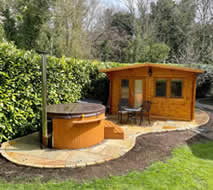
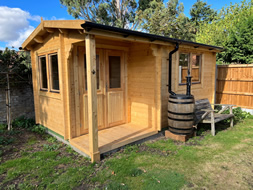
- Garden cabins and summer houses. A well-placed garden log cabin or timber summer house becomes the focal point of the whole garden. The timber walls, roof overhang, and natural finish draw the eye and anchor the space.
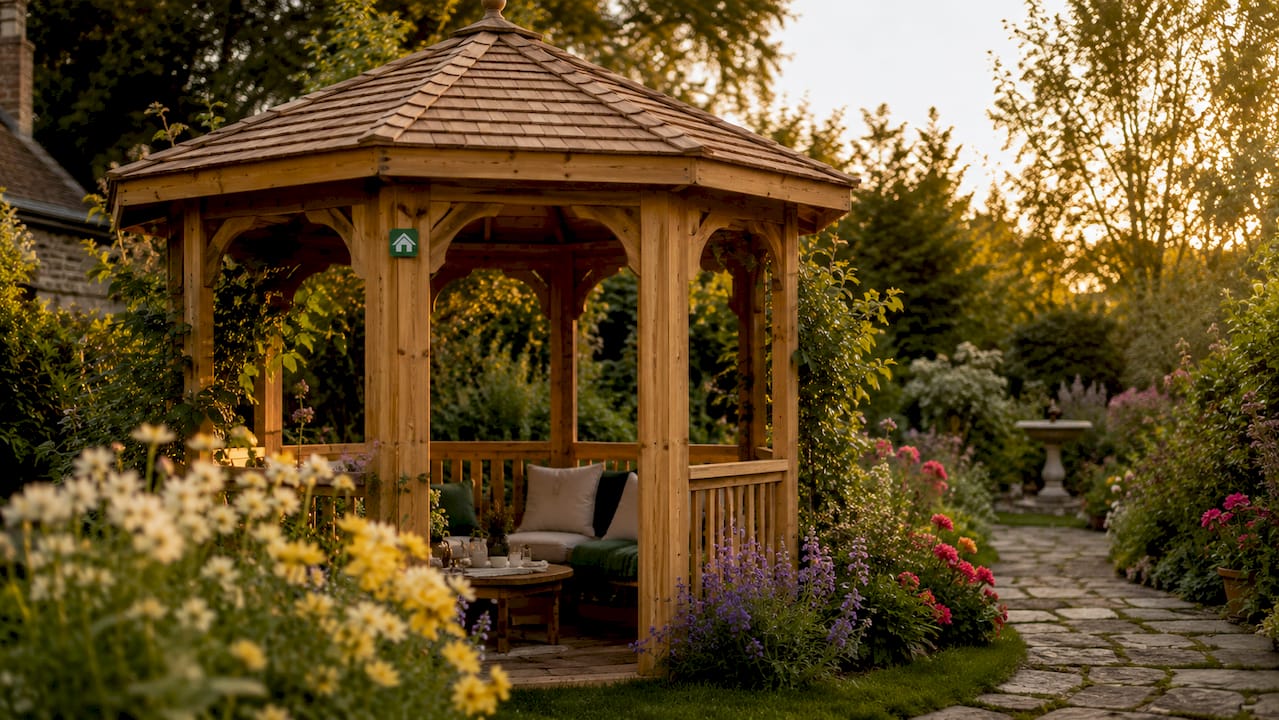
- Pavilions. Open-sided timber pavilions add a sense of occasion to a garden, creating a sheltered outdoor room that feels connected to the landscape rather than imposed on it.
Timber’s tactile warmth and natural texture create a unique sensory experience that transforms outdoor spaces into inviting retreats. No synthetic material comes close to replicating the way timber makes you feel at ease the moment you step outside.
Bespoke and multi-room cabin designs take this further still. When a cabin is sized and finished to suit your specific garden, it stops looking like a product and starts looking like it was always meant to be there. That is the real power of timber in garden design.
Reclaimed timber adds another layer of character. Using salvaged wood in raised beds, pergolas, or feature walls brings weathered textures and a sense of history that new timber simply cannot replicate. Each piece tells its own story through nail holes, grain patterns, and natural patina.
Expert insights on timber’s aesthetic and sustainable value
![A close-up detail shot of a Scandinavian softwood log cabin wall, showing the interlocking corner joints and natural wood grain in warm afternoon light]
Designers and landscapers consistently point to timber’s sensory qualities as the reason it outperforms other materials in garden settings. Timber’s natural warmth connects people to the environment in a way that concrete, metal, or plastic simply does not. This is the principle behind biophilic design: the idea that humans feel better when surrounded by natural materials, and timber is one of the most accessible ways to bring that into a garden.
Timber is a natural, organic product that provides warmth to the touch and fosters a connection with the environment unlike synthetic materials. That quality is not just aesthetic — it changes how a space feels to be in.
Sustainability is increasingly central to how UK gardeners think about their choices. Timber acts as a natural carbon sink, storing carbon throughout its life. When sourced from responsibly managed forests, it has a far lower environmental footprint than steel, concrete, or composite decking. Reclaimed timber goes further by conserving forests, reducing waste, and adding unique character that comes only from age and weathering.
Logcabinkits builds its garden buildings from quality Scandinavian softwood precisely because of these combined benefits: durability, clean aesthetics, and a timber source that is managed for long-term sustainability. Their bespoke cabin design service means you are not limited to a standard footprint or finish. You can specify dimensions, cladding profiles, window positions, and colour treatments to create a garden building that fits your space and your style perfectly.
Designers also value timber for how forgiving it is to work with. It can be cut, shaped, planed, and adjusted on site in ways that brick, stone, or metal cannot. That ease of bespoke adjustment makes it the practical choice for anyone who wants a garden feature that fits precisely rather than approximately.
For anyone planning outdoor construction projects in 2026, timber remains the material that offers the best combination of natural beauty, design freedom, and environmental responsibility.
Key takeaways
Timber suits garden aesthetics because its natural warmth, organic texture, and design versatility create outdoor spaces that feel genuinely connected to nature, in a way no synthetic material can replicate.
| Point | Details |
|---|---|
| Natural warmth and texture | Timber is warm to the touch and carries unique grain patterns, making every garden feature feel individual and inviting. |
| Scandinavian softwood is a premium choice | Tight grain and consistent density make Scandinavian timber the top pick for quality UK garden log cabins and structures. |
| Treatment protects appearance | Pressure treatment, natural oils, and thermally modified wood all extend timber’s life while preserving its natural look. |
| Design cohesion through a timber backbone | Linking fencing, decking, and garden buildings in the same timber species or finish unifies the whole garden visually. |
| Sustainability adds long-term value | Responsibly sourced and reclaimed timber acts as a carbon sink, reduces waste, and carries a lower environmental footprint than concrete or metal. |
Recommended
- blog timber vs metal sheds find perfect fit your garden | Specialist Garden Cabin Supplier
- Garden Building Heights Explained: The UK Enthusiast’s Guide
- blog garden building foundations explained practical uk guide | Specialist Garden Cabin Supplier
- How Layout Transforms Custom Garden Buildings: Function & Style