
How doors transform log cabin design and living
TL;DR:
- Choosing the right cabin door is essential for security, insulation, aesthetics, and natural light.
- A well-selected door enhances comfort, energy efficiency, and the overall harmony of your log cabin.
- Investing in quality, style, and proper maintenance ensures your door truly complements and prolongs your cabin experience.
Most people building a garden log cabin spend weeks agonising over wall thickness, floor plans, and roof styles, then pick the first door that looks roughly right. It’s an easy mistake to make. But as doors in log cabins actually serve multiple roles spanning entry access, aesthetic enhancement, thermal insulation, security, ventilation, and natural light provision, treating them as an afterthought can quietly undermine everything else you’ve invested in. This guide walks you through what the right door choice genuinely changes, how to compare your options, and how to make a decision you’ll be pleased with for years.
Table of Contents
- The many functions of doors in log cabins
- Comparing traditional and modern door choices
- How doors shape energy efficiency and comfort
- Security, maintenance, and longevity of cabin doors
- The overlooked artistry and impact of door selection
- Bring your log cabin vision to life with the perfect doors
- Frequently asked questions
Key Takeaways
| Point | Details |
|---|---|
| More than access | Doors in log cabins influence insulation, security, and natural light far beyond just entry. |
| Traditional vs modern doors | Timber offers classic looks and insulation, while modern glazed designs provide style and greater light. |
| Energy and comfort | Door quality and fit directly affect cabin warmth, reducing energy costs and improving comfort all year. |
| Security and care matter | A well-chosen, properly maintained door offers lasting safety and prolongs your log cabin’s life. |
The many functions of doors in log cabins
To understand why doors matter, let’s examine the many functions they serve in modern log cabins. It’s tempting to think of a door as simply the gap you walk through. In reality, your cabin door is working hard all day, every day.
The impact of doors and windows on your overall cabin experience is far greater than most people realise. Here’s what a well-chosen door is actually doing for you:
- Entry and flow: A wide, well-positioned door makes moving furniture in easy and gives your cabin a welcoming feel from the garden.
- Aesthetic value: The door is often the first thing you and your guests see. It sets the visual tone for everything inside.
- Thermal insulation: A poorly fitted or thin door can undo the insulating work of your walls entirely, letting warmth escape in winter.
- Security: Your door is the primary barrier against unauthorised access. Construction quality and lock systems matter enormously here.
- Ventilation and natural light: Glazed panels or French-style doors let daylight flood in and allow fresh air to circulate without fully opening up the space.
Getting enhancing light and air flow right through smart door selection genuinely improves how healthy and comfortable your cabin feels day to day. Studies on wellbeing in outbuildings consistently show that natural light and ventilation lift mood and make spaces feel larger than they are.
“A cabin door that looks right but performs poorly will cost you more in the long run than investing in quality from the start. Every draught, every stiff hinge, every morning where the lock plays up chips away at how much you enjoy your space.”
Think of your door as the handshake between your cabin and the outside world. It needs to be firm, warm, and welcoming.
Comparing traditional and modern door choices
Recognising these functional roles, let’s break down the main choices facing UK garden enthusiasts. This is where personal taste really comes into play, and there’s genuinely no single right answer.
You can browse rustic and modern cabin doors to get a feel for the range, but here’s how the main styles compare:
| Feature | Rustic solid timber | Modern glazed or sliding |
|---|---|---|
| Appearance | Traditional, warm, natural grain | Contemporary, sleek, light-filled |
| Insulation | Excellent with quality timber | Good to excellent with premium glazing |
| Natural light | Minimal unless glazed panels added | High, especially with full-length glazing |
| Security | Very strong with good locks | Strong, though frames need checking |
| Maintenance | Regular oiling and sealing required | Lower maintenance, especially uPVC or aluminium frames |
| Cost | Mid-range to premium depending on timber grade | Mid-range to premium depending on glazing specification |
| Best suited for | Traditional or countryside gardens | Modern garden settings, year-round cabins |
Contrasting views show that rustic solid timber wins on tradition and aesthetics, while modern glazed and sliding doors suit contemporary gardens and are better for temperature management when you’re choosing premium specification for permanent use.
Neither style is objectively superior. What matters is how well the door matches your garden’s character and how you plan to use the cabin. A yoga studio or home office benefits hugely from the natural light a glazed door provides. A garden hobby room or tool store might suit a solid timber door perfectly.
Pro Tip: If you love the look of timber but want more light, ask about cabin doors with glazed upper panels. You get the warmth of real wood with the brightness of glazing. It’s a popular combination and often sits in the mid-range price bracket rather than at the premium end.
When pairing door style with your garden aesthetic, stand at the point where you’ll approach the cabin most often and imagine opening that door. Does it feel right? Does it look like it belongs? That instinct matters. Bespoke builds make it easy to get this exactly right rather than settling for whatever’s standard.
How doors shape energy efficiency and comfort
Beyond their appearance, the type and installation quality of your log cabin door can have a substantial impact on how comfortable your space stays across the year. In the UK, where temperatures swing from bitter winter mornings to surprisingly warm summer afternoons, this is not a minor point.
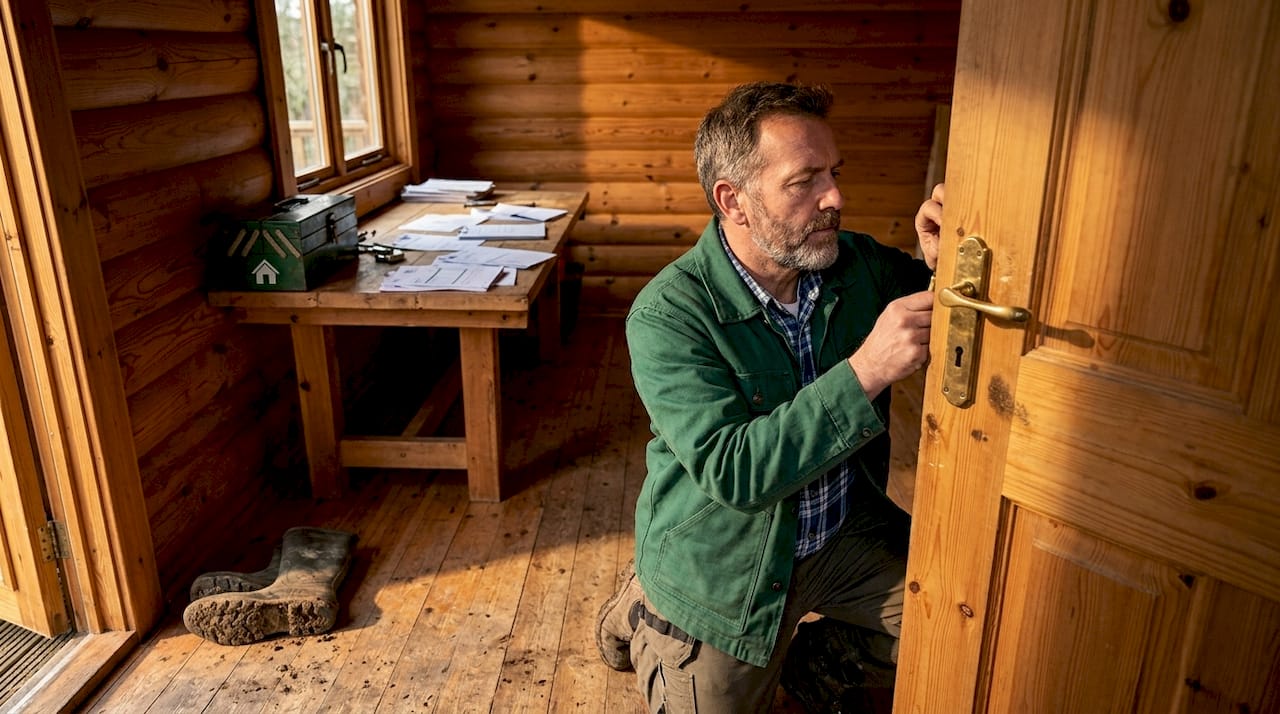
Cabins and energy efficiency are closely linked, and your door is a key part of that picture. Poor-quality or badly fitted doors are one of the most common sources of heat loss in garden buildings, often more significant than wall gaps.
Here’s how different materials compare on thermal performance:
| Door material | Approximate R-value (insulation rating) | Notes |
|---|---|---|
| Solid softwood (e.g. pine) | 1.5 to 2.0 per inch | Good baseline, improves with thickness |
| Solid hardwood (e.g. oak) | 1.0 to 1.5 per inch | Denser but slightly lower R-value than softwood |
| Insulated composite | 3.0 to 5.0+ | Excellent for permanent or year-round cabins |
| Single-glazed | 0.9 to 1.1 | Significant heat loss risk |
| Double-glazed | 2.0 to 3.5 | Good balance of light and insulation |
| Triple-glazed | 4.0 to 6.0+ | Premium option, excellent thermal performance |
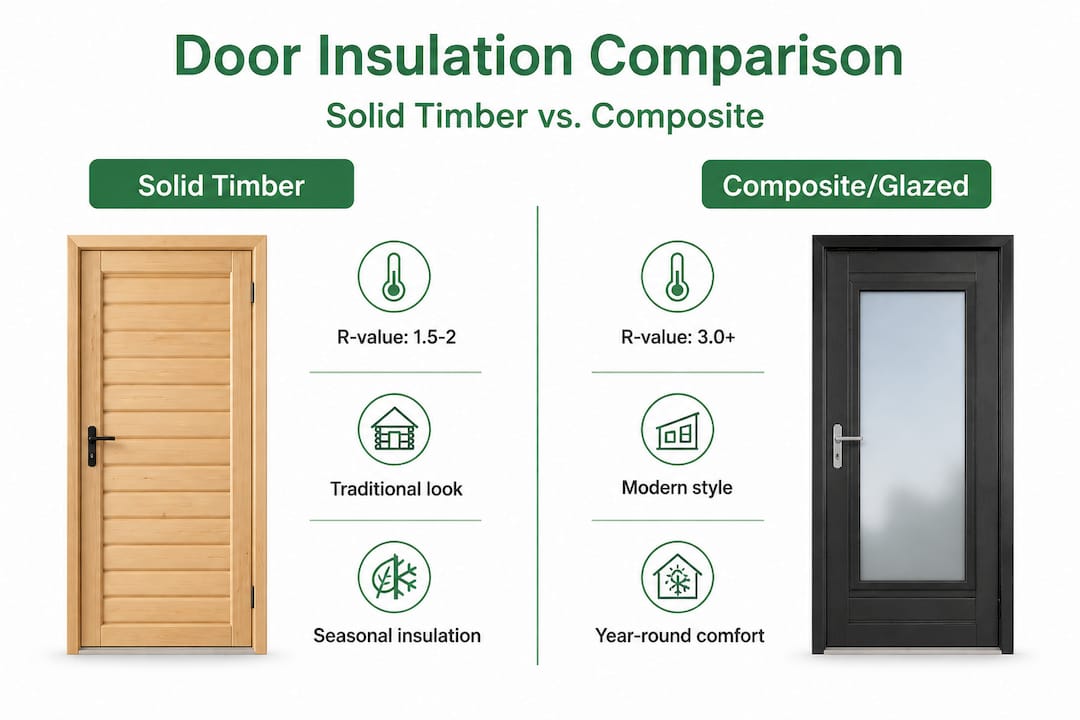
R-value is simply a measure of how well a material resists heat passing through it. Higher is better for keeping your cabin warm in winter and cool in summer. Understanding thermal efficiency in cabins helps you make sense of these numbers in context.
To get the best energy performance from your cabin door, follow these steps:
- Choose the right core material for your intended use. A thicker solid timber door or an insulated composite will outperform a lightweight panel door every time.
- Check the frame and seal quality before committing. Even the best door loses its advantage if the frame doesn’t fit snugly or the weatherstripping is poor.
- Consider low-emissivity glazing if you’re opting for a glazed door. Low-E glass reflects heat back into the room rather than letting it escape.
- Position thoughtfully where possible. A door facing south benefits from solar gain in winter. One facing north loses more heat and benefits from better insulation spec.
- Maintain regularly to preserve performance. Seals compress and degrade over time, and a door that performed brilliantly at installation can become draughty within a few seasons if not cared for.
Good cabin insulation advice always includes the door as part of the whole-building approach. Thinking about it in isolation misses the point.
Pro Tip: If your cabin is used year-round as a home office or treatment room, upgrading to an insulated composite or premium double-glazed door often pays back through reduced heating costs within two or three seasons. It’s worth factoring this into your initial budget rather than retrofitting later.
Security, maintenance, and longevity of cabin doors
With comfort and appeal covered, it’s vital to consider the security and lifecycle of your cabin doors. A beautiful, well-insulated door that fails on security or needs replacing in five years is not good value.
Cabin security features are worth thinking through carefully, particularly if your cabin houses expensive equipment, tools, or serves as a workspace. As security is one of the core functions of log cabin doors, here’s what to look for:
- Multi-point locking systems: These lock at multiple points along the door frame, making forced entry significantly harder than a single-point lock.
- Reinforced frames: The frame is just as important as the door itself. Solid timber or steel-reinforced frames resist both crowbar attacks and weathering.
- Anti-lift hinges: On outward-opening doors, standard hinges can be vulnerable. Anti-lift or security hinges prevent the door from being lifted off entirely.
- Visibility considerations: A fully solid door with no glazing means no one can see in, but it also means you can’t see out. Think about whether visibility matters for your use case.
- Quality hardware: Budget padlocks and hasps are often the weakest point. Invest in British Standard or equivalent locks for peace of mind.
Maintenance is just as important as the initial specification. A well-maintained door lasts decades. A neglected one can deteriorate within a few years in the UK’s wet climate.
For seasonal cabin door care, the key tasks are straightforward:
- Clean the door surface each spring and autumn to remove dirt, algae, and moisture build-up.
- Reseal or re-oil timber doors at least once a year, more often if the finish looks dull or patchy.
- Check and replace weatherstripping if you notice draughts or daylight visible around the frame.
- Oil locks, hinges, and handles to prevent stiffness and corrosion.
- Inspect for warping or swelling after very wet periods and address gaps early before they worsen.
Pro Tip: Keep a small log (pun intended) of when you last maintained each element of your cabin door. It takes two minutes and means you’ll never reach the point where you’re unsure when the door was last sealed or the hinges last oiled.
Timber treatments applied at manufacture are a good starting point, but they’re not permanent. Ongoing care is what genuinely extends the life of your door and keeps your cabin looking sharp for longer.
The overlooked artistry and impact of door selection
Here’s a perspective that most cabin guides don’t offer. When people show us their finished cabins and tell us what they love most, the door comes up far more often than you’d expect. Not the roof pitch or the wall thickness. The door.
There’s a reason for this. The door is the part of your cabin you interact with every single time you use the space. You open it in the morning with a coffee in hand. You close it against the cold in October. You walk through it with guests. That daily, tactile relationship shapes how you feel about the whole building.
We’ve seen cases where customers invested heavily in premium wall logs and beautiful interiors, then chose a basic, lightweight door to save a few hundred pounds at the end of the project. The result felt slightly off in a way they struggled to articulate. The door didn’t match the quality around it, and that mismatch was felt every single day.
Making the difference with log cabin doors is not just about specs. It’s about coherence. The door needs to belong to the building.
As noted when comparing rustic and modern approaches, premium costs more upfront but delivers better insulation, better security, and a longer service life. That’s a sensible financial case. But beyond the numbers, a door you genuinely love to open makes the cabin feel like yours in a way that’s hard to quantify and very easy to feel.
Treat your door as a design decision, not a finishing detail. Choose it with the same care you’d give the cabin style itself. It’ll be one of the choices you’re most pleased you made.
Bring your log cabin vision to life with the perfect doors
Inspiration is great. But putting it into practice is even better. At Log Cabin Kits, we specialise in timber garden log cabins that are built around your exact requirements, including door style, specification, and placement.
Whether you’re drawn to classic solid timber or contemporary glazed designs, our bespoke cabin design service means you don’t have to compromise. You choose what suits your garden, your budget, and how you want to use the space. We handle the details. If you’re ready to explore your options, take a look at our full range of premium doors and windows to see what’s possible. We’re always happy to chat through what’ll work best for your project, no pressure and no jargon.
Frequently asked questions
What is the best material for a log cabin door in the UK climate?
Solid timber treated for weather resistance or premium insulated composite doors are ideal for the UK’s variable seasons, offering reliable thermal insulation alongside durability through wet winters and warm summers.
How do I maintain my log cabin doors for longevity?
Clean the door each season, reseal or re-oil timber surfaces at least annually, and regularly inspect and oil locks and hinges to prevent corrosion and stiffness.
Can glazed doors affect cabin insulation?
Yes, but the right glazed door with double or triple glazing can bring excellent natural light without meaningful heat loss, making it a strong choice for year-round cabin use.
Are there security considerations specific to log cabin doors?
Absolutely. Prioritise multi-point locking systems, reinforced frames, and quality British Standard hardware to ensure your cabin remains secure against both opportunistic and determined entry.
Recommended
- Quality Cabin Doors & Windows | LogCabinKits.co.uk
- Embracing Biophilic Design Elements For Your Log Cabin - Log Cabin Kits To Buy Online
- Enhance Your Garden Log Cabin With Premium Grade Doors And Windows - Log Cabin Kits To Buy Online
- How Doors And Windows Can Make The Difference In A Log Cabin - Log Cabin Kits To Buy Online