
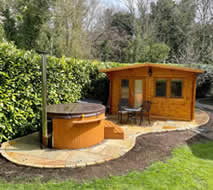
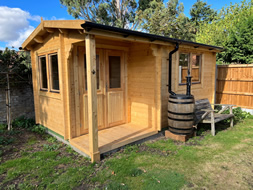
What is a workshop shed? Purpose, benefits and uses
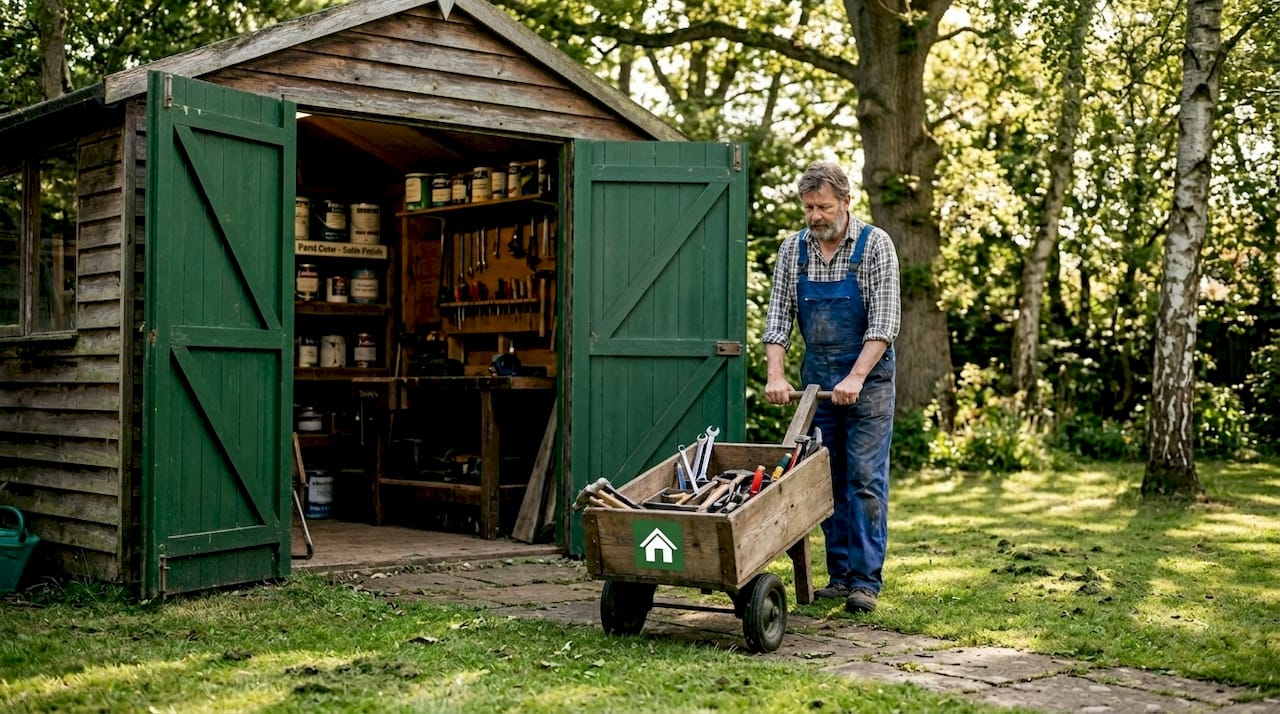
TL;DR:
- A workshop shed is designed for active projects with proper lighting, power, and secure storage, unlike standard garden sheds. It enhances productivity and safety by providing tailored features like workbenches, ventilation, and organization for hobbies or maintenance tasks. UK planning rules generally permit such structures if used incidentally, but larger or different uses may require planning permission.
Most people own a garden shed. Far fewer own a proper workshop shed. And the difference between the two is bigger than you might expect. If you’ve ever found yourself tripping over tools while trying to repot plants, or squinting in dim light trying to fix something on a wobbly shelf, you already know the problem. A workshop shed solves it. This guide walks you through exactly what a workshop shed is, what you can do in one, how to design it well, and what the UK planning rules actually mean for you.
Table of Contents
- Defining a workshop shed: more than just storage
- Typical uses and real-world benefits of a workshop shed
- Key features to consider when designing a workshop shed
- Legal and planning rules for UK workshop sheds
- Why the perfect workshop shed is personal: what most guides miss
- Create your ideal workshop shed with expert support
- Frequently asked questions
Key Takeaways
| Point | Details |
|---|---|
| Workshop sheds are versatile | They provide space for DIY, gardening, and creative projects, beyond mere storage. |
| Planning laws apply | UK rules allow most hobby uses, but restrictions apply for size, height, and alternative uses like living or business. |
| Design drives usability | Features like light, storage, and layout directly impact how effective your workshop shed will be. |
| Customisation is key | The ideal shed is tailored to your hobbies, garden space, and future needs. |
Defining a workshop shed: more than just storage
To understand workshop sheds, start by clarifying what sets them apart from ordinary garden structures.
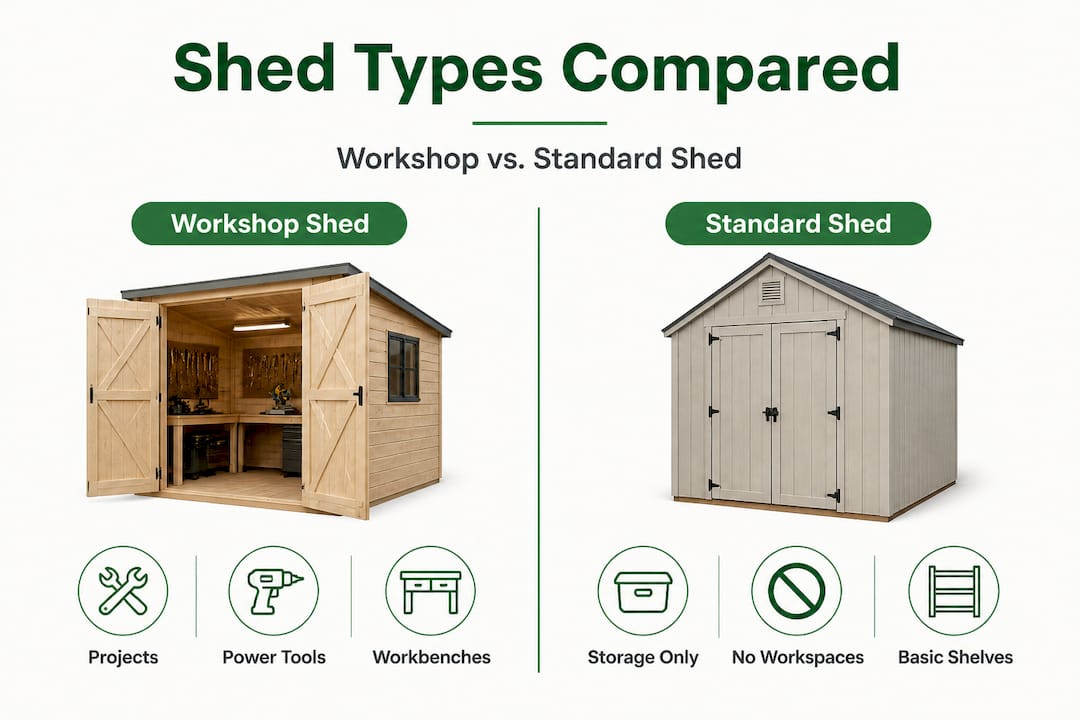
A standard garden shed stores things. A workshop shed is a place where you do things. That shift in purpose changes everything, from the layout and lighting to the flooring and security. Workshop sheds are built to support projects, whether that’s woodworking, repairs, upcycling furniture, potting plants, or working on bikes and lawnmowers.
The difference between a shed vs garden room is often about insulation and finish. A garden room tends to be a comfortable, habitable space. A workshop shed sits between that and a basic shed. It’s practical, hardwearing, and set up for work.
Here’s a quick comparison to make it clearer:
| Feature | Standard garden shed | Workshop shed |
|---|---|---|
| Primary purpose | Storage | Active projects and work |
| Lighting | Minimal or none | Good natural and artificial light |
| Workbench | Rarely included | Almost always present |
| Power supply | Uncommon | Common, often essential |
| Ventilation | Basic | Designed for fumes and dust |
| Security | Simple latch | Proper locks, often alarmed |
| Flooring | Basic timber or bare concrete | Reinforced, easy-to-clean surfaces |
The typical uses for a workshop shed are broad. Think:
- Woodworking and carpentry using power tools and hand tools
- Gardening preparation, including potting, seed propagation, and plant care
- Bike, lawnmower, or equipment maintenance
- Upcycling and painting furniture
- Craft projects, model making, and hobby work
- Tool storage and organisation in a logical, accessible way
Essential features for a proper workshop shed include a solid, weatherproof structure, a sturdy workbench, access to power, good ventilation, and strong locks. Without these, you just have a slightly bigger garden shed.
It’s worth noting that UK permitted-development rules may stop applying and planning permission can be required if you want to use a workshop shed for more than incidental use, such as for living or accommodation purposes. We’ll come back to this in detail later.
Typical uses and real-world benefits of a workshop shed
Having understood what a workshop shed is, it’s helpful to visualise just how much use and value it can provide.
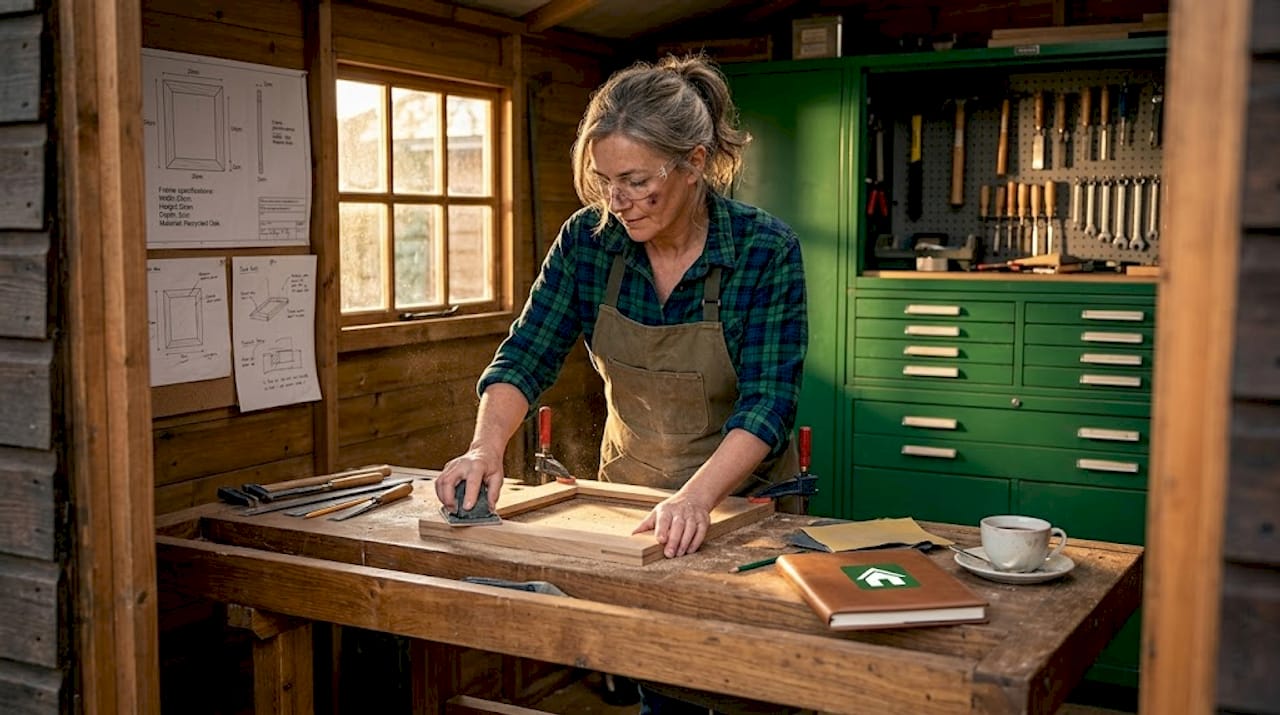
Let’s be honest: most garden sheds become dumping grounds. A workshop shed, by contrast, is actively designed to be used. That simple shift in intention makes a real difference to how you spend your time in the garden and how productive your projects actually are.
Here are some of the most popular uses, along with the practical benefit each one brings:
| Use | Benefit |
|---|---|
| Woodworking and carpentry | Dedicated space keeps sawdust and noise away from the house |
| Gardening prep and potting | Organised shelving and a workbench speeds up seasonal tasks |
| Bike and tool maintenance | Everything is to hand, no more carrying tools back and forth |
| Craft and hobby projects | Focused space means better concentration and fewer interruptions |
| Painting and upcycling | Proper ventilation makes messy tasks safe and manageable |
| Seasonal storage | Organised layout means you can actually find things |
The safety benefits alone are significant. Keeping sharp tools, chemicals, and power equipment out of the house and away from children is a big deal for many families. A properly secured workshop shed with good locks and solid walls does a much better job of this than a flimsy garden shed with a simple latch.
Organisation is another genuine advantage. When you design a workshop shed with your hobbies in mind, you can plan specific zones. A potting area near the window, a workbench along one wall, wall-mounted tool racks, and overhead shelving all make everyday tasks quicker and less frustrating.
Pro Tip: Before you buy or build, spend a week making a note of every task you do in your garden or DIY projects. That list becomes your shed specification. You’ll be surprised how specific and useful it is.
If you’re considering DIY shed kit options, it’s worth thinking about how flexible the layout can be. Some kits allow you to choose window positions, door placement, and internal configurations. That flexibility matters when you’re designing for a specific activity.
For those watching their budget, there are genuinely good affordable tool sheds available that still offer the structural quality needed for workshop use. You don’t need to spend a fortune to get a space that works hard for you.
If woodworking is your main focus, it’s also worth reading up on choosing woodworking tools before you start fitting out your shed, so the layout suits the tools you’ll actually use.
One thing to keep in mind: sheds are typically permitted development if used for incidental purposes, but planning permission is required if you exceed height, coverage, or position rules, or use the building as accommodation. Always check this before you commit to a size or location.
Key features to consider when designing a workshop shed
To get the most from your workshop shed, considering the right features during design or purchase is crucial.
This is where many people go wrong. They buy a shed based on size and price alone, then regret not thinking about lighting, ventilation, or where the door opens. Getting these details right upfront saves a lot of hassle later.
Here’s a numbered checklist of the key features to think through:
- Natural light Plan for large windows or roof lights. Dim sheds slow you down and lead to mistakes. North-facing windows give even, consistent light without glare.
- Artificial lighting Install LED strip lighting and overhead task lights. A single bare bulb will not do the job.
- Power supply Plan for at least four double sockets, a dedicated circuit breaker, and an outdoor-rated cable run from your house.
- Ventilation If you’ll be painting, using adhesives, or working with wood, you need airflow. Louvred vents or a small window that opens fully will help.
- Workbench placement Position it under or near a window. A solid, fixed bench at the right height makes a genuine difference to comfort and accuracy.
- Flooring Solid timber or reinforced concrete is best for workshop use. It needs to handle the weight of machinery and be easy to sweep clean.
- Insulation If you plan to use the shed through winter, insulate the walls and roof. This keeps it comfortable and protects tools from damp.
- Security Fit a hasp and staple with a solid padlock as a minimum. Alarmed sheds are increasingly popular and not expensive to set up.
- Foundation A proper concrete or paved base is essential. A wooden shed sitting on bare soil will warp, settle unevenly, and rot prematurely.
- Storage solutions Wall-mounted pegboards, magnetic tool strips, overhead shelving, and lockable cabinets all help maximise usable space.
“The most common mistake people make with workshop sheds is under-specifying the electrics. Plan for more sockets than you think you need, and make sure the circuit can handle the load of your biggest power tool.”
For guidance on getting the foundation and build right, our shed building guide walks through the full process step by step.
If space is tight, there are some genuinely clever small shed ideas that make a compact footprint work harder than you’d think.
It also helps to have a solid understanding of what tools you’ll actually be using. A practical read on building a tool kit can help you plan your storage and bench layout more accurately.
Pro Tip: Draw your shed layout to scale on paper before you build or order anything. Mark where the door, windows, and power outlets will go, then add your furniture. You’ll often spot problems before they become expensive mistakes.
UK guidance is clear that sheds are typically permitted development if incidental, but planning is needed if you exceed height, coverage, or position rules. Factor this in from the start, not as an afterthought.
Legal and planning rules for UK workshop sheds
While function and features matter, legal compliance is a must for any serious workshop shed builder.
The good news is that most standard workshop sheds in the UK fall within what’s known as permitted development rights. This means you don’t need to apply for formal planning permission, provided you stay within certain limits.
Here’s what the rules generally say:
- The shed must be in the rear garden of your property, not in front of the principal elevation
- Maximum height is 2.5m at the eaves and 4m with a dual-pitched roof (3m for other roof styles)
- The total footprint of all outbuildings must not exceed 50% of the land around your original house
- The shed must not be used as living accommodation or a commercial premises
- Properties in conservation areas, national parks, or Areas of Outstanding Natural Beauty may have stricter rules
- Listed buildings require separate consent regardless of size or use
If you’re planning to use the space for more than incidental use, such as accommodation, a business, or any commercial activity, the permitted development rules may stop applying entirely. In those cases, a formal planning application is almost always required.
What counts as incidental? Broadly, it means occasional and secondary to the main house. A workshop for personal hobby use fits comfortably within this. Running a business from it, renting it out, or sleeping in it does not.
If you breach planning rules, the local planning authority can issue an enforcement notice requiring you to remove or alter the building. In some cases, this can result in fines. It’s simply not worth the risk, especially when most hobby workshop sheds comfortably qualify as permitted development.
Our full guide on garden building permission rules covers all of this in much more detail, including how to check your specific situation and what to do if you’re unsure.
Why the perfect workshop shed is personal: what most guides miss
With practical and legal details covered, it’s worth considering what truly makes a workspace work for you.
Most articles about workshop sheds give you a tick-list of features and send you on your way. That’s useful, but it misses something important. The best workshop shed isn’t the biggest one, or the one with the most gadgets. It’s the one that fits how you actually work.
We’ve seen this time and again. Someone builds a shed that looks brilliant on paper, with double doors, a huge workbench, and a full electrical setup. Then they realise they mostly do potting and seed propagation, and they’ve got no shelving near a window and the workbench is in the worst possible spot. Copying someone else’s layout rarely translates well.
Your hobbies dictate everything. A keen woodworker needs a different layout to a keen gardener. Someone who restores furniture needs ventilation as a priority, while someone who mainly stores and maintains bikes needs height clearance and wide access. There’s no universal answer.
The other thing most guides miss is that your needs will change. The shed you need today might not be the shed you need in three years. That’s why we’d always suggest building in a bit more space than you think you need right now, and leaving some walls clear for future storage or equipment. Flexibility is genuinely valuable.
It’s also worth thinking about when you’ll use the shed. If you’ll be out there in January in wellies and a coat, insulation and a small heater connection become important. If it’s strictly a summer space, you can prioritise other things.
Our shed planning advice goes into detail on how to plan a layout that works around your specific hobbies and garden size, which is well worth a read before you commit to anything.
The bottom line is this: treat your workshop shed as a personal project, not a product off a shelf. The more thought you put into how you actually use the space day to day, the more you’ll enjoy using it.
Create your ideal workshop shed with expert support
Ready to put ideas into action? Here’s how to turn your workshop shed plan into reality.
If you’ve been inspired to create your own workshop shed, we’d love to help you get there. Whether you’re drawn to a DIY build or you’d prefer a bespoke design that’s tailored to your garden and your projects, we’ve got options to suit.
Our range of garden log cabins includes structures that work brilliantly as workshop sheds, with solid timber construction, flexible layouts, and plenty of room to make the space genuinely your own. If you’ve got something more specific in mind, our bespoke log cabin options let you design almost every aspect of the build, from size and window placement to roof style and cladding. Browse our range and see what’s possible. We’re always happy to talk through your ideas and help you find the right fit.
Frequently asked questions
Do workshop sheds need planning permission in the UK?
Most workshop sheds are permitted development if used for incidental purposes, but planning permission may be needed if you’re using it as living space or exceeding height or footprint limits.
What are the main differences between a garden shed and a workshop shed?
A workshop shed is equipped for DIY activities and projects, offering features like built-in benches, better security, and lighting, while a garden shed is mainly for storage.
Can I run electricity to my workshop shed?
Yes, you can run electricity to a workshop shed, but electrical work should be done safely and will likely require a qualified electrician to ensure it meets UK regulations.
How big can my workshop shed be without planning permission?
Generally, your shed can be up to 2.5m at the eaves and up to 4m with a dual-pitched roof, with certain footprint and placement restrictions as outlined by UK planning rules.
Can I use a workshop shed as a guest room or for business?
You will almost always need planning permission if using your shed as accommodation or a business premises, rather than for incidental hobby use, as permitted-development rules stop applying in those situations.