
What is a wildlife pond, and does it work near a cabin?
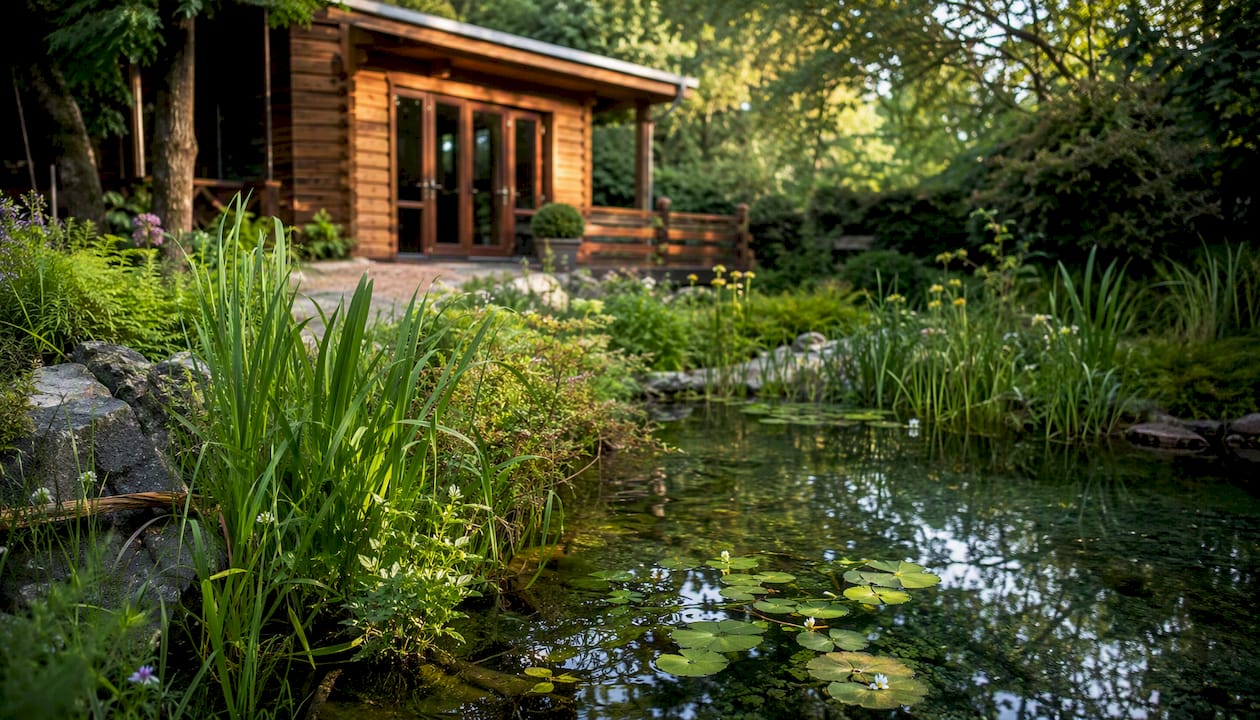
A wildlife pond is simply a body of water left to look after itself. No pump, no filter, no fish. Just water, plants and whatever creatures turn up to use it. That’s the whole idea, and it’s what makes it different from an ornamental pond, which usually needs equipment and upkeep to stay clear and pretty. The Freshwater Habitats Trust defines it as any freshwater body between about 1 m² and 2 hectares that holds water for all or part of the year, and that’s a useful benchmark whether you’re thinking of a bucket-sized feature or something the size of a small swimming pool.
Here’s the direct answer to the question you’re really asking: yes, a wildlife pond can sit near your cabin, and it can work brilliantly, as long as you get the siting and safety right. Bodies like the RHS, WWT and The Wildlife Trusts all back this up, and they’ve spent decades working out what makes garden ponds succeed.
Before you get stuck into digging or buying a liner, run through this quick checklist:
- Keep the pond at least a metre or so from your cabin’s foundations to avoid persistent damp against the walls.
- Fence it off or use weight-bearing safety mesh if children or pets have access to the garden.
- Check where roof runoff and any nearby fertilised beds drain, so nutrients don’t wash straight into the water.
- Choose a spot with some sun and some shade rather than deep tree cover all day.
- Avoid siting directly over drains, cables or anything buried you’d rather not dig into.
Key Takeaways
A wildlife pond needs no fish or filtration to succeed, and it can sit safely near a cabin when sited with sensible offsets, safety mesh and filtered rainwater feeds.
| Point | Details |
|---|---|
| Definition matters | A wildlife pond runs itself, without pumps, filters or fish, unlike an ornamental pond. |
| Siting comes first | Choose part sun, part shade, level ground, away from fertilised beds and tree canopy. |
| Depth needs variety | Mix shallow margins (10–25 cm) with deeper pockets (50–75 cm) for the best habitat range. |
| Safety is solvable | Fence or use weight-bearing mesh, and keep the pond clear of cabin foundations. |
| Cabin design helps | A bespoke cabin layout from Logcabinkits can position windows and decking to suit your pond from the start. |
Table of Contents
- Why a wildlife pond near your cabin actually earns its space
- Where should you put a wildlife pond near a cabin?
- How deep should a wildlife pond be?
- What should you build the pond with?
- How do you actually build a small wildlife pond?
- What should you plant in a wildlife pond?
- How do you look after a wildlife pond through the year?
- How do you keep a pond safe next to your cabin?
- What wildlife will actually turn up, and when?
- Designing the pond and cabin as one setup, not two
- Does your cabin’s roof or treatment affect the pond?
- How do you keep the pond balanced once it’s established?
- A quieter kind of garden reward
- How a bespoke cabin can work with your pond, not against it
- Sources
Why a wildlife pond near your cabin actually earns its space
A pond does more heavy lifting for garden wildlife than almost anything else you could add. It’s the single feature most likely to bring frogs, newts, dragonflies, birds and even hedgehogs into a garden that previously had none of them.
The biodiversity gain is well documented. Frogs and toads need water to breed, dragonflies and damselflies lay eggs on submerged plants, and birds will use even a small pond for drinking and bathing. The WWT points out that garden ponds act as mini wetlands, storing rainfall and offering refuge to amphibians and insects during dry spells. That matters more each year, as gardens increasingly need to cope with both heavy downpours and prolonged dry stretches.
There’s a practical side too, and it ties in neatly with cabin life:
- A pond positioned where you can see it from a cabin window or decking turns wildlife watching into something you do with a cup of tea rather than a special trip.
- Ponds fed by roof runoff reduce how often you need to top them up with tap water.
- Water cools the air around it slightly on hot days, which is welcome if your cabin doubles as a garden office in summer.
- A pond linked to a downpipe, backed by a log pile and a strip of native planting, creates a proper stepping-stone habitat rather than an isolated puddle, according to guidance from the RHS.
Small ponds punch well above their weight here. Even in a compact or paved garden, a modest pond can store rainwater and cut local flood risk while giving wildlife somewhere to drink when everything else has dried out.
Where should you put a wildlife pond near a cabin?
Getting the position right from day one saves you a lot of hassle later. A pond in the wrong spot either fails to thrive or causes problems for your cabin, so it’s worth taking ten minutes to walk the garden before you pick up a spade.
Follow these siting principles:
- Do choose a spot that gets a mix of sun and light shade through the day. Full shade slows down plant growth and wildlife activity; full sun all day can overheat shallow water and encourage algae.
- Don’t dig under a large tree. Falling leaves in autumn will rot in the water and strip out oxygen.
- Do pick level ground, or be ready to build up one side, so the water sits evenly rather than sloping out.
- Don’t site the pond right next to a fertilised flower bed or lawn treated with feed, since rain will wash nutrients straight in and fuel algae blooms.
- Do think about sightlines. A pond a few metres from a cabin window, with a clear view across the water, gives you the best wildlife watching for the least effort.
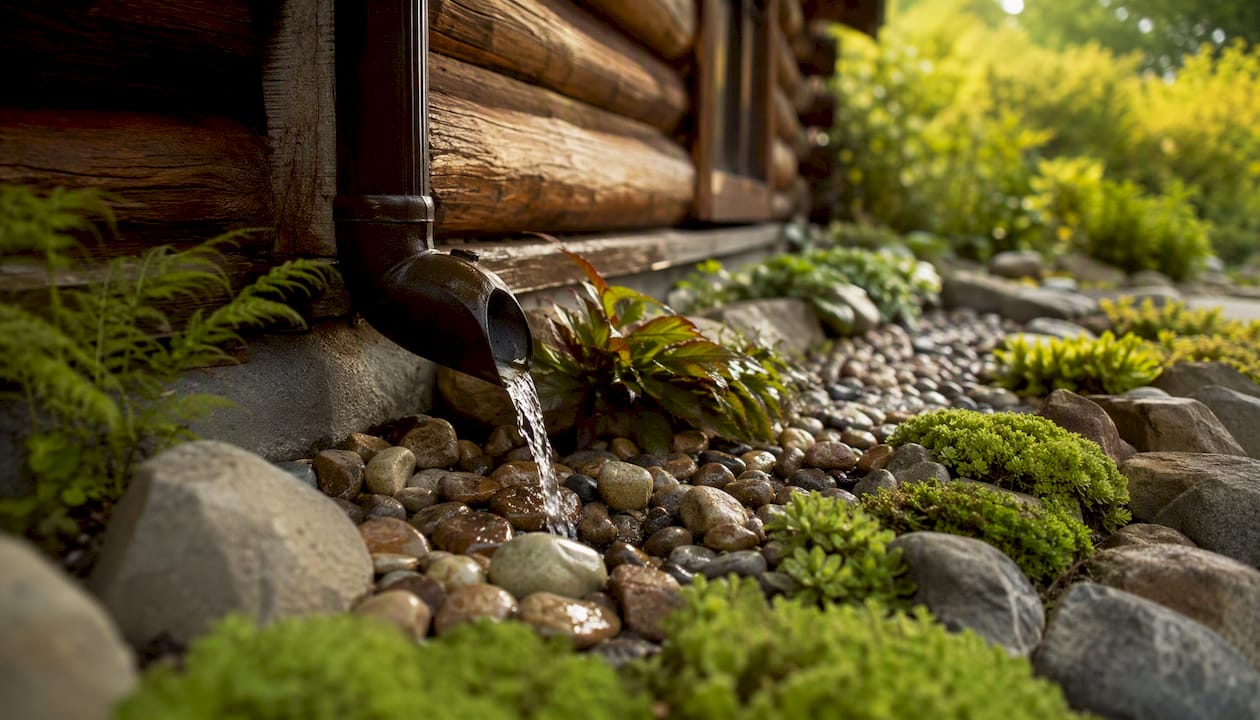
Roof runoff is a genuine asset if you use it properly. The RHS advises filtering or settling rainwater from downpipes before it enters the pond, since raw runoff often carries debris, grit and sometimes traces of fertiliser from nearby beds. A simple diverter and a mesh filter at the downpipe outlet solves most of this, and it means your pond top-up is essentially free.
Pro Tip: Site the pond slightly offset from the downpipe rather than directly beneath it. That way you still capture the water, but you can filter it through a short run of gravel or a rain garden before it reaches the pond, keeping grit and fertiliser out.
One sentence on structure: keep the pond clear of foundations, drains and any underground cabling, and check before you dig if you’re unsure what’s below the surface.
How deep should a wildlife pond be?
Depth is the question almost every reader asks first, and the answer is more forgiving than you’d think. There’s no single “correct” depth. What matters is variety.
- Shallow margins (10–25 cm): these are essential. Amphibians, birds and insects need a gently shelving edge to get in and out safely, and this is where most of your planting will sit, according to RHS guidance.
- General pond area (20–60 cm): a good working depth for a typical small garden pond, giving enough water volume to stay stable through a warm summer.
- Deeper pockets (50–75 cm, up to 1 metre in larger ponds): these provide a refuge that stays cooler in summer and doesn’t freeze solid in winter, which the SRUC technical note on pond creation recommends for temperature stability.
- Container or mini ponds (20–30 cm minimum): an old sink, trough or half-barrel made watertight can support a handful of plants and still attract wildlife, per RHS advice on water habitats.
- Larger ponds for amphibians (1–2 metres or more across): Froglife’s Just Add Water guide notes that amphibians tend to prefer ponds of this size, though smaller features still serve as valuable drinking and bathing spots.
An irregular outline, rather than a neat circle or square, increases the ratio of shallow edge to open water. That extra edge is where most of the action happens, so a wobbly, natural-looking shape genuinely outperforms a tidy geometric one for wildlife value.
What should you build the pond with?
Your choice of construction method depends mostly on budget, how permanent you want it to be, and how fussy you are about the final shape.
| Method | Best for | Cost hint | Trade-offs |
|---|---|---|---|
| Flexible liner (butyl or EPDM) | Bespoke, irregular shapes | A liner for a 3 m × 3 m pond typically runs around £50 to £100, per RSPB guidance | Most flexible design, but needs careful edge burial to protect from UV |
| Pre-formed shell | Quick, straightforward installs | Moderate, varies by size | Fixed shape and depth, less scope for custom margins |
| Container (sink, trough, barrel) | Small gardens, quick wins | Low, often reusing what you have | Limited depth and space, but still valuable habitat |
| Puddled clay | Larger, naturalistic ponds | Low material cost, high labour | Needs the right soil type and a lot more digging effort |
Flexible liners suit cabin gardens particularly well because you can shape them around existing planting, decking or a curve in the lawn. Bury the liner edge in a shallow trench rather than leaving it exposed. Sunlight breaks down exposed liner material over time, and a buried edge also hides the join neatly under turf or gravel.
A few practical build details worth knowing before you start:
- Lay a bed of soft sand or old carpet underneath the liner to stop sharp stones puncturing it.
- Cut planting shelves into the sides as you dig, rather than trying to add them afterwards.
- Smooth any hard edges with your hands before laying the liner. It’s easy to miss a stone until it’s already caused a leak.
How do you actually build a small wildlife pond?
There are two realistic routes for most cabin gardens: a quick container pond, or a proper dug pond with a liner. Both are well within reach of a weekend DIY project.
Container pond (30 to 90 minutes):
- Choose a watertight container. An old sink, butler’s trough, or a repurposed water tank works well.
- Sink it into the ground so the rim sits level with the surrounding soil, or leave it raised if you prefer a patio feature.
- Add a layer of gravel and a few large stones to create a ramp for wildlife to climb out.
- Fill with rainwater if you have some stored, otherwise tap water left to stand for a day or two.
- Add a couple of native plants straight away, and let it settle for a week before checking on progress.
Dug pond with a flexible liner (a weekend, plus a few weeks for planting to settle):
- Mark out an irregular shape with a rope or hose so you can see it from different angles before committing.
- Dig out the shape, creating a shelving profile: shallow margins around the edge, a mid-depth zone, and one deeper pocket in the centre.
- Remove sharp stones and roots, then line the hole with sand or old carpet as a protective underlayer.
- Lay the liner, leaving plenty of overlap, and smooth it into the shape without stretching it too tight.
- Fill slowly with rainwater where possible, then trim and bury the liner edge once the water level has settled.
- Backfill around the buried edge with soil or turf so it blends into the garden.
If you’re moving a lot of soil or the site has heavy clay, it’s worth hiring a mini digger or a local groundworks contractor rather than doing it all by hand. Before you dig anywhere near your cabin, check for underground cables, drainage pipes or septic connections, particularly if the cabin was installed with any groundworks of its own.
Once it’s filled, add a strip of weight-bearing safety mesh if children are likely to be nearby, and plan to top up little and often with rainwater rather than a sudden dose of tap water, which can shock a young pond’s chemistry.
What should you plant in a wildlife pond?
Planting is what turns a hole full of water into an actual habitat. Aim for a mix across three zones, and lean towards native or wildlife-friendly species rather than showy ornamentals.
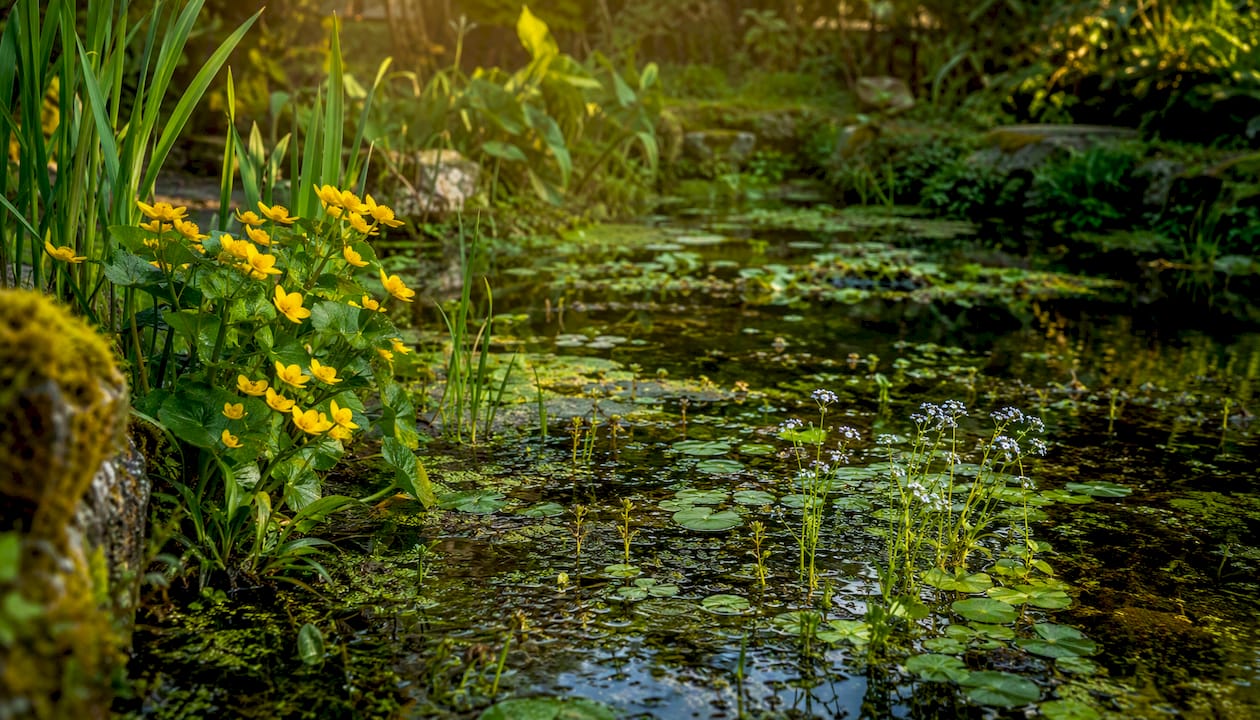
| Zone | Example plants | Role |
|---|---|---|
| Marginal (shallow edge) | Marsh marigold, water forget-me-not, brooklime | Shelter for emerging amphibians and egg-laying sites for insects |
| Submerged (oxygenators) | Hornwort, water starwort, curled pondweed | Add oxygen to the water and help prevent it turning stagnant |
| Floating | Frogbit, water soldier (avoid non-native floaters like water hyacinth) | Shade the water surface and reduce algae growth |
A rough planting ratio that works well: about two-thirds of your planting in the shallow margins, and the remaining third spread between submerged oxygenators and floating cover in the deeper zone. Wait one to two weeks after filling before adding plants, giving any chlorine in tap water time to disperse and the water to settle.
Oxygenating plants matter more than people expect. They’re doing quiet, constant work keeping the water clear and stopping it turning stagnant, which matters far more in a small pond than a large one. Steer well clear of invasive species sold as “pond plants” in some garden centres, particularly parrot’s feather and floating pennywort, both of which can choke a pond within a season.
For container ponds, use a shallow planting shelf or a few pots of marginal plants set on bricks to raise them near the surface.
How do you look after a wildlife pond through the year?
Maintenance for a wildlife pond is refreshingly light compared with an ornamental one, mostly because you’re not fighting a filter or feeding fish. The goal is to let nature settle into a rhythm and only step in when something’s clearly off balance.
A simple seasonal routine:
- Spring: check for frogspawn and avoid disturbing it; start watching for newly emerging plant growth.
- Summer: top up water levels during dry spells, ideally with stored rainwater, and keep an eye on shade if algae starts building.
- Autumn: net out fallen leaves before they sink and rot, but leave some plant growth standing for overwintering insects.
- Winter: check that ice doesn’t seal the surface completely; a floating ball or gentle tap on the ice helps release trapped gases.
Some firm dos and don’ts:
- Don’t add fish. The Freshwater Habitats Trust is clear that fish disturb silt and eat amphibian eggs and invertebrates, which undoes much of the value a wildlife pond offers.
- Don’t use chemical treatments or algaecides. They harm the very wildlife you’re trying to attract.
- Do use rainwater over tap water wherever practical.
- Do keep nutrient-rich runoff, like lawn feed or fertilised bed drainage, away from the water.
A little green algae is normal, especially in a new pond’s first summer. If it becomes a thick mat, remove it by hand with a rake or stick, twist it out gently, and lean on more oxygenating and floating plants to shade the surface naturally rather than reaching for a chemical fix.
Pro Tip: Keep a simple pond diary, even just a few notes on your phone. Jotting down the first frogspawn sighting each spring, or when dragonflies first appear, makes it much easier to spot whether your pond is improving year on year.
How do you keep a pond safe next to your cabin?
Safety concerns are usually the thing stopping people adding a pond near a cabin, and they’re fair to raise, but they’re solvable with a bit of planning rather than a reason to avoid a pond altogether.
For children and pets:
- Fence the pond, or fit weight-bearing safety mesh across the surface if full fencing isn’t practical, as recommended by the WWT.
- Build in shallow, gently sloping margins rather than a sudden vertical drop, so anyone who does slip in can climb straight back out.
- Supervise young children near open water, the same as you would near a paddling pool.
For the cabin structure itself:
- Keep the pond a sensible distance from the cabin’s foundations so water doesn’t sit persistently against the timber or base.
- Direct roof runoff through a controlled downpipe and filter rather than letting it pool near the cabin walls.
- Watch for water tracking back towards the cabin after heavy rain, and adjust the ground slope if needed.
A few practical fixes that solve most of the worry without losing the wildlife value: a removable cover for the winter months when nobody’s watching the garden closely, a planting screen that also doubles as a visual barrier, and clear sightlines from cabin windows so you can keep half an eye on things without stepping outside. If you’re security-minded generally around your cabin, some of the same bespoke security thinking that applies to gates and access points works just as well for pondside fencing.
What wildlife will actually turn up, and when?
Expectations matter here. A new pond doesn’t fill overnight with frogs and dragonflies. Colonisation happens in stages, and knowing what’s normal stops you thinking something’s wrong when actually it’s just early days.
Through the seasons, you can expect roughly this pattern:
- Spring: frogs and toads arrive first, often within the first year, followed by frogspawn if you’re lucky.
- Summer: dragonflies and damselflies start visiting to hunt and breed, along with a growing range of water beetles and pond skaters.
- Autumn: birds increase their visits for drinking and bathing as other water sources dry up, and small mammals like hedgehogs may use the pond edge at dusk.
- Winter: activity slows right down, but the pond still matters as a source of unfrozen water on milder days.
In year one, expect the early colonisers: pond skaters, water boatmen, and often frogs within the first breeding season if there’s a pond nearby already. Newts tend to take longer, sometimes two or three years, since they’re pickier about established vegetation before they move in.
A few signs your pond is genuinely healthy: a good range of invertebrates rather than just one or two species, frogspawn appearing reliably each spring, and visible dragonfly larvae clinging to submerged plants. If you spot anything unusual, or want to contribute to wider records, The Wildlife Trusts and local recording groups are always keen to hear about garden sightings.
Designing the pond and cabin as one setup, not two
The best cabin gardens treat the pond and the building as part of the same plan, rather than adding one as an afterthought to the other. A little thought at the design stage pays off for years afterwards.
Think about how your cabin’s features shape the possibilities. A cabin with a large window or a covered decking area facing the pond turns wildlife watching into something effortless. Door and window positions matter more than people realise here: face the main glazing towards the water, and you get a ringside seat without changing your daily routine at all. If you’re planning a bespoke cabin design, it’s worth flagging the pond position early so window placement and decking can work with it rather than against it.
A few integration ideas that consistently work well:
- Route a section of decking to skirt the pond edge, giving safe, dry access for observation and maintenance.
- Use a planting screen of native shrubs between the cabin and the pond to soften the transition and add extra shelter for amphibians.
- Add a log pile or two near the pond edge. It’s a cheap, effective way to give frogs and insects somewhere to shelter that also looks entirely natural.
- Keep exterior lighting low and warm near the water, since bright white lights can disturb nocturnal visitors like newts and moths.
If you’re planning the wider layout, the garden cabin landscaping workflow covers how paths, planting and decking fit together around a cabin, and it’s worth reading before you finalise where the pond sits relative to everything else.
Does your cabin’s roof or treatment affect the pond?
Yes, and it’s worth thinking through before you connect a downpipe straight into your new pond. Water coming off any roof picks up whatever’s on that surface, and cabin roofs are no exception.
Untreated runoff can carry grit, moss debris, bird droppings and, depending on how the cabin was finished, trace residues from roofing felt or timber treatments applied during construction or maintenance. None of this is usually enough to cause serious harm, but a wildlife pond has no filtration system to clean it out, so anything that washes in tends to stay in. The RHS recommends filtering roof runoff before it reaches the pond and avoiding any pipe route that also picks up fertiliser from nearby beds or lawns.
A simple mesh filter at the downpipe outlet catches leaves and grit. If your cabin’s exterior has been recently treated with a wood preservative or stain, it’s sensible to divert runoff away from the pond for the first few weeks after treatment, letting rain wash the worst of it off elsewhere before you reconnect the feed. Choosing an eco-friendly setup for your cabin from the outset, including low-impact finishes, makes this whole question far simpler down the line.
How do you keep the pond balanced once it’s established?
A wildlife pond doesn’t need constant tinkering, but it does reward a bit of regular attention, particularly in its first year or two while it finds its own balance.
Watch for a few signs that things are drifting out of kilter: water turning consistently cloudy rather than clearing after a few days, a sudden explosion of blanket weed, or a strong smell, which usually points to too much organic matter breaking down. Most of these resolve themselves once you remove excess leaf litter, thin out overly vigorous plants, or add a few more oxygenators to compete with the algae for nutrients.
The balance tends to improve on its own as the pond matures. A pond in its second or third year, with established plants and a settled population of invertebrates, is far more self-regulating than a brand-new one. That’s one of the strongest reasons to be patient rather than intervening too heavily in year one.
A quick seasonal check, alongside your pond diary, is usually all it takes: look at water clarity, note what’s flowering or growing strongly, and keep half an eye out for anything that looks out of place, like an unusually large mat of algae or a sudden die-off of plants. Small, early corrections are far easier than trying to fix a pond that’s badly out of balance.
A quieter kind of garden reward
There’s something genuinely calming about a cup of tea on the decking, watching a dragonfly work the edge of the water while the cabin sits quiet behind you. It doesn’t happen on day one. The first few months of a new pond are mostly patience: watching the water clear, checking for the first pond skaters, wondering if anything will actually show up.
Then, usually without much warning, it does. A frog appears one morning sitting on the edge like it’s always been there. That’s the payoff, and it’s worth remembering when the pond feels like it’s taking its time to settle. Watching wildlife from a cabin window, rather than trudging out into the cold to check on things, makes the whole habit far easier to keep up, and that consistency is often what makes the difference between a pond that thrives and one that gets forgotten.
How a bespoke cabin can work with your pond, not against it
There are plenty of ways to add a pond to an existing garden, but if you’re planning a new cabin at the same time, you’ve got a rare chance to design the two together properly. That’s where a bespoke build earns its keep. Rather than fitting a standard layout and hoping the windows line up with your pond, Logcabinkits can adjust door position, glazing and decking on our standard range specifically so the water sits exactly where you’ll actually see it.

Whether you’re drawn to a simple, single-room garden log cabin, a fully glazed garden pavilion for wraparound views, or a multi-room layout with a study on one side and a garden room facing the pond on the other, the layout can flex around your landscaping plans rather than the other way round. An apex-roof cabin also gives you a wider roofline for capturing rainwater, which is handy if you’re planning to feed a nearby pond from the downpipe. If you’re not sure which shape and size suits your plot, the log cabin selection wizard is a quick way to narrow things down before you get a bespoke quote.
Sources
- Ponds | Freshwater Habitats Trust
- Wildlife ponds | RHS
- How to build a wildlife pond | WWT
- Technical note: Ponds — creation and restoration | SRUC
- Just add water (Froglife)