
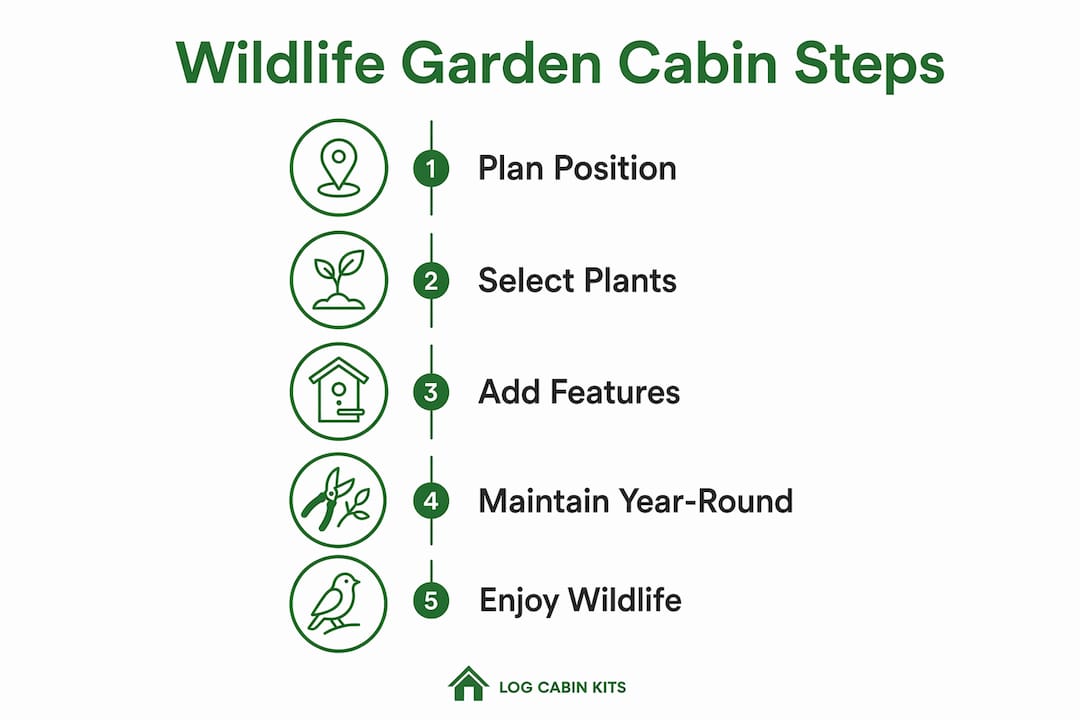
What is a wildlife garden cabin and how does it work?
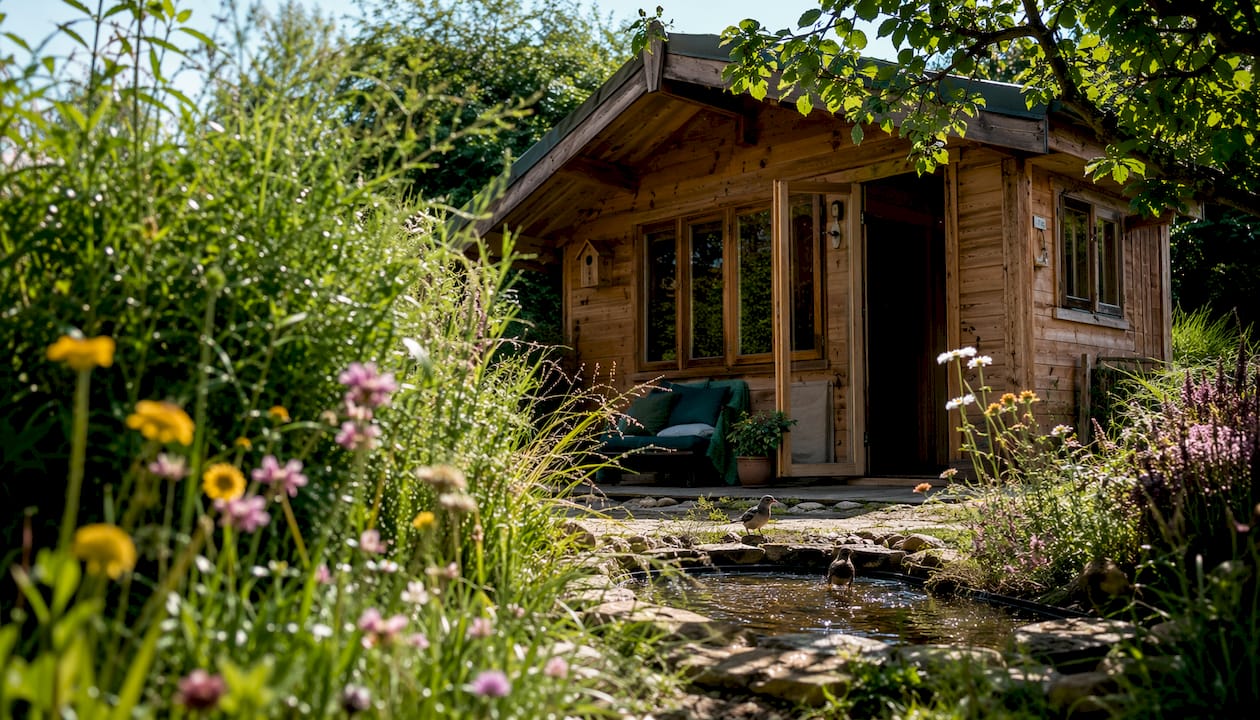
A wildlife garden cabin is a garden building designed with local wildlife in mind. It gives birds, bats, insects, and small mammals a safe place to shelter, nest, and thrive, while you get a quiet spot to sit and watch it all happen. Think of it as a garden room that works for you and for nature at the same time. The RSPB recommends combining water features, native planting, and undisturbed areas to create a truly wildlife-friendly space, and a well-placed cabin ties all of those elements together beautifully.
A wildlife garden cabin typically brings together several key features:
- Native planting around and beside the cabin to provide food and cover throughout the year
- Water features such as a small pond or bird bath to attract amphibians, insects, and birds
- Natural materials in the cabin’s construction, including untreated or low-toxicity timber
- Strategic positioning at a woodland edge or habitat boundary to encourage wildlife movement
- Nesting and shelter features such as bat boxes, bird boxes, or a green roof
The Wildlife Trusts point out that with many gardens in the UK, the way we manage them can make a real difference to declining species like hedgehogs, bats, and song thrushes. A wildlife garden cabin is one of the most practical ways to make your garden part of that wider network of natural havens.
How do you plan and position a wildlife garden cabin?
Getting the position right is probably the single most important decision you’ll make. A cabin dropped in the wrong spot can actually disturb wildlife rather than attract it, so it pays to think carefully before you lay a single foundation.
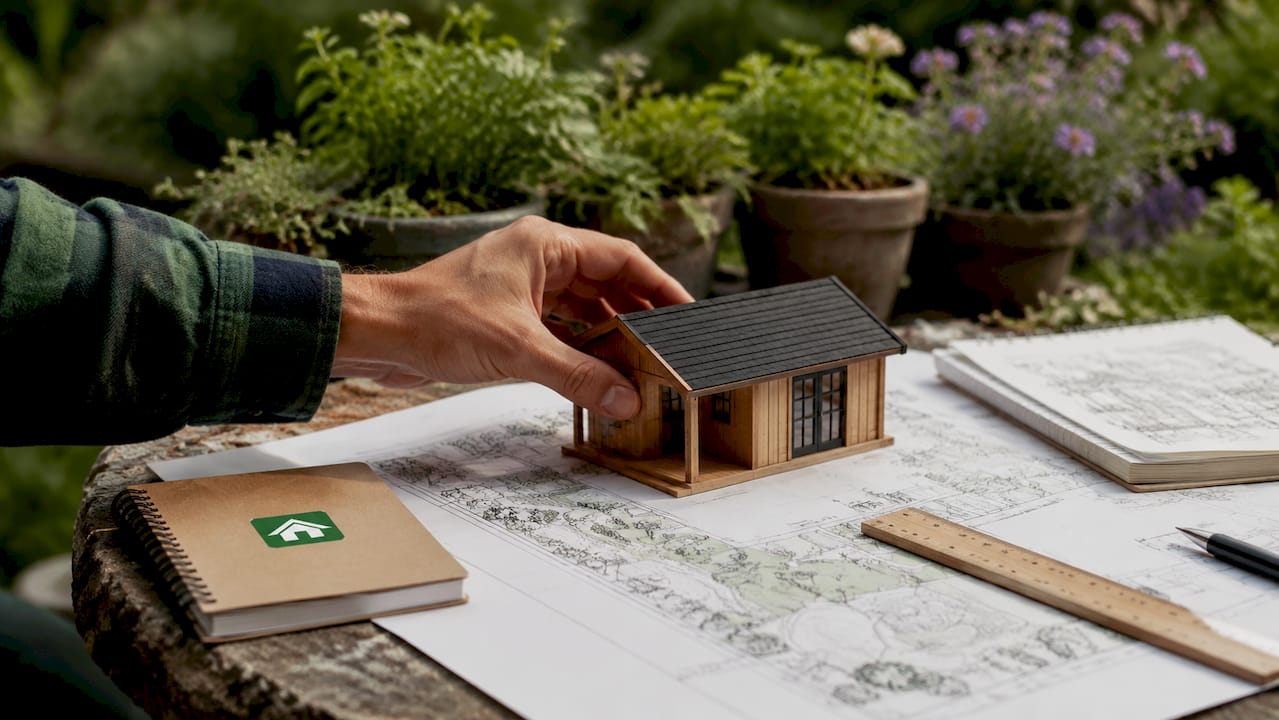
The best approach is to look at your garden as a series of connected zones rather than one open space. Place the cabin where it can act as a transition point between different habitats, perhaps where a lawn meets a hedge, or where a planted border gives way to a wilder patch of ground. The UK Government’s nature garden guidance describes this as a “sensory landscape connection,” where a structure sits at a woodland edge and encourages wildlife to approach without losing access to natural cover nearby.
Here are the key things to consider when planning your position:
- Face the cabin towards the wildlife zone, not away from it, so you can observe without disturbing
- Keep a buffer of planting between the cabin and any open lawn to give animals a safe approach route
- Avoid positioning near busy paths or gates where foot traffic would unsettle nesting birds or foraging mammals
- Check for existing natural features like mature trees, hedges, or damp patches, and site the cabin to complement them
- Consider the sun’s path so the cabin stays comfortable for you while the planted areas around it get the light they need
Pro Tip: Position a low-growing wildflower strip or a log pile between the cabin and the main garden. Animals use these as stepping stones, moving gradually closer to the cabin without feeling exposed.
A bespoke cabin design gives you the freedom to adjust dimensions, door and window placement, and even the roof style to suit your exact garden layout. That flexibility makes a real difference when you’re trying to fit a cabin into an awkward corner or around an existing tree.
Which native plants work best around a wildlife garden cabin?
Native plants are the backbone of any wildlife garden. They’ve evolved alongside local insects, birds, and mammals over thousands of years, so they provide food and shelter in ways that many non-native species simply can’t match. The RSPB’s planting guidance notes that native wildflower meadows are in decline across the countryside, making garden planting increasingly important for keeping insect populations alive.
Layering your planting is the most effective approach. You want something at every height, from ground level right up to the canopy, so there’s always food and cover available regardless of the season.
- Trees and tall shrubs: silver birch, hawthorn, holly, and guelder rose provide nesting height and berries for birds
- Mid-level shrubs: native roses, elder, and blackthorn offer nectar, fruit, and dense cover
- Wildflowers and ground cover: ox-eye daisies, cornflowers, poppies, and clover feed bees and butterflies from spring through to autumn
- Climbing plants on cabin walls: ivy, honeysuckle, and jasmine attract insects and give wrens and robins sheltered nesting spots
- Uncut grass patches: even a small area of long grass supports caterpillars, beetles, and small mammals
The RHS recommends a good proportion of British native plants, particularly those that already grow locally, as these support the widest range of invertebrates. The best time to plant trees, shrubs, and bare-rooted plants is between november and march. Planting before christmas gives roots time to establish while the soil is still warm enough to encourage growth.
![A wildflower border in full bloom beside a timber garden cabin, with bees visiting ox-eye daisies and cornflowers]
What water features attract wildlife near a garden cabin?
Water is one of the quickest ways to bring new wildlife into your garden. Add it close to the cabin and you’ll have something worth watching almost immediately.
The Wildlife Trusts make a reassuring point here: even a small sink or tub pond with a few aquatic plants can make a genuinely valuable habitat. You don’t need a large garden or a big budget to get started.
- Small sunken ponds: attract water insects, dragonflies, frogs, toads, and newts; even a washing-up bowl sunk into the ground works well
- Bird baths: bring in a wide range of birds for drinking and bathing; place them near the cabin window for easy viewing
- Natural pools: larger bodies of water support a richer ecosystem and can become a real focal point in the garden
- Bog gardens: a shallow, permanently damp area beside a pond suits marsh plants and provides habitat for amphibians
Keep the water clean by removing blanket weed regularly and topping up during dry spells. Avoid using chemicals anywhere near a water feature. A gently sloping edge or a ramp of stones lets hedgehogs and other small mammals drink safely without the risk of falling in. Position the water feature where you can see it clearly from the cabin, because watching a frog emerge from the shallows on a still morning is genuinely one of the better things a garden can offer.
What design features make a cabin genuinely wildlife-friendly?
The cabin itself can do a lot of the heavy lifting if you design it thoughtfully. It’s not just about what you plant around it; the structure can actively provide shelter and nesting opportunities for a range of species.
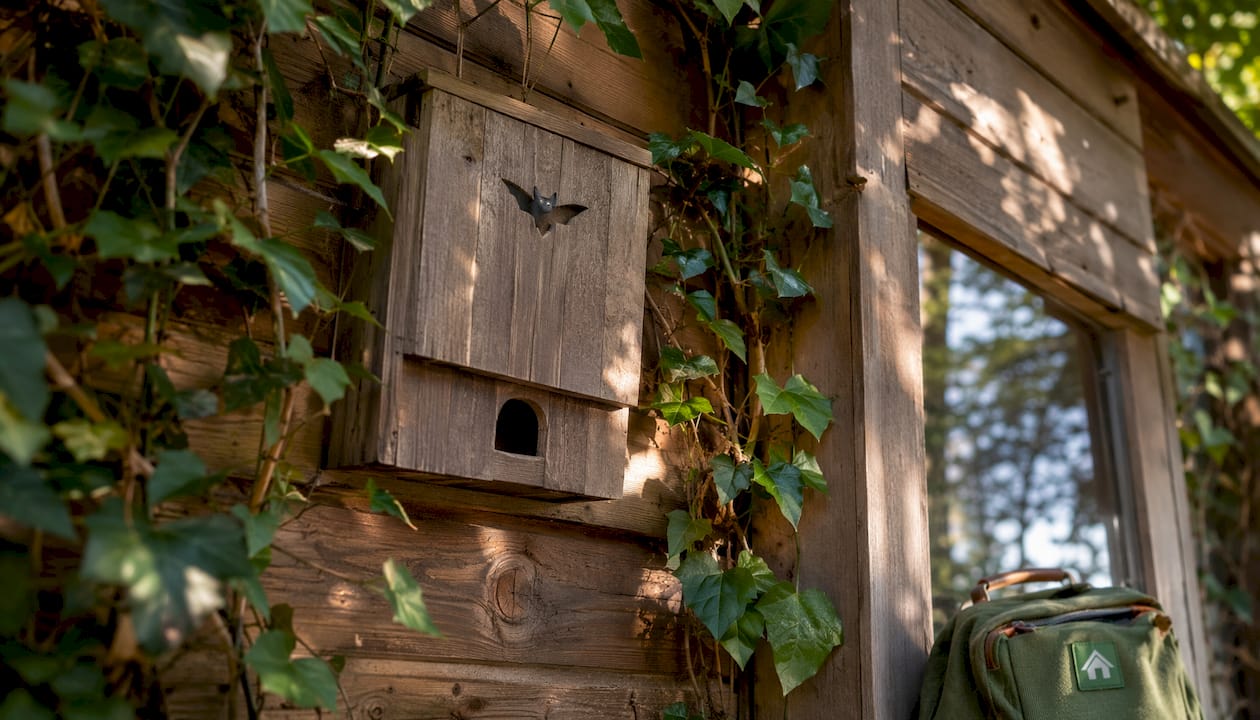
![Close-up of a bat box mounted flush into the timber wall of a garden cabin, surrounded by climbing ivy]
The RHS recommends adding nest boxes for bats and birds if your garden lacks natural cover, and a cabin wall is an ideal mounting point. Bat boxes work best on south or south-east facing walls, positioned at least 3 metres from the ground. Bird nesting boxes suit a north or east facing wall to avoid overheating. Both can be integrated flush into the cabin’s timber cladding so they look like part of the building rather than an afterthought.
Key design features to consider:
- Natural or low-toxicity timber finishes so that animals coming into contact with the cabin aren’t harmed by chemical treatments
- Green roof on a flat-roofed cabin to create an insect habitat and improve the cabin’s insulation at the same time
- Climbing plant supports such as wires or trellis fixed to the cabin walls to encourage ivy, honeysuckle, or clematis
- Sensitive lighting design using warm, low-level lights directed downward to avoid disrupting bats and hedgehogs after dark
- Gap-friendly construction leaving small spaces under decking or between log piles nearby for beetles, toads, and slow worms
Managing outdoor lighting carefully near a wildlife cabin prevents disruption to nocturnal species such as bats and hedgehogs, supporting their natural rhythms. A garden cabin lighting guide can help you choose fittings that keep the cabin comfortable for you without flooding the surrounding habitat with harsh light.
The Berrywell cabin project in South Yorkshire, designed by Will Tomson, is a good example of this thinking in practice. His larch-clad cabin wraps around a large black walnut tree and looks directly onto a natural swimming pond, with the whole structure feeling like it belongs to the garden rather than sitting on top of it.
How do you maintain a wildlife garden cabin ecosystem all year round?
Maintenance is where a lot of wildlife gardens quietly fall apart, so consider professional tuinonderhoud en -aanleg to keep your garden cabin ecosystem healthy. The temptation is to tidy everything up, but for wildlife, a bit of mess is exactly what’s needed.
The three things that matter most are keeping diverse structures in place, providing food sources throughout the year, and maintaining a reliable water supply. Your cabin sits at the centre of all three zones, so keeping it in good shape is part of keeping the whole ecosystem healthy.
Seasonal tasks worth building into your routine:
- Spring: Clean out bird boxes after the nesting season ends, top up water features, and sow annual wildflowers like poppies and cornflowers
- Summer: Leave grass uncut in patches, avoid pesticides, and watch for signs of new wildlife using the cabin’s nesting features
- Autumn: Plant native trees and shrubs, add a fresh log pile near the cabin, and clear blanket weed from ponds before it dies back and rots
- Winter: Leave seed heads and hollow stems standing for overwintering insects, check bat boxes are undisturbed, and treat the cabin’s timber if needed
For the cabin itself, roof maintenance is the task most people put off until it becomes a problem. Checking for moss build-up and clearing gutters in autumn keeps the structure sound without needing harsh chemical treatments that could run off into your pond or planted areas. Use water-based, wildlife-safe timber treatments where possible.
Eco-friendly pest control matters too. Slugs and snails are a nuisance on new planting, but they’re also food for hedgehogs, frogs, and thrushes. Barriers, copper tape, and companion planting are all effective without the risks that come with chemical pellets. Monitoring what wildlife is actually using your garden helps you adapt over time. A simple notebook kept in the cabin, logging what you see and when, builds a surprisingly useful picture of how your habitat is developing across the seasons.
![Overhead view of a timber garden cabin surrounded by autumn planting, with a small pond visible to one side and a log pile tucked against the cabin wall]
Do you need planning permission for a wildlife garden cabin in the UK?
For most garden cabins used as wildlife observation spaces or hobby rooms, you won’t need planning permission. Under Permitted Development rights in England, you can build a single-storey outbuilding in your garden without applying to the council, provided it stays within certain size and height limits and isn’t used as separate living accommodation.
The rules change if you want to sleep in the cabin or use it commercially. A guest cabin or Airbnb use requires full planning permission, as does any cabin on agricultural land or in a designated area such as a National Park or Area of Outstanding Natural Beauty. Some modular cabins built in transportable sections may qualify under the legal definition of a caravan, which creates a different planning position, but this is a grey area and worth checking with your local planning authority before you build.
A few practical points to keep in mind:
- Size limits apply: the cabin must not cover more than half your total garden area and must stay within the permitted height limits for your location
- Listed buildings and conservation areas have stricter rules; always check before you start
- Building regulations apply separately from planning permission, particularly if the cabin has electrics or plumbing
- Scotland, Wales, and Northern Ireland have their own Permitted Development rules, which differ from England’s
If you’re unsure, a quick call to your local planning department is always the easiest first step. Logcabinkits can also advise on standard cabin dimensions that typically fall within Permitted Development limits, which takes a lot of the guesswork out of the process.
How do you attract specific wildlife species to your cabin?
Different species need different things, and a little targeted thinking goes a long way.
Birds respond well to a combination of nesting boxes, dense shrubs for cover, and a reliable water source. Positioning the cabin near a hawthorn or holly hedge gives them somewhere to retreat quickly if they feel threatened. A bird bath visible from the cabin window is one of the simplest and most rewarding additions you can make.
Bats need undisturbed roosting spots and a dark, quiet environment after dusk. Bat boxes on the cabin wall, combined with careful lighting, can attract common pipistrelles within a season or two. Planting night-scented flowers like evening primrose and tobacco plant near the cabin brings in the moths that bats feed on.
Insects thrive wherever there’s a mix of flowering plants, bare soil, dead wood, and water. A log pile beside the cabin, a patch of wildflowers, and a small pond together create the kind of layered habitat that supports beetles, bumblebees, hoverflies, and butterflies all at once.
Small mammals including hedgehogs, voles, and wood mice need ground-level cover and undisturbed corners. Leaving a gap under the cabin’s decking or base gives them a dry, sheltered spot. Avoid using slug pellets anywhere in the garden, as these are one of the main causes of hedgehog decline in UK gardens.
The Murrayfield Allotment Association in Dundee installed a wildlife observation cabin overlooking a wildflower area planted with 60 metres of hedging, and found it attracted birds, insects, and even visiting deer during winter months. It’s a good example of how a simple cabin, placed thoughtfully within a planted habitat, can become a genuine community wildlife resource.
Thinking about your own wildlife garden cabin?
If you’re ready to create a wildlife-friendly space in your garden, the cabin you choose makes a real difference. A well-built timber cabin, positioned thoughtfully and surrounded by native planting, can become the heart of a genuinely thriving garden ecosystem.
Logcabinkits specialises in bespoke and custom-built garden log cabins that can be tailored to suit your garden’s layout, your wildlife goals, and your own taste. Whether you want a compact cabin for quiet observation or a larger garden summer house with room to relax while nature gets on with things outside, there’s a design to suit. Not sure where to start? The cabin selection wizard walks you through the options in a few simple steps and points you towards the right building for your space.
Key takeaways
A wildlife garden cabin works best when it’s treated as a living part of the garden ecosystem, not just a building placed within it.
| Point | Details |
|---|---|
| Position matters most | Site the cabin at a habitat boundary, such as where a lawn meets a hedge, to encourage wildlife movement. |
| Native plants are the foundation | Layer trees, shrubs, wildflowers, and climbers around the cabin to provide year-round food and shelter. |
| Water attracts wildlife fast | Even a small sunken pond or bird bath near the cabin brings in insects, amphibians, and birds quickly. |
| Design the cabin to shelter wildlife | Bat boxes, bird boxes, green roofs, and climbing plant supports all increase the cabin’s habitat value. |
| Planning permission rules vary | Most non-residential garden cabins fall under Permitted Development, but sleeping use or commercial use requires full permission. |
Recommended
- blog garden cabin landscaping workflow your step by step guide | Specialist Garden Cabin Supplier
- Log Cabin Selection Wizard | Find the Right Garden Building
- Garden Log Cabins | Quality Timber Garden Buildings | LogCabinKits
- blog how to soundproof a garden cabin step by step guide | Specialist Garden Cabin Supplier