
Seasonal planting schemes: year-round interest for UK gardens
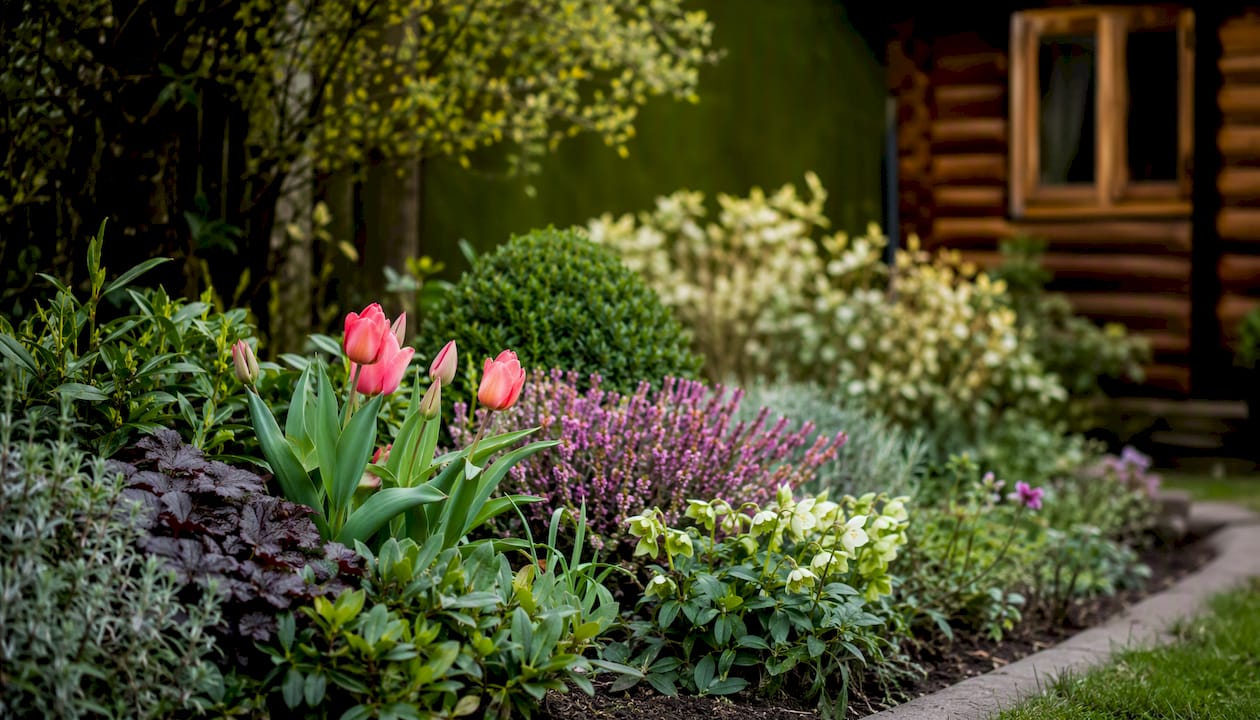
A seasonal planting scheme is a planned, month-by-month sequence of plants so your garden always has something attractive to look at, whatever the time of year. Think of it as a conveyor belt: one plant finishes, another takes over. To get started today, write a simple one-page list of what you want to see in your garden each month, then check for any months where nothing is performing. The RHS guidance on planning a border recommends aiming for at least one plant looking good in every single month, but most four-season garden frameworks and practical expert advice recommend aiming for at least two or three plant performers in every month for true seasonal interest. Use that as your baseline: plan so every month features at least two to three plants in flower, with foliage or strong structure if nothing is blooming.
Key takeaways
A seasonal planting scheme works because it combines an evergreen backbone, layered succession planting, and deliberate foliage choices to keep your garden interesting in every month of the year.
| Point | Details |
|---|---|
| Start with structure | Position evergreen shrubs first; aim for roughly 30% of your border as permanent structure. |
| Plan for every month | Check August and November specifically — these are the months most schemes miss. |
| Use foliage as the glue | Mix textures and shades of green to create visual rest between flowering spells. |
| Layer for small spaces | Use groundcover, bulbs, perennials, and climbers vertically to maximise performers per square metre. |
| Logcabinkits as focal point | A bespoke garden log cabin gives your seasonal scheme a fixed structure to plan around and frame. |
Table of Contents
- Why do UK gardens benefit so much from seasonal planning?
- The four design principles every scheme needs
- What should you plant each season in a UK garden?
- How to plan your own seasonal scheme step by step
- Common mistakes that ruin a seasonal scheme
- Three quick sample schemes you can copy
- Monthly checklist: planting, deadheading and seasonal tasks
- A note on why seasonal schemes matter most in small gardens
- Your garden building as the heart of your seasonal scheme
- Sources
Why do UK gardens benefit so much from seasonal planning?
UK gardens have a real advantage here. Our mild winters mean a much wider range of winter-interest plants perform well outdoors than in colder climates. Hellebores, winter-flowering heathers, Sarcococca (sweet box), and ornamental grasses all look good from November through to February without any special protection.
Without a scheme, most small UK gardens peak in June and July, then look tired by August and bare by November. A planned approach prevents those long dead periods, which matters even more when you have a small plot or planting around a garden building where every square metre counts.
The four design principles every scheme needs
Start here before you choose a single plant.
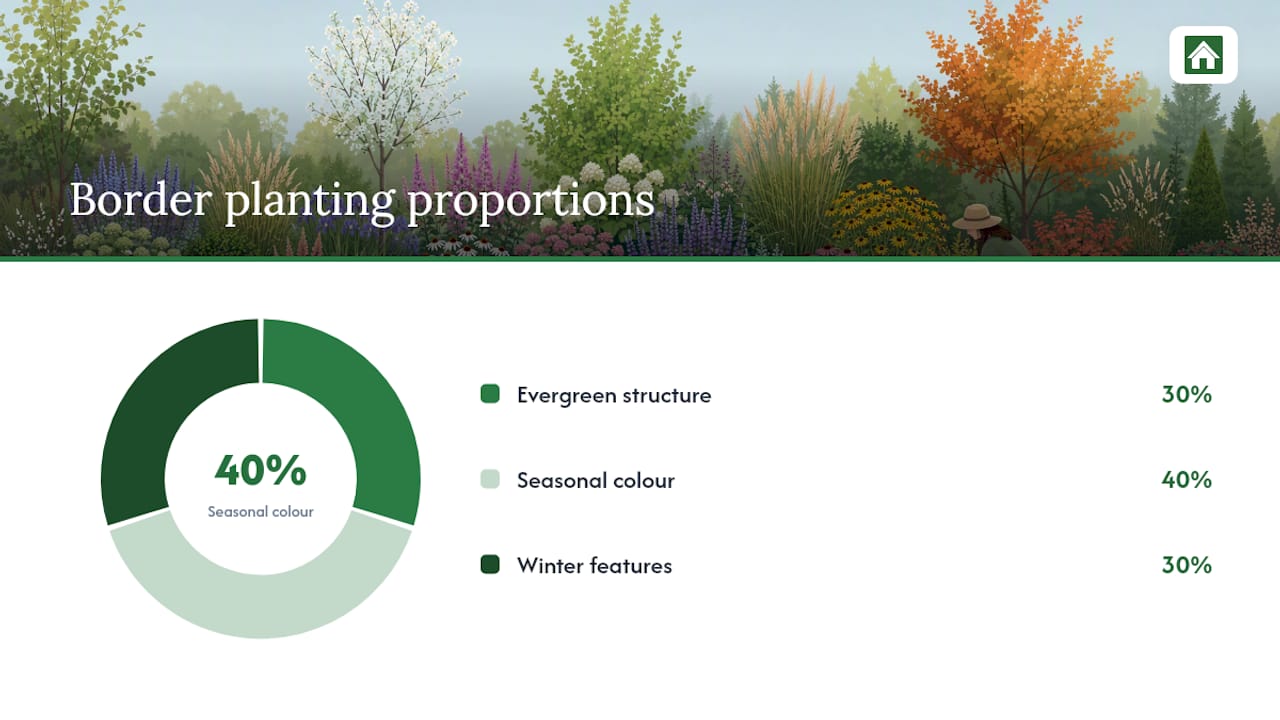
1. Backbone structure first. Position evergreen shrubs and structural plants before anything else. According to Garden UK’s year-round interest guide, a well-balanced border uses roughly 30% evergreen structure, 40% seasonal colour, and 30% winter features. These proportions give you a framework that holds the border together even when nothing is flowering.
2. Succession over spectacle. Plan so one plant finishes as another begins. Lee Burkhill of Garden Ninja describes this as treating your garden like a conveyor belt of interest rather than a single static display.
3. Foliage as the glue. The RHS highlights green foliage as the unifying element that stops a scheme feeling chaotic. Mix textures, forms, and shades of green — think Alchemilla mollis alongside bold hostas — to create visual rest between flowering moments.
4. A restrained colour palette. Pick two or three colours per season and stick to them. More than that and the scheme starts to look accidental.
- Audit your border: does evergreen structure make up roughly a third of the planting?
- Does every month have at least three performers (flowers, foliage, or seedheads) to ensure continuous interest?
- Are you repeating plant groups to create flow rather than dotting singles around?
- Have you planned for foliage texture between flowering spells?
Pro Tip: Use a low, spreading plant like Geranium ‘Rozanne’ as a foliage filler between taller perennials. It flowers for months and its leaves cover gaps left by earlier bulbs.
What should you plant each season in a UK garden?
| Season | Main objective | Key performers | Small garden / container picks | Timing notes |
|---|---|---|---|---|
| Spring | Bridge winter to summer | Tulips, alliums, Pulmonaria, Euphorbia | Dwarf tulips, Muscari, Hellebores in pots | Plant bulbs September–November; deadhead spent flowers |
| Summer | Peak display | Roses, Salvia, Echinacea, Agapanthus | Lavender, Verbena bonariensis, Cosmos in containers | Deadhead regularly; water containers daily in dry spells |
| Autumn | Extend and add warmth | Rudbeckia, Sedum, ornamental grasses, Anemone × hybrida | Sedums in pots, Japanese anemones in borders | Leave seedheads for wildlife; reduce watering |
| Winter | Structure and scent | Sarcococca, Hellebores, Cornus stems, Mahonia | Skimmia, Cyclamen coum, ivy in containers | Plant winter structure in autumn; minimal maintenance needed |
Gardening by Design notes that layering plants vertically — groundcover, bulbs, perennials, shrubs, and climbers — lets even a small bed deliver a changing palette all year. A narrow border beside a log cabin can carry all four seasons if you use this approach.
How to plan your own seasonal scheme step by step
- Audit your site. Walk the garden and note aspect (north, south, east, west), soil type (clay, sandy, loam), and any microclimates near buildings. A south-facing wall beside a garden log cabin creates a warm microclimate that suits Mediterranean plants.
- Map your months. Draw a simple grid: 12 months across the top, your borders down the side. Mark any months that are currently empty.
- Choose your backbone. Pick three to five evergreen shrubs that suit your soil and aspect. Place these on your plan first.
- Add seasonal colour in layers. Work through spring, summer, autumn, and winter, choosing plants that hand the baton to the next season.
- Plan bulb planting. For a 10m × 3m border, Garden UK recommends roughly 200–300 bulbs, 8–12 structural evergreens, and 15–20 perennials. Scale down proportionally for smaller plots.
- Check for gaps. August and November are the months most schemes miss. Add a late-summer grass or Rudbeckia for August; a winter-flowering shrub for November.
- Write a planting calendar. Note when to plant, deadhead, lift, and divide each plant. This becomes your monthly checklist.
- Buy and plant in the right order. Structural evergreens first (autumn), then spring bulbs (September–November), then perennials (spring or autumn).
Common mistakes that ruin a seasonal scheme
Most problems come down to three habits.
- Planting everything to bloom at once. Val Bourne, writing in The Telegraph, warns against this directly. Stagger your highlights across the year rather than cramming them all into June.
- Ignoring foliage. A scheme built only on flowers looks bare for nine months. Hostas, ferns, and ornamental grasses carry a border through the gaps between flowering spells.
- Letting daffodil foliage spoil later displays. Daffodil leaves take six weeks to die back after flowering and can smother nearby plants. Plant them behind later-emerging perennials like hostas or geraniums, which grow up and hide the dying foliage naturally.
- Forgetting August and November. These are the two months most gardeners overlook. Add Rudbeckia fulgida or Sedum ‘Autumn Joy’ for August; Mahonia × media ‘Charity’ or Sarcococca for November.
- Over-planting summer. A border that peaks spectacularly in July but has nothing by September feels like a disappointment. Balance your seasonal performers so the display tapers gradually rather than dropping off a cliff.
Three quick sample schemes you can copy
Small front garden (approx. 3m × 1.5m)
Aim: year-round kerb appeal with low maintenance. Start with a Pittosporum ‘Tom Thumb’ as a structural anchor, add three salvia plants for summer, three rudbeckia for autumn, and underplant with 30 dwarf tulips for spring. A single Sarcococca in the corner gives winter scent and gloss.
Container terrace
Aim: four-season interest in pots. Use one large pot per season: spring Hellebore, summer Agapanthus, autumn Sedum, winter Skimmia. Group them together and swap to the front as each comes into its best. Layering vertically within a large container (bulbs beneath, perennial above) doubles the number of performers per pot.
Planting around a log cabin or summerhouse
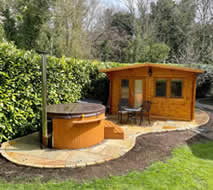
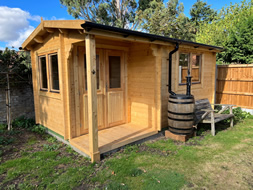
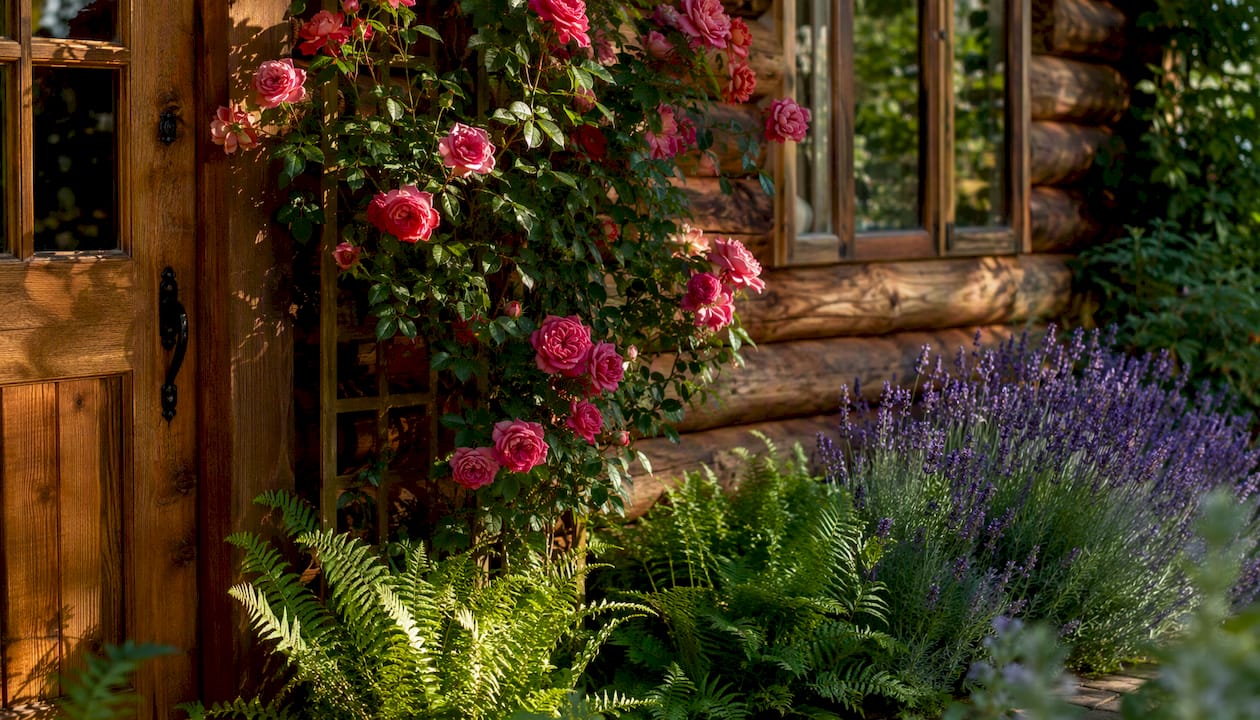
Aim: frame the building and create sightlines to the entrance. Plant climbers (Clematis or a rose) on a trellis either side of the door, low ornamental grasses along the front edge, and a scented shrub (Sarcococca or Philadelphus) within two metres of the main window so the scent drifts inside. Keep planting at least 30cm from the cabin wall to allow air circulation and avoid moisture build-up against the timber. For corner log cabins, wrap a low border around two sides to soften the building’s footprint without blocking light to the windows.
Monthly checklist: planting, deadheading and seasonal tasks
Use this to confirm at least three plants are performing each month. August and November are the months to watch.
| Month | Key tasks | Plants to focus on |
|---|---|---|
| January | Check winter structure; clear debris | Hellebores, Sarcococca, Cornus stems |
| February | Plant bare-root roses and shrubs | Snowdrops, winter aconites, Hellebores |
| March | Divide perennials; feed borders | Early tulips, Pulmonaria, Euphorbia |
| April | Plant summer bulbs; stake tall perennials | Tulips, alliums, Forget-me-nots |
| May | Deadhead spring bulbs; plant annuals | Alliums, Aquilegia, Geraniums |
| June | Deadhead roses; water containers | Roses, Salvia, Geranium ‘Rozanne’ |
| July | Continue deadheading; check for pests | Echinacea, Agapanthus, Lavender |
| August | ⚠️ Gap risk — add late performers now | Rudbeckia, Sedum, ornamental grasses |
| September | Plant spring bulbs; divide perennials | Anemone × hybrida, Rudbeckia, grasses |
| October | Plant evergreen structure; lift tender bulbs | Sedums, late roses, ornamental grasses |
| November | ⚠️ Gap risk — plant winter interest now | Mahonia, Sarcococca, Cyclamen coum |
| December | Mulch borders; plan next year’s scheme | Hellebores, Cornus, Skimmia |
A note on why seasonal schemes matter most in small gardens
The biggest mistake I see in small gardens is treating the planting as an afterthought. A seasonal scheme is not a luxury for large estates. It is actually more important in a small garden, because every plant is visible all the time. There is nowhere to hide a bare patch.
Planting around a garden building makes this even more true. A cabin or summerhouse is a fixed focal point, and the plants around it frame how the whole garden feels. Get the succession right and the building looks purposeful and well-placed in every season. Get it wrong and it looks stranded in a sea of bare soil for half the year.
The good news is that the planning itself is not complicated. A one-page month-by-month list, a handful of evergreen anchors, and a deliberate choice to cover August and November will put you ahead of most gardeners.
Your garden building as the heart of your seasonal scheme
A garden building gives your planting scheme something most open gardens lack: a fixed focal point with sightlines, shelter, and structure. Planting around it is not just decorative. It connects the building to the garden and makes both look better.

At Logcabinkits, you can choose from a full range of garden log cabins and garden summerhouses, all available with bespoke adjustments to suit your plot. Want the door on a specific side to face your best planting view? Need a window positioned to catch the winter light through a Sarcococca? The bespoke design service lets you specify exactly that. Use the cabin selection wizard to find the right size and style for your garden, then plan your seasonal scheme around it.
Sources
These are the sources used throughout this guide, each worth bookmarking for deeper detail.
- Planning a beautiful garden border | RHS Advice
- Year-round interest garden planting | Garden UK
- Succession planting secrets: Year round blooms in your garden - Garden Ninja: Lee Burkhill Garden Design
- The golden rules of seasonal planting | The Telegraph (Val Bourne)
- Succession planting in the ornamental garden - Gardening by Design