
Garden cabin lighting guide: UK homeowners’ handbook
TL;DR:
- Proper lighting transforms a garden cabin into a safe, inviting space while minimizing safety risks and wildlife disturbance. It requires selecting IP-rated fixtures, warm colour temperatures, and compliant electrical systems, ideally installed by a registered electrician. Thoughtful layering and wildlife-friendly choices enhance atmosphere, safety, and ecological harmony.
Garden cabin lighting is the art and science of illuminating your outdoor retreat to balance function, safety, and atmosphere. Done well, it transforms a timber cabin into a year-round space you actually want to spend time in. Done poorly, it creates safety risks, wastes energy, and disturbs the wildlife in your garden. This guide covers everything you need to know: UK electrical standards, fixture choices, wildlife-friendly design, and practical installation tips. Whether you’re lighting a home office, a hobby space, or a relaxing retreat, the right approach makes all the difference.
What are the essential lighting requirements and UK electrical safety standards for garden cabins?
UK outdoor electrical installations follow strict rules, and your garden cabin is no exception. Getting this right protects you, your family, and your property. The good news is that the standards are straightforward once you understand the basics.
IP ratings explained
IP stands for Ingress Protection. It tells you how well a fixture resists water and dust. For garden cabins, IP65 or IP66 is the minimum for exposed locations, while IP67 is required for recessed fittings that may sit in standing water. Choosing a lower-rated fixture outdoors is a false economy. It will fail faster and could become a safety hazard.
Voltage: 12V SELV vs mains 230V
You have two main options for powering your cabin lighting. 12V SELV systems (Safety Extra Low Voltage) use a transformer to step down the mains supply to a safe 12V. They eliminate the risk of electric shock, require no RCD protection on the low-voltage side, and allow flexible cable routing. They are an excellent choice for decorative and accent lighting. Mains 230V circuits deliver more power and suit task lighting and appliances, but they require a 30mA RCD or RCBO for protection and must use cables rated for outdoor use.
Cable and circuit protection
- Use SWA (steel wire armoured) cable or conduit-protected cable for any underground runs
- All outdoor circuits must be protected by a 30mA RCD or RCBO
- Maintain IP ratings at cable entries using correctly sized cable glands and seal any unused entries to prevent water ingress
- Keep cables away from areas where they could be damaged by garden tools or foot traffic
Part P and when to call a professional
Part P of the Building Regulations covers electrical work in England and Wales. Any new circuit from your consumer unit to a garden cabin counts as notifiable work. You must either use a registered electrician (such as one registered with NICEIC or NAPIT) or notify your local authority building control before starting work. Scotland and Northern Ireland have equivalent regulations. This is not optional, and skipping it can cause problems when you sell your home.
Remember: A registered electrician will issue an Electrical Installation Certificate on completion. Keep this document safe. It proves the work is compliant and is often requested by insurers and solicitors.
How to choose the best lighting fixtures for your garden cabin
Choosing the right fixtures is where function meets style. Think of your cabin in zones and ask what each area needs to do.
The three lighting layers
Good cabin lighting design uses three layers working together:
- General lighting provides overall illumination. Ceiling pendants, flush mounts, or recessed downlights work well here.
- Task lighting focuses light where you need it most, such as a desk, workbench, or kitchen area. Wall sconces and under-cabinet strip lights are ideal.
- Accent lighting adds depth and character. Think LED strip lights along shelving, picture lights, or small table lamps.
Fixture types compared
| Fixture type | Best use | Cabin suitability |
|---|---|---|
| Pendant lights | General/ambient | Excellent for open-plan cabins |
| Recessed downlights | General/task | Clean look, needs IP67 if in damp areas |
| Wall sconces | Accent/task | Great for timber walls, adds warmth |
| Floor and table lamps | Accent/ambient | Flexible, no wiring needed |
| LED strip lights | Accent | Under shelves, along beams, very versatile |
Colour temperature matters more than you think
Warm LEDs at around 2700K complement timber beautifully and create a cosy, inviting feel. Cooler white light (4000K and above) can make a wooden cabin feel clinical and cold. For a relaxing retreat or home office, stick to the 2700K to 3000K range. It suits natural wood tones and makes the space feel welcoming in the evening.
Solar and hybrid options
Solar garden lights suitable for UK cabins often feature IP65 ratings, motion detection, and runtimes of 4 to 8 hours. Many now include USB-C backup charging, which is useful during grey winter months. Hybrid solar and mains options give you the best of both worlds: solar for everyday use and mains as a backup when sunlight is limited.
Pro Tip: Split your lighting into two circuits. Put safety and task lights on a reliable mains supply, and use solar or battery-powered lights for decorative ambience. This approach, recommended by lighting designers, keeps your cabin functional even if one system has an issue.
How to design cabin lighting that protects local wildlife
Outdoor lighting affects more than just your garden. Bats, moths, beetles, and birds are all sensitive to artificial light, and poor choices can disrupt their behaviour significantly.
Why blue-rich light is a problem
Blue-rich light disrupts nocturnal wildlife and should be avoided in garden settings. Standard cool white LEDs (above 4000K) are the worst offenders. They attract insects in large numbers, which in turn disrupts the food chain and can deter bats from foraging near your cabin. Warm LEDs at or below 2700K are far less disruptive and are the recommended choice for any outdoor cabin lighting.
Practical steps for wildlife-friendly lighting
- Use fully shielded fixtures that direct light downwards only, reducing spill and glare into hedgerows and trees
- Install dimmers, timers, and motion sensors to limit the duration and intensity of light
- Avoid leaving lights on all night. A timer that switches off at 11pm makes a real difference
- In areas close to ponds, hedgerows, or woodland, consider red LED lighting (630 to 660 nm wavelength). Red LEDs have minimal impact on bats and nocturnal insects and are suitable for lighting sensitive ecological corridors around your cabin
- Point any path or security lights downward and away from vegetation
Pro Tip: If you know bats roost or forage near your garden, contact the Bat Conservation Trust before installing any new outdoor lighting. They offer free guidance and can advise on the safest approach for your specific location.
What are the practical steps to install and maintain your cabin lighting?
Installing cabin lighting well is not complicated, but it does require a clear plan before you start. Rushing this stage leads to the most common mistakes.
Step-by-step installation overview
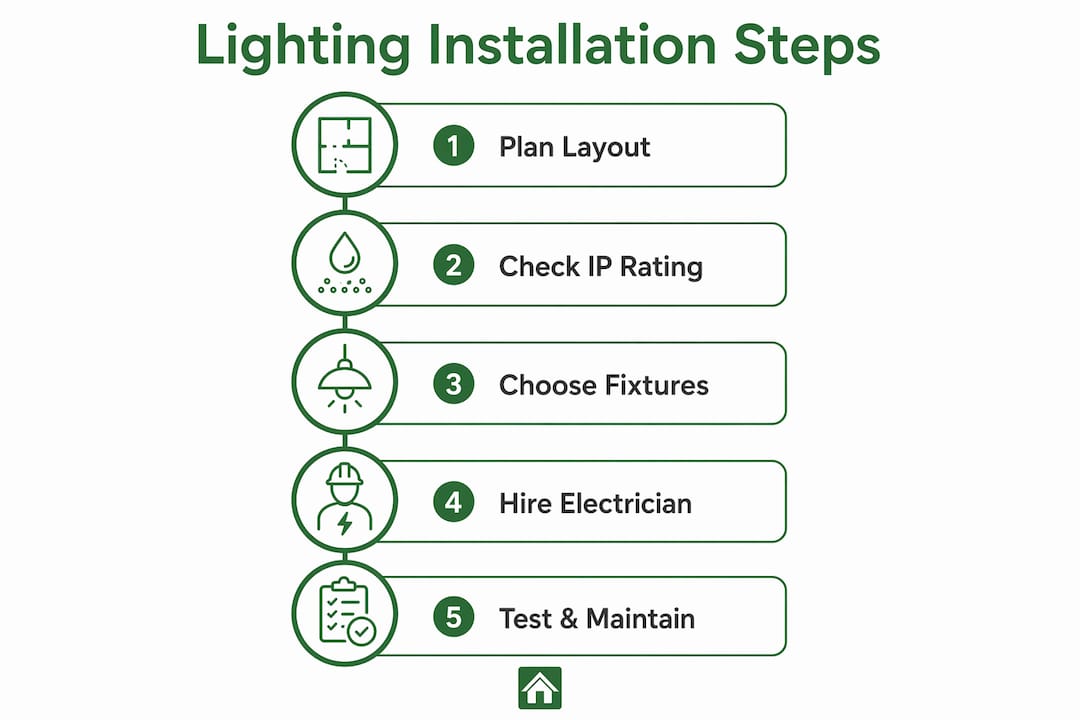
- Plan your layout first. Sketch the cabin and mark where each light will go. Identify which fixtures need mains power and which can run on solar or battery.
- Choose your cable routes. For mains circuits, decide whether cables run internally or underground. Underground cables must be armoured or run in conduit at the correct depth.
- Install the consumer unit connection. This step must be done by a registered electrician if it involves a new circuit from your main board.
- Mount fixtures and connect wiring. Follow the manufacturer’s instructions. Use correctly sized cable glands at every entry point to maintain the fixture’s IP rating.
- Test before finishing. Check every circuit with an RCD tester before covering cables or closing up walls.
- Obtain your certificate. If a registered electrician completed the notifiable work, they will issue an Electrical Installation Certificate.
Common mistakes to avoid
- Choosing fixtures with an IP rating too low for their location
- Using standard indoor cable outdoors without protection
- Forgetting to seal unused cable entry points, which allows water ingress and voids the IP rating
- Skipping the RCD protection on mains circuits
Maintenance tips
Clean fixture lenses twice a year to maintain light output. Check cable glands and seals annually, especially after winter. Test your RCD monthly using the test button on the device. Replace any LED bulbs that start flickering, as this can indicate a failing driver rather than just the bulb itself.
Pro Tip: Smart lighting controls, such as those compatible with Google Home or Amazon Alexa, let you set schedules, dim lights remotely, and monitor energy use from your phone. They are easy to retrofit and can noticeably reduce your electricity bill over time.
How to enhance your cabin with creative lighting effects and modern technology
Once the basics are in place, you can have real fun with your cabin lighting. This is where personality comes in.
Layering light for depth and warmth
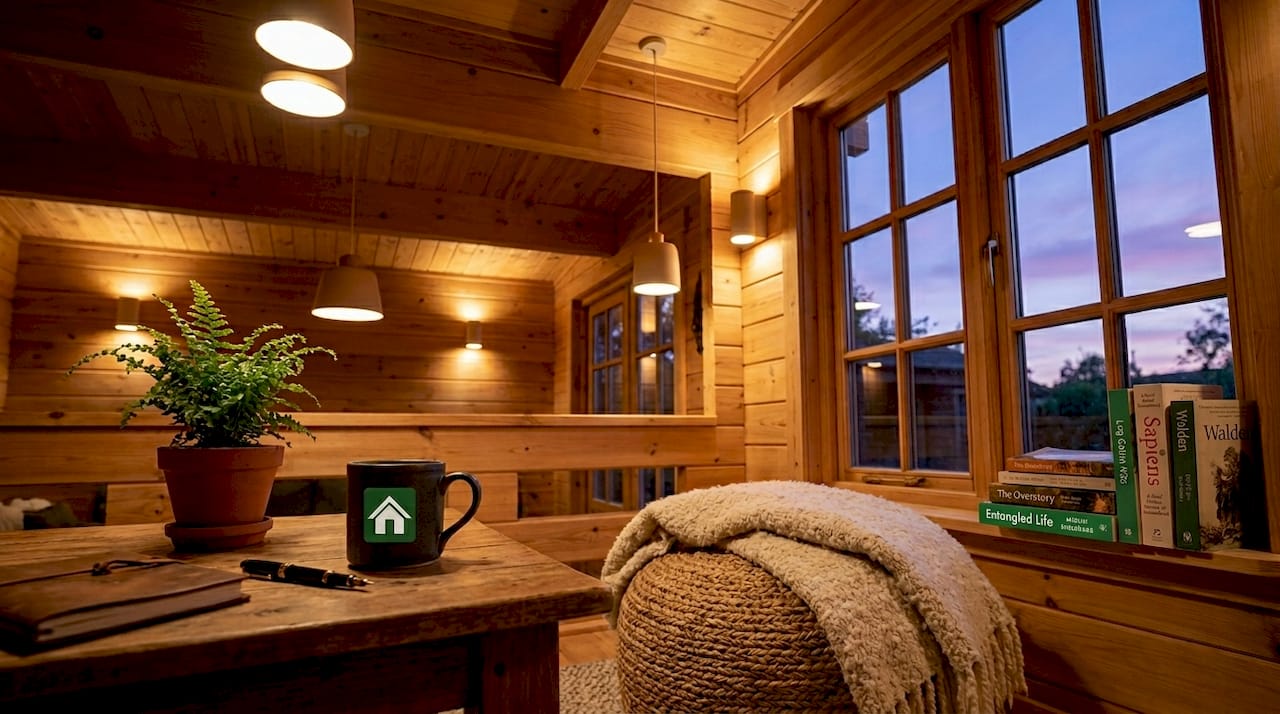
The most inviting cabins use multiple light sources at different heights. A ceiling pendant provides general light, wall sconces add mid-level warmth, and a table lamp or LED strip under a shelf creates a cosy lower layer. This layered approach avoids the flat, harsh feel of a single overhead light and makes the space feel much more like a room than a garden building.
Colour temperature tuning and dimmable lights
Dimmable LEDs let you shift the mood of your cabin in seconds. Bright and clear for working, warm and low for relaxing. Some smart bulbs, such as those in the Philips Hue range, also allow colour temperature tuning, so you can shift from a cool 3000K in the morning to a warm 2200K in the evening. This is particularly useful if your cabin doubles as a home office and an evening retreat.
Solar and hybrid lighting for eco convenience
When designing solar lighting for UK winters, always size your system around the lowest light months. A panel that performs well in July may leave you in the dark in December. Adding a USB-C or mains backup to your solar lights solves this problem neatly. Hybrid systems are now widely available and affordable, making them a practical choice for most UK gardens.
Motion-activated security lighting
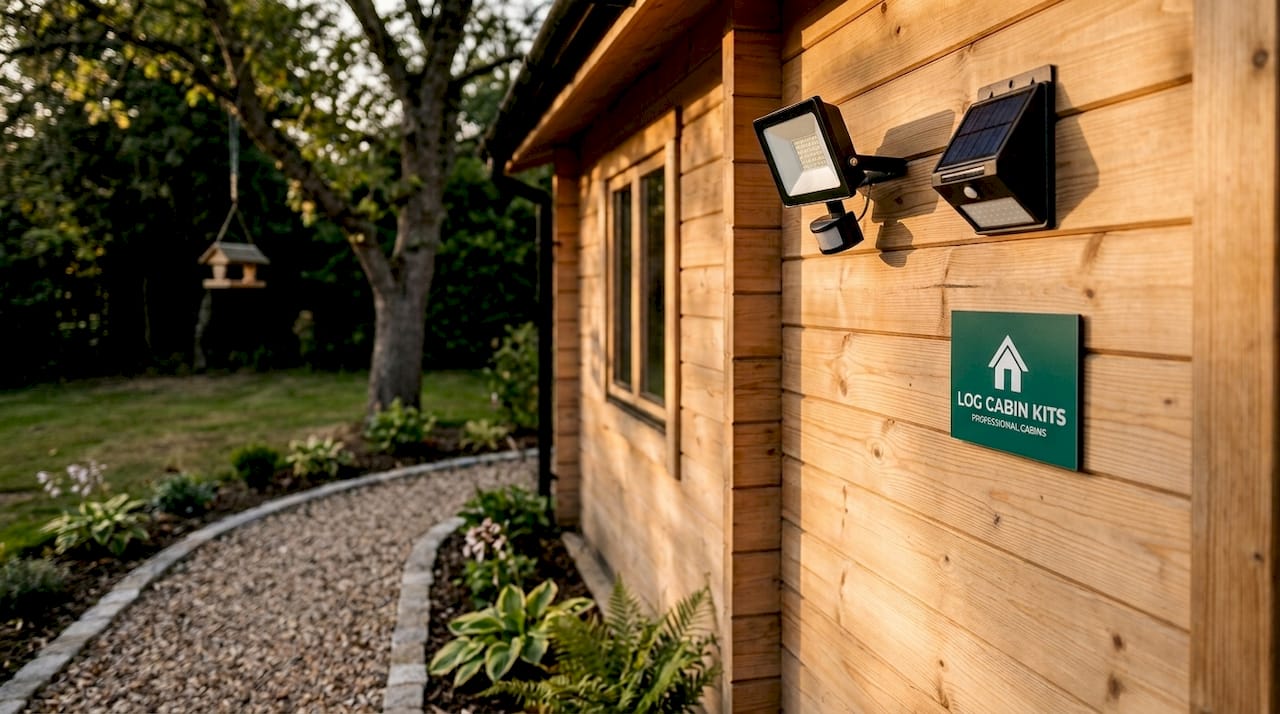
A motion-activated light on the exterior of your cabin serves two purposes: security and energy saving. It only activates when needed, which reduces light pollution and extends bulb life. Position it to cover the approach to the cabin door without flooding neighbouring gardens or wildlife habitats with light.
Pro Tip: For a really polished look, run LED strip lighting along the underside of your cabin’s roof overhang. It creates a warm glow around the exterior without any glare, and it looks stunning on a timber cabin in the evening.
Key takeaways
Effective garden cabin lighting combines the right IP-rated fixtures, warm colour temperatures, and UK-compliant electrical installation to create a safe, attractive, and wildlife-friendly outdoor space.
| Point | Details |
|---|---|
| IP ratings are non-negotiable | Use IP65 or above for all outdoor fixtures; IP67 for recessed fittings in damp locations. |
| Warm light suits cabins best | Choose LEDs at 2700K to 3000K to complement timber and create a welcoming atmosphere. |
| Wildlife needs consideration | Avoid blue-rich light above 2700K and use shielded, downward-facing fixtures near habitats. |
| Part P compliance is required | New circuits from your consumer unit are notifiable work and need a registered electrician. |
| Layer your lighting | Combine general, task, and accent lighting for a functional and attractive cabin interior. |
Why lighting is the detail most cabin owners get wrong
I’ve spoken with a lot of UK cabin owners over the years, and lighting is consistently the thing they wish they’d thought about more carefully before installation. Most people focus on the cabin itself, which makes sense. But the lighting plan often gets left to the last minute, and that’s when shortcuts happen.
The most common regret I hear is choosing fixtures that look great in a showroom but are completely wrong for an outdoor timber building. Cool white downlights in a log cabin feel like a hospital corridor. Warm, layered lighting in the same space feels like somewhere you’d actually want to spend a winter evening.
The wildlife angle is something I feel strongly about too. It’s easy to dismiss as a niche concern, but if you’ve ever watched bats foraging around a garden on a summer evening, you’ll understand why it matters. Swapping to warm LEDs and adding a timer costs almost nothing and makes a genuine difference. It’s one of those rare situations where the right choice is also the easy choice.
My practical advice: spend as much time planning your lighting as you do choosing your cabin. Think about how you’ll use the space at different times of day and in different seasons. Get a registered electrician involved early, not as an afterthought. And always buy fixtures with a higher IP rating than you think you need. You’ll thank yourself the first time it rains.
— Martin
Find the perfect cabin for your lighting vision
If you’re planning a new garden cabin and want to get the lighting right from the start, Logcabinkits makes it easy. The range covers everything from compact retreats to large bespoke builds, all designed with UK conditions in mind.
Every cabin in the Logcabinkits range can be adapted to suit your lighting preferences, whether you’re planning a full mains installation or a solar-powered setup. The team specialises in bespoke garden log cabins built to your exact specification, so you can plan cable routes, window positions, and fixture placements before a single timber goes up. If you’d like help matching a cabin to your lighting ideas, browse the full range or get in touch for a tailored quote. You can also explore custom-designed cabin options if you have something specific in mind.
FAQ
What IP rating do I need for garden cabin lights?
Use IP65 or IP66 as a minimum for exposed outdoor fixtures, and IP67 for any recessed fittings that may be exposed to standing water. These ratings are specified in UK outdoor electrical regulations to ensure weather resistance and user safety.
Do I need an electrician to wire my garden cabin?
Yes, if the work involves a new circuit from your consumer unit. This is notifiable work under Part P of the Building Regulations in England and Wales, and must be carried out or certified by a registered electrician such as one registered with NICEIC or NAPIT.
What colour temperature is best for a garden cabin?
Warm white LEDs at around 2700K are the best choice for most garden cabins. They complement timber aesthetics and create a cosy atmosphere, while also being less disruptive to local wildlife than cooler, blue-rich light sources.
Can I use solar lights for a garden cabin in the UK?
Yes, but size your system for winter conditions rather than summer performance. Many solar lights now include USB-C or mains backup options, which is useful during the shorter, greyer days between November and February. A hybrid approach works well for decorative and ambient lighting.
How do I make my cabin lighting wildlife-friendly?
Use warm LEDs at or below 2700K, fit fully shielded fixtures that direct light downwards, and install timers or motion sensors to limit how long lights are on. In areas close to bat roosts or wildlife corridors, red LED lighting at 630 to 660 nm is the least disruptive option available.