
Eco-friendly garden buildings guide for UK homeowners
TL;DR:
- Most garden buildings in England are exempt from planning permission if they meet specific criteria and are built within size limits. Choosing FSC-certified timber, natural insulation, and incorporating biodiversity features enhance the sustainability and wildlife support of your eco-friendly garden structure. Proper planning of water management, insulation, and airtightness ensures long-lasting performance and environmental efficiency throughout the building’s lifespan.
Building something in your garden should feel exciting, not overwhelming. Yet for many UK homeowners, the question of how to create sustainable garden structures that are genuinely low-impact, legally compliant, and kind to local wildlife can feel like a lot to take on. This eco-friendly garden buildings guide is here to change that. Whether you’re planning a bespoke log cabin, a garden office, or a creative outdoor retreat, we’ll walk you through everything from materials and planning rules to biodiversity tips and water management. No jargon. Just clear, practical guidance.
Table of Contents
- Key takeaways
- Your eco-friendly garden buildings guide to UK planning rules
- Choosing sustainable materials for your build
- Adding biodiversity to your garden building
- Water management and energy efficiency
- Practical DIY tips and common mistakes
- My take on eco garden buildings
- Build your eco-friendly garden cabin with Logcabinkits
- FAQ
Key takeaways
| Point | Details |
|---|---|
| Know your planning rules | Most garden buildings in England are exempt from planning permission, but specific conditions apply. |
| Choose certified timber | FSC-certified wood is the most accessible and impactful green building material choice for UK homeowners. |
| Seal your vapour control layer | A continuous, taped VCL prevents hidden condensation and protects your building long-term. |
| Add biodiversity features | Simple additions like bee houses and native planting make your garden building work harder for wildlife. |
| Plan water systems early | Integrate rainwater harvesting at design stage to avoid costly changes later. |
Your eco-friendly garden buildings guide to UK planning rules
Before you pick a single piece of timber, you need to understand what you can and cannot build. The good news is that most garden rooms in England can be built without full planning permission, provided you meet certain conditions under permitted development rights.
Here’s a clear summary of the key rules:
- The building must be single-storey
- Maximum height of 2.5 metres if within 2 metres of a boundary
- Maximum height of 4 metres (dual-pitched roof) or 3 metres otherwise if set further back
- Cannot be positioned in front of the principal elevation of your house
- The total footprint of outbuildings must not exceed 50% of the garden area
There are important exceptions. If your home is a listed building or sits within a designated area such as a conservation area, Area of Outstanding Natural Beauty, or National Park, full planning permission is required. Always check your local planning authority’s website before starting.
A common mistake is assuming that no planning permission means no rules at all. Planning permission and building regulations are two completely separate things. You can be exempt from planning but still need building regulations approval, particularly if your structure exceeds 15 square metres of internal floor area, is used for sleeping, or is positioned close to a boundary.
| Floor area | Planning permission | Building regulations |
|---|---|---|
| Under 15 sqm | Usually exempt | Usually not required |
| 15 to 30 sqm | Usually exempt | May be required |
| Over 30 sqm | Often required | Required |
| Any size (sensitive area) | Always required | Required |
Pro Tip: Before anything else, write down your building’s proposed dimensions and check them against your local authority’s permitted development guidance. A quick call to your council’s planning department can save months of headaches later.
Choosing sustainable materials for your build
The materials you choose have a bigger impact than most people realise. Green building considers the full lifecycle of a structure, from the energy used to produce materials through to how the building performs and is eventually disposed of.
For a garden log cabin, timber is your best friend. Look for FSC (Forest Stewardship Council) certified wood. This certification means the timber has been sourced from responsibly managed forests, reducing deforestation and supporting carbon storage in trees. Most of the log cabin kits from Logcabinkits use quality timber that can be specified or verified as sustainably sourced.
When it comes to insulation, you have two main routes:
- PIR (polyisocyanurate) boards: Slim, high-performance, and widely used. Good thermal values in tight spaces. Not a natural product, but long-lasting and effective.
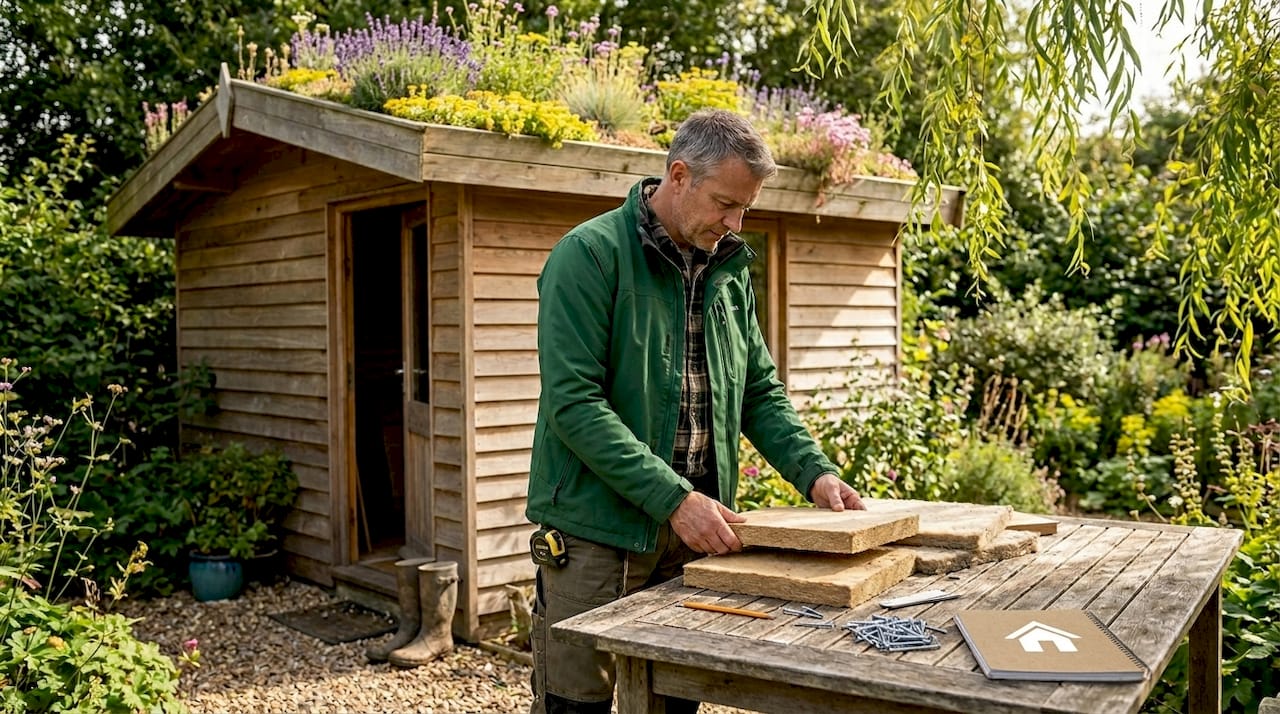
- Natural insulation (sheep’s wool, wood fibre, hemp): Higher embodied carbon savings, breathable, and biodegradable. Slightly bulkier but excellent for garden rooms designed to breathe.
Avoid using rigid polystyrene or single-use foam products where possible. These are hard to recycle and can off-gas over time.
| Material | Eco credentials | Durability |
|---|---|---|
| FSC timber | Excellent | 30 to 60 years with maintenance |
| Sheep’s wool insulation | Very good | 25 to 30 years |
| PIR insulation boards | Moderate | 40 to 50 years |
| Recycled rubber roofing | Good | 20 to 40 years |
| Cedar cladding | Good | 30 to 50 years |
The vapour control layer (VCL) is one of the most overlooked parts of an eco-friendly garden building. It sits on the warm side of the insulation and stops moisture from the inside of the room migrating into the wall structure where it can cause condensation and mould. It must be continuous and all joints must be taped carefully, especially around windows and doors.
Pro Tip: When specifying cladding, consider western red cedar or Siberian larch. Both are naturally durable and need far less treatment than cheaper softwoods, reducing the chemical load on your garden over time.
Adding biodiversity to your garden building
A truly nature-inspired garden design does more than look good. It actively supports the ecosystem around it. Your garden building is a real opportunity to give back to local wildlife without any major effort.
The most impactful thing you can do is incorporate nesting features directly into the design. Solitary bee houses improve pollination significantly when built with the right specifications. Nesting tubes should be between 4 and 10 millimetres in diameter and around 6 inches deep. Position the house facing towards the morning sun, ideally between south and south-east. Add an overhanging roof to keep rain off. Avoid plastic or bamboo straws as nesting material as these hold moisture and can harbour disease.
Beyond bees, you can also:
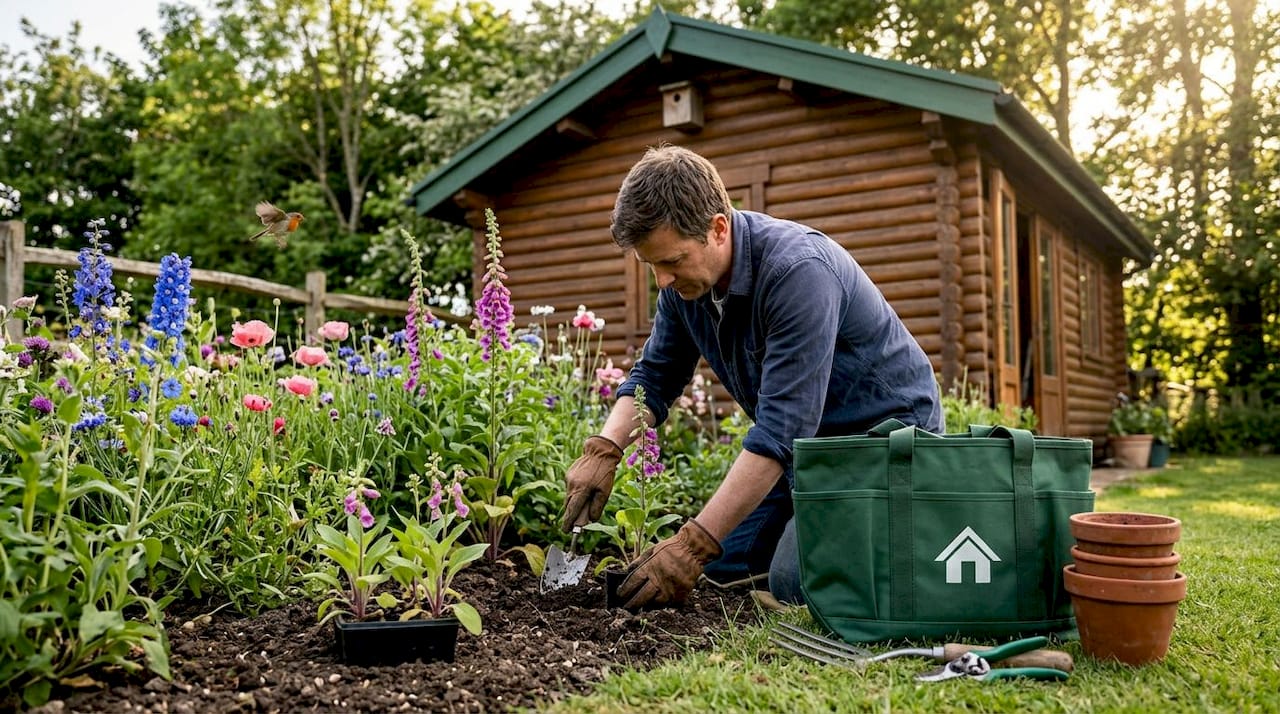
- Fix small bird boxes to the north or east-facing wall to avoid overheating
- Leave a rough, unmaintained strip of planting at the base of the building for ground beetles and hedgehogs
- Choose native climbing plants like ivy or honeysuckle to run up a trellis on the south-facing wall
- Install a simple bat box beneath the eaves if your garden is near water or open fields
When choosing plants around your garden building, native species are always the better choice. Plants like foxglove, ox-eye daisy, and wild marjoram attract pollinators that will benefit your whole garden. These are among the best plants for eco gardens because they need little maintenance, thrive in UK conditions, and provide year-round habitat value.
Water management and energy efficiency
Water and energy efficiency are central to any permaculture garden building approach. Getting these right at the planning stage saves money and reduces your environmental impact for the life of the building.
Follow these steps to integrate water and energy efficiency from the start:
- Calculate your roof catchment area. Multiply the roof plan area by the annual rainfall for your region. This gives you a rough annual harvest potential. A 20 square metre roof in the South East of England can collect around 1,500 litres per year.
- Choose the right tank size. Sizing follows BS 8515:2009 and balances your roof area against your actual water demand, typically for toilet flushing or garden watering.
- Prevent cross-connection. Any rainwater system in the UK must include approved backflow protection. If used for toilet flushing, a Type AA air gap is required by regulation. Never connect harvested rainwater directly to a drinking supply.
- Plan tank positioning during groundworks. Early-stage design collaboration avoids expensive retrofitting. Decide where the tank goes before you lay any foundations.
- Maximise natural light. South-facing glazing reduces the need for artificial lighting. A single well-positioned roof light can illuminate a 15 square metre space for most of the working day without any electricity.
- Ventilate passively. Cross ventilation through opposing openable windows keeps the building cool in summer without air conditioning.
| Feature | Benefit | Approx. cost range |
|---|---|---|
| Rainwater harvesting tank | Reduces mains water use | £500 to £2,000 |
| Roof light | Natural light, heat gain | £200 to £800 |
| Sheep’s wool insulation | Breathable, low carbon | £20 to £35 per sqm |
| Mechanical heat recovery vent | Warm fresh air, low energy | £400 to £1,200 |
Pro Tip: If you’re adding a rainwater system, talk to your groundworker before the base is laid. Relocating an underground tank after the foundations are in is one of the more expensive mistakes you can make on a garden building project.
Practical DIY tips and common mistakes
Getting the build right comes down to preparation and sequence. Here are the practical steps that make the biggest difference:
- Measure twice, plan once. Sketch your building’s footprint on your garden to scale before ordering anything. Check it against boundary distances and the 50% garden coverage rule.
- Install the VCL in one continuous layer. Small gaps in the vapour barrier have a disproportionate effect on thermal performance. Tape every join with foil tape and press it firmly into corners.
- Insulate before you clad. Never rush the insulation stage to get to the more visible finishes. Poor insulation is invisible once clad but costs you in heating bills and condensation for years.
- Seal around every opening. Windows, doors, and cable penetrations are the most common places for air leaks. Use compressible foam tape or acoustic sealant at every frame junction.
- Raise the floor off the ground. A minimum 150mm clearance between the floor structure and ground prevents moisture wicking up through the base. Use breathable membrane underneath.
- Check the build after the first wet season. Look inside wall cavities where accessible, check for any damp patches under the floor, and make sure gutters are clear and water is draining away from the base.
The most common DIY mistake is treating the vapour control and airtightness detail as optional. It isn’t. Condensation inside a wall causes mould and rot that can destroy a timber building from the inside out, often without any visible signs until serious damage is done.
My take on eco garden buildings
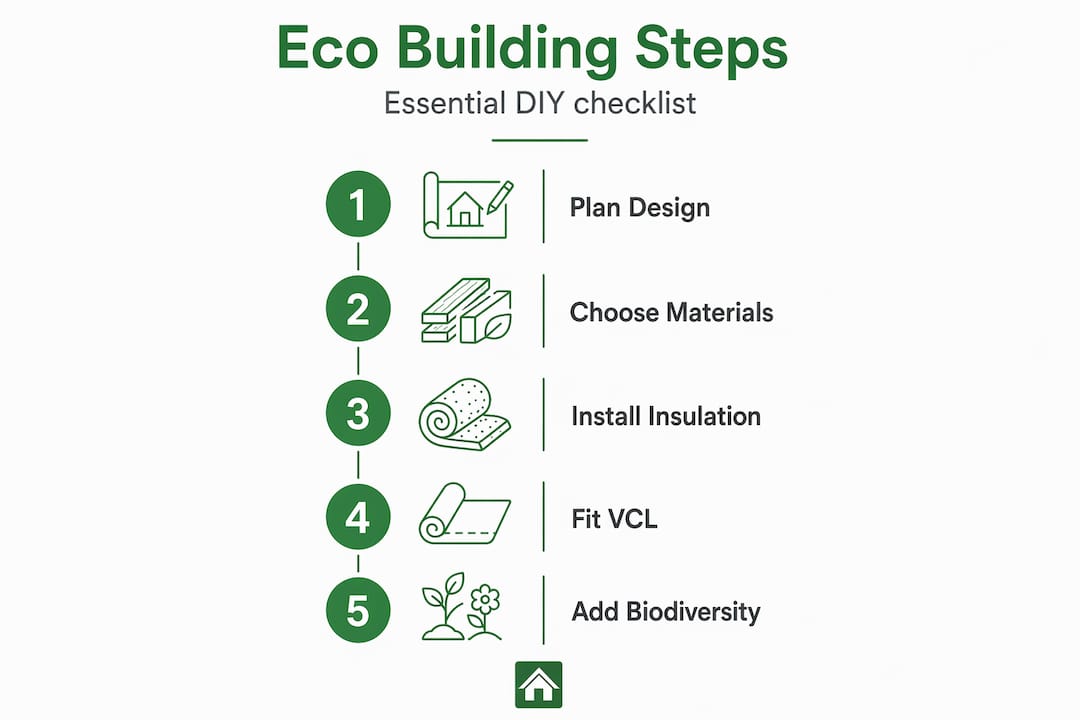
Over the years I’ve seen a lot of homeowners pour money into beautiful eco-inspired finishes and then lose the building to condensation within five years. The truth is that the lifecycle carbon impact of a garden building isn’t just about the materials you choose at the start. It’s about how long the building lasts and how well it performs throughout its life. A well-designed garden building that stands for fifty years and uses minimal energy is far more sustainable than a beautiful natural-material build that fails structurally at fifteen.
The other misconception I come across constantly is that eco-friendly automatically means expensive or complicated. It doesn’t. FSC timber, a properly installed VCL, a couple of bee boxes, and south-facing glazing cost very little extra compared to a standard build. What they require is attention and planning upfront. I’ve found that bespoke adjustments to a standard cabin design, like shifting a window, adding a roof light, or specifying a better insulation thickness, make a profound difference to how the building feels and functions for the next few decades.
Don’t let perfect be the enemy of good here. Start with the basics, get the structure right, and build in the wildlife features as you go. The craftsmanship matters more than the eco credentials on any specification sheet.
— Martin
Build your eco-friendly garden cabin with Logcabinkits
If you’re ready to put this guide into practice, Logcabinkits makes it straightforward. Our range of quality timber garden buildings covers everything from compact garden offices to generous family retreats, all built from quality timber and available with bespoke adjustments to suit your eco design needs.
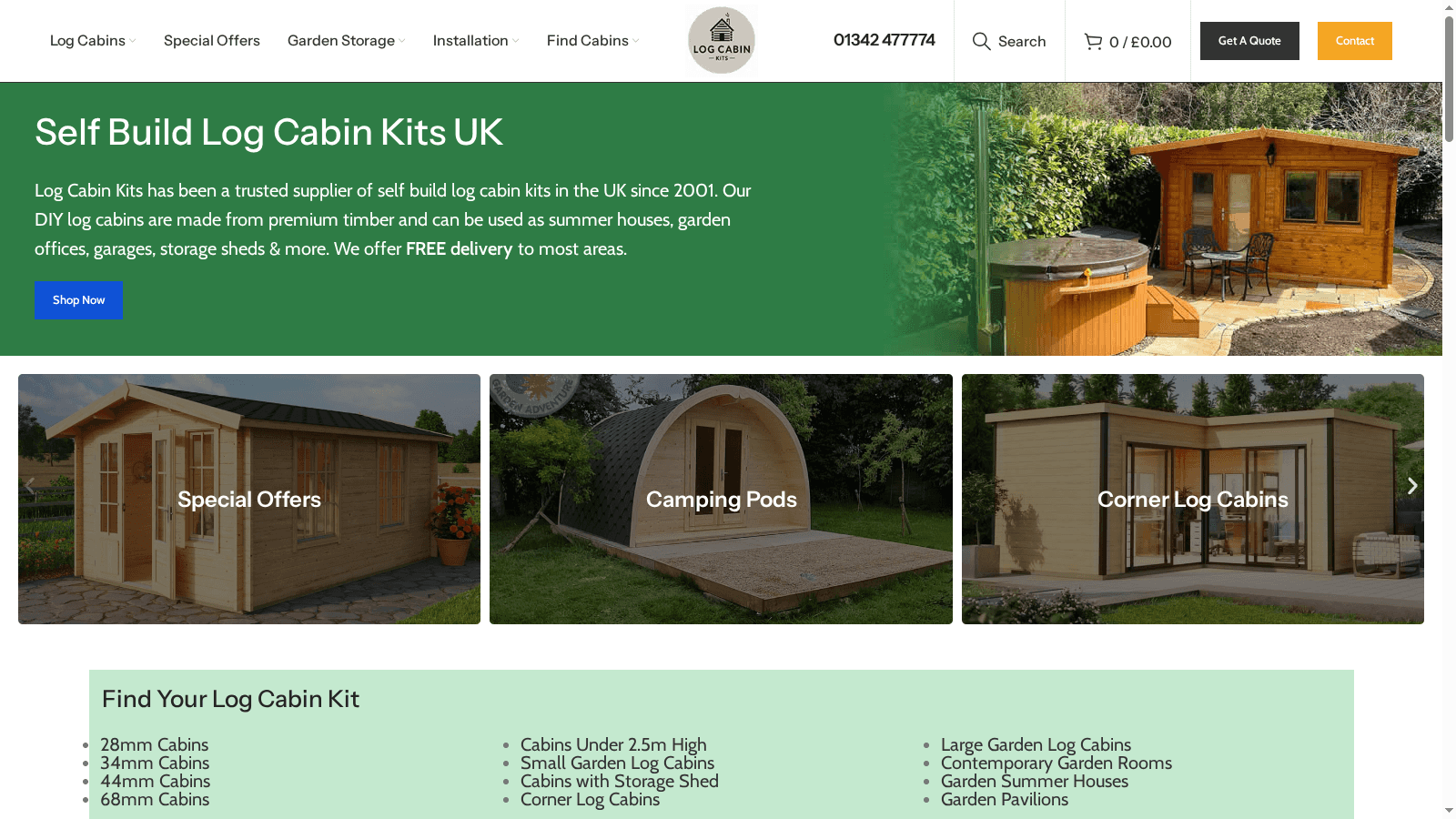
Want thicker walls for better insulation? A roof light for natural ventilation? A specific footprint to fit your garden and stay within permitted development? We can work with you on all of it. Our bespoke log cabin options let you customise the build so it works for your garden, your lifestyle, and your sustainability goals. Browse the range, get inspired, and give us a call when you’re ready to talk through your ideas.
FAQ
Do I need planning permission for a garden log cabin?
Most garden log cabins in England are exempt under permitted development if they are single-storey, within height limits, not in the front garden, and cover less than 50% of the garden area. Always check if you are in a conservation area or other designated zone, as full planning permission will be required.
What is the most eco-friendly material for a garden building?
FSC-certified timber is the most practical and sustainable choice for UK homeowners. It stores carbon, is biodegradable, and comes from responsibly managed forests. Pair it with natural insulation like sheep’s wool or wood fibre for the lowest overall environmental impact.
What is a vapour control layer and do I really need one?
A vapour control layer is a membrane installed on the warm side of your insulation to stop moisture from migrating into the wall structure. Yes, you really do need one. Without it, condensation builds up inside the walls and can cause mould and structural damage within a few years.
Can I collect rainwater from my garden building roof?
Yes. Rainwater harvesting is a great use of a garden building roof. Systems must be designed to prevent cross-connection with your drinking water supply, and if used for toilet flushing, UK regulations require a Type AA air gap. Plan the tank position before your groundworks begin to avoid costly changes later.
How do I attract wildlife to my garden building?
Install a solitary bee house with 4 to 10mm diameter nesting tubes facing the morning sun. Add a bird box on a north or east-facing wall and plant native species like foxglove and wild marjoram around the base. These small additions make a measurable difference to local pollinator populations.