Blog


TL;DR:
- Proper ventilation prevents damp, mould, and structural damage in garden cabins.
- Combining passive vents with mechanical systems offers optimal airflow based on usage.
- Planning and maintaining ventilation early ensures a healthy, comfortable, and long-lasting cabin.
If you think cracking a window is enough to keep your garden cabin fresh and comfortable, you’re not alone. It’s one of the most common assumptions we hear. But relying on windows alone leaves your cabin vulnerable to damp, condensation, and poor air quality, especially during the wetter months. Proper ventilation is essential to prevent damp and mould in garden cabins, and getting it right from the start makes a real difference. In this guide, we’ll walk you through why ventilation matters, which systems work best, how to tackle common problems, and how to design a cabin that stays fresh year-round.
Table of Contents
- Why ventilation matters in garden cabins
- Understanding ventilation types and systems
- Common ventilation challenges and how to overcome them
- Practical tips: Designing and maintaining an optimally ventilated cabin
- Why most garden cabin owners underestimate ventilation: Our expert take
- Discover bespoke garden cabins with expert ventilation solutions
- Frequently asked questions
Key Takeaways
| Point | Details |
|---|---|
| Ventilation prevents moisture | Proper cabin ventilation avoids damp, mould, and condensation problems. |
| Design is crucial | Planning ventilation during build yields better air quality and comfort. |
| Balanced airflow is best | Effective ventilation relies on balancing fresh air with moisture control. |
| Maintenance matters | Regular checks keep ventilation systems efficient and healthy. |
Why ventilation matters in garden cabins
Ventilation is one of those things that’s easy to overlook when you’re excited about a new cabin build. You’re thinking about size, style, and how you’ll use the space. Airflow rarely makes the shortlist. But it should be near the top.
Poor ventilation leads to a chain of problems that build up quietly. Moisture gets trapped inside. Condensation forms on walls and windows. Over time, damp sets in, and mould follows. These aren’t just cosmetic issues. Mould spores affect air quality and can trigger respiratory problems, particularly for anyone with asthma or allergies.
Good ventilation in garden cabins does several important things at once:
- Removes stale, humid air and replaces it with fresh air
- Prevents condensation from forming on surfaces
- Reduces the risk of mould and timber rot
- Keeps the cabin comfortable in both summer and winter
- Protects the structure of the building over the long term
The ventilation importance for cabin longevity really can’t be overstated. Timber is a natural material that responds to moisture. When humidity levels stay high for extended periods, the wood swells, warps, and weakens. That’s a costly problem to fix.
Pro Tip: The most common mistake cabin owners make is relying solely on opening windows for airflow. Windows help, but they only work when you’re present and the weather allows. A properly designed ventilation system works around the clock, whether you’re in the cabin or not.
Many cabin owners only notice ventilation problems when they spot a damp patch or catch a musty smell. By that point, moisture has already been building up for weeks or months. Getting ventilation importance right from the outset is far easier than dealing with the fallout later.
Understanding ventilation types and systems
Now that you know why ventilation matters, let’s look at what’s actually available. There are two main categories: passive ventilation and mechanical ventilation. Each has its place, and the right choice depends on how you use your cabin.
Passive ventilation relies on natural airflow. Air moves through vents, gaps, and openings without any powered assistance. It’s simple, low-maintenance, and costs nothing to run. Mechanical ventilation uses fans or extractor units to actively move air in and out. It’s more controllable and effective in spaces where natural airflow isn’t sufficient.
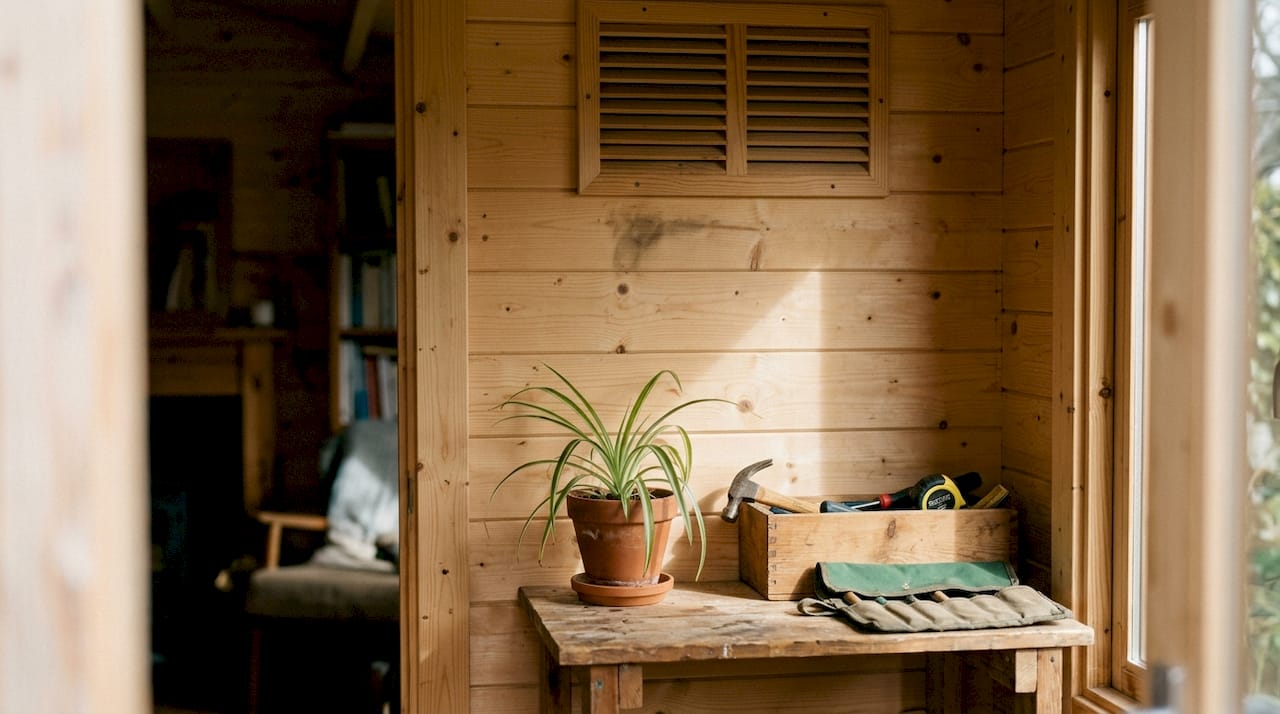
Different ventilation systems offer varying levels of air movement and moisture control, so matching the system to your cabin’s use is key.
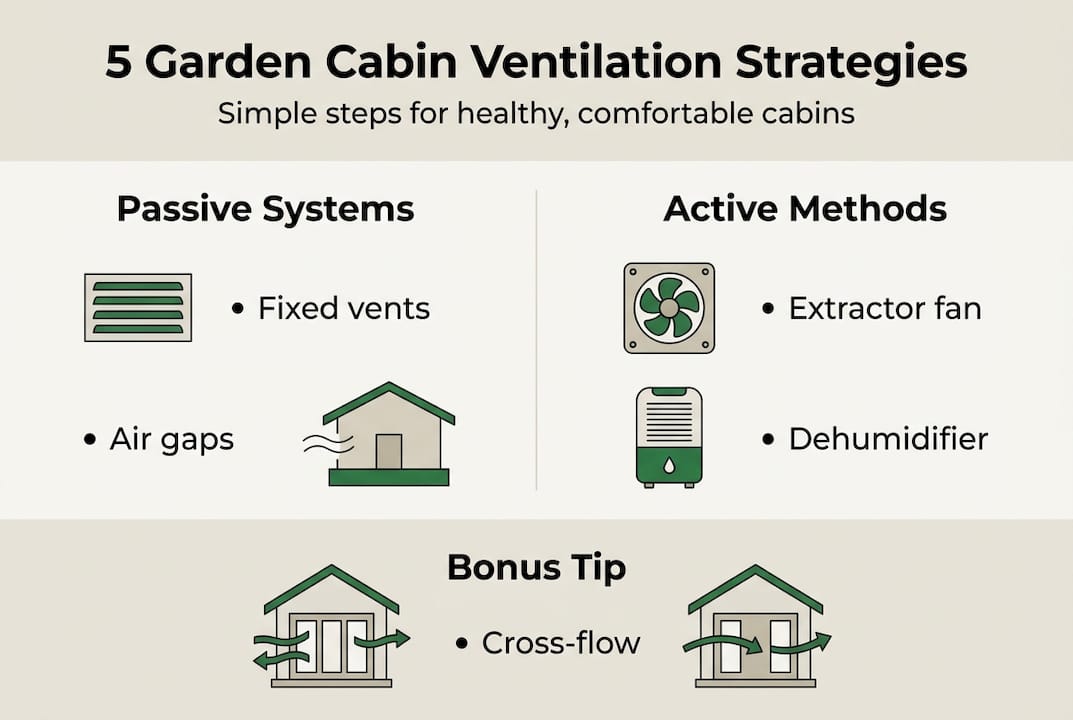
Here’s a quick comparison of the most common options:
| System | Best for | Pros | Cons |
|---|---|---|---|
| Openable windows | All cabins | Easy, free, flexible | Only works when open |
| Fixed air vents | All cabins | Always on, low cost | Limited airflow control |
| Air bricks | Ground-level airflow | Protects subfloor | Can allow drafts |
| Extractor fans | Workshops, studios | Strong moisture removal | Needs power, maintenance |
When exploring your ventilation options, consider how often you’ll use the cabin and what activities will take place inside. A quiet reading retreat needs less airflow than a home gym or art studio.
For small cabins, passive systems usually do the job well. A combination of fixed vents and openable windows creates enough natural airflow for occasional use. For larger or heavily used cabins, mechanical systems become more valuable. An extractor fan in a workshop, for example, removes moisture and fumes far more effectively than a window ever could.
Here’s a summary of pros and cons to help you decide:
- Fixed vents: Always working, no running costs, but limited in humid conditions
- Openable windows: Flexible and effective, but dependent on user action and weather
- Extractor fans: Powerful and reliable, but require electricity and occasional servicing
- Air bricks: Great for subfloor protection, but positioning matters to avoid cold drafts
The best approach for most cabins is a combination. Passive vents handle the baseline, and mechanical options step in when conditions demand more. Your ventilation systems should work together, not in isolation.
Common ventilation challenges and how to overcome them
Even with a decent setup, problems can still arise. Here are the three most common ventilation challenges and how to tackle them head-on.
Challenge 1: Drafts
Drafts are uncomfortable and waste heat. They often come from gaps around doors, windows, or poorly fitted vents.
Challenge 2: Condensation
Condensation forms when warm, moist air meets a cooler surface. It’s most common in winter and in cabins used for exercise, cooking, or crafts.
Challenge 3: Trapped humidity
Humidity builds up when air can’t circulate freely. This is especially common in poorly positioned or blocked vents.
Here’s a step-by-step approach to fixing each one:
- Identify draft sources. Run your hand around door and window frames on a windy day. Feel for cold air. Seal gaps with draught-excluding tape or flexible sealant.
- Address condensation directly. Improve cross-ventilation by opening vents on opposite sides of the cabin. Add an extractor fan if moisture levels remain high.
- Clear blocked vents. Check all fixed vents and air bricks for debris, spider webs, or paint. Clean them out and make sure nothing is obstructing the outside opening.
- Monitor moisture levels. Use a basic moisture metre (a device that measures humidity in the air or timber) to track conditions inside your cabin.
- Check seasonally. Autumn leaves and winter debris commonly block external vents. A quick check every few months keeps things flowing.
Pro Tip: A moisture metre is one of the cheapest and most useful tools a cabin owner can have. Catching rising humidity early means you can act before damp sets in. Aim to keep indoor humidity between 40% and 60%.
As the team at Log Cabin Kits always says:
Moisture control relies on balanced ventilation rather than simply increasing air flow. More air isn’t always better. The goal is steady, controlled movement that keeps humidity in check without creating uncomfortable drafts.
For ongoing moisture monitoring, a simple digital hygrometer works well alongside your ventilation setup. And if drafts are a persistent issue, our guide to minimising drafts in garden cabins covers the topic in more detail.
Practical tips: Designing and maintaining an optimally ventilated cabin
The best time to think about ventilation is before the cabin is built. Designing ventilation at the build stage reduces long-term air quality issues and saves you from expensive retrofits down the line.
When designing for ventilation, keep these principles in mind:
- Position the cabin to take advantage of prevailing winds for natural cross-ventilation
- Place vents on opposite walls to encourage airflow through the full space
- Include roof vents or ridge vents to allow hot air to escape in summer
- Choose windows that open wide and are positioned to create a through-draught
- Plan for extractor fan points in any area where moisture will be generated
Here’s a simple guide to recommended vent sizing and placement:
| Cabin size | Minimum vent area | Recommended placement |
|---|---|---|
| Up to 10 sq m | 500 sq cm total | Two opposing walls |
| 10 to 20 sq m | 1,000 sq cm total | Walls and roof |
| Over 20 sq m | 1,500 sq cm total | Walls, roof, and floor vents |
For how to ventilate effectively on an ongoing basis, regular maintenance is just as important as the initial design. Here’s what to include in your routine:
- Monthly: Check that all vents are clear and unobstructed
- Every three months: Clean vent covers and extractor fan grilles
- Every six months: Inspect window seals and draught-proofing for wear
- Annually: Replace extractor fan filters if fitted, and check timber moisture levels throughout the cabin
Pro Tip: If you’re commissioning a bespoke cabin build, don’t leave ventilation as an afterthought. Raise it early in the design conversation. It’s far easier and cheaper to incorporate the right vents, fan points, and openings during the build than to add them later.
A well-ventilated cabin is a comfortable cabin. And a comfortable cabin is one you’ll actually use all year round, not just when the weather is kind.
Why most garden cabin owners underestimate ventilation: Our expert take
We’ve worked with hundreds of cabin owners over the years, and there’s a pattern we see again and again. Ventilation gets treated as a detail rather than a priority. People spend weeks choosing the right cladding colour or the perfect window style, then give ventilation five minutes of thought at the end.
The conventional wisdom, that you just open a window when it gets stuffy, simply isn’t enough. It doesn’t account for the hours the cabin sits unused, the moisture that builds up overnight, or the damp that creeps into timber over months.
Our honest advice? Think of ventilation expertise as part of the cabin’s foundation, not a finishing touch. The owners who get it right are the ones who raise it early, plan it properly, and don’t rely on reactive fixes. A cabin that breathes well from day one will serve you far better than one that needs rescuing from damp two years in.
Discover bespoke garden cabins with expert ventilation solutions
If this guide has got you thinking about your own cabin plans, we’d love to help you take the next step. At Log Cabin Kits, we specialise in bespoke builds where ventilation is part of the design from the very beginning, not bolted on as an afterthought.

Browse our garden cabin gallery for inspiration, or explore our range of bespoke log cabins to see what’s possible. If you’d like to talk through your ideas and get a tailored design, our cabin design options page is a great place to start. We’re here to make the whole process straightforward and enjoyable, from first idea to finished build.
Frequently asked questions
What is the best ventilation system for a small garden cabin?
Passive systems combining fixed vents and openable windows work well for most small cabins, though an extractor fan may be worth adding if you use the space for activities that generate moisture. Varying ventilation systems suit different cabin sizes and uses, so it’s worth matching the solution to how you’ll actually use the space.
How can I prevent condensation in my garden cabin?
Keep vents clear, encourage cross-ventilation, and monitor humidity levels regularly to stay ahead of condensation. Balanced ventilation is more effective than simply increasing airflow, so focus on steady, controlled air movement rather than just opening everything at once.
Should ventilation be planned during cabin design or added later?
Always plan ventilation during the design stage. Designing ventilation early is far more effective and cost-efficient than retrofitting it after the cabin is built.
Can poor ventilation affect health in garden cabins?
Yes, it can. Poor ventilation causes damp and mould to develop, which can aggravate respiratory conditions and reduce the overall comfort and safety of the space.
Are there maintenance tasks to keep ventilation systems working?
Absolutely. Monthly vent checks, quarterly cleaning of grilles and fan covers, and annual filter replacements all help keep your cabin’s airflow working properly throughout the year. Build-stage ventilation planning also makes ongoing maintenance simpler and more straightforward.
Recommended
- How To Ventilate Your Garden Log Cabin: Comfort And Durability
- The Importance Of Ventilation In Log Cabins | Log Cabin Kits
- Proper Ventilation For Your Garden Cabin | Log Cabin Kits
- Why Climate Control Matters In A Log Cabin | Log Cabin Kits
- 7 Signs Of Poor Attic Ventilation (And How To Fix It Fast)