

Blog


A beautiful garden log cabin can quickly become a source of frustration if the air inside feels stuffy, damp, or musty. Poorly ventilated log cabins are prone to damp, mould, and structural issues over time, which means your investment can suffer long before its time. The good news is that sorting your ventilation doesn’t have to be complicated. In this guide, we’ll walk you through why ventilation matters, what you’ll need, how to set it up properly, and how to check it’s working. Whether your cabin is brand new or already in the garden, there’s something here for you.
Table of Contents
- Why ventilation matters in your garden log cabin
- What you need to ventilate a log cabin
- Step-by-step: how to ventilate your garden log cabin
- Optimising ventilation and common mistakes to avoid
- Verifying success: how to check your log cabin ventilation
- Get expert help with your dream garden log cabin
- Frequently asked questions
Key Takeaways
| Point | Details |
|---|---|
| Ventilation prevents damage | Effective ventilation stops damp, mould, and rot from shortening your cabin’s lifespan. |
| Combine systems for best results | Pairing passive vents with MVHR or extractor fans creates fresh air without energy loss. |
| Check seasonally | Regular checks and simple maintenance keep your log cabin healthy and comfortable year-round. |
| Upgrade without hassle | Most cabins benefit from easy additions like vent covers, window stays, or portable fans for better airflow. |
Why ventilation matters in your garden log cabin
Wood is a natural material, and it reacts to moisture. When warm, humid air gets trapped inside your cabin, it cools against the walls and windows, creating condensation. Over time, that moisture soaks into the timber, encouraging mould growth and, eventually, rot. This isn’t just an aesthetic problem. Structural rot can compromise the integrity of your whole cabin.
Good ventilation keeps that cycle from starting. Effective ventilation reduces humidity, prevents rot, and improves air quality, making your cabin a genuinely pleasant place to spend time. It also means you’re not constantly battling condensation on your windows or that tell-tale musty smell.
Here’s a quick summary of what proper ventilation does for your cabin:
- Reduces indoor humidity and prevents condensation
- Protects timber from rot and mould damage
- Keeps the air fresh and healthy for regular use
- Helps regulate temperature across the seasons
- Extends the overall lifespan of your cabin
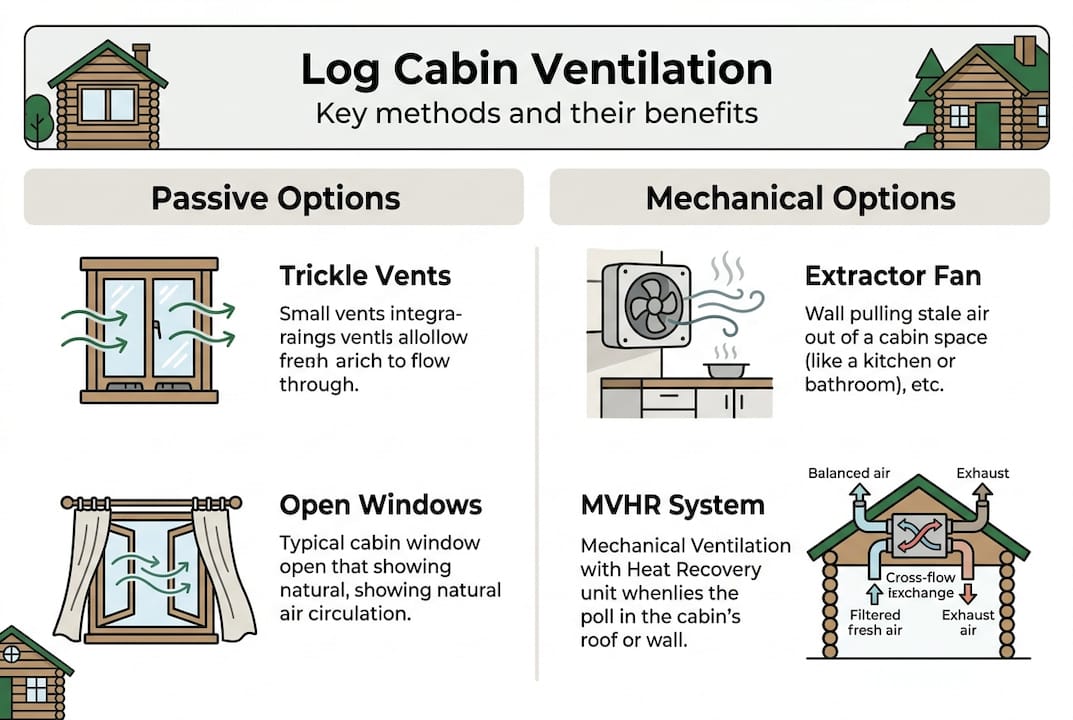
There are three main types of ventilation used in garden log cabins. Passive ventilation relies on natural airflow through vents, gaps, and windows. Mechanical ventilation uses fans or extractor units to move air actively. Mechanical ventilation with heat recovery (MVHR) does both, while retaining warmth. Understanding the importance of ventilation and why ventilation is important for a log cabin helps you make the right choice from the start.
“A well-ventilated cabin isn’t just more comfortable to use. It’s a cabin that will still be standing strong in twenty years.”
Now that you know why log cabin ventilation can make or break your investment, let’s look at what you’ll need to get started.
What you need to ventilate a log cabin
Before you start installing anything, it helps to know your options. Ventilation solutions range from simple and low-cost to more advanced systems, depending on how you use your cabin and how airtight it is.
Here’s a comparison of the main options:
| Ventilation type | Best for | Approximate cost | Heat retention |
|---|---|---|---|
| Trickle vents | All cabins | Low | Minimal loss |
| Openable windows | All cabins | Low to medium | Moderate loss |
| Extractor fans | Kitchens, bathrooms | Low to medium | Some loss |
| MVHR system | Airtight, insulated cabins | Higher | Up to 95% retained |
MVHR retains up to 95% of heat, making it the most energy-efficient choice for well-insulated cabins. If you’ve already invested in making your cabin an energy efficient log cabin, MVHR is worth serious consideration. You can also combine it with energy saving tips to keep running costs low.
Here’s what you’ll typically need to get started:
- Trickle vents or air bricks for passive airflow
- Openable windows positioned to encourage cross-ventilation
- An extractor fan for any wet or cooking areas
- A moisture meter or humidity monitor to track indoor levels
- Draught-proof seals to control where air enters and exits
- MVHR unit (optional, for airtight or heavily insulated cabins)
Explore the different ventilation methods available to find the right fit for your cabin’s size and use.
With the right tools and preparations in place, you’re ready to plan the best ventilation set-up for your cabin.
Step-by-step: how to ventilate your garden log cabin
Getting your ventilation right is a process, not a one-off job. Follow these steps to set things up properly from the start.
-
Assess your cabin’s environment. Think about how your cabin is positioned. Does it get direct sun? Is it sheltered or exposed? A south-facing cabin will warm up quickly, while a shaded one may stay damp. Also consider how you use it: a home office needs different airflow to a hobby room or gym.
-
Check your insulation levels. Ventilation and insulation work together. A poorly insulated cabin loses heat fast, while an over-sealed one traps moisture. Knowing your insulation level helps you choose the right ventilation approach.
-
Install passive ventilation first. Fit trickle vents into window frames or walls to allow a constant, low-level exchange of air. Position them high on one side and low on the opposite side to encourage natural airflow through the space.
-
Add mechanical ventilation where needed. If your cabin has a kitchen area, bathroom, or is used intensively, add an extractor fan. These are straightforward to fit and make a big difference to air quality.
-
Consider MVHR for airtight cabins. Combining MVHR with purge ventilation (openable windows) maximises fresh air and energy efficiency. This is the gold standard for cabins used year-round.
-
Adjust seasonally. In summer, open windows fully to encourage cross-ventilation. In winter, rely more on trickle vents and MVHR to keep warmth in while still refreshing the air. Pair this with energy-efficient heating for a comfortable cabin all year.
Here’s a quick comparison to help you decide between passive and mechanical approaches:
| Feature | Passive ventilation | Mechanical ventilation |
|---|---|---|
| Running cost | None | Low to moderate |
| Installation effort | Simple | Moderate |
| Heat retention | Lower | Higher (especially MVHR) |
| Control level | Limited | High |
| Best for | Mild climates, occasional use | Year-round, airtight cabins |
Pro Tip: If you’re unsure which system suits your cabin, start with trickle vents and a humidity monitor. Track your readings over a few weeks before committing to a more advanced solution. Good climate control in cabins starts with understanding your baseline.
Following the basic setup, you may find issues or wish to boost results with expert tweaks. Let’s explore optimisation and troubleshooting.
Optimising ventilation and common mistakes to avoid
Even with a solid system in place, small mistakes can undermine your results. Here are the most common ones to watch out for.
Over-sealing your cabin is a frequent problem. It might seem logical to block every gap to keep warmth in, but this traps moisture and stale air. Your cabin needs a controlled exchange of air, not a complete seal.
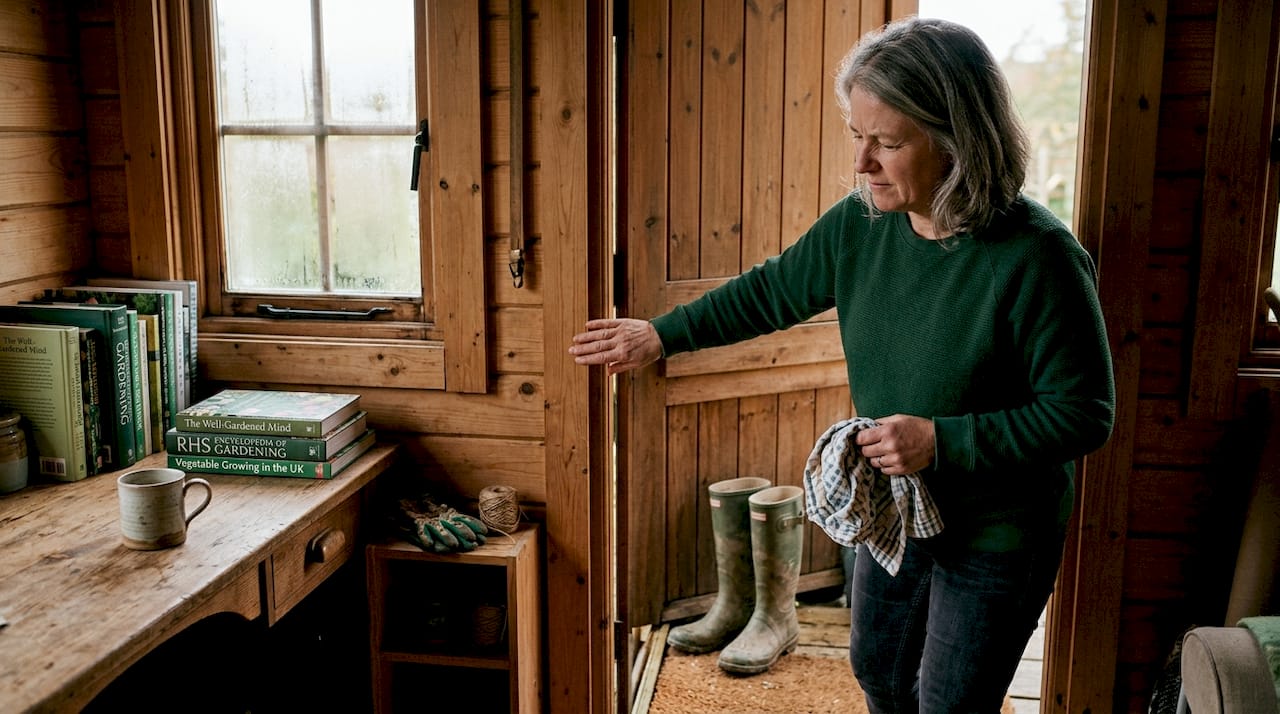
Ignoring the intake and exhaust balance is another issue. If you extract air without allowing fresh air in, you create negative pressure. This can pull damp air in through unintended gaps, making things worse. Always pair extraction with an intake source.
Neglecting vent cleaning is easy to overlook. Blocked vents reduce airflow significantly. Check and clean them every few months, especially after autumn when leaves and debris can clog external grilles.
Here’s a checklist to keep your ventilation performing well:
- Inspect all vents and grilles for blockages every season
- Check window seals and trickle vents for wear or damage
- Monitor humidity levels with a simple indoor monitor
- Look for early signs of condensation on cold surfaces
- Keep an eye on minimising drafts without over-sealing
- Review roof maintenance tips to prevent moisture entering from above
Proper ventilation prevents condensation, damp, and related structural issues in log cabins, so staying on top of these checks is genuinely worthwhile. Combine ventilation improvements with insulation upgrades for the best results, and don’t forget to look at maintaining cabin beauty as part of your overall care routine.
“The biggest ventilation mistake isn’t choosing the wrong system. It’s forgetting to maintain the one you’ve got.”
Pro Tip: Pair any ventilation upgrade with a check of your cabin’s insulation. The two work hand in hand. A well-ventilated but poorly insulated cabin will still struggle with temperature swings and energy costs.
By now, you have a robust, healthy airflow system. Next, let’s cover the finishing touches and verify your results.
Verifying success: how to check your log cabin ventilation
Once your ventilation is set up, you’ll want to confirm it’s actually working. Here’s how to check.
-
Look for condensation on windows. A small amount on cold mornings is normal. Persistent, heavy condensation throughout the day suggests humidity is too high and airflow is insufficient.
-
Smell the air. Fresh, neutral air is a good sign. A musty or stale smell means moisture is building up somewhere, or air isn’t circulating properly.
-
Check for uneven temperatures. Hot spots near the ceiling and cold patches near the floor suggest poor air circulation. This is especially common in larger cabins.
-
Use a humidity monitor. Aim for indoor relative humidity between 40% and 60%. Readings consistently above 65% indicate a ventilation problem that needs addressing.
-
Inspect timber surfaces. Run your hand along internal walls and floor edges. Any soft or damp patches in the timber are a warning sign that moisture is getting in.
Seasonal checks matter too. Before winter, make sure vents aren’t blocked and that your system is ready for colder, wetter conditions. Read our winter cabin preparation guide for a full checklist. After heavy rain, check for any new damp patches or leaks that could affect your airflow.
Key stat: Up to 95% of heat can be retained in well-ventilated but airtight cabins using MVHR. That means you don’t have to choose between fresh air and warmth.
If you spot a problem, don’t ignore it. Address blockages immediately, increase passive ventilation, or call in a professional if you’re unsure. Small issues caught early are far easier and cheaper to fix than structural damage down the line.
Now you’re able to assess and maintain your log cabin’s ventilation, you may wish to further improve or even redesign your space. Find out how expert help can make it easier.
Get expert help with your dream garden log cabin
Getting ventilation right from the very beginning is so much easier when your cabin is designed with it in mind. That’s where we come in.

At Log Cabin Kits, we specialise in bespoke cabin design that takes ventilation, insulation, and year-round comfort into account from day one. Whether you’re starting fresh or looking to upgrade an existing cabin, our team can help you find the right solution for your space and budget. Take a look at our garden log cabin gallery to see what’s possible, and get in touch to discuss your own project. A well-ventilated, beautifully designed cabin is closer than you think.
Frequently asked questions
What type of ventilation is best for a garden log cabin?
A combination of passive vents, openable windows, and, for airtight cabins, MVHR is most efficient. MVHR recovers up to 95% of heat while keeping the air fresh.
How often should I check my log cabin’s ventilation system?
Inspect your system seasonally, especially before winter and after heavy rain. Routine checks prevent damp and ensure long-term performance.
Can I improve ventilation without major alterations?
Yes. Installing trickle vents, opening windows regularly, or adding an extractor fan can all make a real difference. Passive and small-scale upgrades can boost ventilation and comfort without major building work.
Why is MVHR recommended for some garden cabins?
MVHR is ideal for airtight, well-insulated cabins used year-round. It keeps the air healthy while retaining up to 95% of heat, making it the most energy-efficient option available.
What are the signs of poor ventilation in a log cabin?
Look out for damp patches, persistent condensation, mould growth, and musty smells. Poor ventilation leads to condensation, mould, and structural issues if left unchecked.


