

Blog


Most people spend weeks choosing the right cabin size, cladding, and interior layout, then pick the first window option on the list. That’s a mistake. Glazing is one of the most consequential decisions you’ll make for your garden cabin, shaping how warm it feels in January, how bright it is on a grey afternoon, and how it looks from the garden. Double glazing cuts heat loss significantly compared to single glazing, making year-round use genuinely achievable. This guide covers every glazing type, window style, frame material, and thermal consideration so you can choose with confidence.
Table of Contents
- Understanding your garden cabin glazing options
- Window styles and how glazing choice influences design
- Frame materials: timber, uPVC, aluminium
- Thermal performance, U-values, and energy savings explained
- Beyond basics: security, noise, safety, and special cases
- How to choose the right glazing for your cabin
- Enhance your garden cabin project with bespoke glazing solutions
- Frequently asked questions
Key Takeaways
| Point | Details |
|---|---|
| Double glazing recommended | Double glazing is the minimum standard for year-round UK garden cabins, offering warmth and lower energy bills. |
| Material and style matter | Frame material and window style affect not only design but also thermal performance and upkeep. |
| Match glazing to cabin use | Select your glazing based on how and when you’ll use your garden cabin, from an occasional retreat to a home office. |
| Prioritise safety and noise | Toughened or laminated glazing and acoustic glass are ideal for extra security and peaceful use, especially in busy or urban settings. |
| Invest for longevity | Avoid budget styrene or perspex; quality glazing improves looks, energy savings, and cabin lifespan. |
Understanding your garden cabin glazing options
Not all glass is the same, and the range available for UK garden cabins is wider than most people realise. Common glazing options include single, toughened, double, SAN styrene, triple, low-E, acoustic, laminated, and self-cleaning glass. Each serves a different purpose, and choosing the wrong one can leave you with a cold, noisy, or short-lived result.
Here’s a quick breakdown of what each option actually means for your cabin:
| Glazing type | Key feature | Best for | Watch out for |
|---|---|---|---|
| Single glazing | One pane, minimal insulation | Unheated storage | Cold, condensation |
| Toughened glass | Safety-rated, shatters into granules | All cabins as standard | Not insulating alone |
| Double glazing | Two panes, air/gas cavity | Year-round use | Cost vs. single |
| Triple glazing | Three panes, superior insulation | Cold climates, offices | Weight, cost |
| SAN styrene | Plastic alternative to glass | Budget sheds | Discolouration, noise |
| Low-E glass | Reflects heat back inside | Heated cabins | Slight tint |
| Acoustic glass | Laminated for noise reduction | Roadside, urban sites | Added cost |
| Laminated glass | Bonded layers, stays intact | Security, safety | Heavier |
| Self-cleaning glass | Photocatalytic coating | Hard-to-reach windows | Premium price |
SAN styrene is worth a special mention because it appears in budget cabin kits as a cost-saving measure. It yellows over time, rattles in wind, and offers poor insulation. For anything beyond a basic seasonal shed, it’s a false economy. Toughened safety glass is now widely standard on quality cabins, and for good reason: it’s safer, clearer, and far more durable. If you want to explore the full range of garden cabin features available, it’s worth understanding how glazing integrates with the rest of your build. For premium performance, residential grade windows make a significant difference to both comfort and longevity.
Window styles and how glazing choice influences design
Once you’ve settled on a glazing type, the window style shapes how your cabin actually looks and functions day to day. Window styles include fixed/full pane, casement, Georgian, tilt-and-turn, awning, sliding, and bay/bow, each with distinct aesthetic and practical qualities.
Here’s how the main styles pair with glazing types:
- Fixed/full pane: Pairs beautifully with double or triple glazing. Maximises light and views, ideal for garden-facing walls. No ventilation, so combine with opening windows or a door.
- Casement (opening): Works with any glazing type. Essential for home offices and hobby rooms where fresh air matters. Pairs well with toughened double glazing.
- Georgian bar: Adds a traditional, divided look. Works best with double glazing where the bars are internal (between panes) to avoid cleaning headaches.
- Tilt-and-turn: Versatile and secure. Suits double or triple glazing and is excellent for cabins used as offices, where you want controlled ventilation.
- Sliding: Space-saving and modern. Works well with large double-glazed panes for a contemporary feel.
Aesthetics and utility don’t have to conflict. A full-pane double-glazed window on a south-facing wall floods your cabin with light and frames the garden like a painting. Casement windows on side walls add ventilation without compromising the main view. For guidance on choosing window styles that balance both priorities, it’s worth thinking about your cabin’s orientation before finalising the layout.
Pro Tip: If your cabin will double as a home office, prioritise at least one opening casement window. Ventilation reduces condensation and keeps the space comfortable during long working sessions.
Frame materials: timber, uPVC, aluminium
The frame holds everything together, literally and visually. Timber frames feel warm and traditional but need maintenance; uPVC is low-maintenance; aluminium offers slim sightlines but requires a thermal break to prevent cold bridging.
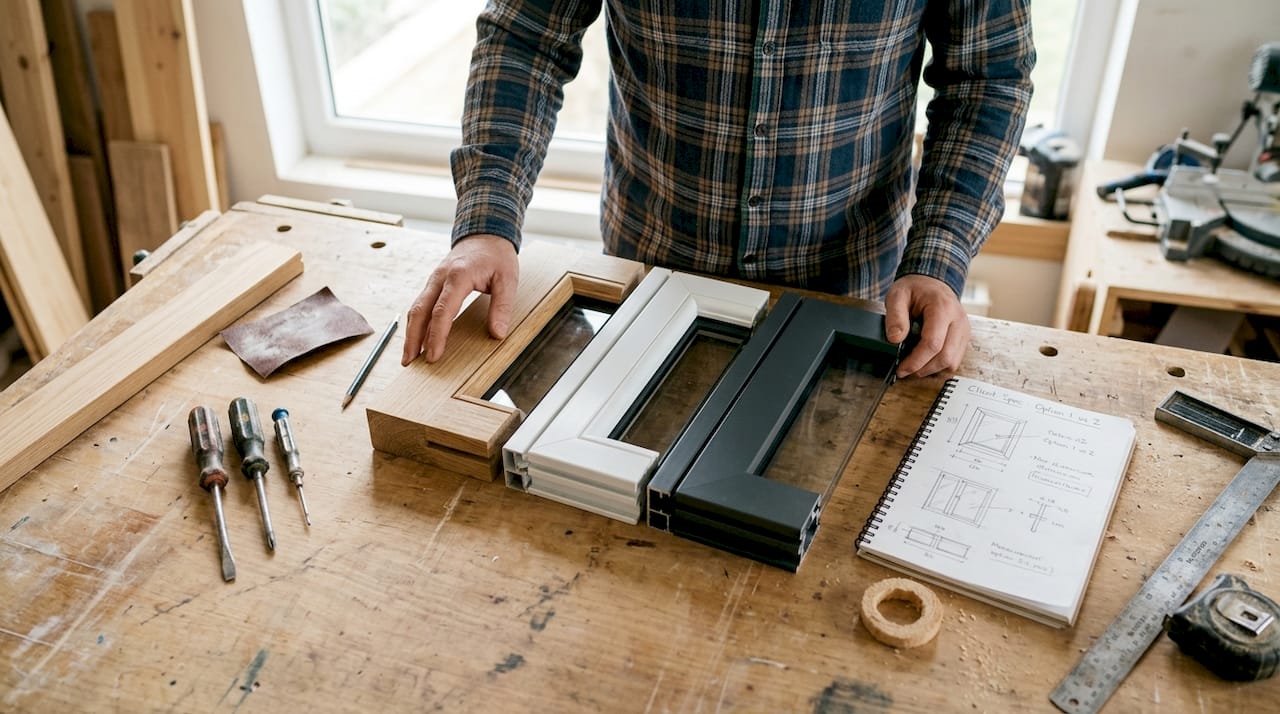
| Criteria | Timber | uPVC | Aluminium |
|---|---|---|---|
| Aesthetics | Classic, warm | Functional, plain | Modern, slim |
| Maintenance | Staining/painting needed | Wipe clean | Wipe clean |
| Insulation | Good with treatment | Good | Needs thermal break |
| Lifespan | 30+ years if maintained | 20-25 years | 40+ years |
| Cost | Mid to high | Low to mid | Mid to high |
Choosing the right frame material depends on your cabin’s style and how much upkeep you’re willing to do:
- Choose timber if your cabin has a traditional or Scandinavian aesthetic and you’re happy to treat it every few years. It pairs naturally with Georgian or casement styles.
- Choose uPVC if you want low maintenance and a clean, functional look. It suits contemporary cabins and works well with tilt-and-turn or casement windows.
- Choose aluminium if you want ultra-slim frames and a modern, architectural feel. It’s ideal for large fixed panes or sliding doors, but insist on a thermal break in the profile.
For timber frames specifically, the finish you apply matters as much as the wood itself. Proper timber protection and maintenance extends frame life significantly and keeps your cabin looking sharp year after year.
Thermal performance, U-values, and energy savings explained
A U-value measures how quickly heat passes through a material. The lower the number, the better the insulation. For glazing, the difference between a poor and a good U-value is the difference between a cabin you can use in February and one you abandon until April.
Here’s how the main glazing types compare on thermal performance:
- Single glazing: U-value around 5.0 W/m²K. Loses heat rapidly. Fine for a summer shed, poor for anything else.
- Basic double glazing: Around 2.8 W/m²K. A significant improvement, but not optimal.
- Premium double glazing with argon fill: Between 1.1 and 1.6 W/m²K. The sweet spot for most UK garden cabins.
- Triple glazing: Around 0.8 to 1.0 W/m²K. Top-tier performance, worth considering for year-round heated spaces.
UK Building Regulations set a maximum U-value of 1.4 W/m²K for replacement windows. Premium double glazing with argon fill meets this standard comfortably. Source: U-values for summer houses and log cabins
The benefits of double glazing go beyond warmth. Reduced condensation, lower noise transmission, and better security all come as part of the package. If you’re still weighing up whether the upgrade is justified, the guide on whether double glazing is worth it in a garden log cabin lays out the case clearly.
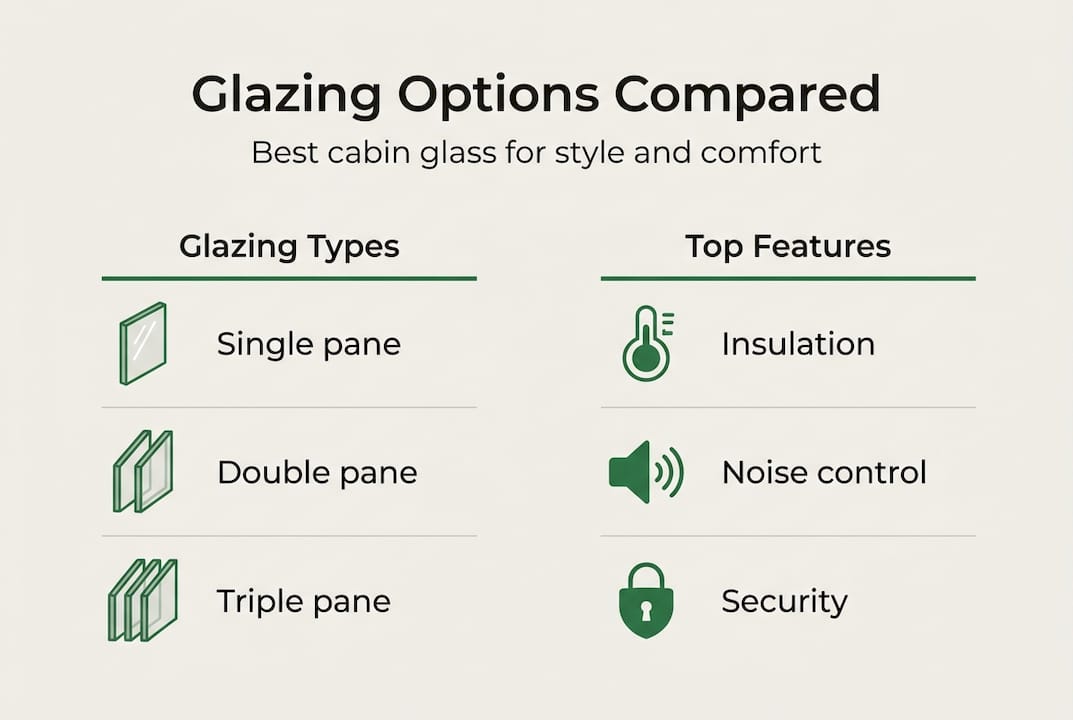
The cavity between panes matters too. A wider gap (typically 16mm) filled with argon gas performs better than a narrow air-filled cavity. Low-E (low emissivity) coatings on the inner pane reflect heat back into the room, adding another layer of efficiency without changing the appearance of the glass.
Pro Tip: When reading a window energy rating label, look for the U-value and the energy rating band (A++ to E). A-rated or above with an argon-filled cavity is the target for a year-round cabin.
Beyond basics: security, noise, safety, and special cases
Some cabin uses demand glazing that goes beyond standard thermal performance. Security, acoustic comfort, and site-specific conditions all influence the right choice.
Toughened glass shatters safely into small granules rather than dangerous shards, and double glazing adds a meaningful layer of security and noise reduction on top of insulation benefits. For most cabins, toughened double glazing covers the basics well.
Here’s when to consider specialist glazing:
- Acoustic glass: Laminated construction absorbs sound waves. Worth it if your cabin sits near a busy road, railway, or noisy neighbours. Particularly valuable for home offices and music rooms.
- Laminated glass: Two panes bonded with a plastic interlayer. It stays in one piece if broken, making it harder to breach. A good choice for secure windows on cabins storing valuable equipment.
- Low-E glass: Reflects solar heat in summer and retains warmth in winter. Essential for south-facing cabins that risk overheating in July and August.
- Corrosion-resistant frames: Coastal locations expose frames to salt air. Powder-coated aluminium or treated hardwood outperforms standard uPVC in these conditions.
- Self-cleaning glass: Useful for roof lights or high windows that are difficult to reach safely.
One thing most people overlook: the lock and hinge quality on opening windows matters as much as the glass itself. For tips on making your cabin more secure overall, hardware and frame strength are just as important as glazing specification.
How to choose the right glazing for your cabin
With all the options laid out, here’s a practical five-step process to land on the right choice:
- Set your budget. Double glazing with toughened glass is the sensible baseline. Triple glazing and acoustic upgrades add cost but deliver measurable returns if your use case justifies them.
- Define your use. Seasonal hobby space or year-round office? The answer changes everything. Double glazing reduces heat loss by 40 to 60%, making it the minimum for year-round UK use.
- Consider your style. Traditional cabin with Georgian windows, or a contemporary build with full-pane sliding glazing? Match the glazing type and frame material to the aesthetic you’re after.
- Check your site. South-facing, coastal, roadside, or shaded? Each condition points to a specific glazing solution.
- Factor in special requirements. Security, noise, or accessibility needs may push you towards laminated, acoustic, or specific frame types.
Here’s a quick reference for common cabin uses:
| Cabin use | Recommended glazing | Frame suggestion |
|---|---|---|
| Home office | Premium double or triple, low-E | uPVC or aluminium |
| Hobby room | Double glazing, toughened | Timber or uPVC |
| Guest accommodation | Premium double, acoustic option | Timber or uPVC |
| Gym or studio | Double glazing, ventilation priority | Aluminium |
| Workshop | Double glazing, laminated for security | uPVC or aluminium |
| Seasonal garden room | Double glazing minimum | Timber |
For further guidance on window choice decisions and how to prepare your cabin for colder months, the guide on winterising your cabin is a useful companion read.
Enhance your garden cabin project with bespoke glazing solutions
Choosing the right glazing is only the beginning. The real difference comes when every element of your cabin, from the frame material to the window placement, is designed around how you actually want to use the space.
At Log Cabin Kits, we specialise in bespoke cabin design that puts your glazing preferences at the heart of the build. Whether you want full-pane double glazing for a light-filled home office or acoustic glass for a quiet creative studio, we can help you specify exactly what you need. Browse our garden log cabin gallery to see how different glazing choices look in finished builds, or get in touch for a free planning consultation. We’ll help you match the right glazing to your budget, your site, and your vision.
Frequently asked questions
What is the best glazing for year-round use in a UK garden cabin?
Double glazing with a low U-value is the minimum recommended for year-round comfort, reducing heat loss by up to 60% compared to single glazing. Argon-filled premium double glazing is the sweet spot for most UK homeowners.
Is toughened glass worth the upgrade for a garden cabin?
Yes. Toughened glass shatters safely into small granules rather than dangerous shards, and it’s now standard on most quality cabin builds for good reason.
Why avoid styrene or perspex glazing in garden cabins?
SAN styrene and perspex discolour over time and are noisy in wind, and they offer poor insulation and security compared to glass. They’re a false economy for anything beyond basic seasonal storage.
Are triple glazing or acoustic glass needed for most garden cabins?
Acoustic glass suits noisy locations such as roadside or urban sites, while triple glazing is best reserved for year-round heated spaces where maximum insulation is the priority. Most cabins perform well with premium double glazing.
How does window style affect the amount of daylight?
Full-pane glazing maximises light and views by removing dividing bars, while Georgian or divided-light styles reduce the clear glass area and can limit how bright the interior feels.


