

Blog


Garden cabins represent a significant investment for UK homeowners, yet 600,000 garden thefts occur annually across Britain. Many owners mistakenly believe outdoor structures don’t require the same security attention as their main homes. This article explores practical security features for bespoke garden cabins, from robust physical measures to smart landscaping strategies, helping you safeguard your outdoor space against increasingly sophisticated thieves whilst maintaining the aesthetic appeal of your garden retreat.
Table of Contents
- Understanding The Theft Risk To Garden Cabins In The UK
- Physical Security Measures For Robust Garden Cabin Protection
- Landscape And Environmental Strategies To Enhance Cabin Security
- Technological And Insurance Considerations For Comprehensive Security
- Explore Bespoke Garden Cabins With Tailored Security Options
- Frequently Asked Questions About Garden Cabin Security Features
Key takeaways
| Point | Details |
|---|---|
| Theft risk is substantial | Garden cabins face serious security threats with outbuildings accounting for 20% of burglary claims and average losses exceeding £4,000. |
| Physical security is foundational | Heavy-duty framing, ground anchoring, and robust locks form the essential first line of defence against intrusion. |
| Environment matters | Strategic landscaping with gravel paths, trimmed vegetation, and thorny plants creates natural deterrents without compromising garden beauty. |
| Technology adds layers | Motion lighting and CCTV systems complement physical security, though careful placement prevents false alarms from wildlife. |
| Insurance requires evidence | Policies often demand proof of forced entry, making visible security measures both protective and financially necessary. |
Understanding the theft risk to garden cabins in the UK
Garden cabins and outbuildings face a genuine security crisis across the UK. Recent insurance data reveals that outbuildings account for 20% of burglary claims, with the average garden-related theft claim valued at £4,205. These aren’t opportunistic crimes targeting cheap tools. Thieves specifically target high-value items stored in garden cabins, from power equipment and bicycles to furniture and electronics.
The vulnerability stems partly from perception. Many UK homeowners invest thousands in bespoke garden cabins yet leave them fundamentally unsecured. Research indicates that millions of British properties have outbuildings with no locks whatsoever, creating easy targets for criminals who can work unobserved away from main dwelling windows. This false sense of security proves costly when theft occurs.
Location compounds the problem. Garden cabins typically sit at property boundaries or tucked into corners where natural screening from hedges and fences provides cover for thieves. The same privacy features that make these spaces attractive for relaxation also shield criminal activity from neighbours and passersby. Criminals can spend considerable time forcing entry without detection.
“The combination of high-value contents and poor security makes garden outbuildings prime targets. Thieves know these structures often contain thousands of pounds worth of equipment with minimal protection.”
Insurance complications add another dimension to the risk. Many policies include clauses requiring evidence of forced entry before paying claims. Without visible signs of tampering on locks or damage to doors and windows, insurers may refuse coverage entirely. This legal requirement makes security features not just protective measures but financial necessities. Understanding these interconnected risks provides the foundation for implementing effective garden cabin security that addresses both physical threats and insurance obligations.
Physical security measures for robust garden cabin protection
Robust construction forms your cabin’s primary defence against intrusion. Heavy-duty framing using 58x44mm timber provides substantially greater resistance to forced entry than standard shed construction. Thieves targeting garden buildings often use leverage tools to pry apart weak joints and thin panels. Upgrading to substantial timber dimensions makes this approach significantly more difficult and time-consuming, encouraging criminals to move to easier targets.
Ground anchoring transforms your cabin from a movable structure into a permanent fixture. Thieves have been known to simply lift entire small outbuildings onto vehicles. Securing your cabin with ground screws or concrete-set bolts eliminates this possibility whilst also improving wind resistance. The anchoring process involves drilling through floor joists and fixing them to substantial ground anchors at multiple points around the perimeter. This creates a mechanical bond that requires considerable effort and noise to defeat.
Door and window security deserves particular attention as these represent the most common entry points. Standard cabin locks offer minimal resistance to determined thieves. Upgrading to hardened steel padlocks with enclosed shackles prevents bolt cutters from gaining purchase. Shed bars, which are metal reinforcement bars fitted across doors, distribute force across the entire door structure rather than concentrating stress on lock points. For windows, internal bars or security film add layers of protection without compromising natural light.
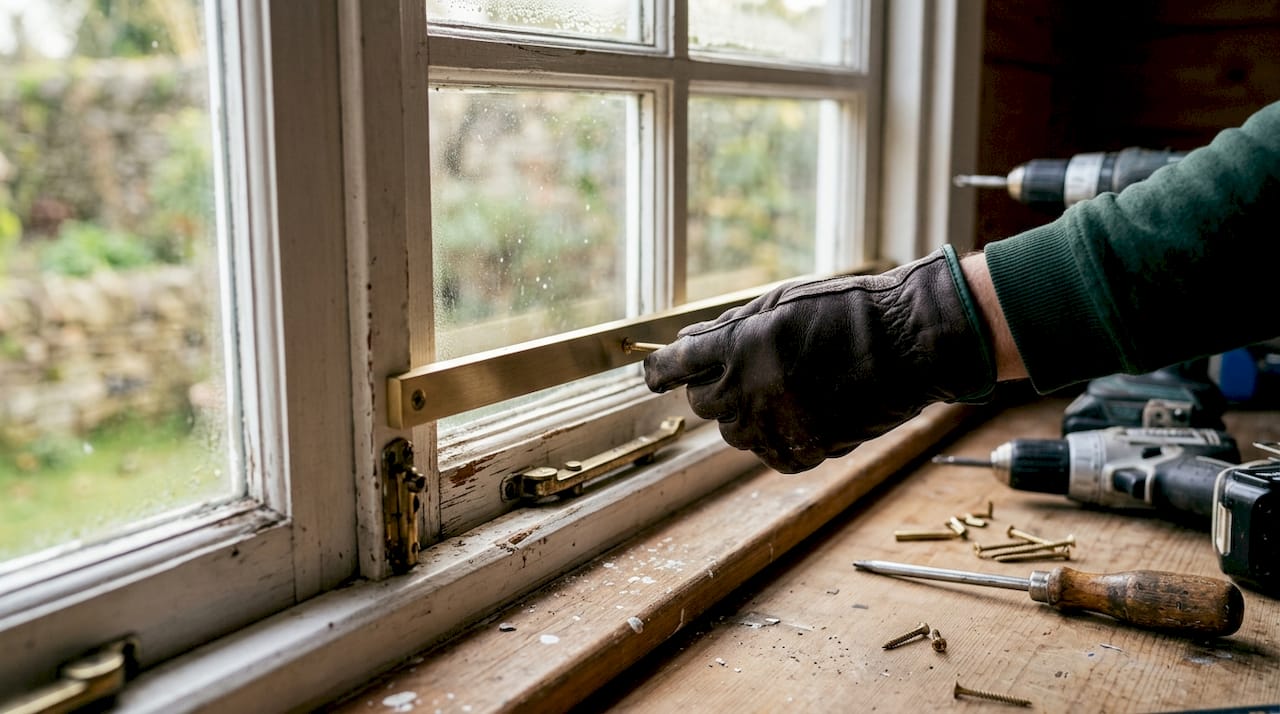
Internal security provides a final barrier even if perimeter defences fail. Installing a compact safe bolted to floor joists protects small valuables and important documents. For larger items like bicycles or power tools, ground anchors with heavy-duty chains create individual security points. These measures ensure that even if thieves gain entry, they cannot quickly remove your most valuable possessions.
Pro Tip: Schedule quarterly security audits of your cabin’s physical defences. Locks corrode, timber swells and contracts with seasons, and fixings can work loose over time. Regular inspection and maintenance ensures your security measures remain effective year-round, particularly after harsh winter weather that can compromise structural integrity.
The synergy between these physical elements creates defence in depth. Each layer forces criminals to make noise, spend time, and risk detection. Most opportunistic thieves abandon attempts when faced with multiple robust barriers, seeking easier opportunities elsewhere. This principle applies equally whether you’re securing a basic log cabin or a sophisticated bespoke structure.
Landscape and environmental strategies to enhance cabin security
Your garden’s layout profoundly influences cabin security through visibility and access control. Trimming vegetation below 1m height near cabin walls eliminates hiding spots where thieves can work unobserved. Overgrown shrubs and dense planting provide exactly the concealment criminals seek when attempting forced entry. Maintaining clear sightlines from your house to the cabin means you can monitor the structure from indoor spaces, whilst neighbours gain casual oversight that deters suspicious activity.
Gravel pathways serve dual purposes as attractive landscaping features and audible alarm systems. The distinctive crunch of footsteps on gravel creates noise that’s difficult to mask, alerting you to movement around your cabin during evening hours. Laying a 50mm deep gravel border around the entire cabin perimeter ensures anyone approaching must cross this natural alarm zone. Choose angular gravel rather than smooth pebbles for maximum acoustic effect.
Defensive planting transforms garden borders into natural barriers without the harsh appearance of security fencing. Thorny species like blackthorn, holly, pyracantha, and berberis create painful obstacles that criminals avoid. These plants work particularly well along property boundaries and beneath cabin windows. The Royal Horticultural Society research demonstrates that strategic planting of thorny barriers significantly reduces intrusion attempts whilst supporting wildlife and enhancing garden aesthetics.
Trellis additions to existing fences increase their effective height and reduce climbing ease. Fixing trellis panels to fence tops creates a flexible barrier that bends and rattles when weight is applied, making silent approach nearly impossible. The lightweight construction means trellis cannot support body weight, forcing potential intruders to remove or damage it noisily. This simple modification dramatically improves perimeter security at minimal cost.
Cabin positioning during initial installation determines long-term security potential. Placing structures in open, visible locations rather than tucked into secluded corners removes the privacy criminals require. Whilst this might seem counterintuitive for a retreat space, the security benefits outweigh privacy concerns. You can still create intimate spaces through strategic internal design and window positioning whilst maintaining external visibility that deters theft.
Pro Tip: Design your security landscaping to support local wildlife alongside deterring criminals. Berry-producing thorny plants like pyracantha provide food for birds whilst creating barriers. Native species like hawthorn offer dense thorny growth that benefits pollinators. This approach delivers beautiful garden features that serve multiple functions, making security measures feel like natural garden enhancements rather than defensive installations.
These environmental strategies work continuously without power or maintenance, providing passive security that complements active measures. The cumulative effect of multiple landscape features creates an environment where criminal activity becomes difficult, noisy, and highly visible.
Technological and insurance considerations for comprehensive security
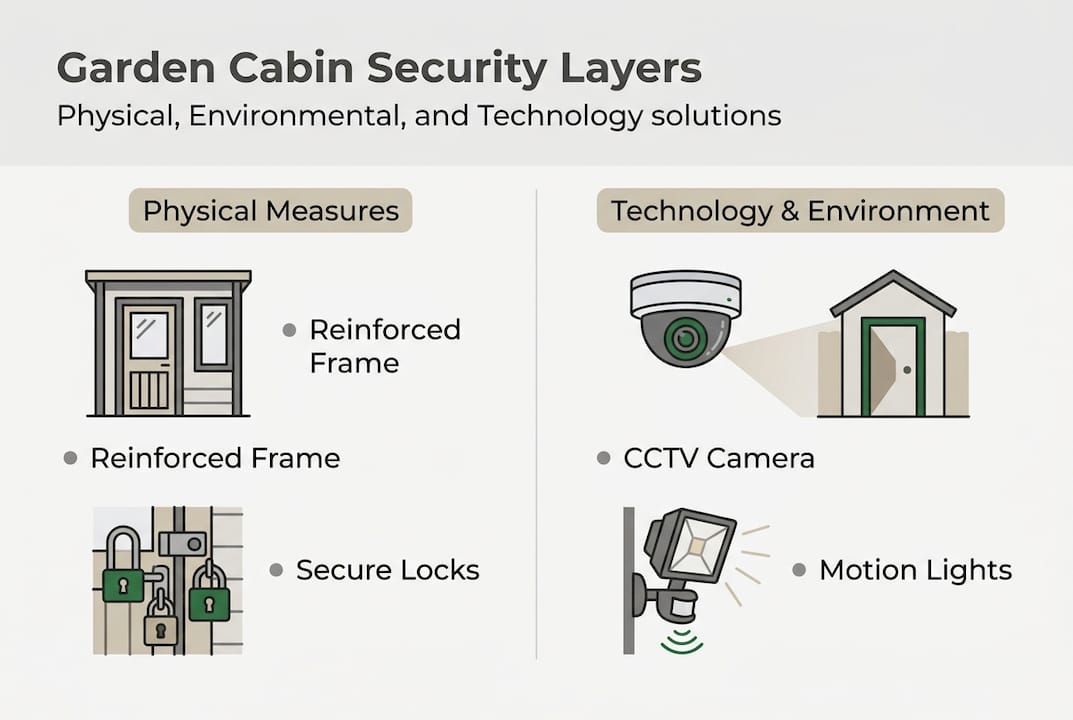
Security technology adds intelligent monitoring layers to physical and environmental defences. The following comparison illustrates common options and their practical implications for garden cabin protection:
| Technology | Pros | Cons | Typical Cost |
|---|---|---|---|
| Motion sensor lights | Instant illumination deters criminals; low running costs | Frequently triggered by animals; requires careful positioning | £25 to £80 per unit |
| Smart CCTV | Remote monitoring via smartphone; recorded evidence for police and insurance | Requires WiFi signal strength in garden; subscription costs for cloud storage | £80 to £300 plus potential subscriptions |
| Wireless alarms | Loud deterrent; alerts you immediately to intrusion attempts | False alarms from wildlife or weather; battery maintenance required | £60 to £200 per system |
| Smart locks | Remote locking control; access logs show entry times | Requires power source; potential connectivity issues in outbuildings | £100 to £250 per lock |
Motion-activated lighting remains the most cost-effective technological deterrent. Modern LED units consume minimal electricity whilst providing bright illumination that exposes criminal activity. However, wildlife triggers create challenges with foxes, badgers, and hedgehogs causing frequent false activations. Positioning sensors to detect human-height movement rather than ground-level activity reduces nuisance triggering whilst maintaining security effectiveness.
Smart CCTV systems have evolved considerably, with subscription-free models now offering excellent value. These systems store footage locally on memory cards rather than requiring cloud subscriptions, eliminating ongoing costs after initial purchase. Image quality has improved dramatically, with many affordable cameras now providing clear footage even in low light conditions. The visible presence of cameras alone deters many opportunistic thieves who prefer unmonitored targets.
Insurance requirements create legal imperatives for visible security measures. Industry analysis reveals that 25% of policies include forced entry clauses requiring clear evidence of break-in attempts before paying claims. Without damaged locks, broken windows, or tool marks on doors, insurers may argue that theft occurred due to negligence rather than criminal force. This legal landscape makes robust physical security not just protective but financially essential for valid insurance coverage.
Common mistakes undermine otherwise sound security approaches. Many owners install expensive technology but neglect basic physical security, creating a false sense of protection. Others secure doors thoroughly but leave windows vulnerable, providing easy alternative entry points. Perhaps most critically, some fail to maintain security equipment, allowing batteries to die or cameras to become obscured by vegetation growth.
Pro Tip: Position security cameras and motion sensors where they complement rather than replace physical barriers. Technology works best as a monitoring layer that alerts you to threats and records evidence, whilst robust locks and anchoring provide the actual resistance to intrusion. This layered approach addresses both deterrence and documentation needs.
Best practices for garden cabin security technology include:
- Test all systems monthly to verify functionality and battery levels
- Position cameras to capture faces at entry points rather than wide garden views
- Ensure motion sensors have clear detection zones free from overhanging branches
- Keep camera lenses clean and check that vegetation hasn’t obscured views
- Maintain written records of security measures for insurance documentation
- Store high-value item receipts and photographs separately from the cabin
- Review footage periodically to identify potential security weaknesses
Integrating technology with physical and environmental security creates comprehensive protection that addresses detection, deterrence, and evidence collection. This multi-layered approach recognises that no single measure provides complete security, but combined elements create formidable barriers that discourage all but the most determined criminals. Understanding common construction and security mistakes helps you avoid vulnerabilities during initial cabin setup.
Explore bespoke garden cabins with tailored security options
Protecting your garden investment starts with quality construction designed for security from the ground up. Bespoke garden cabins offer the flexibility to incorporate robust framing, reinforced entry points, and strategic window placement that prioritises both aesthetics and protection. Custom designs allow you to specify heavy-duty materials and security features during the planning stage rather than retrofitting them later.

Explore our range of custom build log cabins designed with security considerations built into the structure. Our bespoke cabin design service works with you to create outdoor spaces that balance beauty with practical protection. Browse our garden log cabin gallery for inspiration on secure, stunning designs. We offer free delivery throughout the UK and expert guidance on maximising your cabin’s security potential from initial concept through to installation.
Frequently asked questions about garden cabin security features
Is it necessary to anchor a garden cabin to the ground?
Anchoring is essential for both security and structural stability. Ground fixings prevent thieves from lifting or tipping smaller cabins whilst also improving wind resistance during storms. Most insurance policies expect permanent structures to be properly secured, and failure to anchor may affect claims. Use either ground screws or concrete-set bolts at multiple points around the perimeter for maximum effectiveness.
What plants are best for natural garden security?
Thorny native species provide excellent security whilst supporting wildlife. Blackthorn, hawthorn, holly, pyracantha, and berberis create painful barriers that deter climbing and forced entry. Plant them beneath windows and along boundaries where criminals might approach. These species require minimal maintenance once established and offer year-round protection with the added benefit of berries for birds and flowers for pollinators.
How can I ensure insurance covers my garden cabin?
Document all security measures with photographs and keep receipts for locks, anchors, and technology installations. Most policies require evidence of forced entry, so visible security features like quality locks and reinforced doors become crucial. Review your home insurance policy specifically for outbuilding coverage limits and exclusions. Consider specialist garden building insurance if your cabin’s value exceeds standard policy limits. Maintain an inventory of contents with photographs and purchase receipts stored separately from the cabin.
Are smart CCTV systems worth the investment?
Smart CCTV provides valuable deterrence and evidence collection for modest cost. Subscription-free systems eliminate ongoing fees whilst still offering smartphone monitoring and local recording. The visible presence of cameras discourages opportunistic theft, whilst footage provides crucial evidence for police investigations and insurance claims. Position cameras to capture clear facial images at entry points rather than wide garden views for maximum effectiveness. For comprehensive garden cabin security, combine cameras with robust physical measures.
What are common mistakes to avoid when securing a garden cabin?
Many owners focus exclusively on door security whilst leaving windows vulnerable to forced entry. Others install expensive technology but neglect basic physical measures like quality locks and ground anchoring. Failing to maintain security equipment allows batteries to die and cameras to become obscured. Some position cabins in secluded corners that provide cover for criminals rather than open visible locations. Perhaps most critically, owners often don’t document their security measures for insurance purposes, creating complications when making claims after theft occurs.


